Posts Tagged ‘photography’
Good News on Clinical Trials: Positive Results Plummeting
This is good for science and good for patients. It saves repeating a trial or patients taking medication that they may or may not need.
—Veronica Irvin, assistant public health professor at Oregon State University, as quoted in The Oregonian about a study she was lead author of concerning how the percentage of clinical trials with positive results has plummeted since federal regulators established new rules requiring greater transparency

di Rosa Art Museum
###
Quoted from ACRP Wire. Oregonian article here.
Image Credit: Kirk Livingston
Something Old. Something New. What is Your Process?
Mostly borrowed. Likely blue.
We like the myth of the genius inventor or the brilliant writer. We want to hear more about the talent that simply cannot be stopped: so much to write and create.
But pull back the curtain on their work and you see lots of failure and many bad first-, second-, third-, twenty-fifth drafts. Just ask Edison. Or Hemingway. L. Frank Baum’s Wizard of Oz was rejected so many times he kept a journal he called a “Record of Failure.”

Let’s break out: new from old.
That’s why our ongoing conversations are so critical. These conversations—with friends/colleagues/spouse, with media, with a keyboard, with ourselves, with God—are the process by which we sort all kinds of life-stuff. An artist friend has challenged me to attempt an abstract watercolor. I’m no artist, but I do produce dumb sketches every day. It helps to have the bar set very, very low.
The only way I can move forward with an abstract image is to think of the entire project as a conversation. But this conversation is between a bit of burnt sienna, a dab of periwinkle, a waterbrush and a slice of Strathmore 90# paper. I call it a conversation because I am only bringing the elements together and have no clue what the result will be. I call it a conversation because I await the new thing that often results from the interplay. I’ll likely not call it art.
It’s the “something-new from old” that energizes creators. Today’s copy project also requires a conversation between old elements, a clarified message from my client and a new audience. Again: I’m trusting process rather than brilliance. Because any brilliance that happens grows organically out of process.
###
Image credit: Kirk Livingston

Our Best Conversations Satisfy and Anticipate
They can satisfy a question we didn’t know we had.

They can anticipate a question still on the horizon.
###
Image Credit: Kirk Livingston
How Does Anyone Change Direction?
Living with Questions
I met a preacher at a wedding recently. He had just officiated the ceremony, which was a beautiful thing—two people creating a great beginning. Afterwards, making small talk, the preacher told me how a few people in his congregation had changed. I was curious, because I had been reading Howard Gardner’s Changing Minds: The Art and Science of Changing Our Own and Other People’s Minds. In these highly partisan days, where we carefully surround ourselves with our tribe who speak our language, agree with our view of the world and where we ingest the news biased toward our agenda, I’ve been wondering how anyone ever escapes their own personal echo chamber.

“God did it,” he said. “In quite miraculous ways. Real change. 180 degrees.”
The preacher’s story of change had to do with someone coming into his congregation and how their life was different now.
“Wow,” I said, because change is remarkable. And because I like to hear stories about God doing stuff in real life.
“Sometimes I wonder,” I said, “Whether God does stuff or whether people change to fit the new club or group they’ve joined. Because I’ve noticed that the things we attribute to God can sometimes be explained by communication dynamics—how this new club or group satisfies a question someone has. Or perhaps the group dynamic meets an impulse they have, and they are more than happy to abide by the rules and unspoken ways this tribe works. And that looks like change. And perhaps that’s where change takes place: as we adopt a new moral code and sort of work ourselves into it.”
Was the preacher backing away?
“Which is not so say God is not in it,” I added, quickly.
“Hmmm,” he said.
“Because I absolutely believe God works through ordinary conversations in very big ways (now’s when you would mouse over and order a copy of my new book ListenTalk. Or just click here.)
“But I’m just sort of eager to cite the proper authorities when we talk about change,” I said. “Because change seems more nuanced, more a response to the questions we carry with us.”
Was he nodding in agreement?
Wait—where did he go?
What questions do you carry into everyday life? Those very questions may be the beginning of change.
###
Image Credit: Kirk Livingston
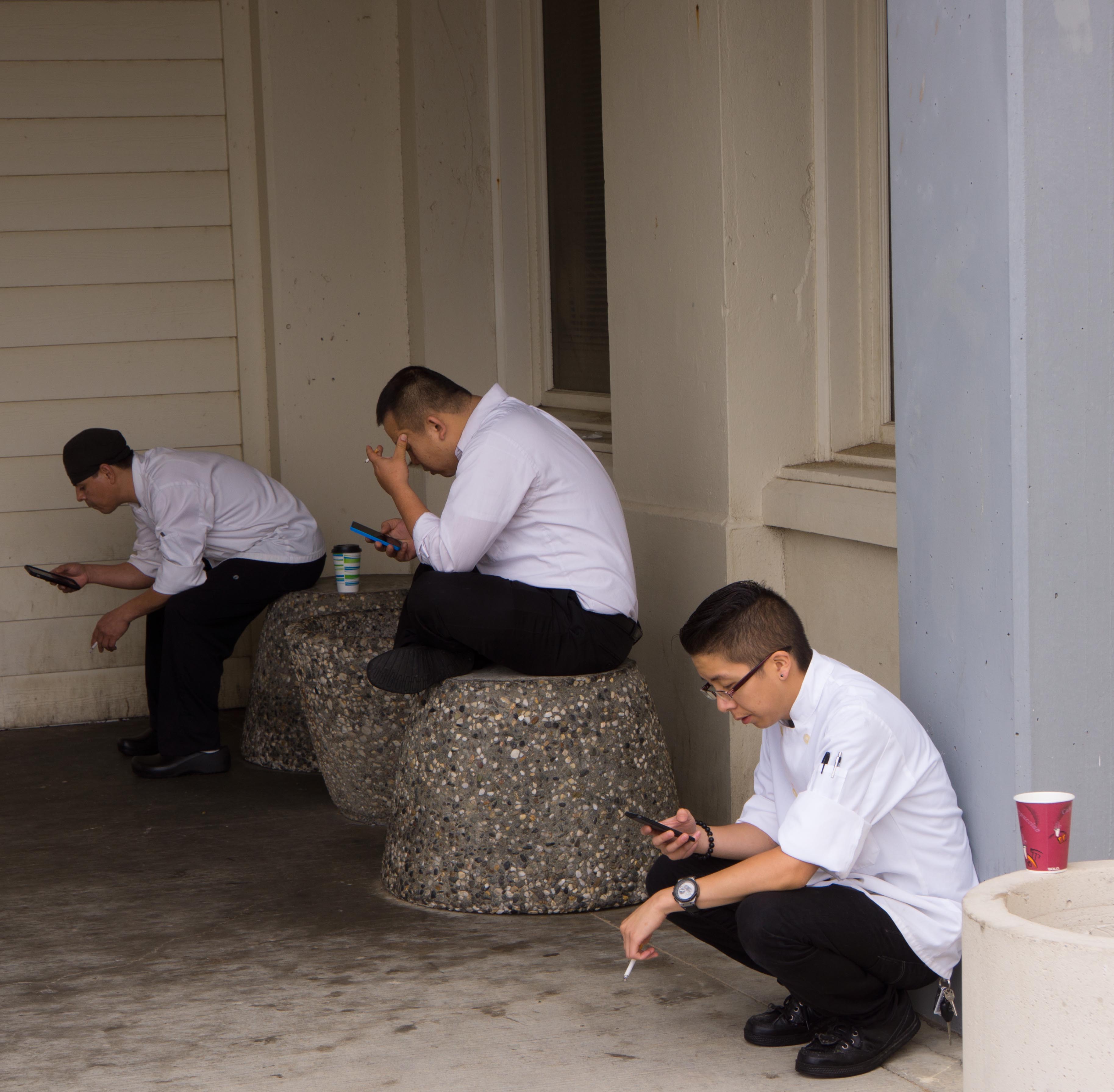
Italian Hand Model. Flown to the Northwoods.
Resting between cup-stacking sessions.
 Such busy days.
Scenic State Park: When Buildings Talk
Of course it uses contractions–it’s a lodge, after all.
Things get all informal and cozy at a lodge, remember?
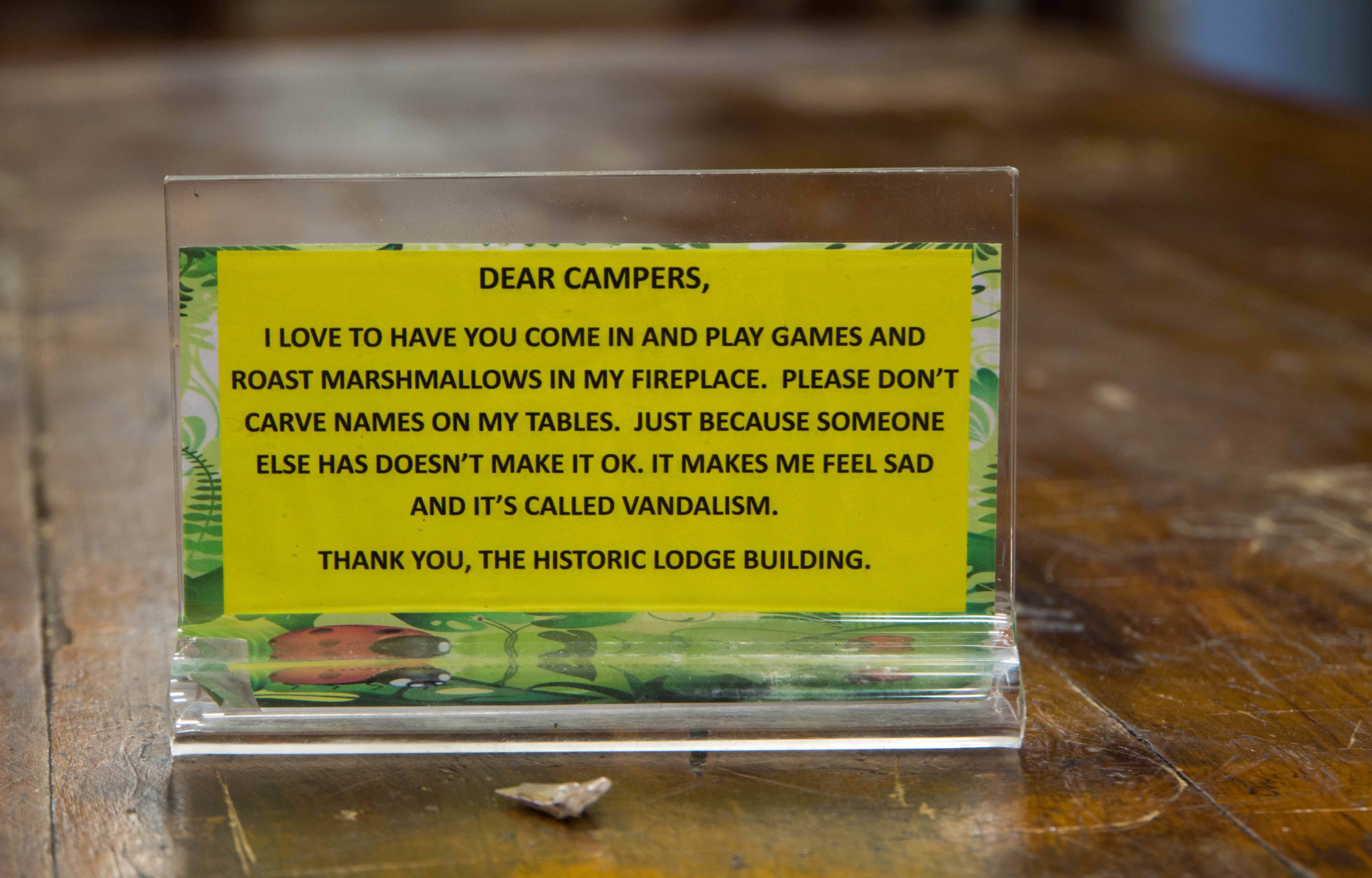
Still, I can hear the manic cry behind the uppercase.
###
Image Credit: Kirk Livingston
Conversation with the Moon
Blue Moon’s Eve



So bright, sir. You have startled me.
###
Image Credits: Kirk Livingston
“You Disappoint Me” & Other Nonstarters (DGtC#30)
Don’t Make Everything a Crisis Communication
Regular old talk has a way of lining things up. Steady, routine conversation between spouses, friends, family, neighbors, and colleagues can have a gentle, restorative quality.
Does that sound like an overpromise—especially given the mundane nature of so much of our talk?

Regular talk helps grow people along similar lines
It’s true in this way: like keeping roads open for traffic. We depend on open streets to drive to the grocer or to pick up our returning student from the airport. And sometimes we use those roads to race our pregnant wife to the birthing center.
Hard conversations are hard because of some urgency. Something needs to be said right now or else bad things will happen. Often we put on our formal language when we intend to communicate some crisis point:
- “I’m disappointed in…X” is a way corporate managers temper the screaming in their skulls.
- “We need to talk….” Is the time-honored way spouses bring up all sorts of unpleasantness.
But if those conversational roads have been open for traffic for some time, and relationships have been established, sometimes those formal words need never make an appearance. Talking about things can be handled on the fly, in normal conversation, in small bits. That’s because trust builds with the word traffic. And those conversational roads can carry quite a lot of weight.
Talking is a wonder.
Who would have guessed?
###
Image credit: Kirk Livingston

 conversation is an engine