Posts Tagged ‘work’
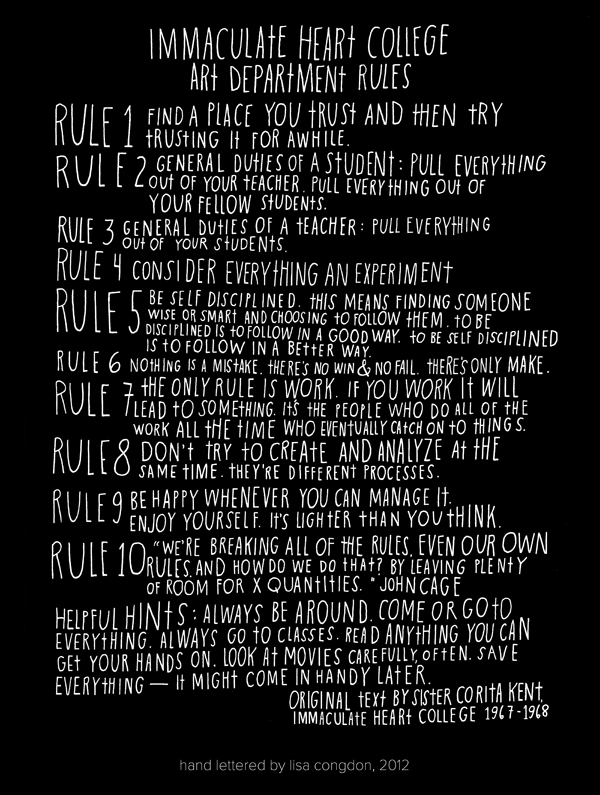
Sister Corita Kent’s Art Department Rules
 ###
###
Image credit: Lisa Congdon via thisisn’thappiness
Writing with Sheet Metal (ShopTalk #2)
The Pull of the Factory Floor
 As a copywriter I spend my days in front of a pair of computer screens. Writing. Yes, I have meetings with clients and colleagues, brainstorming sessions and updates and phone calls. But mostly I remain planted before my computer, sorting through masses of information, ordering data that came with competing priorities and generally figuring out new ways to present the right facts to the right people in a way that causes a reaction.
Then there are days I visit a particular client’s factory. It’s a factory with a whistle that blows, union members who take 15-minute breaks, safety glasses and focused workers at benches doing macro and micro tasks. It’s a factory that stamps and welds metal, where electricians wire metal carcasses as long and tall as a semi-trailer. This factory is lit so everything is visible and produces a hum of activity across the concrete floor, which is the size of several football fields.
Why give so much detail? Because many who read this—myself included—spend our days in offices. But a factory floor is a different sort of place—a different world, with a different set of priorities and where production is king but craft sits near the throne.
I like this factory floor because it is different from an operating room, different from a cath lab, different from a conference room during an endless PowerPoint presentation, different from a row of cubicles and different from the Livingston Communication Tower (high over St. Paul). There is an irresistible, energizing activity on this factory floor that flows out of the scores of workers. But maybe that energy also comes from my past, because I grew up watching my dad craft furniture from oak and walnut. Maybe that’s where I absorbed the notion that producing a solid piece someone might actually use is a great way to spend your time and a fulfilling thing to do.
In this ongoing discussion of what makes for fulfilling work, I want to trace fulfillment down a different thread. This thread places the writer in a team with a goal of productivity. The writer and the team are focused on this goal of shipping something real and substantial. At the same time this team is also sort of doing life together—because in the middle of work there are the discussions about the rest of life. For a writer, this team-ness is a different way of spending the day and not to be missed.
Don’t take this as a romantic view of factory work. Instead, see it as the reality of the life situations where your craft takes you to meet a need.
###
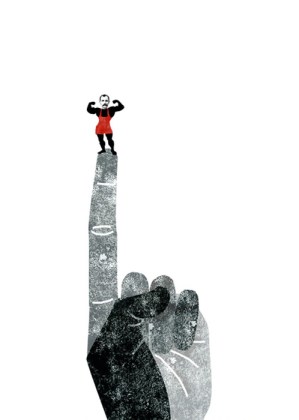
Image credit: Yael Frankel via 2headedsnake
Your Cubicle Neighbor’s Bold Reveal May Be Your Salvation
One Lesson from Office Space
In Office Space, as Peter Gibbons descended down the dark tunnel searching out meaning in his work, he maintained friendships with other like-minded/cynical employees, Michael Bolton (no, not that Michael Bolton) and Samir N. And then there was Lawrence who heard everything about Peter’s life through the thin walls of the apartment next door. Together these friends reveal more and more to each other as the film progresses.
I’ve been blessed with great work friendships over the years. I believe the shared experience of dealing with the despot in the corner office and the silly conundrums she or he introduces can have a binding influence on co-laborers. Plus, the work of finding or making meaning in work often happens at the collegial level: the expertise, instincts and humor with which we approach our work has a way of rubbing off on those around us and vice versa. These friendships can and have lasted for years through changed jobs and kids and sickness and all manner of life change.
Not long ago I wondered aloud what would happen if God showed up at work. To that list I might add the people around us with whom we connect. These people in our shared work experience are way more than companions in misery—they may be part of your job’s salvation. Part of that has to do with what we reveal of ourselves to each other. And maybe the hope is that we share the stuff that matters with these people with whom we spend our days.
###
Image Credit: IMDB
“Work is my salvation.”
Theologically—entirely false. Literally—sorta true.
I heard myself say that headline the other day. My buddy and I were talking about what it means to pursue a craft. For me, the work of pursuing a craft is about the ability to focus. And the ability to get back to focus post-distraction.
 Focus and getting back to focus are inherent parts of learning and practicing a craft. I believe that focus on craft builds sanity and humanity. Getting back to focus on my craft of copywriting has pulled me out of many mentally ambiguous places and difficult decisions. Focus on craft—especially as I aim toward usefulness and practical service—allows me to background difficult decisions and gives time for my subconscious to work at them. And after I’ve focused I am able to do productive work on those decisions.
I also think growing in our craft is a way to serve God and people. Bethel Seminary—my alma mater—recently received a $190K grant to pursue a “Work with Purpose” program (Bethel Magazine, Fall 2012, p.8). I’m eager to see how this unfolds because the standard churchy answers for a productive and full life mostly involve using work as verbal platform to persuade others. But the work itself—that’s where I see growth, usefulness and, frankly, the hand of God. This is an old notion from the Reformation that need resurrecting pronto.
Last weekend Mrs. Kirkistan and I watched a documentary called Buck, about a guy from a rough, abused background who had an uncanny way with horses. I’m not a horse guy, and I’m not a fan of cowboy flicks, but this film was mesmerizing from beginning to end. What Buck could tell people about themselves as he watched the way they treated their horse was painfully close to home. The movie is full of notions about collaboration, respecting others and how to work with others without breaking them. One take-away quote from the film was that “horses just need to do something useful. They want work to do.” Maybe Buck was anthropomorphizing horses—maybe not. I do know that the craft we learn and the work we do often places us productively among other people.
And that is a good place to be.
###
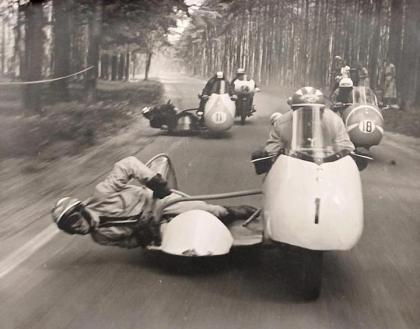
Image credit: gibsart via 2headedsnake
What if God Showed Up at Work Today?
I doubt it would look like church.
 It wouldn’t look like a Promise Keepers rally. It wouldn’t look like clouds of incense. Probably there would be no robes involved or collars or big leather-bound Bibles to thump.
There might be preaching, but no pulpit. And no audience. If God showed up, the preacher might be the unknown worker silently speaking with deeds, deep inside a process, attending every detail. The example of some human serving in a hidden way that was not meant to be seen.
If God showed up, someone might float an idea in a meeting, an idea that was not politically motivated or meant to show how smart they were. Just an idea to help the group move forward.
If God showed up, all the gossipy chatter might be silenced—all that vindictive, energy-sapping talk about so-and-so that goes on all day every day.
If God showed up, maybe we’d see why we worked there in the first place. And maybe we’d decide this job costs way more than it pays. And we’d quit.
If God showed up today, what would your work look like?
###
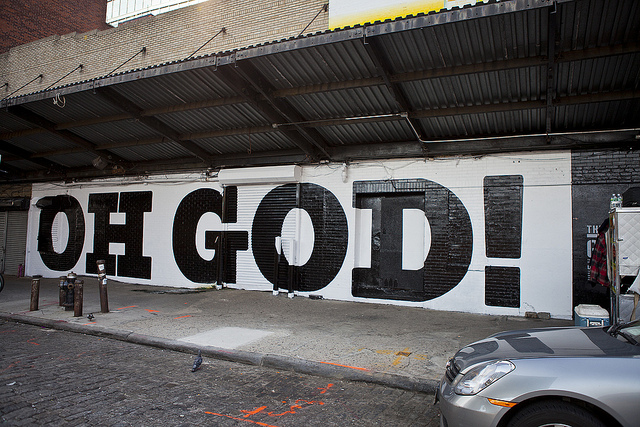
Image Credit: Robert Hunt via 2headedsnake
Start Anywhere Not Over
Starting over, would you do it different?
Today’s project? This job? That relationship? This marriage?
Looking back, we all see some things that would benefit from a shift in approach.
I was recently talking with a new college grad in a job with significant responsibility. He wants to do great work, but the immense pile of work before him and the fast pace environment seem to conspire against ever feeling caught up, letting alone doing the exceptional stuff he did in college. I recognize lots of friends and clients in this same spot. Most of us have been there or perhaps that is our permanent home.
But if you started over, you’d do things differently.
Really?
Some things. Perhaps. But those old patterns are woven deep into the fabric of our approach to any given day. Starting over may not have the cleansing effect we hope for. There are no easy answers to managing your time to do great work. Saying “No” to some work and “Yes” to other work is part of the solution. Learning to focus and keep distractions at bay is another piece. Lots of people have lots of advice for how to deal with this and much of it is quite good. Seth Godin distributes advice like this every day. Free. His “The Dip” is all about when to quit and when not to.
Training Day
Maybe the pressures we face today or this year have everything to do with the direction we need to grow. Maybe the pressures we face are part of how we are to be shaped right now. I’m fond of an old dead poet/king/dancing machine. In this particular ancient text of his, he offered that the troubles we find ourselves in have a disruptive quality designed to help us look again for balance. And balance is found in a deepening alignment with, well, God. Whether in today’s project, this job, that relationship and especially this marriage. This poet had strategies for his pursuit. Those strategies make sense any time we’re wondering whether we should just start over. And his strategies make even more sense if we’re trying to figure out how to pick up just one piece right now. Right in the middle of the pressure—which piece can I start that will unravel this tangled mess?
Before you start over, start anywhere.
###
Image Credit: via thisisnthappiness
How I had to stop working to love my work.
I don’t have to work. I get to.
People are endlessly interested in work—though not exactly in the stuff they toil at daily. Every week I talk about work with lots of different people. Students looking for work. Careerists suddenly thrust out of (formerly) safe positions. Adjunct professors disgusted with poverty-level positions. University lecturers trying to fit research together with teaching and coming up short.
Work says a lot about who we are as individuals and what we like to do. It’s says things about our priorities and talents, but work could never tell the whole story of who we are. It is only a starting place for that question.
Roughly 15 years ago I realized I was hiring and paying expensive ad agencies to do the very work I wanted to do. So I quit to find a way to do the work I was hiring away. That was the beginning of a journey toward a new way of thinking about how I spend my days. It became less about going to a place and more about solving real problems that bothered real people, using ideas and words strategically. It felt great to jettison the internal politics of a large corporation, though I miss the great fun I had with friends in the workplace. That’s why I relish my current client teams.
But like the hero in the commercial below, being perfectly suited for something doesn’t mean someone will give you the chance to do it.
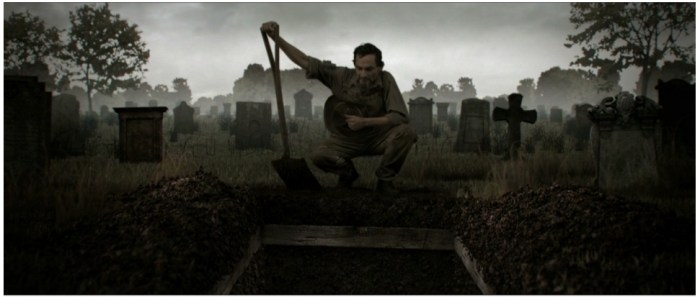
Just because someone says you don’t fit the job, doesn’t mean you don’t fit. This is how you find your work: the thing you won’t stop doing just because someone won’t pay you to do it.
Today, even on a Monday, find a way to start doing the thing you love. And don’t wait for a company or boss or faculty chair to recognize your genius. Start the process now to expand and hone your particular genius. Don’t get to the end of a career only to realize you missed the opportunity to work.
###
The Pleasures and Sorrows of Work [Book Review]
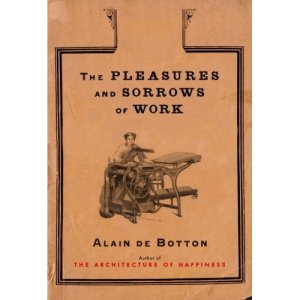 Alain de Botton (The Pleasures and Sorrows of Work, (NY: Pantheon Books, 2009)) is the guy you want on your next trip. He sees things the rest of us pass over as invisible: the electrical pylons running zig zag across the countryside, the huge grey warehouses plunked into industrial areas, the airplane junkyard in the California desert. And then he does one better by somehow inviting himself in to hear about the work and workers who made or use these invisible objects. All this curiosity is in the service of the question: What is it people really do all day with their time? And could I really understand even if they told me?
De Botton reveals the glories of tuna, from the Indian ocean to a grocer and table at home in London; the secrets of shipping (ships, warehouses, labyrinthine but well-timed world-wide movement); biscuit (cookie) production, rocket science, accountancy, painting and other things. Each a fascinating journey into the work practices and one psyche of the worker and artist.
De Botton seems to understand much, especially about the joy of finding meaningful work and the despair of having meaning sucked away. Where solitary baking for oneself or one’s family can be a joy, when the process is set on an assembly line with each stop isolated and optimized for the biscuit factory floor, when responsibility has been removed from each individual worker, it is up to the bosses and managers to re-inject purpose back into the work. Much like slipping niacin and riboflavin back into the stripped- down biscuit recipe.
Always entertaining, de Botton doesn’t mind climbing up on his soapbox from time to time to deliver mini-sermons about the nature of work. De Botton’s “School of Life” espouses the return of the secular sermon, so it is not surprising The Pleasures and Sorrows of Work does not mention the Creator’s involvement in our work. That’s too bad, because there is much to commend the (Biblical) notions that we were made to work, that when our work is harnessed to serve others (versus fulfilling our demand for meaning) we can find moments of transcendence. Plus the added bonus of the truth of the Biblical notion. De Botton does, however, offer robust hints about our current obsession with finding meaningful work. Namely, we add to the pressure when we expect our work to fulfill us. Another criticism may be the occasional flights of fancy de Botton takes as he verbalizes what may or may not be occurring in the minds of these workers.
A very entertaining read. Highly recommended.
###

 conversation is an engine