Archive for the ‘Ancient Text’ Category
Noah and the Other: A Hump Day Story
Here’s your Bible story for today.

Occupy Midweek
Once upon a time there was a man named Noah. He enjoyed a good conversation. He also had a sense of wanting to do the right thing as he walked upright through a strange time.
And he walked through a very strange time. Noah lived among superheroes, when the sons of god walked the earth, sexing the hot chicks (OK, the text says “they married,” but there is meat-market sense to it) and producing a super race. Men of renown. It’s all in the Bible—Genesis 6. But it was also a time of great violence. And Noah was the last man standing uncorrupted—so the story goes (except for the problem with new wine, a bit further in the story). But mostly Noah was blameless and faithful as he did the right thing. Noah’s way of living had something to do with the conversations he had.
Noah had cultivated a sensitivity unlike anyone else: he was conversant with the Being that created everything. The Bible calls this being “God” and the story that Genesis unfolds seems predominantly God’s story, though steadily unfolded through people who interact with Him and His creation. When God saw how bad things had become on earth: violence pouring from the evil thoughts that ruled every person’s heart, He said he would wipe out the whole thing. Then He said it again. To Noah. Along with a few instructions that preserved Noah and his family. You know the rest of that violent story—which is really no kids’ story at all.
“Corrupt and full of violence.” I hope that does not describe your work place today, though it is a theme carried out through the entire story of God’s interaction with the earth. But no matter how it feels today, Noah’s story is about pursuing and preserving conversational moments that move toward freedom from the violence and evil that so easily infects all we do. Living above the fray—not by willpower but by deeply connecting with this mysterious being.
It’s a strange story and not at all polite or nice. It raises all sorts of questions and highlights unsolvable mysteries we rarely speak of—a perfect story to occupy midweek.
###
Image Credit: Bechet Benjamin via Iconology
Year in Chesed—Day 11: What if we cultivated radical availability?
 One thing that happens in a conversation is that we become available to each other. It’s a function of simply talking. But what if our talk was all bound up with the baggage of our intent? We want to be seen as a certain person. Wise. Funny. Clever. So we use pre-fab phrases and clichés and stories heard elsewhere. Nothing wrong with that, but at some point we need to drop the modular phrases and really tell who we are. This is part of being present.
I’m a fan of the writer/theologian/activist/martyr Dietrich Bonhoeffer. His clear writing never fails to pull me in. And I love how he raises my eyes to see what a people could look like who love God together. In Life Together he wrote that brotherhood (or “fellowship” a word desperately in need of rehab) is not some ideal we strive toward or some pot of gold at the end of a rainbow, if only we could get our ducks in a row, shape up, and all that “I’ve got to do better” stuff. Instead brotherhood is a “…reality created by God in Christ in which we may participate.” (Life Together, 30) Bonhoeffer suggested that in this reality, it is not the man or woman “furnished with exceptional powers, experience, and magical, suggestive capacities” (32) who has the ability to bind others to her or himself. Instead, the real power is what God says. The Wikipedia entry on Life Together is thought-provoking:
Bonhoeffer felt strongly that there is an empirical experience that results from meeting with others to become intimate before Christ. He suggests that Christians should confess their sins to one another. He states, “The church community, not some philosophical or theological system of thought, is God’s final revelation of the divine self as Christ existing in community”. In other words, Christians should not wait for a revelation from God before they do something, but because they are continuously and prayerfully considering what is right, it is possible that God has already revealed His will to them and they need to summon up the courage to take the appropriate actions.
Yesterday’s postcard from chesed talked about the ways of the Eternal One with the wicked and the righteous. For the wicked: separation. For the righteous: presence. Except that’s not the image painted on the card. The image had two parts: one was like a desert with scorching winds, smelling of sulfur and raining coals. One part was a face. God’s face.
I cannot claim any righteousness, except in agreement with Bonhoeffer about what the Christ did. I mostly live my life on the other end of the spectrum. And yet the picture of radical availability gives me a bit more courage to hide less and pursue being available.
###
Image Credit: Bad Postcards
Please Write This Book: A Year in Chesed
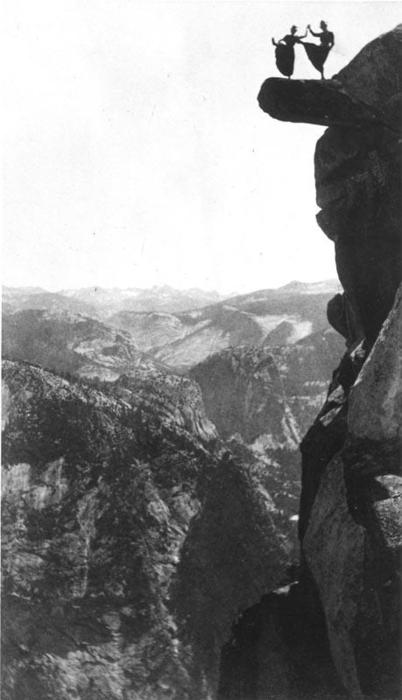
of course there is dancing
In A Year in Provence, British copywriter Peter Mayle, moved to France and wrote about this place of exceptional food, wine and beauty. Mayle provided his reader with nearly first-hand experiences of cooking, shopping and conversation. Along the way we saw hints of a different way of living.
I want to read a book that takes a similar journey, but rather than air travel to a glorious foreign country, I want the author to settle into a land devoid of anxiety and full of bonhomie toward men and women. I want the author to get there by following the thread of meaning from a very particular foreign word: “Chesed”
Google chesed and you’ll find a central Jewish value that means (for starters) “lovingkindness,” but points to much, much more. This old Hebrew word appears 247 times in the Torah and 127 times alone in the Psalms. “Chesed” has shades of meaning in the Torah, variously translated to English as: loving-kindness, mercy, favor, pity.
I imagine living in chesed is something like life in a foreign country. My glimpses of this country come mostly through the Psalmists who use the word again and again as they respond to or acknowledge God’s care. It is a word that describes a way of life that is the polar opposite of my country’s “Black Friday,” and all that consumerist orgy represents.
As you write this book, please take long, generous expeditions into this land of living in gratefulness and thanksgiving. Explore how the inhabitants of this land depend on materials and attitudes already in their possession. Please show me what contentedness looks like. Show me how they brush off the slights and insults and lack of fame because they are grounded with a deeply-rooted faith-joy in the creator. I imagine this land as anti-Kim Kardashian: Sopping with contentment. Joy. Stability. Not glamorous. Not narcissistic. Not attention-seeking. So that means your book won’t get on the news every evening. But I’ll buy a copy.
Spend a full year there. Show me what happens when the crops are not bountiful and enemies encroach. Show me chesed when taxes are due and when plans go terribly wrong.
Please write this book soon because my land is teaming with insects whose bite results in a longing for more shiny stuff and much daily fame. In the meantime, I’ll keep looking through the postcards the psalmists sent.
###
Image Credit: Via 2headedsnake
Occupy Everything: Every Group Forms Around a Promise
Anarchists organize for anarchy while pacifists plot their war on war. A church may promise a club-like space where everyone knows your name or it may work out the day-to-day look of those ancient texts that call for justice, mercy and rightness with the Creator.

Optimist/Activist Professor Reich
At the moment, Occupy Wall Street is a BYOP (Bring Your Own Promise) event. But commentators and talking heads are showing up to frame up their version of the promise. Also showing up: opportunists, would-be pornographers, and anybody with a beef. Robert Reich took to the bullhorn Wednesday at Occupy San Francisco with his version of the promise: “I really do believe we are on the cusp of a fundamental change,” Reich said.
Maybe so.
Maybe Occupy [whatever] is this generation’s 1968 moment. Maybe the greedy will be shamed into… what? Backing away from the system that hands out checks for the way they risk other people’s money? Maybe we are simply shining light on the scurrying rats of a corrupt and corrupting financial system. We also shine the light on our own culpability in a corrupt and corrupting system
The single, binding promise has yet to emerge. But certainly our conversation is different today. And that feels like progress.
###
Image Credit: SF Examiner
Take This Word to Rehab: “fellowship”
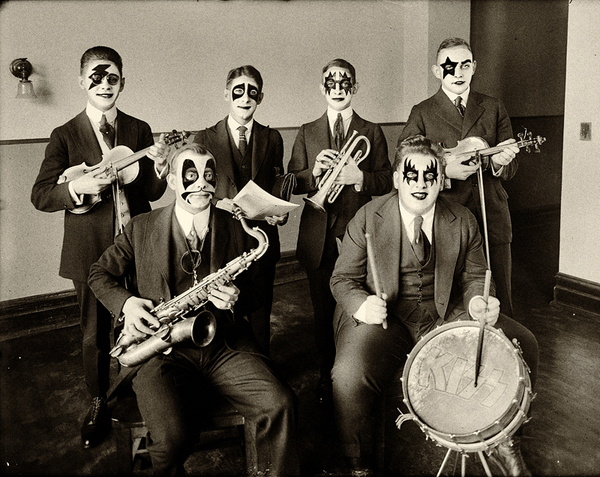
Old becomes very, very new
If it makes you think of blue-haired older women drinking tea and serving Jello salad in a musty church basement—like I did—then you need rehab.
A few of us are making our way through an ancient text: a very old letter from around the first century. The writer said he had seen and heard and touched a man claiming to be God. This writer, eager to connect with his audience, was also eager for his audience to connect with this Man (the writer said his “joy would be complete” if they also had “fellowship”). That’s because there was something about “fellowship” that was not just “nice” and way more even than “robust.” As one of our readers put it: “these first few lines are awesome.” The writer opened an invitation to some kind of life and some kind of relationship that was well beyond ordinary human experience. The open invitation hints at far more than idle conversation. The writer invites full-on partnership/participation/relationship with this God and God-Man and the other people known to both.
Which is awesome. And becoming more so every day.
I see the notion of “fellowship” changing before my eyes.
###
Image: MyModernMet.com
Words Work as Stepping-Stones
“…Words work as stepping-stones through confusion to resolution.” — Marilyn Chandler McEntyre in Caring for Words in a Culture of Lies
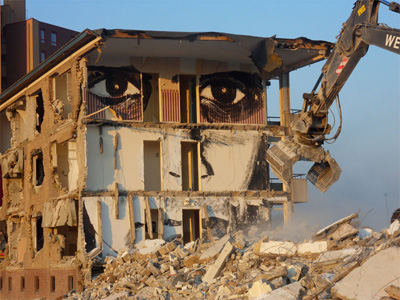 This happens in ordinary conversation: I start my explanation with one set of words and end up in quite another place. Often the conversation takes me from confusion to resolution. But more often I come to the end of what I’d never planned on saying with a new insight or a new question that needs answering (if only in my own mind).
But Marilyn Chandler McEntyre was actually talking about the way prayer works in the above quote. She had been quoting a poem by Gerald Manly Hopkins. Here’s how she finished the quote:
“What begins as argument ends in an act of vulnerability and self-yielding. The words we encounter along the way [from GHM’s poem]—just, contend, plead, disappoint, friend—offer stopping points for reflection upon our paradoxical situation before God: familiar and strange, bound by law and freed by grace, fulfilling and frustrating, longing satisfied.”
I had not been familiar with Hopkins’ poem. But the words I encounter in the Psalms offer movement from argument to self-yielding with stopping points for reflection—and the entire Psalter functions like a bolus of spot-on conversation.
###
Image via 2headedsnake: Cem Ulucan
Prayer for a Toxic Boss
 Give the boss your justice, O God.
May she judge her team with righteousness,
And those with a steep learning curve with hope.
Let the mountains bear prosperity as she credits workers for their work.
May he listen to the wisdom of the poor and experienced on his team
and defend their cause.
May righteousness and honesty flourish under him,
So the team has success and all they touch may progress.
Turn his ignorant bloviating
To intelligent questions.
Set her mind on reaching out with wisdom and skill to others
Rather than hunkering in protective maneuvers.
Free his tongue to utter truth
Rather than reacting with clichés that obscure ignorance.
Separate her ego from the work
So she can direct her team and fix her talents on our larger goals
In her days may the righteous flourish and peace abound, till the moon be no more!
###
Mega-Church or Micro-Brew?
What’ll it be?

Are beer wars an apt analogy for churches? Maybe so. Walk with me:
My friend and I are cooking up a book proposal for how the church can use social media. But a major disagreement stands between us: Do churches really want to go where social media leads? Groundswell (Li and Bernoff), which I use as a text in my Social Media Marketing class, makes a compelling case that the end-game of social media is people participating in product development, in customer support, in sales and—generally—in decision-making. Businesses using social media only to broadcast messages (the old marketing monologue model) will be left out of the real conversation as it continues around rather than with them. Many corporate overlords resist this new communication freedom and stay out of the conversation—until forced into it.
What about churches? My friend thinks the future lies with mega-churches that typically retain control of as many outward and linking messages as they can—for the sake of efficiency. I believe nearly the opposite: that we’ll see more churches that require less control of messages so as to actually invite people to bring their voices and contribute. I see as problematic the requirement of multiple overlords, presidents, governors, lieutenants, elders, council-people—you name it—just to keep the big ship moving. Multiple overlords tend to squash multi-directional voices.
Back to beer: There will always be Budweiser and Miller. But last time I checked, that’s not where the market growth was. The growth was in the micro-brews. My explanation for that growth: people realize they want beer that tastes like beer rather than water. Same with churches, there will always be a few mega-churches around, but the real growth will take place in smaller congregations where a definite personality develops because many voices are being heard and are actually participating in directing the community. Or perhaps growth will take place in those mega-churches that make a way for spectators to become contributors with voices.
And now back to social media. I contend that social media naturally leads to a democratization of leadership and a multiplicity of voices—two genetic traits not found in the DNA of most hierarchical mega-churches. But they could be in the DNA of smaller congregations (but, clearly, authoritarian leaders exist in any size organization).
At least two glaring problems to all this:
- I’ve oversimplified my argument by casting big as bad. That is simply not true. Very big churches can be very relational and very flavorful (to push the beer analogy). And there is clearly an attraction for churches that hold firmly and broadcast the Bible’s message of the God bent on reconciliation. Maybe big churches can also admit a multiplicity of voices. I just haven’t seen it.

- Even Groundswell recognizes that only a small percentage of any online population serves as creators. A slightly larger population functions as critics. But the great majority of folks online are spectators. Test your own population here. Maybe that’s the same population that fills up the back rows of any church or college class—those who prefer watching. So while I’ve noted that social media provides the opportunity to amplify one’s voice, few actually take advantage of it. Maybe that will change. Maybe it won’t. The truth is most of us are pretty happy to not lead.
What do you think? Does social media lead to a place churches really want to go?
Postscript: I believe the opportunity social media presents has a theological component that moves us closer to the creator’s intent for communication. More on that later.
###

 conversation is an engine
Copyranter’s Dad is Dying
leave a comment »
Copyranter, my favorite, consistently profane and truth-speaking advertising blogger, today wrote about his father dying of cancer. “Asshole commenters” have been lining up to sympathize and pray and weep. All great responses.
or does prayer have much deeper capacity?
Prayer is like wishing, right?
Mention “prayer” and people mostly nod in agreement—what is there to disagree with? My colleague’s husband fell down a set of stairs and broke his neck. Her email from intensive care told the full story. People responded—as they will—with kind wishes and promises of prayer, among other things. Later she updated all concerned with the good news that he would fully recover, and went on to thank people for their positive energy, prayers and good wishes. Her update-—it seems to me—caught the primary understanding of prayer for most people, monotheists of most stripe and Christians included. Prayer, positive energy, good wishes, wishing on a star—all sort of the same thing. There is mystery in the words spoken in silence and the desire and the pain and the faith. Maybe something happens when someone prays. Maybe not. Prayer is hard to characterize.
Probe with a few questions—even among staunch believers and practiced pray-ers—and the mystery only deepens. “Prayer works,” someone might say. And they point to a prayer they prayed and then some related action that occurred. Did their prayer work? Possibly. Is there power in prayer? Maybe. And maybe not like we think. Certainly God has power—complete, entire power over all that is and ever was. And certainly God is under no obligation to fill our order, answer our requests, or even hear us—unless as He obligates himself.
We ask things of God from all sorts of motives with all sorts of expectations. The truth is we know very little about what happens when we pray. But we know prayer is the example and model the Bible holds to out for interacting with God. What does the Bible say about the connection between prayer and action?
Bible people were always talking with God. The list of praying people is extensive and includes those who were face to face with God (Adam and Eve, Moses), sometimes hand to hand (Jacob), as well as those who sat through years of silence in their prayer (Abraham, Hannah), and everyone in between. We typically think of prayer as a solitary, passive activity of last-resort. And yet the Bible routinely shows action following people praying. And not just small stuff, but game-changing action. Action that shifts a story to an entirely different place.
I’m trying to learn more about prayer. And I’m praying for Copyranter and his dad and his family.
###
Image credit: stopping off place via this isn’t happiness
Share this:
Written by kirkistan
March 3, 2012 at 1:18 pm
Posted in Ancient Text, Communication is about relationship, Prayer
Tagged with asshole commenter, copyranter, God