Archive for the ‘Ancient Text’ Category
What Good Is a Group?
The occasional spark. The intentional fire.
I’ve been wondering this lately: what good is a group?
Mrs. Kirkistan and I lead a small group that regularly meets together to read ancient texts. At the moment we’re slowly going through Jesus’s Sermon on the Mount. It’s riveting stuff.
There comes a time in the life of every small group where people start to bow out. Life gets in the way. Work, sickness, commitments and gradually the small group is, well, really small. Only a few show.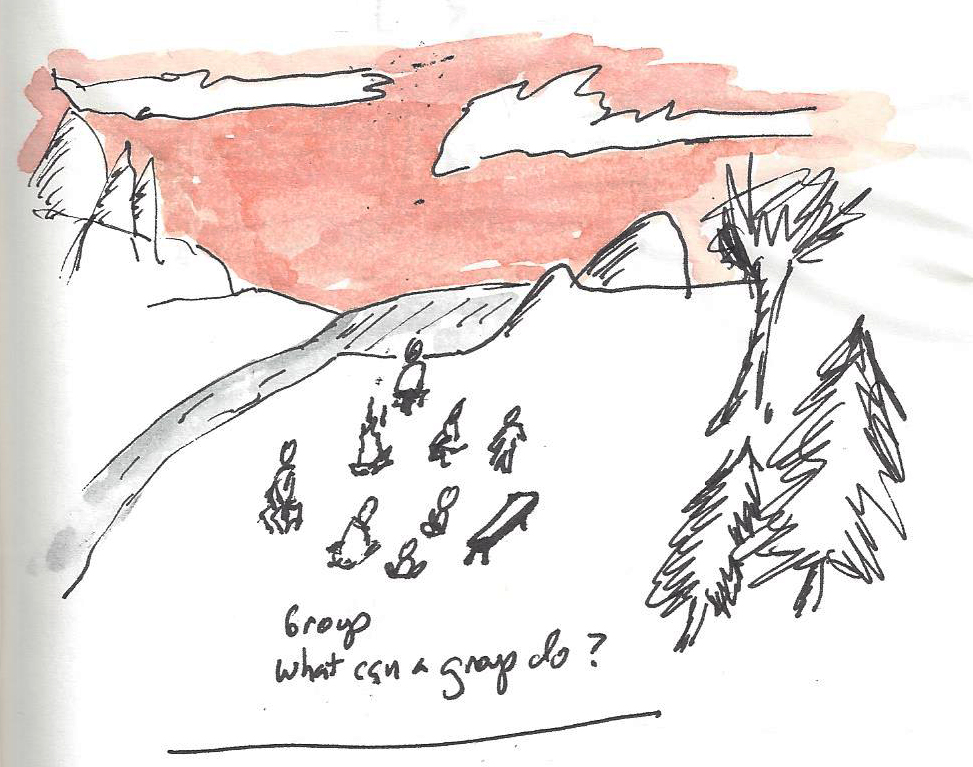
Even so—with only one or two showing up—some magical spark can happen in the course of an ordinary conversation. We talked about the pointed words Jesus had to say about lust and adultery—old terms we don’t hear much in our culture—experiences so common they seem to be just expected parts of everyday life. In the course of hashing through those words, we talked about seeing people as objects. And suddenly I was making connections with Levinas and Buber and realizing I am also in need of reforming bad thought habits.
These conversational sparks happen at work too. Yesterday I was lamenting to myself the ways large corporations dampen the enthusiasm of otherwise bright, motivated people. In the middle of that thought a client returned a call that we had cut short the day before. He had been thinking through our conversation and had five or six things to add. This client—from a very large corporation—had found a way to take personal ownership of the process and our discussion had a sort of breathless excitement to it.
This is rare.
And cool.
Our seemingly ordinary conversation had unearthed some live wire. And a group of us were doing our best to act on it.
So—all this to say that groups can do things individuals cannot. And sometimes a group conversation can create something brand new.
###
Dumb Sketch: Kirk Livingston
Martin Buber, Jesus and Kim Kardashian walk into a bar
The Sermon on the Stool

“I can’t be your love object, Marty,” said Kardashian.
“How could you be my object?” said Buber. “As far as I know, we’re still all “I-Thou.” Though I will say your Instagram screams “I-it.”
“That’s the spirit, Marty,” said Jesus. “Way to marshal your intent.”
“Bartender—give me a Jägermeister.”
[The End]
###
Image credit: Kirk Livingston
God-Talk and Other BS
Do Communication and Spirituality Connect?
I say “Yes.”
And I say it manifests in the ordinary conversations of everyday life.
Let me prove it: deep down in your brain-pan, where you instantly recoil from people who snap at you; back down there where your inner child says snarky, politically incorrect, frankly obscene, stuff that your adult, outer-self edits and translates to “Hmm. I see….”
Deep down there in the hidden recesses—that’s part of the connection.
Your immediate responses to the stuff of everyday life can tip you off that things are not right—deep down in the soul. Yes—I’m talking about weird stuff. But you have an inner life, right? A place where no one visits but you.
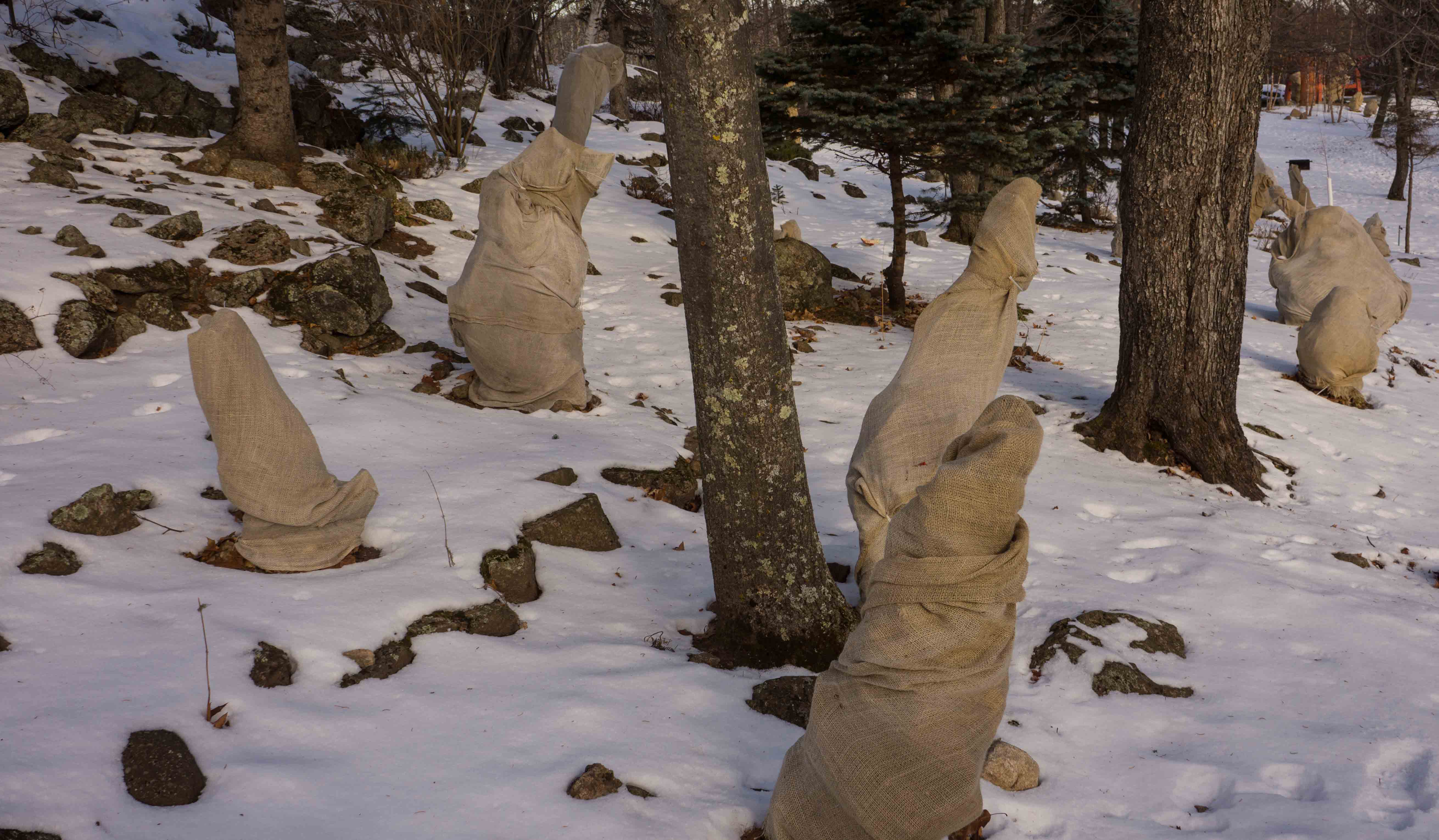
If that inner place is full of doubt, while your outer self—the adult self in tie and loafers, who edits and translates the inner child’s voice so the rest of the world remains unaware what a low-life that kid is—if that outer self proclaims stable faith in God and corporation and the upright institutions (ha ha) that surround us—that’s where the cognitive dissonance starts. That’s the precise locus of hypocrisy.
Mind you: I’m big on doubt. Questions are good. Questioning institutions and the quick answers to life’s hard questions—I’m all for that. Talking unbelief to God makes perfect sense to me (Just read Job, my patron saint of doubt honestly-processed).
It’s the saying one thing while believing another I’m not for. It is that very place where God-talk becomes BS. And I believe most of us have sixth-sense/BS detector that goes off when outer words don’t match inner life—even if we cannot put our finger on exactly why. I am most certainly talking to myself here as well.
We need to process our bouts of cognitive dissonance together to keep our God-talk from becoming BS—rudderless words without the ballast of belief and action a life-lived.
If you don’t have a friend to be honest with, find one.
This is important.
Today is Good Friday—a day when the Christian Church celebrates (is that even the right word?) Jesus’ death. Three days later we celebrate that this dead guy is dead no longer.
I appreciate this time of year for processing doubts together with others. Quite often we come away rejoicing. And somehow more whole.
###
Image credit: Kirk Livingston
By the way: I’ve written ListenTalk: Is Conversation an Act of God? to explore this connection. Pre-order here.
Someone Died and Everything is Different
Times Change Us.
A gentleman acquaintance—someone I barely knew.
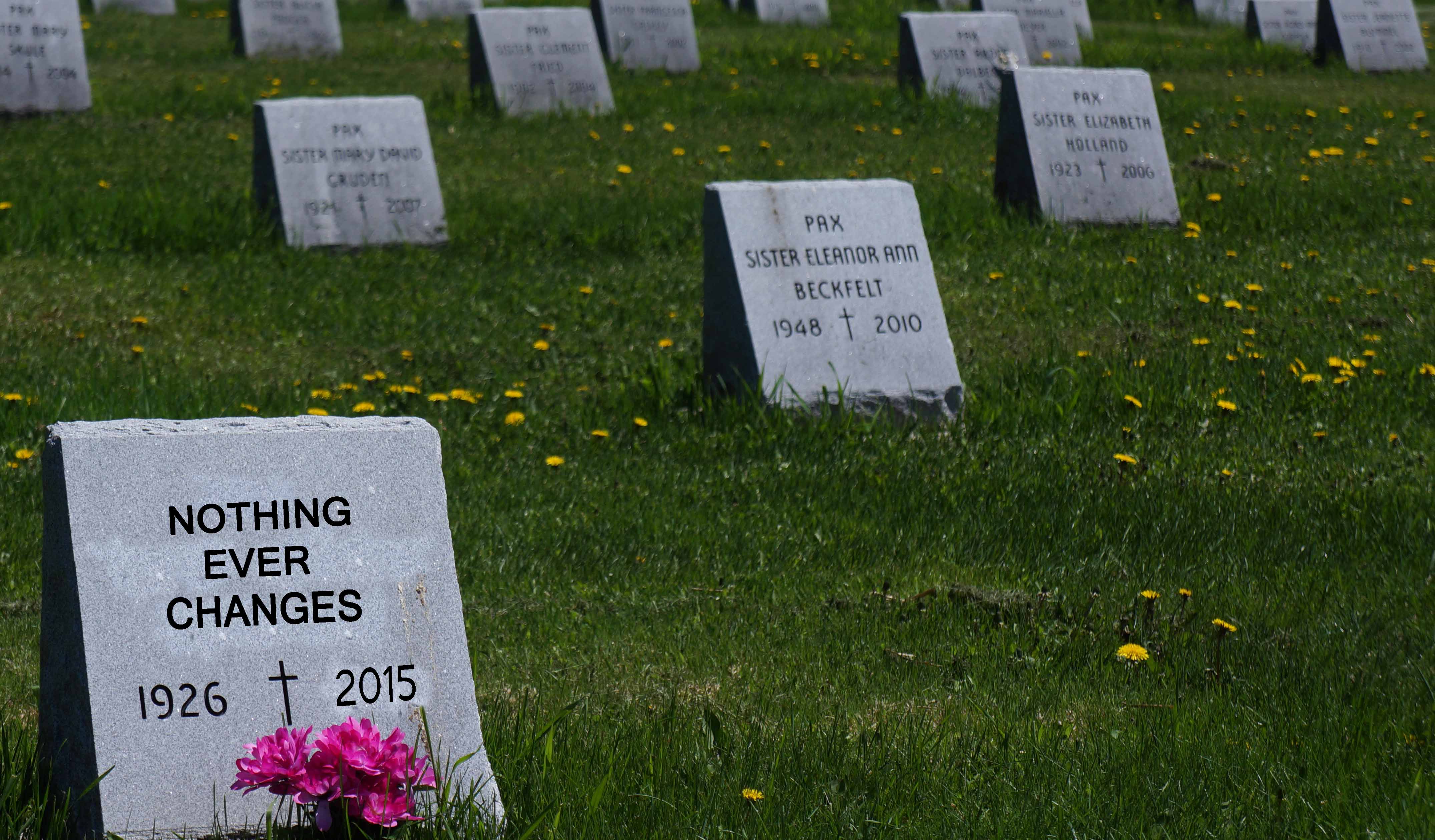
Mrs. Kirkistan and I were in a meeting with him not two weeks ago, and now he is absent. It’s a shock—but our shock is minor compared to that of the grieving widow and children. They have our sympathies and prayers. I cannot imagine the shift in outlook this change has wrought for them.
Even for me, who did not know him, there is a clear hole where he once existed. A big nothing–a memory–where, moments ago, a person stood.
And so. Mourning.
“Blessed are those who mourn, for they shall be comforted.”
–Jesus the Christ
We usually want to stick those holy old, churchy words in a pew to visit on Sunday or Easter. But today, even from the distance where I stand, they hold a glimmer.
###
Image credit: Kirk Livingston
Pick a Door: Blessed are the Poor
How do you read this?
Jesus went up the mountain with his followers, as the great teachers do. His first words:
Blessed are the poor in spirit, for theirs is the kingdom of heaven.
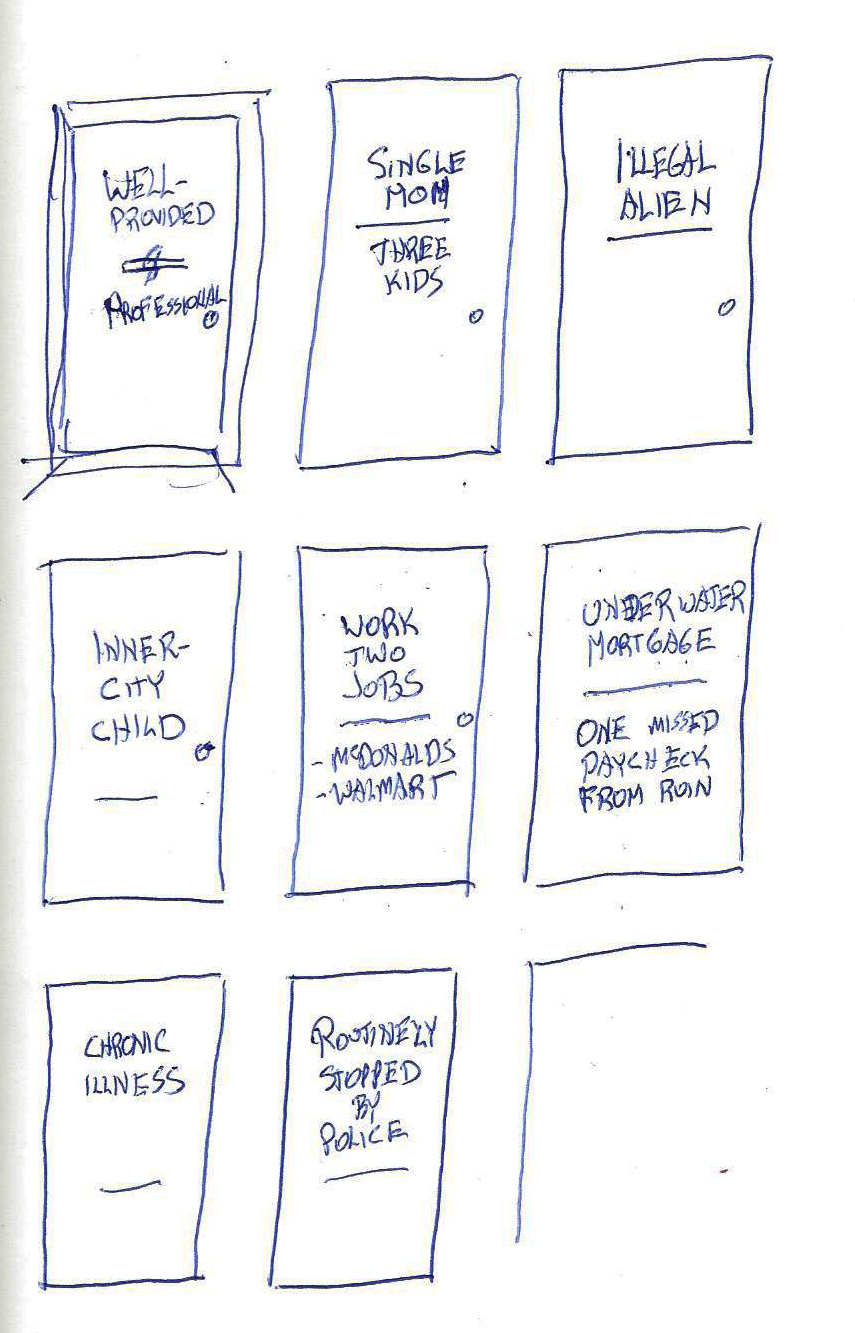
How you hear those words depends on where you come from. The images that come to mind, the connections you make, the hope or lack of hope—much is prefigured and preloaded by the conditions you bring.
What did the original hearers hear? That is the question.
But we make a start toward answering that question by asking what door we just stepped through.
###
Dumb sketch: Kirk Livingston
“…shouldn’t give away your pie with breakfast—it makes you look cheap.”
The Reading Pulls the Funny from the Words
The Diner is an old Saturday Night Live skit (1989-1990/Season 15/aired 21 April 1990) with the late Jan Hooks and Alec Baldwin. It is a bit of genius in the way the language does double-duty, pointing at meaning far beyond the sublimated exchanges. The characters and their inevitable conflict are showcased in the writer’s words (read the transcript here). But it’s the words exchanged between Hooks and Baldwin—words that seem almost physical—that move the skit forward.
![[Click to play.]](https://conversationisanengine.space/wp-content/uploads/2014/12/alecbaldwinsnlthediner-12262014.jpg?w=700&h=477)
[Click to play.]
[https://screen.yahoo.com/brenda-waitress-000000407.html]
Read the transcript. It does not come across as powerful as it does in the hands of Hooks, Baldwin and the rest of the cast.
But that holds for lots of things.
Words come to life when spoken or acted on by a human. If that seems too philosophical, consider how much copy you read that is lifeless because you cannot hear any human voice. This is why press-release quotes from CEOs sound so wooden. No human speaks that way. On the other hand, some books remain in our lives precisely because they capture the human voice so well. For me, the old poet-king and the gospel writer John portray the human voice so accurately that I return to them daily. Ian McEwan’s Atonement also did that for me recently.
What words will you act on in 2015?
###
Image Credit: SNL/Yahoo
Tune-up the Voices Talking Inside Your (Corporate) Head
Pitch the preachy. Scrap the sing-song. And definitely lose the lingo.
Sometimes a certain tone will flip a switch for me. And all the person says next is covered in darkness because the tone pointed me elsewhere—so I miss the message entirely:
- The VP standing before the group launches into a sermon and 93% of the audience tunes out before she takes her first breath
- The newsletter from internal communications plays out cheery, one-sided copy that feels as manufactured and questionable as a tuna sandwich from the vending machine
- A poetry recitation where the sing-song voice seems to have come from a different century
- The prayer that sounds like a sermon. The sermon that sounds like a lecture. The lecture that shows no interest in connecting with an eager audience.
Each communication event is an opportunity to pass information, true. But each event is also an opportunity to deepen relationship and build trust—both of which may be more valuable than the information in transit. To squander those communication events on vacuous, preachy or condescending fare seems a waste of time, money and consciousness.
Perhaps certain situations activate your autopilot and you slip into a particular communication mode. The status meeting, the Sunday sermon, talking to an employee. Talking to a child. Maybe we even have a special voice reserved for praying with other people. We may not even realize that we adopt a slow-meter pacing, using parlor words we pull from our big-bag-of-sacred-stuff.
Our autopilot mode can learn from the practice of that old poet-king. That old poet-king had a special voice for prayer too, but it wasn’t from the big-bag-of-sacred-stuff. Instead, it was the voice of desperation, of falling and not being able to get back up, of righteous anger on the dudes who done him wrong. The poet-king’s voice was a real voice, based on real bad stuff that seemed to be happening.
The lesson from the poet-king is this: keep it real.
Employees appreciate hearing what’s really happening, not some vetted-party-line version. Use your real human voice as often as possible. Real voices—the ones that we believe—find a way around buzzwords and corporate lingo.
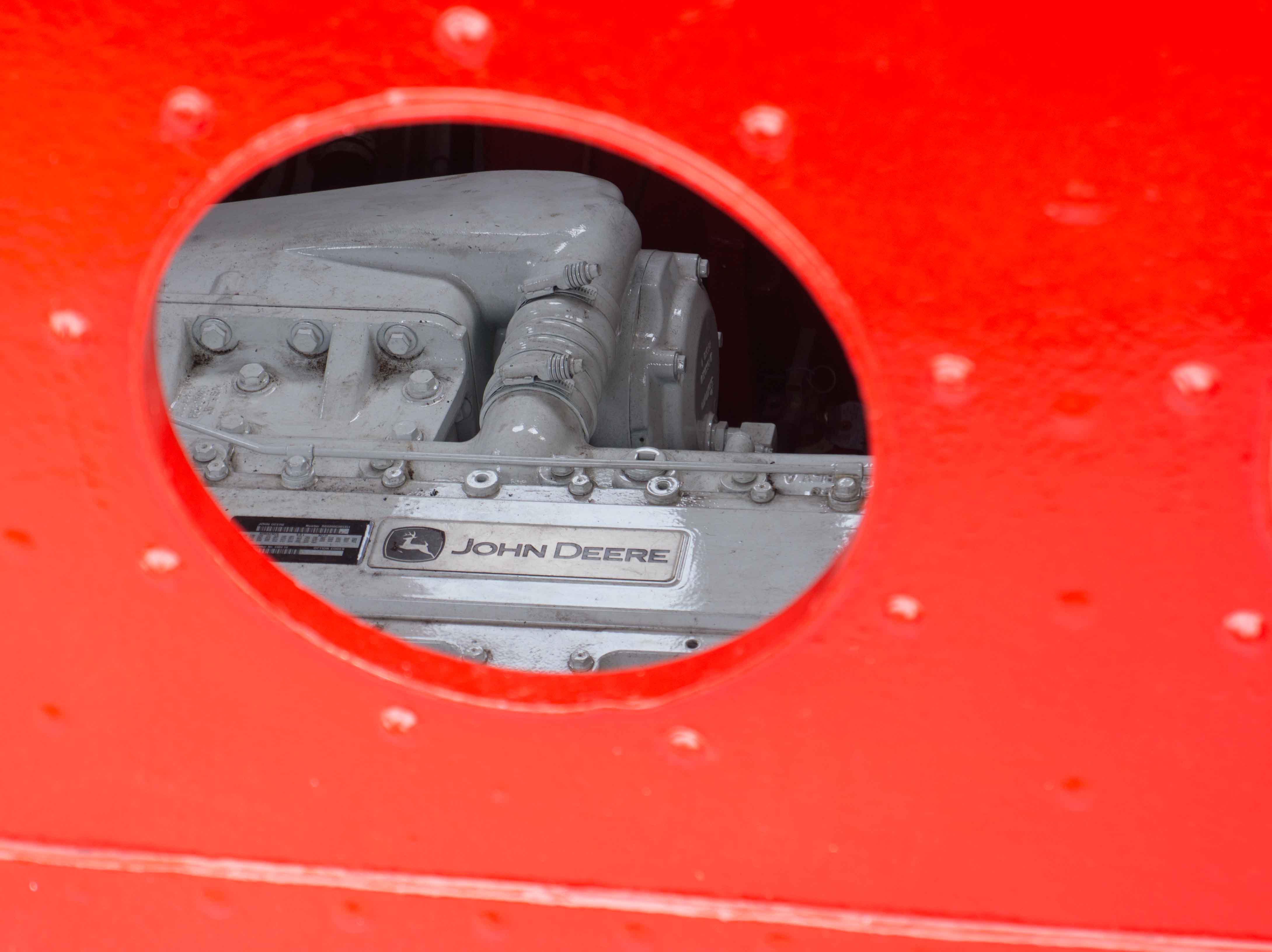
Real conversation with real voices is the engine moving all of us forward.
###
Image credit: Kirk Livingston
A Word About Thanks
And that word is “Thanks.”
In the United States we have a day set aside for giving thanks.
Media-wise it is overshadowed by Black Friday and the ritual purchase of unnecessaries. And please don’t miss the tasty irony that at least one definition of “Black Friday” pins it as the day of the year when retailers move from financial loss to profit–so here in the U.S. we celebrate the religion of corporate solvency.
But for me Thanksgiving has little to do with buying stuff. Instead, I prefer to see Thanksgiving as a time to pause.
I like the work of Australian philosopher Damon Young, who at the end of his Distraction recommended giving thanks. Though an atheist he still noted that gratitude was a pretty good way of going through life—it ordered things, kept desire at bay and helped set perspective—though I wondered aloud how gratitude works without a being at the other end.
 For quite a while I’ve taken cues from a poet-king who penned a number of poems, each deeply infused with gratitude. His poems offered gratitude as a way of ordering life and seeing opportunity and obstacle as part of the whole deal. Unlike the Australian philosopher, the poet-king cited Jehovah as the One to offer thanks to, and he did it again and again. And again. This is typical:
You make the going out of the morning and the evening to shout for joy. (Psalm 65.8b)
The whole poem shows off stuff Jehovah does in the world and it is worth reading (check it here). Interesting that most of the 150 poems (not all written by the poet-king) had very little to do with the ritual purchase of unnecessaries—but our culture won’t rethink that until the next great depression.
Two things strike me about the poet-king’s words:
- Gratitude incites calm. When I meditate on those words, calm happens. I appreciate that. Thanks is a much more potent perspective-maker than desire.
- Gratitude generates a sense of presence. In particular, the poet-king had the sense of taking a seat at table with the very One. Invited by Jehovah. And that is pretty cool stuff.
I’m grateful for Mrs. Kirkistan and for our kids, parents, in-laws and friends. I’m grateful for way more than enough (food, shelter, clothing). I’m grateful that you stop here and read these posts.
Thanks.
###
Image credit: Kirk Livingston
About the Node Not Taken
Steady There, Young Philosopher
My hardworking, entrepreneurial colleague surprised me in conversation the other day:
Sometimes I wonder what it would be like had I stayed in the corporate world—what would I be doing now?
My friend was in one of the periodic slumps that happen to anyone building a business of their own. Those slumps squeeze out long-suppressed questions. These are the questions that precipitate momentary crises of faith for those constructing wings as they plummet.

No. Really. Is there an actual “Afton State Park”?
Young philosophers like to ponder the “What ifs” of life:
- What if I had dated that person rather than this person?
- What if I had taken that job rather than this job?
- What if I had studied engineering rather than philosophy? (One certain answer: the world would have to cope with a very bad engineer.)
- What if had dived 12 inches to the left and missed that rock in the lake?
One problem with our casual “What ifs” is that they often assume a straight line from the point of decision. You go this way. You go that way. Two roads diverging in a yellow wood.
But what if our lives are composed of nodes that become roads? What if each decision is followed by another so that our paths are constantly changing in real-time?
Another problem with casual “What ifs” is they forget the tiny but forceful pinpricks of relationship and conversation and motivation that accompany every choice. Thousands of tiny insights and histories and dreams contribute to each action as well as each subsequent action.
Personally, I cannot help but wonder if the nodes that become roads all lead to the place/people we were meant to be in the first place. Wait—don’t call me a determinist yet. Stick with me: what I mean is that whether we stayed in the corporation or went on our own or dropped everything to join the circus, would we end up as the kind of people we were meant to be?
This is not a perfect thought: we build things into our lives, good and bad, by daily habit. We grow, or not, because of those habits and subsequent opportunities. Admittedly, the determinist take on choice has holes.
But I’m reminded of that inveterate letter writer who wrote his friends about walking in the “good works” begun in them.
Today I’m looking for nodes and roads.
And I hope to step in a good work along the way.
###
Image credit: Kirk Livingston
How to Make Your Message Permanent
A tip from a prehistoric consultant
First: Forget about it. Nothing is permanent—at least not in the way advertising mavens augur.
Second: OK—if you insist—make your message about someone else. Make your message give back more than it takes in. “GE” branded on a rock would never last. Even the Apple logo will be chiseled away by Microsoft rebels. But a man with jointed wings, well, who can resist that story?
![Who can resist the story about the “Thunder Being”?]](https://conversationisanengine.space/wp-content/uploads/2014/10/birdman-2-10022014.jpg)
Who can resist the story about the “Thunder Being”?
Prehistoric peoples stopped by these ancient rocks to tell their version of the human condition. So they carved/picked/incised/abraded their messages into the exposed Sioux quartzite outside Comfrey, Minnesota long before there was a Comfrey or a Minnesota or a U.S. of A. Maybe before the pyramids and Stonehenge. Ancients left messages here to direct and entertain passers-by.
Why make your message permanent? We understand marketing communications for companies—it’s about keeping the wheels of commerce turning. But you personally—what messages do you have to communicate? And why would you make them permanent? I argue that your take on the human condition comes out in the way you do your work, the way you interact with family, friends, colleagues, and even the way you see/refuse to see the homeless guy at the end of the exit ramp. And all these daily interactions amount to a carving and incising that is far more permanent than any of us imagine.

The Jeffers Petroglyphs tell a story that became a destination.
Our conversations have an enormous (cumulative) effect on the people around us. An effect that may move through generations.
What exactly is your message, anyway?
###
Image credit: Kirk Livingston

 conversation is an engine