Archive for the ‘Ancient Text’ Category
If By Yes
What we grow when we sow “Yes”
For the past three weeks I’ve not been able to escape the orbit of an old story. It’s a story that tells what happens when one takes a stance of extreme listening. I’ve not been able to escape the story because it has a lot of moving parts that defy easy categories—just like real life. The story refuses to be reduced, which is great because I’m trying to be rid of my old reductionist tendencies.
The story has a woman on the rise and a man on the decline. The product of the woman on the rise was a boy who demonstrated what can happen when one is committed to extreme listening. The story has a narrator who seemed to know more than any narrator has a right to know. And then there was someone standing behind the narrator who could control all things but chose not to.
Right now I’m focused on the son of the woman. This man had a way of listening and agreeing that looked like progress for him and actually pivoted a nation. The man was known far and wide (so the story goes) as one who told truth—because the stuff he said happened out in the world. He was sort of a walking speech-act performative generator.
I’m grappling to understand what seems to be movement between generations—a movement of willingness to listen. That sounds crazy, right? Because we are all responsible for ourselves, yes? Genetic stuff is only physical, only the stuff we inherit. And yet…the social norms, the expectations, the ways we approach life, much of this is nurture rather than nature, so movement of attitudes between generations could apply. Much as I am horrified by North Korea’s policy of imprisoning political prisoners for three generations, it is true we transmit all sorts of ways to think and be through our families.
The woman demonstrated deep listening. Her son demonstrated even deeper listening. The woman’s son learned to say yes to certain risky opportunities that presented. He practiced saying yes. His “Yes” affected wider and wider circles of people around him, as these opportunities became actions out in the world, actions which changed history.
Of course we don’t say yes to everything. Not every opportunity that presents deserves a “Yes.” But some do. Some opportunities need a “Yes” from us, and those around us need us to say “Yes.”
There is a quote that connects our “Yes” with what follows. It’s from the oddly interesting book Pricing on Purpose by Ronald J. Baker. It’s long but worth the effort (bold emphasis mine):
Because economies are governed by thoughts, they reflect not the laws of matter but the laws of mind. One crucial law of mind is that belief precedes knowledge. New knowledge does not come without a leap of hypothesis, a projection by the intuitive sense. The logic of creativity is “leap before you look.” You cannot fully see anything new from an old place…. It is the leap, not the look, that generates the crucial information; the leap through time and space, beyond the swarm of observable fact, that opens up the vista of discovery.
–George Gilder, Wealth and Poverty, 1993. Quote from Baker, Ronald J. Pricing on Purpose (Hoboken, NJ: John Wiley and Sons, 2006) 15
So. If some small, long forgotten voice speaks up reminding you of something you once treasured, consider saying yes.
###
Image credit: 2headedsnake
Ten Ways Fulfillment Mingles with Professional Writing (Shop Talk #4)
Life’s not about poetry. Or is it?
 I’ve been posting in response to a query from an English student who wondered about finding fulfillment as a professional writer. How can we compare writing poems and short stories and novels to writing for companies or ad agencies or other firms or organizations seeking help to communicate? She asks a good question which we all struggle to answer all our lives. See a few responses here: Shop Talk: The Collision of Craft, Faith and Service
When I teach professional writing classes at Northwestern College, I like to invite Rich Bosshardt, who writes for a well-known local manufacturer, to talk with the class. Like many of us, Rich’s route to writing was circuitous: from mover of boxes to telemarketer to carpenter to chemical compounder to university research lab technician—plus about ten other jobs. Along the way he earned a Master’s in New Testament, so his thoughts about work and writing have a theological bent, which I appreciate. In response to my request, Rich rattled off ten things about writing for a living and offered to explicate one more:
- We could learn a lesson on career fulfillment from Joseph, the son of Jacob and the great administrator in Genesis.
- How do you work through when the honeymoon of being hired is over and passion for the work is long gone, but the bills keep coming?
- My career has been an unintentional path; I didn’t enjoy writing and knew nothing about technical writing until I was over 30 years old.
- Why shouldn’t we be passionate about what we do for a living? Whom would you rather hire—the passionate worker or the dispassionate one? You can raise the competence of a mediocre worker who is passionate about the work and therefore wants to improve, but the dispassionate worker? Let him or her go; you’re doing both of you a favor.
- Luther had great insights about one’s vocation, raising the legitimacy and importance of “common” work and sparking the Protestant work ethic.
- There is joy in doing work of the best quality that you can and in a manner that marks you as a person who has character, thereby earning the respect and admiration (stated or unstated) by others. Good (both competent and ethical) workers do eventually get noticed by those who work with them, and these good workers will find themselves happily employed.
- I thank God for the “little things” at work, e. g., that I’m working inside in a temperature-controlled environment on a frigid winter day or a hot, humid summer day.
- Relationships can make all the difference; being part of a caring and talented team can turn drudgery into joy because you enjoy the relationship regardless of the circumstances.
- There is a psychology to technical writing; good writers should think about at least two things: (1) how people will use the product that they are writing about; and (2) how people will interact with the instructions and illustrations that you create.
- “And God saw that it was very good.” There is a satisfaction (and fulfillment) in a job well done, no matter what job it is, great or small.
I like Rich’s list and think it gets at the tensions of creating versus making a living versus making meaning every day. Rich’s vocational path also reminds me of Parker Palmer’s wonderful “Let Your Life Speak,” which is all about taking the time to notice what you enjoy. Palmer’s book is one to own and read annually.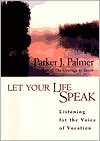
I’d like to hear more from Rich on Number 9: the psychology of technical writing.
What would you like to hear more about? What would you add or subtract?
###
Image credit: 2headedsnake
“He may be short, but he’s slow.”
Of inauspicious beginnings

That’s what my sixth grade gym teacher said as he watched my friend run the cinder track in a time trial. Some days feel like this: nothing doing, no big expectations and no real signs of progress, let alone genius. Some days seem to perfectly satisfy low expectations, like a poem from John Tottenham:
A long time ago I made a decision
to become a failure. It wasn’t
as easy as I thought: browsing through life
from one distraction to the next, while waiting
for the last lost moment to become unseizable.
As if there were some fundamental honesty
to not striving: There wasn’t.
I suspected it all along. (The Measure of a Man, John Tottenham)
For the past week I’ve been working with an old, old story. I can’t let the story go because I want it to frame a chapter I call “Extreme Listening.” I need the story to hint at what is accomplished when we listen very closely to the voices in our lives. I keep retelling the story to myself, emphasizing different elements to see what it is really about, but it remains elusive.
My story is of a Mighty Narrator and a Woman and a Man and Another Man born of humble beginnings. The Woman wanted a baby so badly she would do anything, including dedicating the yet unborn child to God—which meant the child would grow up apart from her. In her desperate soul-searching and panic of spirit and bargaining with God, she appeared drunk and senseless. The man, an observant official who was himself on a long, slow dereliction of duty, said as much:
“How long will you go on being drunk?” he said. “Put your wine away from you.”
“No,” she said. “I am a woman troubled in spirit.”
“Go in peace,” he said. “And may God grant your petition.”
The Woman had the baby and carried out her promise. The Man continued to abandon his duties and became widely known for how he let things slip. The baby grew into Another Man who took over the Man’s abandoned duties and then steered a nation into (yet another) vibrant beginning.
What intrigues me about this story is the mighty narrator. Because behind the scenes much larger things were happening, things that showed themselves as tip of the iceberg stuff in the conversations between the Woman and Man. So…listening and talking that resulted in pivotal actions (human and well, Other).
I think it is a good story—but who was listening to whom?
###
Image credit: Nikita Nomerz via 2headedsnake
Wendell Berry’s Jayber Crow: Christ Came to Found an Unorganized Religion
I am, maybe, the ultimate Protestant, the man at the end of the Protestant road, for as I have read the Gospels over the years, the belief has grown in me that Christ did not come to found an organized religion but came instead to found an unorganized one. He seems to have come to carry religion out of the temple into the fields and sheep pastures, onto the roadsides and the banks of rivers, into the houses of sinners and publicans, into the town and the wilderness, toward the membership of all that is here.

Well, you can read and see what you think.
(Jayber Crow, Chapter 29)
###
Low-Life Exiled Son of a Hooker
A Leadership Story You Never Heard in Sunday School
 Jeff, son of Gil, was a fighter. Jeff’s mom was a prostitute—which deeply embarrassed Jeff’s brothers. Jeff’s brothers—born of Gil’s wife—told Jeff in no uncertain terms he was different, not up to par, had no share in the family business and had to go. So he did: Jeff moved off to a different country. In that different country he attracted all sorts of has-beens, slackers and ne’er do wells. Jeff’s low-life friends went out and did their low-life stuff together.
Years passed. Jeff’s brothers took power and a neighboring nation declared war on them. So they called Jeff to lead the attack. Jeff said, “Why? I thought you hated me.”
[under their breath: we still do you son of a…and maybe we hate you even more now but] “Come be our leader.”
So he did. He proved to be a hot-head and prone to rash vows, but Jeff first tried to reason with the opposing army. When that didn’t work, he went and busted them, which did work. But in the process he vowed something very precious to win the battle. It was a promise he would deeply regret and remains entirely barbaric today (hint: don’t wager treasures from your own home).
I read this story a few days back and it reminded me that all sorts of people get enlisted to lead us forward. My favorite ancient text points to a leadership tree composed of a family of deceivers, a tongue-tied retiree, a prostitute, and this son of a prostitute—just for starters. One thing these losers had in common, even beyond a sense of calling, was trust in some One larger than themselves as they faced a need way out of proportion to their tool box.
So…just because you don’t have what it takes to move your team or family or people forward, doesn’t mean you should not consider the task. Look for a way to trust, which seems a good way to proceed, given the frailty of our human condition.
###
Image credit: Thom Ang via Frank T. Zumbachs Mysterious World
Please Read Jonathan Sacks “The Dignity of Difference”
How to Escape the Orbit of Xenophobia
There is so much good to say about Jonathan Sacks’ The Dignity of Difference: how he welcomes the stranger, how he shows the impact of considering everything as a marketplace endeavor (this approach does not end well: people and relationships don’t fit the calculus of the marketplace), how the work of covenant might well be the glue that binds a global culture together and helps us overcome our stunning differences (just like communities have for centuries).
I like that Sacks grabs texts from the Old Testament to reframe very modern difficulties, like how Abraham honored the stranger, which speaks to our own ambivalence about people different from us. But Sacks also draws on old Jewish wisdom and criticism to help put those stories into context. I like how he pits Plato against Moses and dispels the notion of dualism and the notion of perfect forms. In doing this, he has opened a way from the ivory tower where pure academics lives apart from the rest of life. I appreciate his examples of Jewish scholars who were also workers. Thinking and working should be intertwined, much like Matthew Crawford wrote about so successfully.
You may get the sense this is a wide-ranging book, and it is, though a delightful read at each step. All this material—and he does make it fit together—is in the service of helping the reader reconnect with the wonder of what we can learn from each other. Rabbi Sacks Jewishness is a vital piece of the puzzle: as someone from a tribe that famously wandered for a long time, he thinks his people are uniquely positioned to welcome our world’s current batch of strangers. He may be right about that. In Sack’s view, people of true, deep faith learn to value the faith of others, even as they hold to their own.
My one critique has to do with the other end of the Bible Sacks quotes from freely. I would offer that the mystery of the very Jewish Jesus who was also the Christ greatly enhances the story of tolerance and inquisitive curiosity Sacks seeks to tell. The apostle Paul, in one his letters to his friends in Corinth, talked about being an ambassador to any and all, representing to the any and all the reality of being in relationship with God. My take on Paul, with a nod to Lord Sacks, is that those compelled by the Christ have every reason in the world to both hold firmly to their faith in the Christ while simultaneously listening deeply to those around them.
Many of you will stop here and point out how firm faith is more often used as a battlement from which to sling arrows. I don’t deny that has happened. And I confess we’ve not done well in that approach. But faith in the Christ offers both solid ground and excellent motivation for listening, though this is not the kind of thing you hear from the outposts of conservatism.
If you have opportunity to read The Dignity of Difference—do it. It is challenging and a tasty intellectual meal, and possibly life-changing.
###
“Today I Choose to Wear Clothing.”
You have more choices than you think
 Shirt? Yes. Pants? Why not?
Just like every day.
Just like most people.
Except for the odd nudist colony, most people clothe themselves without becoming embroiled in internal debate. Appearing clothed is one of those basic understandings we share. Being clothed is not the question. What that clothing looks like is, of course, the question that drives multi-billion dollar industries.
I’ve been thinking about the boundaries that circle our lives. Or maybe I’ll call them norms. There are expectations out there we follow without thinking. And that’s a good thing, because we might become paralyzed by all the choices before us if we did not have these norms our culture expects of us. And we also have these well-worn ways of acting that help us avoid constantly choosing. We always shower before breakfast. We always drive this route to work. We always park on this side of the lot. We always say “Yo, James” to the receptionist. These are the things we do.
But nothing says we must do it that way.
Nearly every corporate job I’ve had has involved colleagues complaining bitterly about the boss or the manager or director or the CEO. Mondays seemed to foster these discussions. Maybe we cited “golden handcuffs” or likened ourselves to wage slaves in those discussions. But in truth, we’ve been surrounded all along by truckloads, trainloads, barges full of options. An unprecedented wealth of options. But we didn’t see them because we followed the script of our workplace or culture. We didn’t see our choices because the script didn’t let on that there were choices.
I’ve been reading Wendell Berry and Jonathan Sacks—both of whom saw choices that were outside the script: pursuing contentment rather than fame or honoring the stranger. That poet-warrior-king wrote his own set of scripts that were bathed in gratefulness rather than ambition. That inveterate letter writer Paul went off script by weighing the choice of death and life for himself. Of course, Jesus the Christ guy lived the king of all scripts—something we’re still sorting out 2000 years later.
What script are you following today?
What choices are hidden from you because of that script?
###
Image credit: Gervasio Gallardo via 2headedsnake
Lead By Explaining Something to Yourself Out Loud
Our Words Always Boomerang
Early in Dr. Luke’s account of the nascent church, a central character was named Peter. Peter was a guy who processed things aloud: he had a mind-mouth connection that sometimes got him into trouble. But in Dr. Luke’s account, Peter’s verbal processing framed what was an entirely new situation. Peter grabbed pieces of the Law and Prophets and combined them with what he observed to sort out what they were all experiencing. In doing so, he freed many to participate in the ongoing conversation. The resulting conversation was nothing less than explosive.
Walk with me: what happens when we release our perception into a conversation? It’s not the case that anything we say comes true. (Despite what Minnesota Senator Al Franken said as Stuart Smalley) But there is something in the mechanism of “saying aloud” that allows an audience to hear and respond. That audience may be other people. That audience may be the one speaking the words. Our audience can agree, disagree or whatever. But the words are out there, itching for response. Hearing our own explanations often has a much more profound effect on the speaker than anyone we are talking to. That’s why the teachers and professors I know all say they learn so much every time they teach a class.
My favorite leaders often use that mind-mouth connection to process out loud what the team is experiencing. It’s a kind of shop talk that results in meaning-making right in the work place. I can think of several of those out-loud-processings from people I respected that changed my perception of an organization or situation forever.
###
On This 1st Day, Consider the 7th
How can freshly-sliced time call to you?
 It’s Monday and that is bummer enough. But take a minute and think with me about how time works—it may make a difference for next weekend. We’ll do this by looking at The Sabbath by Abraham Joshua Heschel.
Heschel’s The Sabbath feels like an old book though the first printing was only in 1951. (Some of you will say, “Yeah: old.”) But the thoughts, the pacing and even the language mark it as something way older and way more out of sync with our current urgencies. In this case, the medium mirrors well the topic, which is a day set apart—a day out of time. [One note: My understanding is that the Jewish observance of Shabbat extends from Friday sundown to Saturday evening. The Christian observance of Sabbath is a Sunday. It’s not the exact time I want to look at, but the concept.]
There is no end to the mystery Rabbi Heschel presented as he talked about the observance of the seventh day as a day of rest. Many of us innately understand the point of Sabbath though few of us practice it. We get that a day away from work is a good thing. We can be convinced that not working for a time makes us sharper for when we are working. For us—especially in the U.S. around Christmas—the Sabbath is a useful day for practicing our American religion of acquisition. But maybe there was some wisdom in those old out-of-sync rules that forced merchants to close for a day.
The heart of Heschel’s book is a quote from the Torah, where God rested from all his work on the seventh day and called that day “holy.” Many of us associate that word with church and religion and boring sentimental stuff. But Heschel’s first interesting point is that it was a day that was holy. Not a place. Not a thing. Not a people. But a day. And that day recurred. Every week or so. (Well, every week).
That a slice of time would be separate and somehow different is a wildly different way of looking at life. Especially as we push toward always-on-24/7/365 connection. It raises the expectation that something different can/should/will happen in that time slice devoted to rest. Heschel does a heartening job of building out the possibilities—indeed, that is his point: time devoted to, well, transcendence. But with a God-shaped denouement.
The second interesting thing Heschel said is that rather than seeing the day of rest as a reward for a week of hard work, this freshly-sliced time becomes an anticipated climax to the week. All of our thinking, our relating and collaborating, all the working pieces of life somehow move toward this festive laying down of the keyboard/pen/steering wheel/hand truck in rest. So…not a reward for a week’s work but the week’s work serving to outline the great difference of a day set apart to contemplate and celebrate relationships.
There’s lots more to this, of course. And generations of smart people have written volumes on the topic. But just laying a different story arc on this week’s work may make this Monday different.
###
Image credit: laurabfernandez via 2headedsnake
How to Talk About Stuff That Matters
2 Places to Begin
We’re at a restaurant, my friend and I. We have not seen each other for a while and I am eager to hear what is going on—really going on. Not just work. Not just hobbies or movies or other distractions. But what is the stuff touching my friend’s soul?
 With some friends, a movie watched or a book read or a work assignment is the gateway to a conversation that opens up the irritations and joys, the tough marriage or relational issues we’re going through and the spiritual questions and self-doubts we’re currently entertaining. Maybe some ancient text seems to have pointed the way forward or that inveterate letter writer has provoked a response in us that looked like this set of actions last week. Those are conversations to cherish. They can fill a person up for long time—not with information but with connection and ideas and forward-motion.
With other friends, our work is the only topic and we don’t venture far from that. Rather than opening up, the conversation seems to circle the wagons and becomes something less. Probing is not part of this communication event. I leave somewhat disappointed.
Why is that? How can conversation be so different? I’ve often puzzled through this. Both conversations can happen with friends old and new. Maybe introvert/extrovert/personality type has something to do with it. Maybe trust has not built or has been destroyed. Or maybe we don’t have the language to adequately express what is going on or maybe the last time we were honest with someone they shot us down.
Conversation has so many variables that direct cause and effect is impossible to pin down. And there are no formulas or road maps. But two things are certain:
- Engaging in direct conversation is profitable. If not today, then tomorrow. Or next Tuesday. Or in a month/year. Engaging in conversation is a gift we give to each other, and sometimes it takes time to explore the topic and trust that has risen between us. Our conversation says we value someone.
- Our own willingness to share the deep stuff in us has a direct effect on opening the talk and life of our conversation partner. This is scary: what if someone doesn’t respond? What if they put me down? Trust and boldness help answer that question.
With whom will you talk about what matters today?
###
Image credit: fer1972 via 2headedsnake

 conversation is an engine