Archive for the ‘art and work’ Category
Do a Dumb Sketch Today
Magnetize Eyeballs with Your Dumb Sketch
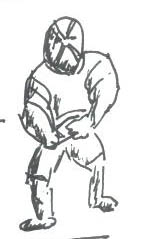 As a copywriter, I’ve always prefaced my art or design-related comments with, “I’m no designer, but….” I read a number of design blogs because the discipline fascinates me and I hope for a happy marriage between my words and their graphical setting as they set off into the world.
But artists and designers don’t own art. And I’m starting to wonder why I accede such authority to experts. Mind you, I’m no expert, but just like in the best, most engaged conversations, something sorta magical happens in a dumb sketch. Sometimes words shivering alone on a white page just don’t cut it. Especially when they gang up in dozens and scores and crowd onto a PowerPoint slide in an attempt to muscle their way into a client’s or colleague’s consciousness. Sometimes my words lack immediacy. Sometimes they don’t punch people in the gut like I want them to.
A dumb sketch can do what words cannot.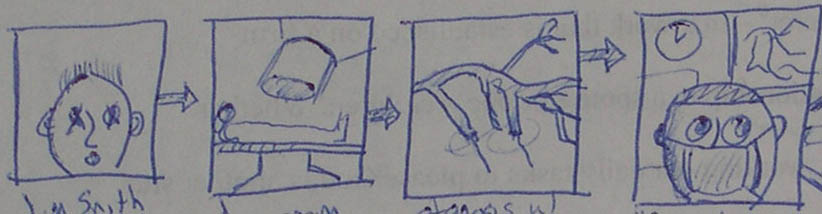
I’ve come to enjoy sketching lately. Not because I’m a good artist (I’m not). Not because I have a knack for capturing things on paper. I don’t. I like sketching for two reasons:
- Drawing a sketch uses an entirely different part of my brain. Or so it seems. The blank page with a pencil and an idea of a drawing is very different from a blank page and an idea soon to be fitted with a set of words. Sketching seems inherently more fun than writing (remember, I write for a living, so I’m completely in love with words, too). Sketching feels like playing. That sense of play has a way of working itself out—even for as bad an artist as I am. It’s that sense of play that brings along the second reason to sketch.
- Sketches are unparalleled communication tools. It’s true. Talking about a picture with someone is far more interesting than sitting and watching someone read a sentence. Which is boring. Even a very bad sketch, presented to a table of colleagues or clients, can make people laugh and so serve to lighten the mood. Even the worst sketches carry an emotional tinge. People love to see sketches. Even obstinate, ornery colleagues are drawn into the intent of the sketch, so much so that their minds begin filling in the blanks (without them realizing!) and so are drawn into what was supposed to happen with the drawing. The mind cannot help but fill in the blanks.
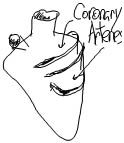
The best part of a dumb sketch is what happens when it is shown to a group. In a recent client meeting I pulled out my dumb sketches to make a particular point about how this product should be positioned in the market. I could not quite hear it, but I had the sense of a collective sigh around the conference table as they saw pictures rather than yet another wordy PowerPoint slide. In fact, contrary to the forced attention a wordy PowerPoint slide demands, my sketch pulled people in with a magnetism. Even though ugly, it still pulled. Amazing.
###
Steve Jobs: “…you have to trust the dots will connect in your future.”
File Under “Memorable Speeches”
Check out Steve Jobs speaking at a Stanford graduation in 2005. Favorite moment (~5:35): “You can’t connect the dots looking forward. You can only connect them looking backwards. So you have to trust that the dots will connect in your future.”
Thanks to Bob Collins at MPR News Cut for the link.
###
What Didn’t You See Today?
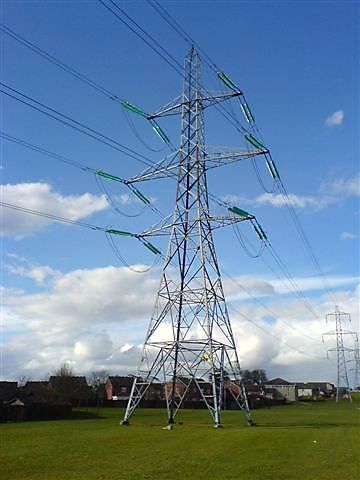
pylon of the month
pylon of the month
Giant Metal Men Matter
Have you noticed the gigantic metal men standing in your neighborhood? One’s over there, just above the tree line. Enormous and sinister. Sort of hulking at around 100 ft. tall. What’s that–you’ve not noticed it? How could you miss it, standing there in the wide open? Your kids saw it and have already made up stories about it: why it’s there and how it could reach down and grab anybody at any moment so let’s not spend too much time beneath it.
Electrical pylons are just one of the things we miss as we walk or drive around our city. They only become visible when someone shows you. Then you see them. Your eyes probably registered the shape and presence, but somehow the tall tower did not enter your consciousness. You needed someone to point it out—not that you particularly care about pylons. Same with people: do we even notice the janitor cleaning the corridor at the airport or the clerk at the grocery store? We are trained to have these people blend into the background, just like the pylons. Just like the homeless guy at the stop light on Hennepin and Lyndale. It makes our life easier—less to deal with—when we don’t see these things or people.
How much we are missing when we tune out stuff we don’t want to deal with?
One of my clients is trying to help a particular set of physicians tune in to a class of patients that are largely unstudied. These patients present with certain features in their heart that routinely exclude them from pharmaceutical and other clinical trials. The conventional wisdom is that the outcomes would be significantly worse if these patients were included. So they aren’t. It’s a kind of research Catch-22.
My challenge this week is how to help these physicians see these patients. These patients cannot be treated until they are seen. Which is true for all the invisible stuff in our lives: we can’t deal with it as long as it is out of sight.
More on pylon appreciation: Alain de Botton from The Pleasures and Sorrows of Work.
###
TOC 2011: Margaret Atwood, “The Publishing Pie: An Author’s View”
This is worth watching.
Life is Full of Choices
Whisky is the Least Important
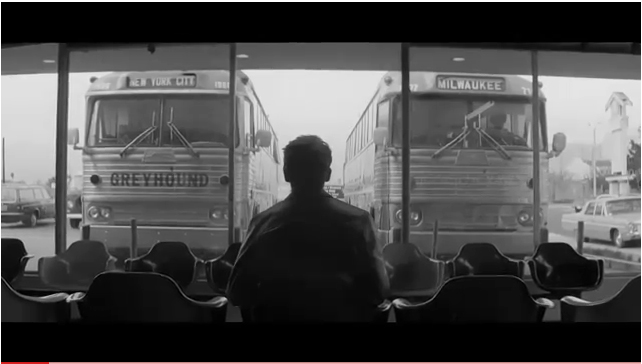 I’m not a whisky drinker but I can appreciate this beautiful bit of propaganda. The wonder of a life full of choices is unsettling. Invigorating.
###
Work Posters: Violence in the Service of Safety
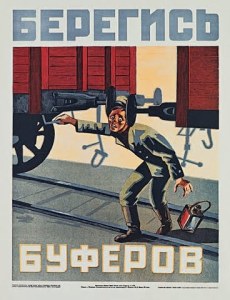
Careful: Train Cars will Crush Your Skull
In classes I teach we often puzzle through how to get and retain attention. As a nation our attention spans continue to shrink so that a block of copy seems too huge a commitment. Many readers move on. These old work-safety posters are a gory-wonder in gaining attention and remaining memorable.
###
Why do you call me good?
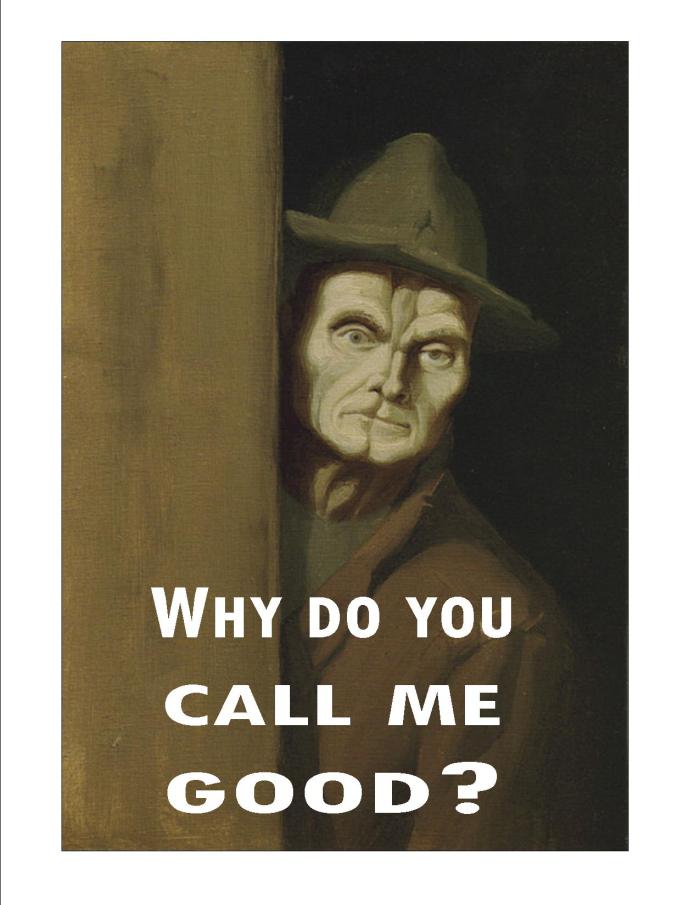 Full of capacity. Charged with purpose.
Ancient texts lead to surprising places. Jesus’ question to the rich young ruler in Mark 10.18 might have been rhetorical—not wanting to play into the man’s argument too quickly. Or it might have been a hint about the complexity of the character before the young man. It was certainly an invitation to think twice about the obvious stuff in plain view. Is cash a sign of blessing? Should I listen more closely to the important person or the stranger? Is death an end or a beginning?
###
Listen Up: #2 in the Dummy’s Guide to Conversation
The problem with listening is the other people who keep talking
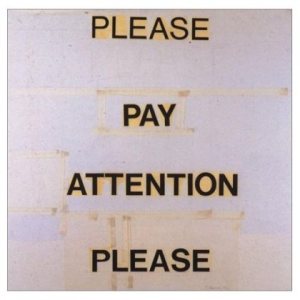 You’ve opened your pie hole and made like a human: shaping experience into words that can be understood by the humans around you (though it’s still a bit fuzzy how anyone understands anything). You anticipate being stopped dead in your tracks with realization or wonder, right in the middle of a conversation.
But there’s a step to bridge the two: you’ve got to listen.
The traditional problem with listening is other people: they keep talking. When they are talking, you are not at the center and they keep uttering words that don’t refer to you. For instance: they rarely mention your name, which you keenly listen for. They keep talking about their own experience. Why, oh why, don’t they stop talking and ask me about me?
Let me introduce you to three friends who knew something about listening: Mortimer Adler, Alain de Botton and Jesus the Christ. I met Mortimer Adler when I read his book, “How to Read a Book.” Why read a book on how to read a book? Because of the author’s crazy fascination with understanding. He didn’t just read, he annotated, he outlined and he synthesized. He labored over passages in long conversations with the authors. Plus, he made it sound like fun (which it is!). Of course, there is not enough time to do that with every book, so Adler picked what he called the “Great Books.” His Great Books program has gone in and out of style over years, depending on your politics and your conclusions about who qualifies as worth reading.
Alain de Botton writes readable books that satisfy his curiosity and pull his readers into the vortex of questions he counts as friends. If you’ve ever wondered how electricity gets to your house or what is the process behind producing biscuits (that is, cookies) or why Proust is worth reading or why Nietzsche was not a happy-go-lucky guy, de Botton is the author you want.
Jesus the Christ knew something about listening, despite being both God and man. His human condition opened a limiting opportunity which in turn caused him to steal away for hours to converse with the God of the universe. I go into depth on this in Listentalk. But the point is that prayer, which is ultimately more about listening than talking, was a preoccupation of the man who was God.
Listening opens us to hearing—which sounds like “duh” except for when you examine your own listening practices and realize how often you are thinking of something else entirely when your spouse/child/boss/friend/neighbor appears to be talking. But to really hear, to be crazy to understand, to be curious and to be committed to connection opens us to the place where we can be stopped dead in our tracks.
###
Talking through the Troublesome Ten Percent
Brilliant Technicians can be Eloquent with the Right Topic and Right Audience
Say you have this friend. And your friend is a genius. She invents stuff all the time—important stuff people want. People buy this stuff and are even willing to spend significant money for it. And the stuff she invents works…mostly. It works, but it needs help. It works 90% of the time, but needs 10% adjusting and tweaking and, well, help. Your friend knows this. She knows she is brilliant at putting the technology together to meet a particular need. But she also knows she and her team work like demons once their unique idea is in place. They work like demons because each of their unique ideas requires constant adjustment as they are put into place, adjustments peculiar to the customer that bought the solution.
This last 10% is the source of significant pain and long hours for your friend’s team. This is because the customer bought the unique solution—knowing it was a unique solution—but secretly thinking the unique solution would work right out of the shipping crate. And no matter what your friend said to the customer, that assumption that it would work right out of the crate persisted in the customer’s mind.
That last 10% is a technology problem but it is also a communication fail. The customer perceived one thing and received another—whether or not the customer’s perception was accurate. In fact, the last 10% has much more to do with conversation than it does with technology. How so? Because conversation between those who understand the solution and the problem must take place before the solution becomes a fully realized solution. Because conversation is the give and take between people as they listen and offer suggestions, over and over again.

Let Others See the Process
Introduce Your Brilliant Friend Around
Conversations are not magic (or…are they?) but they accomplish much more than we can understand. They are great at connecting, where people begin to understand each other. They are great at diffusing tense situations simply by passing words between people. They also can inoculate against tense situations before those situations occur. All of this through the regenerating power of relationship that happens when people connect. I and have argued that letting people into a process earlier only helps the process.
Helping your brilliant friend talk about the solution she is putting together, even to engage the customer in the last ten percent may be the most productive thing you can do for your friend, her company and her customers.
There are ways to do this. Painless ways that lie outside of the old media channels. Ways that can do far more good than you may realize.
###
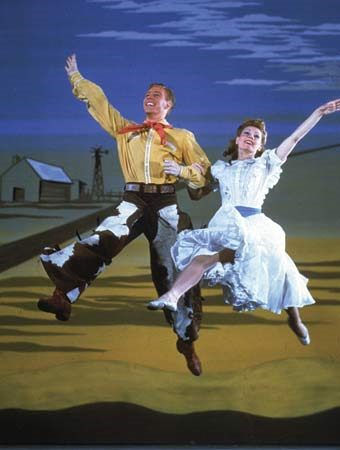
The farmer and the cowman can be friends, but would either want their kid to study English?
All it took in Oklahoma was a rousing dance—and a few right hooks—to convince farmers and cowmen–two different disciplines–they could hang together. But a few generations later, getting their grandkids to combine art and commerce in the college classroom requires a completely different kind of dance: one few are prepared for and even fewer seek.
 Momentum is building (again) for those questioning the value of a liberal arts education. Sameer Pandya, a lecturer at UC-Santa Barbara wrote recently in Miller-McCune, of his soul-searching when a student asked for advice: whether to major in something she found fascinating or something that might produce a job at the other end of the coursework. He said what anybody with a bias toward the liberal arts says: choose what you enjoy and the work will take care of itself. But privately he backtracked as he worked through the cost/benefit ratio: just how will the dollars spent reading F. Scott Fitzgerald help the student outside the classroom? And “Higher Education? How Colleges are Wasting Our Money and Failing Our Kids and What We Can Do About It,” a recent book by Andrew Hacker and Claudia Driefus, has given the debate legs, and will surely be a topic of conversation as students lament tuition bills and make the way back to school (or not).
It is clear we need a new educational model that rewards thinking and practical skills. But wait: who ever said thinking and practice were poles apart?
One of my jobs is to teach professional writing classes to college juniors and seniors. These are (often) talented students who have made their way through the rudimentary composition classes and exhibit ongoing interest in writing in a work setting. Some even envision themselves using the skill to make some coin. I teach because I earn my living as a copywriter, which means I serve organizations, companies and advertising agencies by thinking and writing. I teach because writing is fun (really!), and because these interested students are excellent communicators who participate in lively discussions. And I teach because I have an axe to grind with those who think they can find themselves only by writing poetry or short stories. Don’t misunderstand: I’m a great fan of poetry and short stories. But there’s a mood that begins somewhere in undergraduate education, perhaps even earlier in high school, that applies the romance of the fiction writer or poet to our own scribbly ways. We think the more we burrow into our selves, the more we tell our stories or embellish stories we make up, the more we’ll figure out who we really are. I believe there is much truth in that notion, but the burrowing-in may not lead where we want to go. And it may not lead to the place we need to be.
There is another way to personal formation.
I tell my writing students that poetry and short stories are good—indeed, very good—but that you can also learn quite a lot about yourself, you can grow in your craft, and put beans and rice on the table (even Spam sometimes), by writing for others. Yes—serving others through writing. It’s not an easily-caught vision for poets and fiction writers, frankly. Because of clients—they’re always changing my words! And because the technical detail clients use to serve their customers can feel, well, boring. There is very little room for plot or the arc of a story in a brochure or print ad. Right? And yet, it is precisely these missing artful bits that are helping to change the face of communication as restless writers find new ways to communicate with audiences—new ways that break down the old forms. I’ve seen the short-story writing student effectively bring story into a product brochure—to excellent effect. In our changing communication world, where corporate monologue is even now giving way to engaging dialogue, it’s the writers who resist the high walls of the old forms that will move us all forward.
That’s why I think the farmer and the cowmen’s grandkids will help us establish this new communication frontier as they find themselves making friends with art and commerce, with every use of their English degree.
###

 conversation is an engine