Archive for the ‘art and work’ Category
Creative Rebellion and Your DIY Career
Creativity + Freedom = Finding Your Work
We’ve finished our last session of freelance copywriting at the University of Northwestern—St.Paul. And now, after all the boring, blathery lecture stuff and all the portfolio additions and all the clever advertising we’ve seen, the bottom line is freelancing is a business of making it up as you go.

Just like no one can teach you to write (though teachers offer suggestions and direction, writing remains something one learns on one’s own), no one can teach you to rebel or to cultivate a disruptive presence in your work. Writing your way into and through creative rebellion is the beginning point to locating a solution to a problem that connects with an audience.
Freelance copywriting has by no means cornered the market on these qualities of creative rebellion. But those freelancers invited back provide value by looking at things deeply and differently. These are the folks who have organized their lives around creative rebellion and get antsy when asked to follow a party line.
Let there be more of this tribe.
###
Image credit: Kirk Livingston
Thai Life Insurance: Get All Good-n-Weepy
Pass the Tissues
Look: I know it’s selling me something. But I kinda want to buy. Not so much the life insurance as “witnessing happiness.”
###
Via Adfreak/ Rebecca Cullers
Edward Hopper: How to Talk to Yourself
Can a conversation result in art?
The answer can only be “Yes!”
Not every conversation, mind you. But some will.
Last weekend Mrs. Kirkistan and I (plus our art-student daughter) wended our way through the sketches and drawings by Edward Hopper currently on display at the Walker. As a nation we’re quite familiar with Mr. Hopper’s drawings and paintings—today they seem perfectly obvious explanations of life in America. But I was intrigued by how he got there. What was his process for producing such enduring images? How did he see what he saw?
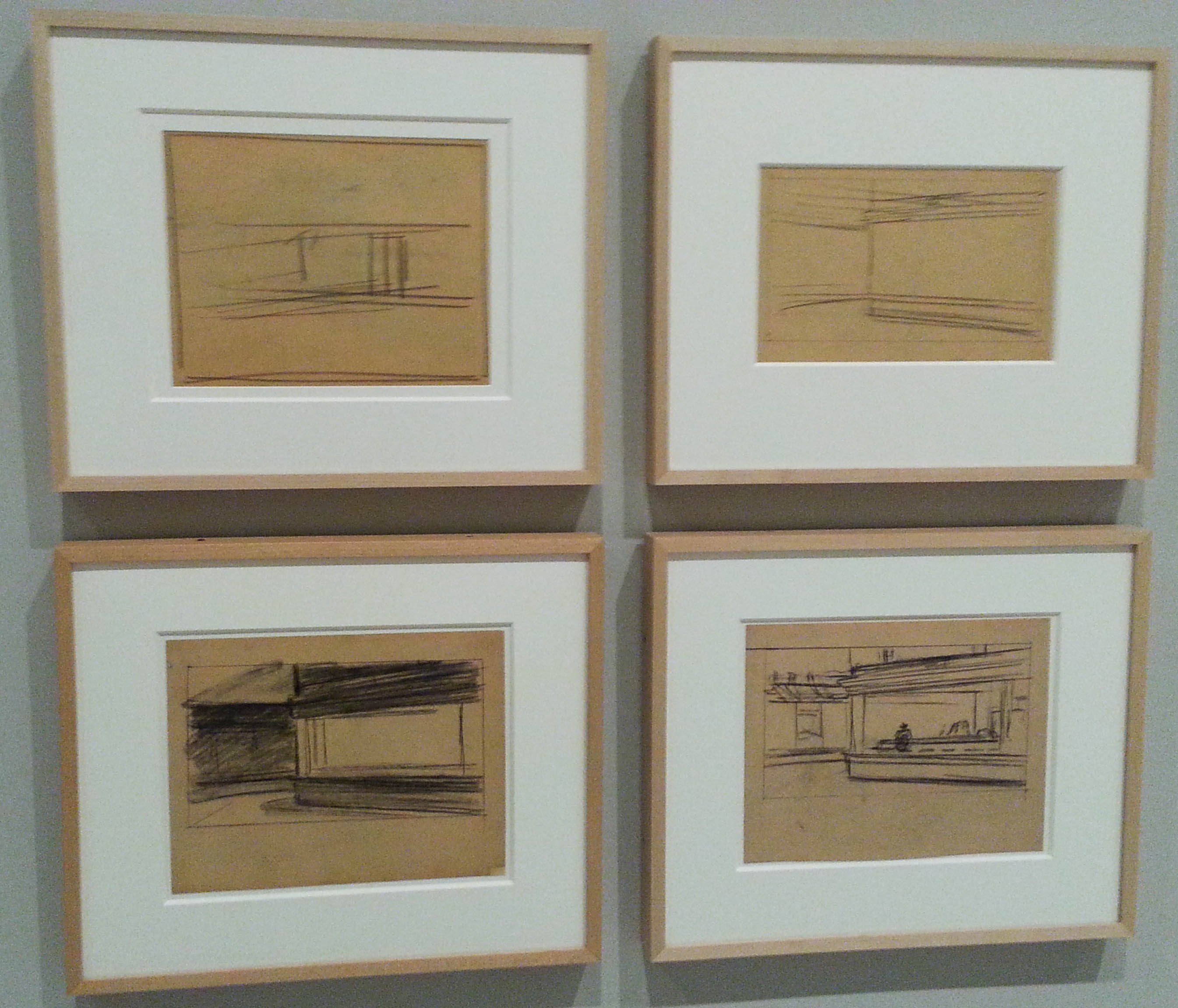
His sketches look like conversations with himself. Look how he developed the frame for his (well-beloved, much parodied) Nighthawks at the Diner. His sketches add layer to nuance to layer. It’s almost as if he were explaining something to himself with one approximation and then another and then another. Sort of like conversations with our best friend where we allow each other to say it wrong even as we pursue saying it right.
Hopper was a man given to observation and keen on interpreting detail. With quick strokes he captured form and mood and motion. And there’s no question he had an eye for the ladies:
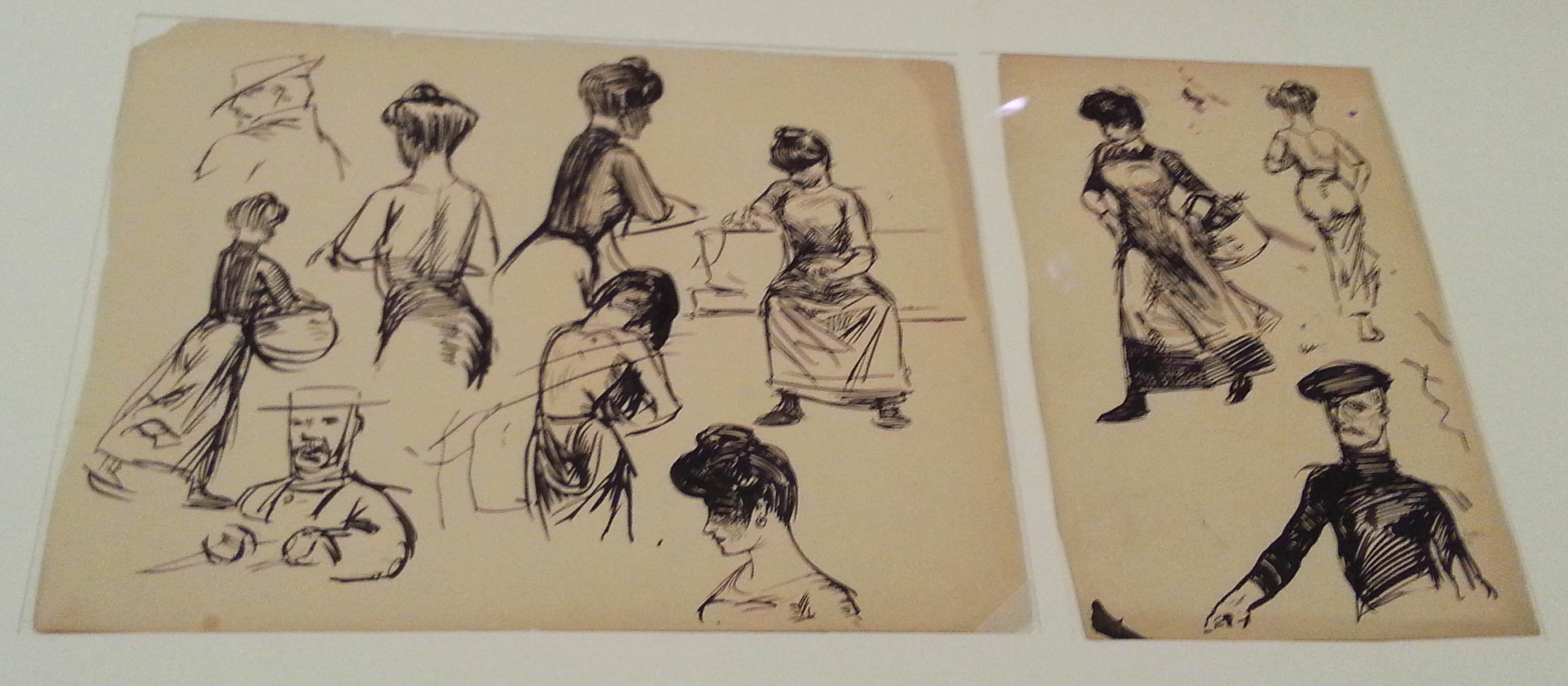
Hopper seemed to never stop observing and capturing. Again and again and again. He spent hours sitting at favorite locations and sketching and perhaps waiting. This quote from Mr. Hopper hints at his process:
My aim in painting is always, using nature as the medium, to try to project upon canvas my most intimate reaction to the subject as it appears when I like it most….
I’ve been a fan of sketches for some time because they give a behind-the-scenes picture into how someone’s mind works. The Hopper exhibit at the Walker does not disappoint. And I cannot help but think how sketches provide such a rich analog to our collaborative conversations.
###
Image credit: Kirk Livingston photos taken at Edward Hopper exhibit, Walker Art Center
How You Say: Not Just “What” But “When”
A word is a fuse. Light the fuse.
I’m teaching a freelance copywriting class at the University of Northwestern—St. Paul. Yesterday was our first day and I wanted the students to begin the shift from writing papers for professors to writing words to make a difference. I maintain that excellent copywriting is the very opposite of spewing malarkey and hype. Especially today, when anybody who can read and/or listen and absorb marketing messages has their BS meter set on high all day long.
The best copy doesn’t call attention to itself. The best copy is nearly invisible and absorbed without realizing it. The best copy latches on to or illustrates a larger idea and leads the reader to the idea threshold. The best copy is emotive and rational. If it can be silly too—all the better.
We talked about the differences we perceive in writing for non-profit, mission-driven organizations and for-profit organizations. At first glance we might think one organization is all about mission and the other is all about money. But that is a mistaken notion: for-profit organizations can be all about mission and non-profits can be all about fundraising. Examples abound in each category.
One of the things I love most about teaching these particular students is the sensitivity to mission. They are cool with the notion of using your writing skills to help others. Many are considering starting work with non-profits, but that is not unusual for many studying the liberal arts. These particular students are often eager to trace their motivations for helping others back to some of the ancient texts that drive much of this school’s mission.
But one thing that is not so clear is that mission-driven work exists in both non-profits and for-profits. One’s mission comes largely from within. Our job—that thing we get paid for—is an outward-focus of the mission we bring with us. A copywriter with a sense of wanting to help others can find a home in any number of organizations, whether for-profit or not-for-profit. And using that copywriting skill to bring a reader to a life-changing realization can be a primary motivation for the whole task of writing.
I would like to see more copywriters with that motivation.
My go-to example is the quiet laugh from the writer in this four-minute film. Listen for the laugh. Think about what that laugh says about delivering the right words at the right time:
###
Lady Gaga: Onstage Vomit Sells Doritos? Of Course.
“Selling In” Not Quite Opposite “Selling Out”

One adorned in a plastic tarp need not “sell out.”
Lady Gaga made a plea for “selling in” at SXSW last week. Doritos sponsored her onstage vomit-art, which attests (she said) to her artistic success. But read the Rolling Stone article and you’ll find a more complex, nuanced notion that falls short of completely bowing to the demands of the sponsor.
When Kerry Miller (@DailyCircuit @KerriMPR) wondered aloud what people thought about “selling out,” she echoed a sentiment borne decades before when the big rock and rollers first roamed the earth and bowed to the demands of advertisers to create art to propel commerce. Ms. Miller’s comment generated responses from scholar Patrick Cox (@patrickcoxMN) and others on just what corporate sponsorship was beginning to look like.
Ms. Miller’s generation (also my generation) labeled such people “sell-outs” and tried to work up disdain for them even as we bought the cans of soda or beer or whatever they shilled. Even as we ourselves sold out to the company we worked for. And never mind that the notion of patronage has been around for as long as artists have starved.
Watch the recent Frontline “Generation Like” and you’ll get a sense of how Millenials approach the art vs. commerce question. Gen Y seems largely happy with getting free swag and brandishing logos on their social spaces/shirts/tattoos/hair cuts.
“What’s the big deal?” [They might ask.]
Ms. Kerry’s generation (my generation) is quick to point out that “You, sir, have sold out.” The Millenials I teach might return: “You, sir, have also sold out.” Which would be entirely accurate.
Maybe Gen Y has done us a favor by repackaging the connection between art and commerce: That repackaging looks more like an articulation of authenticity. It is a voice we need to hear today. I’ve been arguing that craft and service (and art and faith) do better together than separated into holy, inviolable silos.
Gen Y is articulating some of this. Not perfectly, but they are closing some gaps and opening others. The “selling out” conversation has changed.
###
Image credit: Michael Buckner/Getty Images for SXSW via Rolling Stone
“Nothing Cheers Me…Like a Great Pair of Ears”
I like reading blogs because…detail
In regular life you might never hear the word combinations that people reveal in blogs. Bloggers can answer questions you’d never dream to ask—and suddenly you are enriched by some comment outta nowhere.
Like this quote (above) from Roz Wound Up.
I recently started following Roz Wound Up, a Minneapolis artist/sketcher/writer (designer/illustrator/teacher at the Minnesota Center for Book Arts) because of the detail she includes about how she practices her craft. A few days back she wrote a fascinating post about the ethics of sketching people in public. Hint: wear a large duck-billed hat so people cannot see your eyes. Today’s delightful post fixates on ears:
I’ve been watching tattoo shows again—Best Ink is the one that’s on right now. It was late, the day had been a complete wash up. Then this kid was standing there being judged on the show and I simple fell in love with his ears.
Read any of her posts and you’ll find in yourself a growing affection for pens and paper and seeing. Specifically:
- Pentel Pocket Brush Pen
- Fabriano Tiziano (8.5 x 11 inch sheet of cream)
- And this: the way the pen feels going across the paper. Especially that.
I once thought a pen was a pen and paper was just something you grabbed from the drawer on the copier (and money’s just something you throw off the back of a train—thanks for sticking that in my brain, Tom Waits).
No longer. Sketching is a sensual art. Maybe seeing is too. The focus of Roz Wound Up has piqued my interest. And with the little sketching I’ve done I’ve started to have a sense of the way my pencil graphite feels across the fine tooth surface of my sketch pad. Now seeing has a sensual element—it’s something I do with a pencil and paper in hand.
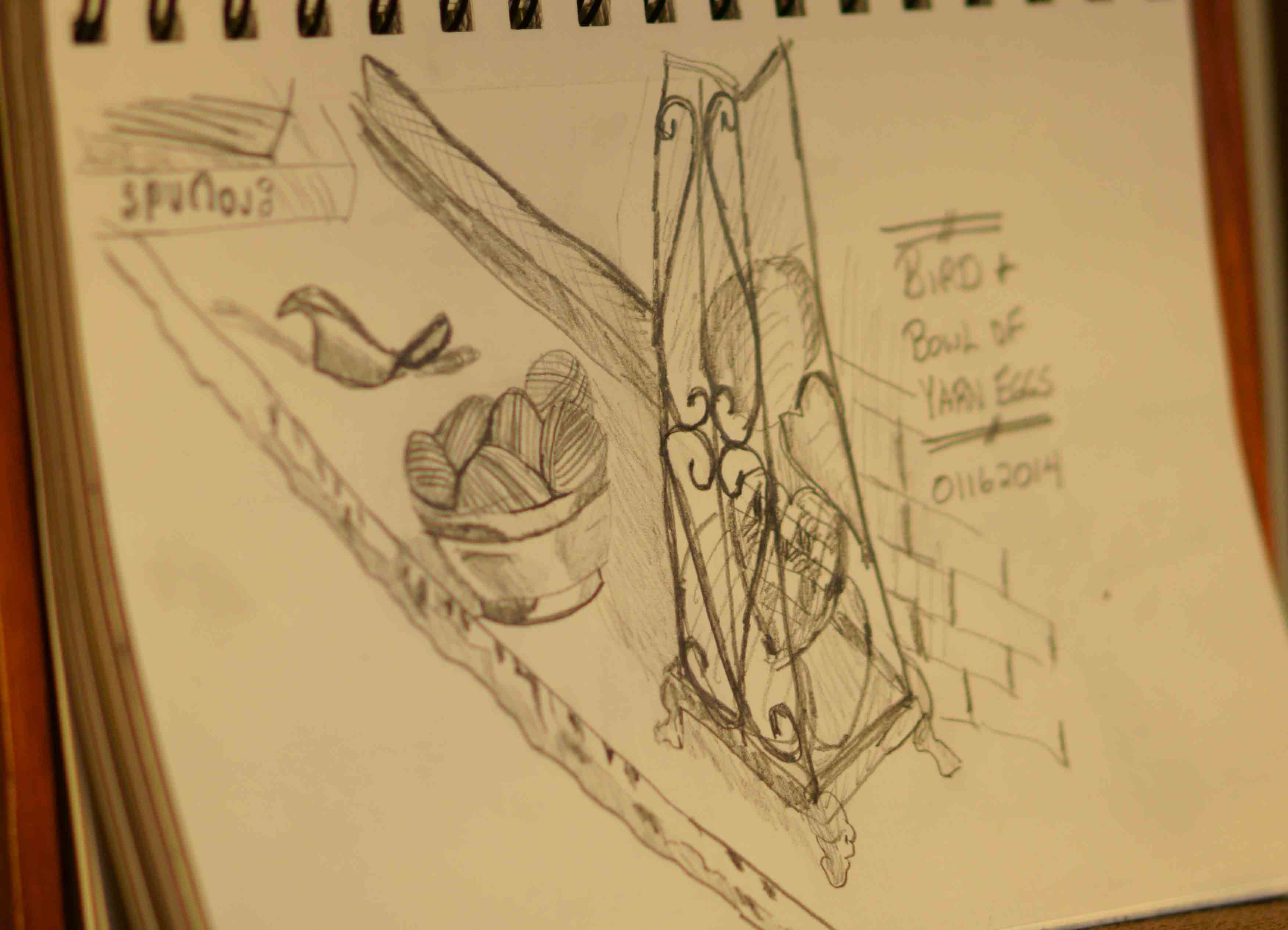
Seeing rocks. I hope to do more of it.
###
Image credit: Roz Wound Up, Kirk Livingston
Kristina Halvorson & The Discipline of Making Stuff Up
Content Strategy and Brain Traffic
Someone asked a perfectly reasonable question:
What is content?
Our Social Media Marketing class is composed of collegiates with a passion for writing and communicating. Whether from the Journalism/Communication school or from the English department, we’ve come together around this notion of producing content in pursuit of a vision.
So we write.
While “content” seems a rude way to talk about the deep thinking that goes into a paper on, say, the merits of determinism, it’s a term that works pretty well for less lofty/more human conversation. The kinds of conversation suited to inviting in semi-interested onlookers.
Content is the stuff we use to describe our vision for…whatever. If we’re building a coalition to alleviate homelessness, the content we produce will point to the problem, tell stories about real people, show the inadequacy of current solutions and keep offering attitudes that illustrate the need and humanity of the man on the corner with the sign. If we work for a company that makes implantable deep brain stimulators, our content will highlight the current science behind Parkinson’s disease, show current (inadequate) ways of dealing with the disease, harp on the benefits of such stimulation without hiding the downsides.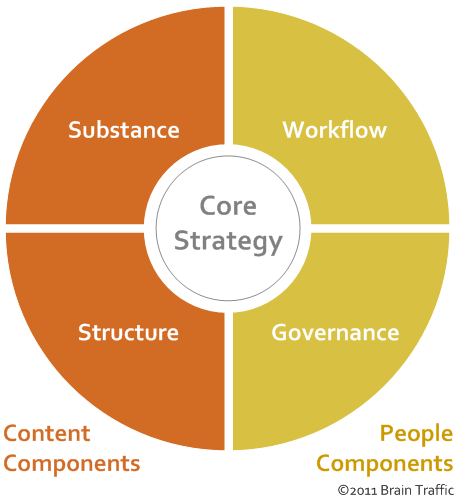
Kristina Halvorson, founder and CEO of Brain Traffic and co-author of Content Strategy for the Web will join us today (provided she can plow through 4-6 inches of new snow) to talk about the disciplines involved with making stuff up. Because that’s what content is: making stuff up. For a purpose. Making stuff up in accordance with a discipline, toward a specific end, to meet a particular business or social objective. That’s why content and writing go so well together: there’s nothing a writer likes more than stepping into a big idea and exploring the main streets, side streets and alleys and foot paths with words and images and video. Sometimes we have a map to start with. Sometimes we make up the map as we go.
Mostly we do both.
###
Image credits: Brain Traffic
Hey: Where did that voice come from?
Don’t be stung by inauthenticity
Some in my class are English majors and don’t mind wading into the waters of how words work. So when Content Rules (Handley and Chapman) talked about voice, a close reading ensued. Handley and Chapman lobby for authenticity in voice: voice is your own way of corralling point of view and word choice and rhythm (meter?) and pressing it all into service. Voice is making language work to express your words in your way. Voice is what you sound like when you talk (and we’re aiming for conversational writing in this class, so writing and talking sort of blend).
But voice is also something that gets companies and organizations all hepped up. To give your brand a personality by adopting a particular point of view (which leads to word choices/meter and etc.) is what companies and organizations seek these days. Voice helps a brand stand out from the crowd.
And one must stand out.
But this:
How can you write with an authentic voice when you are adopting the voice of the brand?
Good question, English-major-friend. Two answers come to mind:
- Sometimes we use voice in the service of some larger purpose. So we might submit our voice to the larger brand purposes and adopt as best we can the machinations of the brand voice. Some people may naturally embody a brand voice. The rest of us have to work at it. This adding and adopting is part of serving the larger goal you believe in (at best. At worst: you adopt voice to make coin for rent). This is the collision of craft, faith and service.
- If you find yourself stinging with inauthenticity as you write for your brand—look for a different job.
I’ve maintained all along that when people add their voice to a project, new things happen. Sometimes a new voice provides new electricity and a new approach to a time-worn topic. Even old-timers can learn stuff from new voices.
Of course, people must voice up.
If you don’t say what you’re thinking, the new thing just around the corner will sit there in silence—just around the corner.
###
Image credit: red-lipstick via 2headedsnake
Technology is remarkable when it leads us to people
We forget this.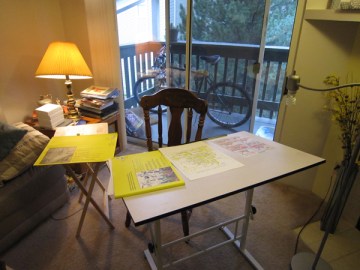
There are irresistible bits all over the world wide web, naturally. We stumble on these irresistible bits and do what any human does: tell someone else. Our “Like” and “Forward to” capitalizes on this innate human desire to share. And, naturally, some have been able to monetize this compulsion.
I like how in Groundswell, Li and Bernoff put people ahead of technology. They like to ask, “Who do you want to make contact with and what do you want to accomplish with them?” as a starting point. Then sort out the technology later. That seems right.
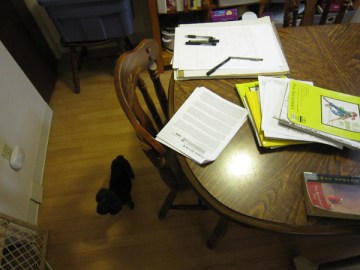
One way that technology leads us to people is in microbursts of information—very specific and very narrow information—about each other. I just stumbled on From the desk of…, a project by Kate Donnelly that shows, well, people’s desks.
 Grant Snider’s work I see all the time. His easily-accessible takes on say ambition, or escape from digital life or rules for freelancers (pasted below) are themselves irresistible thought-pieces. I hesitate to call them comics. Even more remarkable is to see how his imagination flowers in such a tight, confined space.
Seeing someone’s desk is a bit like opening the door of their medicine cabinet or searching through a found wallet. The stuff we surround ourselves with has a way of telling on us. And especially the place we work says something about how our minds work. I like how technology (in this case social media) lets us tell fuller stories about each other—for those who want to hear. I also notice that the work I do for clients—even very technology-focused clients—opens up when there is a people-story to tell.

###

 conversation is an engine
