Archive for the ‘Brand voice’ Category
Tell Me a Story
On the Mindfulness of Listening
Listening is such a simple thing. How hard can it be?
But we all know that listening is harder than it appears, because listening means we have to shut up. And good listening means not just shutting up but also not using someone’s moments of speech as a time to plan counter-arguments.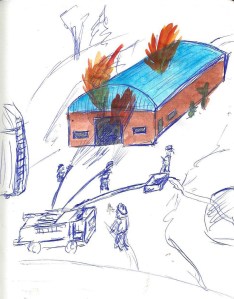
Real listening happens nine hours into a car trip, after you’ve exhausted the common topics and celebrity gossip and a silence settles. For miles. Which can feel weird. And then you pass a broken down Quonset hut and your spouse/friend/acquaintance/ride share starts in on early memory of a fire at her parent’s farm, and how all the kids huddled in blankets watching the barn in flame and hearing the gas tanks in the tractors explode one after the other and how the firemen pumped water from a pond into a little pool they created and then onto the barn. And how the whole thing left her feeling sad and, well, bereft.
It had been a kind of turning point, she says, now that she thinks about it. And then she collects memories of what was different with her family after that and how it was different. She has very specific points.
And you have not said a word. Because the fire story had and entirely engulfed you as well. You were there—as she told her story—shivering on the side and hearing the pop of gas tanks.
Most listening is not that dramatic. But sometimes it is.
We’re talking about how to listen in our social media marketing class. How to listen to the audiences and communities we want to interact with. We want to hear the concerns and the jargon and the voices and the rhythm of those voices.
It occurs to me that we listen in stages. Or perhaps we hear—or comprehend—in stages. When new to a community, we hear the words and perhaps can make out only the broad outlines of the bigger story. The more we listen, the more we hear specificities and nuance The more we listen, the more stories we hear the emotion and motivations that bind a community together.
Good listening means sitting with and through the stages so that we burrow into understanding the people of the community. Our best friends are often great listeners because they sat through the bursts of story that followed silences.
Most of us have little time for listening.
Pity.
###
Dumb sketch: Kirk Livingston
Forget Content Strategists: We need Village Storytellers.
Begin the Begatting!
“Content strategy” has such a corporate feel to it. Such strategized-promotional-content-puzzle pieces, dreamed up in isolation, will move forward whether or not anyone cares. But here is exactly where strategy and art must date, marry and get busy begatting fecund stories.
No human will be interested otherwise.
No amount of strategizing can actually make that happen. Art must take over. Art connects with emotion. Art is a human meaning-making activity not easily controlled by a corporate agenda. If controlled too-tightly, art quickly becomes something less than art.
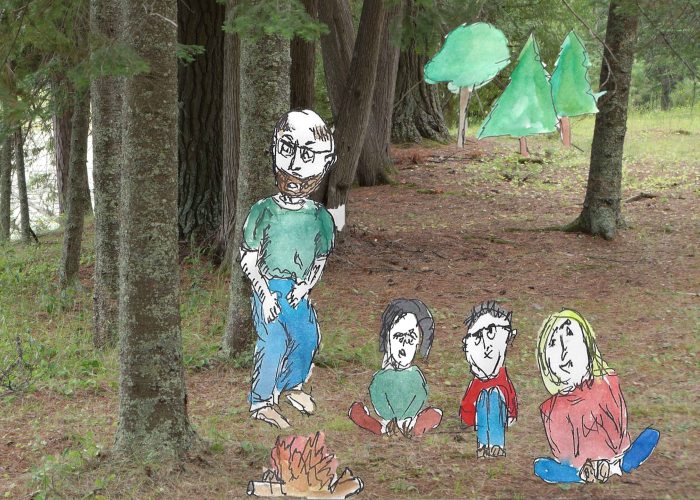
I’m working with a group of writers who need to understand this. Their task is to pull people into the causes they have begun to champion. They will identify their mission and purpose, complete with telling details about their target audiences. They will strategize about content and assemble editorial calendars, but in the end, it is the art of storytelling that has the power to pull anyone forward.
My theory is that strategy works best as a beginning point. You do your best to get a strategy in place, but then you move forward. As a writer, I know from experience that stories and strategies grow up best together. Each talking to the other. That is because the weaving of the story actually makes new strategy elements available (and vice versa). Elements appear that would not be apparent except that the artist has accessed that deep subconscious, chaotic place where connections are made and much foolish talk swirls around very bad ideas before anything worthwhile appears.
Sometimes when I get stuck in the analytical side of strategy, I set it aside to tell stories just to open possibilities. I am not alone in that practice.
There is a push for strategists today. But I would rather work with their more human cousins: story-teller strategists.
###
Image credit: Kirk Livingston
Stephen Fry’s Voice Serving Heathrow
Please speak human
Copywriters try to harness voice to say their client’s message. There’s lots of talk about being on brand these days, and for copywriters that means speaking in the voice of the brand. But voice must always be human to be heard. That’s why press releases and spokespeople are so easily dismissed—they generally don’t sound human.
John Cleese felt he could perform Basil Fawlty for Specsavers because the voice they wanted was true to the character he had created. He had refused many opportunities because unfunny scripts deviated from that character.
Check out how Stephen Fry voices a gentle, unhurried, humorous take on a place that launches an airplane every 45 seconds.
###
Via Ads of the World
John Cleese and Writing Funny
The writing must bring the reader along.
John Cleese is nearly always funny. And he has a lot to say about writing funny. In the “John Cleese Interview” that follows, he says that Basil Fawlty (from Cleese’s Fawlty Towers) was never angry at the beginning of the show. The funny bit was showing how he got there and showing it in a way the viewer could relate to. He goes on to describe the difficulty he had finding a branch to give his auto a good thrashing.
###
Via Adweek
4 Ways to Bring Creativity to Work
Hint: Creativity is not easily contained
I’ve been reworking priorities for the social media marketing and copywriting classes I start teach again in January. If these are like previous classes (I’ve not yet looked at the rosters), there will be quite a few English majors, juniors and seniors, many of which will be excellent writers. I teach the class in a sort of writing-forward way: we use writing as our primary tool for sorting client brand problems and opportunities. But over the last few years, the copywriting class has morphed from a focus on “copywriter” to “idea writer,” which is a book by Teressa Iezzi that I’ve become very attached to. We use The Idea Writers as a text to help grow our understanding of our task.
My syllabus is mostly intact from last time I taught, but this time it I see four areas where additional emphases are needed. These four areas make it difficult for a student to jump from writing papers for an English professor to writing copy in the world of commerce: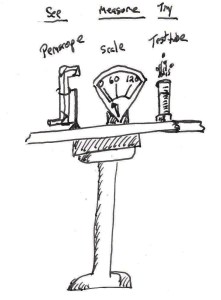
- See: this has to do with trying to get out of your own brain-pan and jumping into someone else’s life situation. Read more: How to Go Out of Your Mind
- Try: social media, in particular, rewards those who jump in and try stuff—all sorts of stuff. Trying stuff is a way of learning what your audience will listen to, and will respond to, along with understanding the limits of their attention. Yes there are some best practices and some favored tools, but social media is in constant motion.
- Measure: The goal really is to move the needle, that is, to get a response. Hits, page views—so many of these numbers are really only incidental to engagement. Real engagement looks like a comment or a share or some other solid action in the world. This is debatable, of course, and varies by audience and objective. But social media opens a window to see just what effect our words and ideas can have. Which can also be terribly discouraging for a writer with a message to deliver.
- Passion: This is the surprise for students, that they can channel a passion about a topic or tool or process into a project for a client. Many think passion and inspiration are ingredients only safely stirred into their own poetry or short stories. It turns out the more you run on inspiration, the more you run with inspiration.
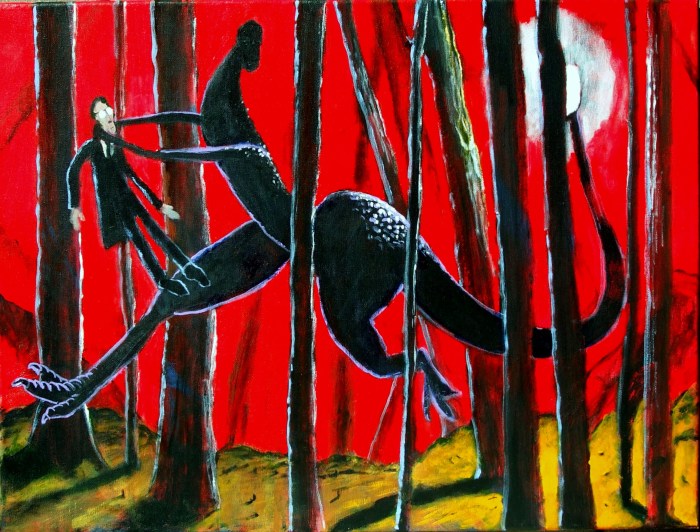
“Inspiration” by Richard Bledsoe
Richard Bledsoe’s interpretation of “Inspiration” is completely right: there is often a point where the idea carries the writer forward, eyes bulging, wishing only to stop.
###
Dumb Sketch: Kirk Livingston
Image credit: “Inspiration” by Richard Bledsoe, used with permission
How to Go Out of Your Mind
Hint: It’s a crazy idea that just might work
Can you ever see from someone else’s point of view?
“No,” some say. We are entirely bound by our own way of seeing. All the world lays before us—all the friends and enemies and acquaintances and mobs, the institutions, the physical world, all the influences, everything that is, was and ever will be (amen)—all of which we perceive from our own vantage point. We fill our brain pan using our eyes, our ears, our sense of touch, our taste buds, our sense of smell.
It’s always me looking out at you.
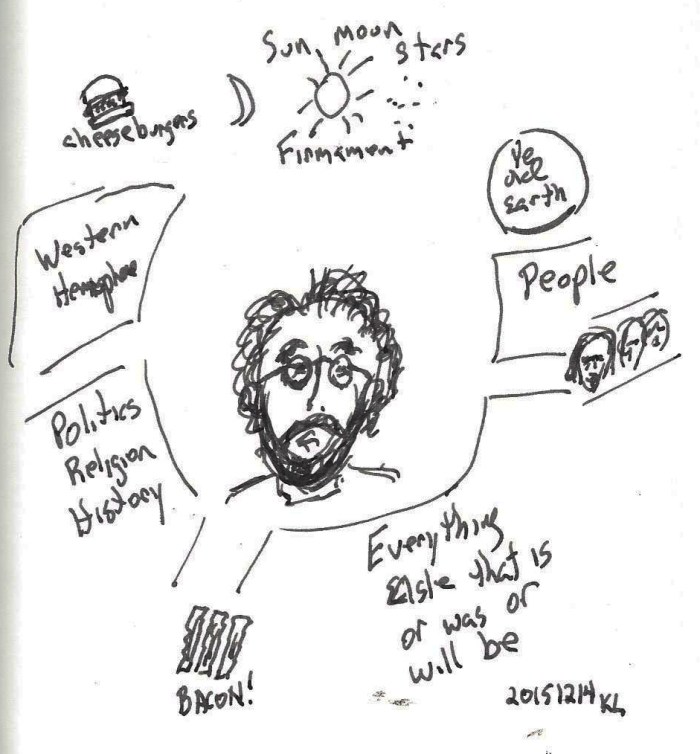
There are manufactured instances, though. Huge numbers have already bought Star Wars: The Force Awakens tickets for the very experience of looking out at a favorite world through JJ Abram’s eyes, who happens to be channeling George Lucas’ story-brain. We reread Harry Potter or Tom Sawyer for the joy of seeing from someone else’s perspective.
Stories get us close to seeing from someone else’s eyes.
A primary challenge in teaching copywriting to English students is asking them to see from someone else’s perspective. It’s an invitation to awaken the force (as it were) of caring about someone else’s issues and feeling the weight they feel. And though we see and feel imperfectly, it is enough to begin to engage our imagination. And it is precisely the imagination-engaged that produces satisfying, potentially useful copy that has a chance of meeting some human need.
I want to think that as we age, we become better able to see from someone else’s perspective. But my experience says otherwise: it is all too easy to let my world close in to include only what impacts me directly.
Hard work, it is, to begin to see from someone else’s perspective.
And good work.
###
Dumb Sketch: Kirk Livingston
NOLA: Same words. Entirely different experiences.
Your Interpretation May Vary
Maybe you’ve seen a version of these New Orleans tourism spots. What is remarkable is how the same voiceover is used in all, but each depicts an entirely different experience. Tim Nudd has some smart comments on the three at Adfreak.
I watch these and cannot help but think about how we interpret any text, And how each understanding of a text is different because of the intentions we bring to a text and the experience/baggage we also bring to our reading. That’s why we talk through how we read things—your interpretation gives a fuller perspective to mine. And, I hope, vice versa.
These three ads tell that interpretation story well.
###
Via Adfreak
“And the only one with access is me!”
Why you need this Dutch insurance company.
Privacy is something we are keen on giving away.
###
Via Adfreak
We’re not good with multiple voices
But if top-down communication isn’t working,

People find their voice.
###
Image Credit: Kirk Livingston

 conversation is an engine