Archive for the ‘church is not an industry’ Category
Ken Kellenberg (1940-2013): Thoughtful Mentor
What’s The Impact of One Life?
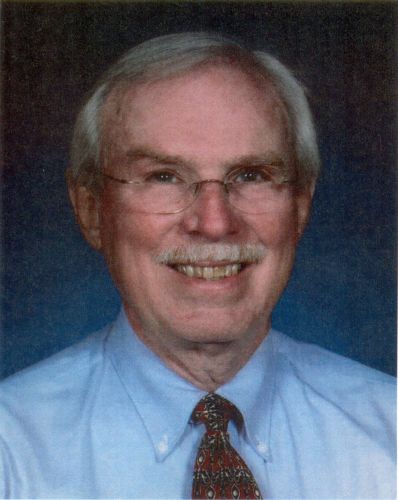 Different people stand out at different times in your life. Ken Kellenberg was one of those stand-out people for me, at a specific time when I was making all sorts of life choices. Ken died last Sunday.
I met Ken in college. He was the founder of a free-form church on the edge of the University of Wisconsin—Madison campus. Faith Community Church was just beginning to shape-shift and every Sunday looked different from the previous. Some days the gathering was raucous. Some days quiet. Some days a theme bubbled up through the words and prayers and thoughts shared. But every week was unscripted and very different from the previous week. There was no formula.
Every week was unforgettable—and quite possibly poisoned me for the many feeble prescriptive gatherings I’ve been part of since.
Ken and I met a few times toward the end of my undergrad days and he offered advice about jobs and faith and relationships. Ken also performed the ceremony that united Mrs. Kirkistan and I in marriage (Behold: 27+ years ago).
Once Mrs. Kirkistan and I we were passing through London on the way to or from somewhere and stopped to talk with Ken and Natalie. They were characteristically open about reservations with the particular organization with which they were working. I had some experience with the organization so we had a rich and memorable conversation.
It was Ken’s openness that retained my attention. The sharing of doubts and questions, the refusal to set out a formula. The desire to be present in the relationship and situation and to listen and to pray—these are things I learned from Ken.
Over at Men of Hope they are talking about people who have influenced them. I hope they don’t wait until their influencer has died to consider the full story.
Ken, I wish I could have said good-bye.
You’ve meant a lot, friend.
###
Rob Bell and Our Costly Questions
Conversations to engage a generation of questioners
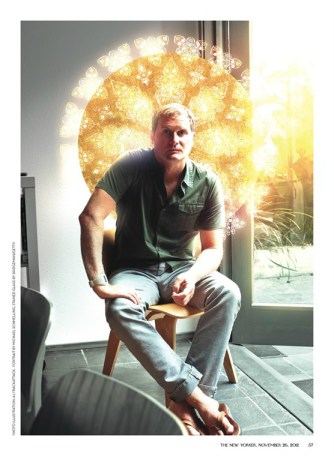 There’s a telling line in the recent story of Rob Bell in The New Yorker (“The Hell-Raiser”), where the author Kelefa Sanneh conjectured that in writing “Love Wins,” Bell was “dreaming of a world a world without arguments—as if the right book, written the right way, would persuade Christians to stop firing Bible verses at each other and start working to build Heaven on earth.” (60) Conjecture about what others are dreaming is often problematic. But Sanneh, like the rest of us, take our cues from what others say and write, which is standard operating procedure for human communication events. Conjecture is always fair game for conversation.
There’s a lot the author gets right in the article and there are a few places with loaded language and mashed-up history. For instance, the notion that the “church matured” (60) out of the notion of Hell as a physical place is too loose a summary to really work. Debates about interpretation rage today, from all quarters.
Sanneh’s focus on how a preacher became a questioner among a people who do not respond generously to larger questions makes for interesting reading. These are my people and I confess that I too have responded without generosity too many times. And yet these larger questions are exactly the conversational fuel that can help move forward this often awkward project called the church. Especially because the generations behind me are increasingly wed to questions rather than dogmatic answers.
Much of what Bell wrote resonates with me. In particular, I’m smitten by this notion that people can talk—even about very deeply held things—without demonizing or judging each other. The notion reminds me of those noble people who early in the history of the church were in conversation with the inveterate letter writer. They eagerly heard what he had to say then examined it on their own to decide whether it was true or not. I imagine them discussing with authoritative texts and possibly disagreeing, but maintaining their relationships.
Bell has done us a great service by voicing these questions, even though the penalties for him have been high.
###
Image Credit: The New Yorker
On Coasting
Good for biking. Not good for marriage. Not good for collaboration.
 I like to ride my bicycle and downhill is my favorite route. Coasting is the best part of biking. But biking is one of the few places where coasting is best.
We’ve spent the last five or six years coasting in a church. From the very beginning, we looked for places and situations where we could use our gifts and talents, where we could put our shoulder to the work and help the vision move forward. But in the end we just couldn’t break into the right spot where usefulness meets need meets a bigger-picture purpose. Now as we look for a people with whom we can fully engage, I realize I was coasting far longer than I ever meant to.
Except for biking, coasting is not a good place to exist. Just passively taking things in and waiting for stuff to happen is no way to attend any job, any relationship, any organization. Coasting in a marriage smells like doom. Coasting in life is no plan at all.
There are hopeful signs: last time we looked for a church, we just wanted to escape the groupthink of evangelical Republicanism. We achieved that. In the meantime we did a lot of good sorting out of this notion of church, how it is an awkward marriage of human structure and something completely Other. Something Other with far bigger plans than policing morality (though we do need help with this) or weekly showcasing a few people’s talents or developing sentimental religious feelings.
The hopeful thing I’m starting to observe is that people of faith are exhibiting behavior that makes me think a relationship with God looks like good work and fair treatment of others in the workplace. The hopeful thing is seeing people with a generous devotion to God that looks like pleasure with other people. This hopeful thing looks a pursuit of chesed rather than amassing more stuff or more fame or attention.
I’ve met people like this recently. People who are not coasting. That makes me hopeful.
###
Image credit: Benjamin Phillips via 2headedsnake
What if God Showed Up at Work Today?
I doubt it would look like church.
 It wouldn’t look like a Promise Keepers rally. It wouldn’t look like clouds of incense. Probably there would be no robes involved or collars or big leather-bound Bibles to thump.
There might be preaching, but no pulpit. And no audience. If God showed up, the preacher might be the unknown worker silently speaking with deeds, deep inside a process, attending every detail. The example of some human serving in a hidden way that was not meant to be seen.
If God showed up, someone might float an idea in a meeting, an idea that was not politically motivated or meant to show how smart they were. Just an idea to help the group move forward.
If God showed up, all the gossipy chatter might be silenced—all that vindictive, energy-sapping talk about so-and-so that goes on all day every day.
If God showed up, maybe we’d see why we worked there in the first place. And maybe we’d decide this job costs way more than it pays. And we’d quit.
If God showed up today, what would your work look like?
###
Image Credit: Robert Hunt via 2headedsnake
There Is No Litmus Test for President
There is only conviction and thinking and prayer and conversation.
 And even that conversation will vary within your community.
I’m reminded of the paradoxes of the old culture wars. A couple decades ago when politics were just as heated and dialogue just as rare, Mrs. Kirkistan and I lived in a rough section of South Minneapolis. People of faith in our community—I’ll call them Christians—routinely voted “for” Democrats. Given the particular demographic quirks of the area, it was easy to understand why those candidates did better. For a variety of reasons (economic, housing, vision, spiritual) we ended up moving miles away. We eventually found ourselves at a large suburban church where the assumption was that everyone voted “for” Republicans. Mind you, much of this was never said aloud. It was all just assumed.
After all, Republicans were anti-abortion and that’s where God hangs out—right?
After all, Democrats cared for the poor and that’s where God hangs out—right?
The danger of litmus-test thinking is that it promises some clear, unassailable answer: the candidate is this or the candidate isn’t this. Case closed.
I argue that leadership is and always has been about more than one thing. There is no litmus test because the human condition is complex and society and culture are exponentially complex. And while I’m certain God is all about creating life, the Creator is also bent on sustaining life, so listening to the poor, the widow and the orphan take up a lot of column-inches in our common, ancient text. But even those are not litmus-like tests, because which party will actually do those things best?
I’m hoping the faith communities around the country will have conversations that help their members vote not according to some mandate from a culture-wars war-room, but instead according their growing convictions from dealing with texts, from conversation and from prayer.
It’s time the church led by being counter-culture.
###
Image via thisisn’thappiness
What Question Consumes Your Church?
Not so easy to answer for most of us.
 Church is not a place of questions. It is a place of sameness and routine, where old stories—even ancient stories—are retold. We go to church to be reassured, right? Reassured we are forgiven, for instance. Reassured that I am personally going the right direction, and perhaps even welcoming that kick-in-the-pants reminder of how I veered off-course—yet again. Reassured there is a God. And that God has something to say.
No, church today is not a place of questions. It is a place of answers.
It was not always so.
I’ve been reading through an ancient text that documents the questions the early church was trying to sort out. One primary question was, “What is this thing?” A question even more visceral was surely muttered silently, “What the hell is going on here?” And after that, questions tumbled forth from any and every quarter:
- “How can this possibly work?”
- “How could I be friends with you?”
- “Is this belief so dangerous that I am hunted for it?”
- “Why are you sharing your fortune with me?”
- “Am I ready to die for this?”
Questions everywhere because what was happening was outside the control or vision of one or any individual. Questions because they were watching God do stuff. Extraordinary stuff.
Today we have it figured out. Programs and formulas and seminars and best practices—just like with any industry. We’ve got experts who know stuff.
But every once in a while, I see something in a church and say under my breath, “What the…? How can that possible work?”
###
Image credit: Alleanna Harris via 2headedsnake
Why Leaders Flee
A Tale of Two Organizations
 One organization was a for-profit and well-respected, with revenue growth of 15% per year and generally thought of as on the way up. The other was a non-profit, well-respected in the community, gaining hundreds of new attendees every year and generally thought of as on the way up. Both organizations had a mandate to grow leaders.
The for-profit harvested fresh MBAs from Harvard, Wharton, Kellogg and other high-octane B-schools to populate corner offices and lead the common folk. They provided these new grads with some authority, though few needed permission to whip the employees into shape.
The non-profit built a leadership program and invited people in for up to three years of hands-on experience. People came from all over the world to participate—for no pay—and were given all sorts of jobs to organize among the constituency.
In both organizations, the new leaders were issued mandates, which they interpreted and issued to the employees (for-profit) and constituents (non-profit). And work began.
“Well done,” said the top leadership to each other. “Things are getting done. These are the leaders we need.”
And so it seemed as they looked from the top down.
But from the bottom up, things looked different.
The employees and constituents realized the newly-installed leaders had energy but not experience. Worse: they didn’t know what they didn’t know. Even worse: the organizational leaders were now only talking with the newly-installed neophytes. The employee and constituent voices—the ones that shouted in joy at a shared mission and offered small course corrections the leaders had previously listened to—could no longer be heard. And as they realized this, the able thinkers, the natural doers, the low-key champions of the larger mission and the natural leaders started making exit plans to find a new place where they could again have a voice in the mission.
And while both organizations seemed instantly more efficient, their poverty would not become apparent for several years.
###
Image Credit: VVEINVENTVOU via 2headedsnake
Relevance is Dead. Long Live Relevance.
Future church isn’t like present church: connect four dots

here comes what’s next
We’re relating differently these days. I’m not talking just about Facebook and Twitter and/or any other rising social media. We’re relating differently because our expectations are changing—partly due to our experience of being heard (which does relate to social media). This post is aimed at the church, but much of it could apply to any organization. Some parts are unique to the church.
Here are four points to consider as you think about how organizations may connect in the future. Apply yourself to three bits of reading and one bit of listening. It’s all interesting/amusing/amazing. Then tell me: how do you see the church changing?
Dot 1: Jeff Jarvis & the Death of Content
Jeff Jarvis was invited to speak to a group of professional speakers. He spoke about how content is dead and how the speakers should really be hearing from the audience and piecing together brand new things.
I suggested — and demonstrated — that speakers would do well to have conversations with the people in the room and not just lecture them. I said I’ve learned as a speaker that there is an opportunity to become both a catalyst and a platform for sharing.
His talk did not go over well with the professional speakers and there was plenty of harrumphing. Read his article here. But the take-away was the opportunity for speakers (and leaders) to be both “catalyst and platform for sharing” versus pouring content from a podium.
Dot 2: Jonathan Martin & the Decline of the Church Industry
Over at Big Picture Leadership there is a lengthy quote from Jonathan Martin who has suddenly seen that he is not at the center of things. He laments that the Spirit has passed him and Piper and Driscoll and CT and all the other usual suspects in favor of the rush of new Jesus-followers in developing nations. Read the excerpt here. Read the whole thing here.
I like this guy’s approach. I think he nailed it. But I disagree that the Spirit has moved on to other countries and peoples. I think the Spirit is alive and well and deeply embedded in God’s people—wherever they are—just where the Spirit will always be as long as people profess faith in Jesus the Christ. But what Mr. Martin observed is simply the decline of church as an industry in the U.S.
To that I would add: and not a moment too soon.
It was never sustainable, anyway: all the inward-focused authority generated by books and CDs and conferences and leadership gurus and models and formulas. Why did we think that God worked through all that? Oh. That’s right. Because the authors and conference leaders told us so. Here’s my favorite take-away from Mr. Martin:
We enjoyed our time in the mainstream well enough to forget that the move of God always comes from the margins . . .
But what if Mr. Martin is even more accurate than he knew or believed? What if the locus of authority is shifting from controlling authorities to the people in the pew who refuse to spectate? What if people really started taking seriously the notion that they should bring their gifts and voices directly into the ritual gatherings and far beyond—sort of like that inveterate scribbler Paul wrote?
Dot 3: Apophenia and Participatory Culture
At Apophenia they are asking questions (fitting!) in preparation for a book on participatory culture. What is participatory culture? I’m new to the phrase too, but danah boyd cites several characteristics of such a culture:
- With relatively low barriers to artistic expression and civic engagement
- With strong support for creating and sharing one’s creations with others
- With some type of informal mentorship whereby what is known by the most experienced is passed along to novices
- Where members believe that their contributions matter
- Where members feel some degree of social connection with one another (at the least they care what other people think about what they have created)
I very much like this notion and phrase because that is the culture I most want to belong to. I spend my days thinking about communication in industry. I think the church holds the key to the most invigorating participatory culture possible. I believe the future of the church will be a participatory culture speaking directly to all culture rather than focusing inward to build a religion industry.
Dot 4: Reggie Watts: Sing the Milieu
Watch this guy produce his own content (sounds)—even as he grabs content (sounds and ideas) from the environment—to make something new. It reminds of Jeff Jarvis’ note that content is not king, and how he challenged a group of professional speakers to listen to their audience. It also hints at a jazz-like participation with the audience and the larger environment.
Perhaps one way to connect the dots is to say that the top-down approach to relevance is dead or dying. The top-down approach has long been a battle cry of the church-industry: let’s give the people what they ask for, but we’ll mix in the stuff we think they need, like giving a pill to a dog by mixing it in her food. Maybe what we’re seeing now is a new mix: content relevant from the bottom up because people are listening in a new way. More precisely, they are listening for the good stuff planted there by the Spirit of God.
And please hear: this is not either-or. It is both-and.
The church can lead the way in this. Not the church as an industry, but the church made of people. But will leaders have courage to listen to individuals? Or will leaders circle the wagons?
How do you connect the dots?
###
Image credit: Howard Penton via OBI Scrapbook Blog
Pray Like You Talk. Talk Like You Pray.
How to be.
 Back when I was newish to this notion of pursuing reunion with the Creator, I began to wonder about prayer. Was it just a kind of thick wishing; full of detail and electric longing, uttered into the silence? The practices of prayer remain mysterious to this day, but way back then my buddy said something I’ve never forgotten:
“Look. Just pray like you talk. Simple stuff. Forget the impressive words. Just talk.”
That proved useful. It still makes sense to me today.
Prayer is an articulated event. A speech-act that causes things to happen out in the world—though not exactly the way you might hope. This is what people who pray believe (people like me): that by talking to the One who controls everything, laying out the case, and leaving it there, stuff starts to happen. Of course, dictation and demands are fruitless. So are bargains. Prayer doesn’t work that way—it’s not exactly a reciprocal relationship.
But what if my friend’s advice worked the other way too: what if that easy conversation full of detail and electric longing was a part of our daily, hum-drum human conversations? So rather than utter desire into silence we uttered it into relationship? That does not sound like wishing into the silence. People would be listening—the very people right around you. They would hear. And sympathize. Or challenge. You’d get known. Your peaks and valleys would be known. There would be no hiding. If our talk were like our prayer, there would be a measure of freedom, and a whole lot of assumptions about the level of interest in our conversation partner.
No. Now I see that would never work.
But. Wait—that characteristic of being known is a peak human experience. What if we were designed for that very thing?
That would be something.
###
Image Credit: Kris Graves via Lenscratch
Just How Bad Were You?
 When I was a kid going to church, there was a lot of excitement generated around the story of how you came to faith. Being a good kid (in the generalized sense of comparison to people, but not in comparison to God, you understand), I didn’t have much of a story. In conversation with friends once, we lamented not having amazing from-the-pit-of-hell stories. We were convinced that was the whole essence of Christianity—that story of how you were a junkie/homicidal maniac/generalized ass but now you are a teetotaler/upright citizen/polite human of seeming different coinage.
It wasn’t until years later I realized that conversion story was only one small story that became a kind of exploded view in my church culture. We encouraged it to show the difference our faith made—sort of like baiting the hook. Our church was constantly inviting others in and we thought this was why they would come. But once in—then what? Life as usual, I guess. We seemed to drop the topic or just worked on becoming more polite and avoiding being a self-righteous ass. (I generally failed at this).
We seemed not to know what to do beyond inviting and converting. There was no place in our theology for the wisdom of God to penetrate into our work relationships or to investigate story-telling in art and theater and music. Those were off-base tools of the dark lord. I never heard about boldly moving forward in faithful work.
I thought of this after reading the Coracle Journeys post on beauty and seeing again that old emphasis on witnessing. I’m not against witness, in fact I’d like to take the word to rehab along with fellowship and strategy. But life is a fully-orbed thing, not a single set of words that when uttered complete you. Life is full of gifts to give away out of crazy chesed to any and all—just like God does it.
Think about that as you go to church today, and step out of the straight jacket and into the sprinkler.
###
Image Credit: marina molares via 2headedsnake

 conversation is an engine
