Archive for the ‘Collaborate’ Category
Talk to Me (Life of Privilege, Part II)
Be a Tool Today
It’s what we each crave: the incisive conversation that changes everything. Some of our most thrilling moments are verbal, from “I love you” to a simple “Thank you,” thoughts and affections formed into words can warm us like nothing else on a cold day. Words are arrows snapped directly into the deep-inside-brain-heart.
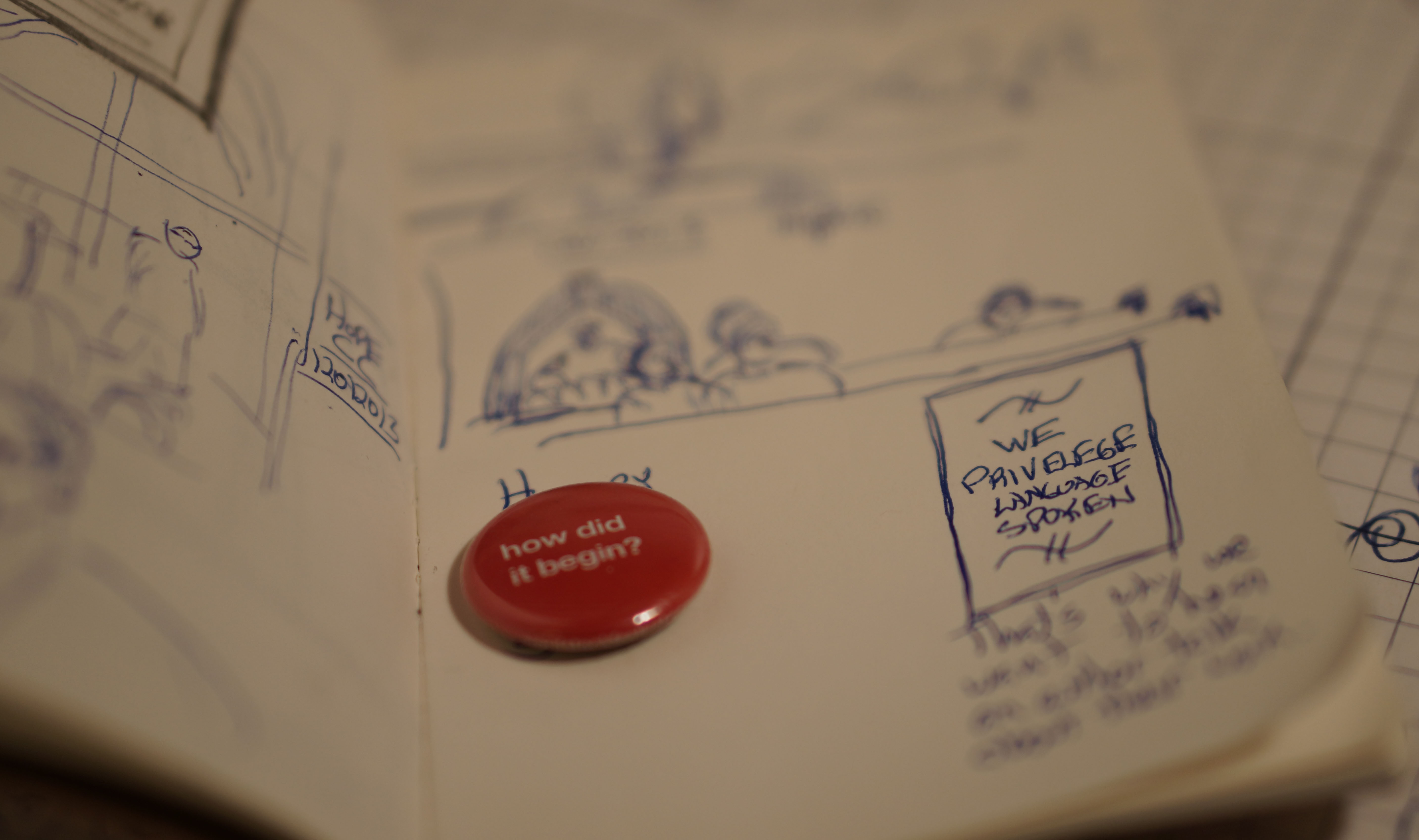
We privilege words spoken—and rightly so. When Kerri Miller hosts Talking Volumes, we listen in because we want to hear some fresh take on the author’s art. We hope the author will reveal some secret to the writing process that fleshes out what we know of her work. We listen intently for some meta-comment that shows how he organized the story. We want more and spoken words are our most believable medium.
Freshly-thought words spoken with spontaneous candor often achieve that end. Fresh words are a response to relationship and a response to the present moment. Which also explains why the CEO’s vetted and scripted remarks at the press conference reek of plywood and formaldehyde. We’re more likely to hear the real story from an employee down in the ranks.
Writing is a technology. Computers, smartphones, pen, ink: all technologies.
Words spoken are not a technology. They are made of breath. They are kind of alive, if only for a moment. But they can also live on in memory (for better or worse).
Which is not to say words are not tools. Words are possibly our closest tools. We use words to accomplish all sorts of things. Words may be our most important tool.
What relationships will you encounter today that will conjure conversations using words you never dreamed you’d say?
See also: Lorde & The Life of Privilege (Part I)
###
Image credit: Kirk Livingston
Taking Direction from Clem Fandango
A Year of Great Clients
I’m counting my blessings these days because I’ve had a year of clients who have been a joy to work with. Which is to say: they let me alone to do the work we’ve agreed on. And then we come together, talk parts through and make the work better.
All in all, there’s been very little Clem-Fandangoing.
And for that I am grateful.
###
Via Sell!Sell!Blog
Groundswell Plus: Please Write a Plus-Sized Book about Today’s Social Media Opportunities
Beyond Li & Bernoff’s Groundswell
Groundswell was published by Charlene Li and Josh Bernoff in 2008 (Boston: Harvard Business School Publishing). I’ve used it a couple times to frame this new opportunity and give social media marketing students a sense of the possibilities of communication beyond liking a snarky comment, link or photo on Facebook. I’ll use the text again but I’m also prowling about for newer texts.
Groundswell is a grandfatherly text by today’s standards. Published (counting fingers: 9-10-11-12) more than five years ago and much has changed. I like the book for the authors’ optimism about building and maintaining communities. And that is precisely where it is starting to wear thin. It turns out building communities is a much more complicated endeavor that works best when flesh and blood people talk with flesh and blood people. The social media piece is a nice and useful add-on, but students need to see a larger picture.
I’ve got other texts that give details about best practices and content strategy. We’ll certainly discuss the disciplines of editorial calendars and fine-tuning their understanding of their audience and tightly defining what their audiences need/want. And, as always, we’ll write and share and write and share and learn what works for ourselves.
Groundswell is firmly focused on taking full advantage of business opportunities. That’s why I first started reading it and it may be why I end up with something else next time. My students tend to be a devoted bunch: they attend this Christian college and their writing (most are English students with a professional writing focus, plus a few journalism and business majors) bubbles up from deep theological streams. Many will say they have no interest in business right up to the point where they realize they actually have to pay off their school loans. That realization attenuates their post-college work vision. One my teaching goals is to help students start to see just how much those deep theological streams can pour through the world of work with all sorts of happy results (an income comes to mind, but also making a difference in real life).
What I’d really like is a Groundswell Plus. I’d like a version of Groundswell that paints a larger picture of the community-building opportunities. Perhaps Groundswell Plus tells stories from the Arab Spring (for instance) or Ai Weiwei and points readers toward organizing for social change. Maybe this plus-sized version of Groundswell could point readers toward unearthing social problems (along with business opportunities) that might respond to collaborative energies.
Because in the end, students want to give themselves to things that matter.
Just like the rest of us.
###
Aunt Jo’s Snack Mix Recipe + Mop Mop Mix Footage
Careful with that marimba!
Make it today so you don’t eat it all before the kids arrive. And don’t try to mix too closely to the crazy marimba tempo:
Aunt Jo’s Snack Mix
- 1/2 cup margarine
- 1.5 teaspoon salt
- 1 teaspoon garlic salt
- 6 teaspoons Worcestershire sauce
- 3 cups Wheat Chex
- 3 cups Corn Chex
- 3 cups Cheerios
- 1.5 cups pretzels
- 1 can mixed nuts
- 1.5 cup Cheese Nips
- Preheat oven to 250 degrees.
- Melt margarine in saucepan.
- Remove from heat; add salt, garlic salt and Worcestershire sauce.
- Combine cereals.
- Pour margarine mixture over cereal and toss (loosely imitating marimba beat).
- Add pretzels, cheese nips and mixed nuts.
- Toss until all pieces are coated.
- Bake for 45 minutes in large shallow baking pan, stirring occasionally. Cool completely and store in an airtight container.
- Try to not eat it all the first night.
You’re welcome.
###
Chris Armstrong Just Said Something Insightful About Work
Your Actions Keep Shouting To Me
Which is no big surprise—Dr. Armstrong, Professor of Church History at Bethel Seminary, often says insightful things.
But in the Fall 2013 issue of Bethel Magazine (if it were available online, it would be here) he pinpointed a theological missing link: that while people of faith think lots about God and Jesus the Christ and Heaven (and Hell), we have not thought much about what happens between the beginning and the end. Which also happens to be where most of us spend most of our time (that is, we’re all at various points between the beginning and the end).
Work is a key feature of what we often call “life.”
So we have Creation, Incarnation, and New Creation. But most of us are pretty fuzzy on these three key parts of the Bible narrative. And because we’re fuzzy, we super-spiritualize our faith. Faith is about the stuff we do on Sunday, at church. But darned if we knew how it’s supposed to connect with our Monday-to-Saturday life, most of which involves work. The only biblical way to get past this is to reconnect with Creation, Incarnation, and New Creation.”
(Armstrong, Chris. A Theology of Work. Bethel Magazine, Fall 2013. pp. 22-24.)
I like what Dr. Armstrong says and would encourage you to read the entire article. He draws on insights from Tim Keller’s work on work and points out, for instance, that Jesus the Christ had a first career as a contractor (building with wood and probably stone too) before he turned to the Christ business. Or this: the Christ part of his career was there all the time but latent for the first 30 years.
Allow me to adjust Dr. Armstrong’s insight with this: it’s actually our faith spokespeople who direct us toward beginning-and-end thinking. That’s where their expertise lies. You might say pastor/theologian types have (limited) authority and a free pass to talk about that stuff (especially what happens when you die). And so they do. Week after week.
But it’s up to the people living the life and doing the work to talk about what Incarnation says about, say, copywriting. Or craftsmanship. Or selling or surgery or teaching. Or digging wells (or graves). Or caring for kids or forests or the earth itself. And maybe we should look for action rather than sermons from each other, because that is how most of us talk: through the work we do.
I would go on to wager that most of us regularly draw from quite a collection of eloquent life-statements about meaning and work: both how to do it and how not to do it.
###
Image credit: Via Frank T. Zumbachs Mysterious World
Talk as an Economic Tool
Flesh out your own opportunity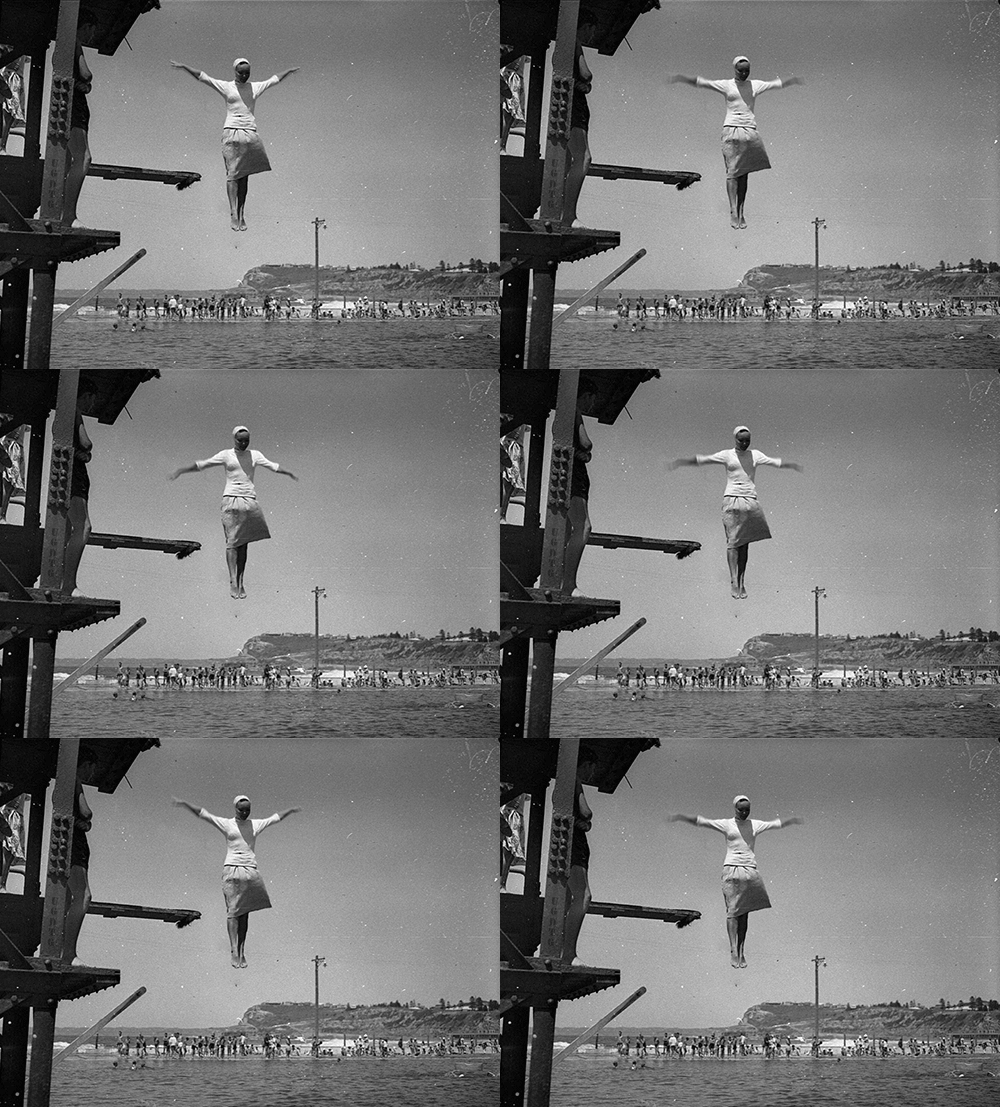
Grandad was a salesman. Talk was his tool. Talk and presence. He showed up with people to help them locate a house they could own. I doubt he talked many people into buying because he was careful about the economics of the deal. He dealt in houses long before our recent mortgage troubles. He sold houses back when mortgage interest rates were well over 10%. He depended on people keeping current with payments, and they did, mostly. At Grandad’s funeral more than one person told me how the opportunity to own a home had been out of their reach except for his help (which was cool).
Grandad talked his way through a house with a client, through a friendship, through a cribbage game, through dinner. Talk was his tool for getting stuff done, to the occasional exasperation of his wife and daughters. Talk made stuff happen for Grandad.
I’m gearing up for a couple classes that help college students take their writing out of the classroom and into the workplace and Grandad’s example comes to mind. What had been a rather solitary passion for these students—working out stories, poems and arguments for themselves or some instructor—can be made to have broader use in the world they’ll graduate into. This is my argument: enterprising writers use their writing/thinking/talking skills to serve others and actually find it satisfying. Even illuminating: it turns out that looking out for ways to serve others is also as much a knowledge-producing endeavor as the scouring of personal experience and/or feelings that become grist for a poem or story.
Moving writing from an inward to an outward focus begins with a firm grasp on what they can offer—a sort of inventory of one’s communication skills. And then comes some thinking about how those skills may help push forward an organization’s marketing objectives. And just like Grandad’s conversations, writing itself is the route in and the outcome. But it starts with hearing about a need, and that takes a different kind of dedicated listening.
###
Image credit: un-gif-dans-ta-guele via 2headedsnake
It’s Better to Have the Conversation Than Not
Assumptions are a cul-de-sac. Admissions, an autobahn.
A fast-moving project I’m on pits the changing need of the client with the frantic response of the agency. I’m writing copy and providing strategic direction for a moving target, which has (literally) kept me up nights.
One truth that has proven itself to me several times over the past few weeks is that it is simply better to have a conversation than to not. That may seem obvious to you. But it’s taken me years to come to understand this. I’m too easily put off by the gruff manner or the fly-off-the-handle personality. It’s too tempting to put my head down and just do the work. But the way forward—especially when the task and deliverables are murky—is to talk together about what we understand. Naturally it is embarrassing to admit I know only this much (thumb and forefinger stretched) when I imagine those who wrote the scope of work know this much (from here to the wall, say).
But admit I must.
It is the only way forward. And sometimes it is the only way to get to the place where you can put your head down and do the work. Admitting what I know is also the best way forward: anything I can do to get the team on the same page, whether that means showing my rough draft copy or my quick dumb sketch of what I think the interactive designer just said. And by admitting what I know, others can feel free to admit what they know. That’s usually when I come to find out someone heading up the whole thing is just as baffled. But when we talk openly about what we know and especially what we don’t, a measured response can emerge and we assemble our next steps. At least until the next client meeting.
There is something of an art to getting people on the same page. Some personalities fall into this easier than others. Getting open discussion is aided by vulnerability: the admission. The confession. I suppose the question is: how badly do you want to move forward?
See also Seth Godin’s commentary about fearing the fear vs. feeling the fear. It may give you courage for your task.
###
Image Credit: Mark Brooks via 2headedsnake
(Please Write this Book) Busted, Berated & Celebrated: The Job for Anyone
Is Job the Michael Bluth of the Bible?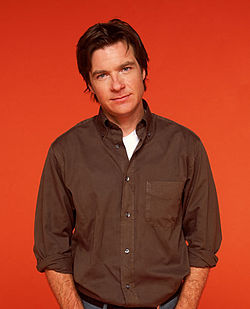
Now the story of a wealthy family who lost everything and the one [man] who had no choice but to, well…. It’s arrested development—with a twist: It’s Job’s tale, but with the focus shifted from his unjust suffering to a character trait everyone depended on.
He brokered peace for others.
Job had a habit of conciliating for his kids: after every round of feasting and drinking, he offered sacrifices, reasoning that just in case his kids cursed God, maybe his own intervention (which looked a lot like pleading) could help out. Just in case. This was Job’s habit.
And in the end, it worked. More on that in a moment
Would someone write this book? I want to read about how this habit of seeking help for others is more than just a pleasant idiosyncrasy of a hurting old man. Please unravel the mystery of this central piece of the story. I’d like know more about how Job’s habit of conciliation served as bookends to the entire story-with the Almighty making himself available (at least partly) because of Job’s habit. I’d like to read about how the right-sounding-but-flawed arguments delivered all the way through only reinforce how blinded we get in our self-righteousness. And how even the self-righteous need help in the end. I’d like someone to belabor the connection between what it means to care for others when you yourself are broken—wait, maybe Henri Nouwen already wrote that.
Please write Busted, Berated & Celebrated: The Job For Anyone.
I’ll read it.
I may even buy it.
###
Image credit: Wikipedia


 conversation is an engine