Archive for the ‘Communication is about relationship’ Category
Better Listening in 2014
Wonder + Bigger + Spark

Robert Kennedy Funeral train, Harmans, MD, 1968
Three attitudes that can help us listen better in 2014:
1. Regain a sense of wonder. It’s easy to pose as world-weary: our culture rewards the cynic and pessimist as more experienced. But let’s remember the fun of being with people who have a sense of wonder. It’s why we take young kids to see Santa or fireworks or midnight mass or sunrise service: they have the capacity to take it in without the baggage and doubts that come from years of living. It’s a capacity to believe and it need not be lost forever. I still cannot quite believe our Toyota—or any car—runs at negative 13 degrees (Fahrenheit). Slow down to savor the cold, or the taste of Mrs. Kirkistan’s stew or fresh bread, or the smart thing your spouse or colleague just said—all these inch us back toward wonder. And that is where we belong: amazed at the life around us, listening to eagerly take it all in.
2. This thing is bigger than me. In a week or so I’ll start teaching a professional writing class at a local Christian college. One supporting thought I return to again and again is a theological notion that giving ourselves away pays far more dividends than hoarding and habitual self-focus. It’s a thought that pivots around the old notion of kenosis or self-emptying. There are some great ancient texts that work this out and it never fails to open a set of productive thoughts for me, especially when it comes to the task and opportunity of writing. Two take-aways:
- It’s quite possible, and even likely, that I learn more about myself by serving others and focusing on others’ needs than I do constantly obsessing over my own needs and wants.
- Listening becomes like a tasty meal when I start to wake to the needs and opportunities around me.
This is a message I need to hear all the time. I constantly forget this.
3. See the spark in another person. No one likes the notion that we may have responsibility for a complete stranger, but there is an undeniable pang when you see the homeless person on the corner with the sign. That pang means you are still human (Congratulations!). This notion also has theological roots in the old idea of hospitality to a stranger. That pang moves us to do something—or perhaps we hide from it. Either way, the pang is there. Those moments of recognition occur all day long and they are a call to honor and, yes, listen to, the humans around us. It starts by acknowledging the names of the people in our meeting and moves out from there.
If we grew in listening this year, interesting and possibly amazing things would happen.
###
Image credit: Paul Fusco via MPD
The 99 and the One
Merry Christmas! 

Over the course of 2013 I’ve voiced criticisms and critiques of religion and Christianity, trying to sort culture from subculture and truth from fiction. Eisegesis vs. exegesis. Questioning which texts I privilege and why. Such unwinding and rewinding seems like waking up to the world around me. I’m mostly happy with the process. But it is also unsettling.
One enduring piece of this—one mystery that pulls me in again and again—is the birthday we celebrate today.
It is always dangerous to reduce this to that, so without reducing, I’ll simply point to this small story and say I like how it sets the mystery front and center:
What do you think? If a man has a hundred sheep, and one of them has gone astray, does he not leave the ninety-nine on the mountains and go in search of the one that went astray? And if he finds it, truly, I say to you, he rejoices over it more than over the ninety-nine that never went astray. So it is not the will of my Father who is in heaven that one of these little ones should perish.
Some will ask “What is astray?” Others: “What is perish?” Some will say, “Why ‘Father?’” All reasonable questions and of a piece with how we process the world today. But this notion that God wants relationship with people is mysterious and, for me, quite compelling.
I suspect 2014 will be even more full of mystery.
###
Image credit: Dumb Sketch by Kirkistan
Chief Conversation Officer: So 2009
Still…what if we armed someone with authority and charged them with getting us talking?
Not just some C-level social media manager—I mean someone really interested in starting conversations throughout an organization and (especially) outside the organization. A sort of gadfly armed with an attitude and a purpose. That purpose would not be selling (it seems natural to put a garrulous salesperson in that position, doesn’t it?). The purpose would be collaboration. And the attitude? Open.
This chief conversation officer would not deploy monologue with all her contacts. Instead, she would be skilled in the art of the open-ended question. She would be relational and vulnerable.
Yikes!
But those are the building blocks of conversation.
Anyone intent on climbing through an organization will read those words and be repelled—“relational” and “vulnerable” represent the opposite of the power trip and pulling rank. Just think on the best, most productive conversations you’ve had and you’ll see you were free to say anything, you were pulled in by the enthusiasm of your conversation partner and by the crazy fun of participation. You were not worried about how you were coming across—which is the collateral damage of most boss-focused rhetoric.
The Chief Conversation Officer (CCO) will be a fearless talker and an optimist. He’ll be a mindful connector. He doesn’t know where the next terrific idea will come from. But he fearlessly pursues conversation with janitors and CEOs and middle managers and walks along with line workers to hear their concerns and ideas. The CCO is boundary-crosser and synthesizer: processing information from everywhere and spinning it into, well, gold.
Launching people left and right.
Sounds like a fun job.
And this: the Chief Conversation Officer could work effectively from nearly any actual position.
What if 2014 were the year of the Chief Conversation Officer?
###
Image credit: Ho-yeol Ryu via MPD
Listen Your Way Into a Larger Story
Start to stop. Stop to hear.
There’s an old story of a woman who could not get pregnant. Her rival got pregnant with unrelenting, vexing regularity. Read the story here—it’s from an ancient text many of us privilege as telling true stuff about the world.
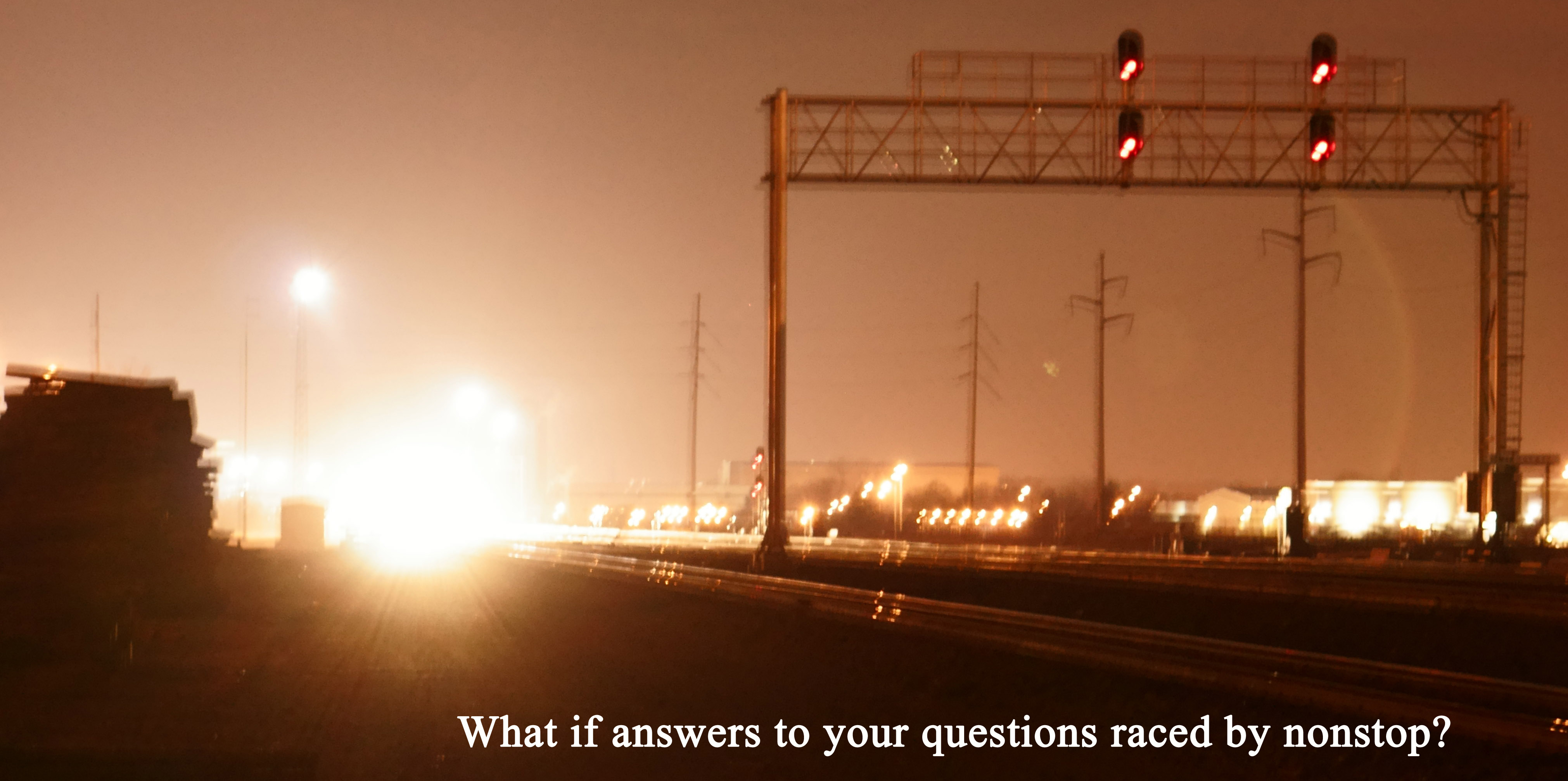
I keep returning to this story because of what it says about how desperation drives our listening habits. The truth is we don’t listen well. Often we don’t listen until we have to: maybe we need some information and it kills us to slow long enough for the clerk/cashier/spouse to spit it out. But we need that information to get where we need to go.
But what if we made a habit of listening? Intent listening. Close listening, rather than listening only when backed into a corner. What if we eagerly sought out answers in the conversations right around us?
What if the clue to the way forward after our recent lay-off was in the conversation we’ll have at 2:30pm with an old work colleague? What if insight for a growing doubt we’ve had about our faith was just inside the threshold of a chance conversation with an old friend? What if answers to our questions were spinning around us constantly?
That sounds like magical thinking, right?
The woman in the story prayed in her vexation and angst. She prayed so hard the feeble old guy watching her thought she was drunk. The old guy was no prophet and not all that well respected, still, his words formed an answer to the woman’s long-standing question. The story goes on to tell how the answer to her question was part of a much, much larger story with questions an entire nation was asking.
Questions and conversations can be a potent mix.
###
Image Credit: Kirk Livingston
Lou Gelfand: No More Complaints
How do you love an impossible task?
In darker moments I wonder what good lies in all the words produced, day after day—especially my own words. But if words serve only to remind or tell again the story of a bright spot someone saw, then maybe that is enough. Because bright spots shine a bit of hope.
Lou Gelfand was a bright spot for me.
I am a casual newspaper reader. I read the StarTribune and various news sources on-line. But the StarTribune has been my go-to, privileged (and sometimes angering) source for many years. Lou Gelfand was the long-suffering ombudsman/readers’ representative. For nearly 23 years he listened to complaints and reader’s rants and charges of bias (a countless number, surely). And then he calmly worked it out with words on paper.
Mr. Gelfand’s “If You Ran the Newspaper” columns were a must-read for me because he seemed fearless in taking colleagues and readers and the process itself to task. He aimed for resolution and made everyone mad as he did it. But there was something satisfying in his assessments. His words produced a sort of end-game where conflict and anger were addressed, if not always resolved.
Here’s Mike Meyers, former Strib reporter and friend of Gelfand, on the mood created by Mr. Gelfand’s assessments:
“He was a guy who often ate alone in the cafeteria because reporters were so damned thin-skinned,” Meyers said.
Mr. Gelfand was a kind of pivot point between audience and the communication machinery that was the daily newspaper. It was a no-win position from the beginning—an impossible assignment—which Mr. Gelfand moved forward with aplomb, sympathy and spirit.
His son called him “relentlessly fair” and Gelfand surveyed his own columns and found he split about evenly between backing the paper and the complaining readers.
Read Mr. Gelfand’s obituary here.
###
Image Credit: via Frank T Zumbachs Mysterious World
Behold the Power of 22 Words
Abraham Piper & the Second Most Shared Site in the World
Getting shared is the thing today. Maybe it’s always been the thing: interestingness traveled by word of mouth long before the share button came along. Producing (or pointing to) content that is so sticky, so memorable, that you feel like a hero passing it on—that is the point of sharing.
It turns out sharing can be measured.
And somebody, somewhere (Newswhip via The Atlantic), ran the numbers and found that Upworthy.com had the most Facebook-shares-per-article (and it is a huge number). But coming up second was Minneapolis’ own Abraham Piper with his 22 Words. Read Ned Hepburn’s story in Esquire: Second most shared website in the world. Twenty Two Words was way ahead of the likes of the Onion, Rolling Stone, Mashable, NPR and many other household names.
 My favorite quote from Mr. Piper—apart from building his empire on the tears of his children along with coffee and Coors Lite—was that his secret sauce was simply, “I can usually guess what my readers will like.” His sensibilities and his occasional wry comment makes his posts must-reads, sort of like the interesting uncle at the holiday table who says very funny stuff at just the right time.
Time after time.
Well done, Mr. Piper.
###
Talk to Me (Life of Privilege, Part II)
Be a Tool Today
It’s what we each crave: the incisive conversation that changes everything. Some of our most thrilling moments are verbal, from “I love you” to a simple “Thank you,” thoughts and affections formed into words can warm us like nothing else on a cold day. Words are arrows snapped directly into the deep-inside-brain-heart.
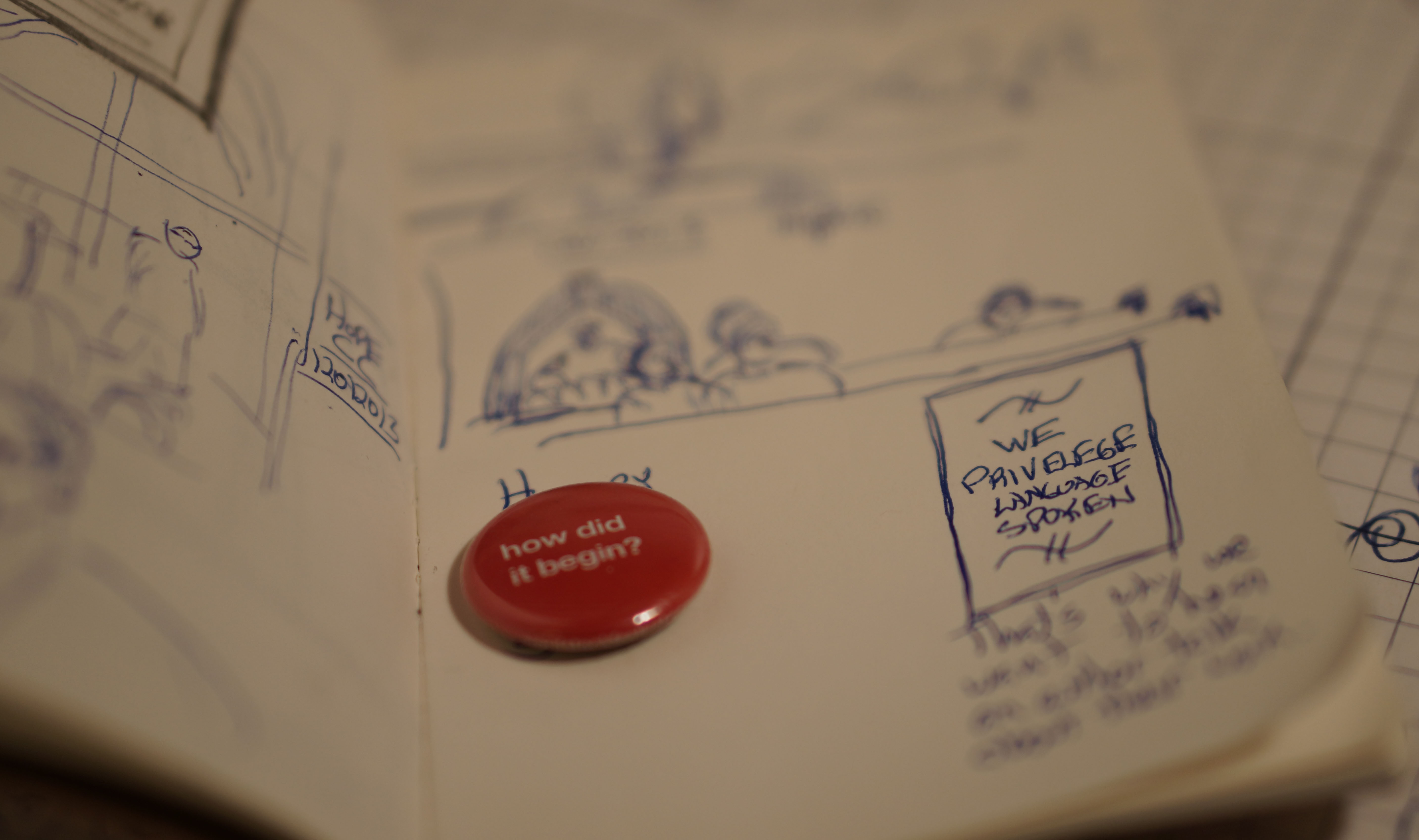
We privilege words spoken—and rightly so. When Kerri Miller hosts Talking Volumes, we listen in because we want to hear some fresh take on the author’s art. We hope the author will reveal some secret to the writing process that fleshes out what we know of her work. We listen intently for some meta-comment that shows how he organized the story. We want more and spoken words are our most believable medium.
Freshly-thought words spoken with spontaneous candor often achieve that end. Fresh words are a response to relationship and a response to the present moment. Which also explains why the CEO’s vetted and scripted remarks at the press conference reek of plywood and formaldehyde. We’re more likely to hear the real story from an employee down in the ranks.
Writing is a technology. Computers, smartphones, pen, ink: all technologies.
Words spoken are not a technology. They are made of breath. They are kind of alive, if only for a moment. But they can also live on in memory (for better or worse).
Which is not to say words are not tools. Words are possibly our closest tools. We use words to accomplish all sorts of things. Words may be our most important tool.
What relationships will you encounter today that will conjure conversations using words you never dreamed you’d say?
See also: Lorde & The Life of Privilege (Part I)
###
Image credit: Kirk Livingston
Lorde & The Life of Privilege
Because none of us knows everything.
Lorde’s critique of wealth (covered memorably by Puddles Pity Party) got me thinking about privilege. Her catchy pop tune about pop tunes is itself an expression of privilege. Not so much the gold teeth and Grey Goose (spendy vodka) as it is the kind of information she allows herself to dwell on: those privileged sources she and we take as true.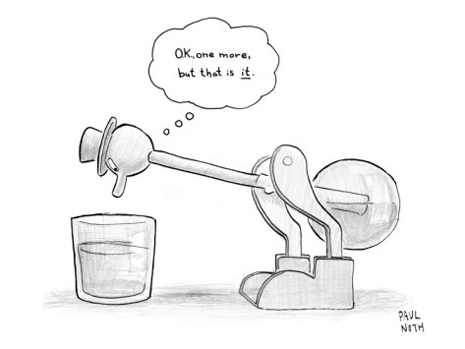
We all have privileged sources.
We might be a red-letter Christian or only read the Apostle Paul. We might consider sacred and true everything we hear on Fox News or NPR or read in the St. Paul Villager. We might listen more closely to a Marxist/feminist/liberation theology reading of any piece of literature. We want the commentator representing our particular bent to comment on life from the perspective of our tribe.
Humans are subjective beings and we do our best work from a perspective. We always have opinions and those opinions are based on whatever we scrape together and push under us, which is to say, we often form opinions first and then seek to support them. Every once in a while we form opinions from available evidence using solid reasoning. But that’s a lot of work.
What texts or authors or people in your life do you privilege? My two friends Rick and Jason often make remarkable book suggestions. Time and again as I’ve read their suggestions, I’ve thought: “Wow. This author is really talking to me.” My friend Russ has made prescient comments that have worked out in real life years later—so I’ve learned to not dismiss his chatter too quickly. My poor beleaguered friend Job wrote poetry possessing an uncanny ability to express my exact experience. Mrs. Kirkistan often sees things before I do. (Often? No: Usually. Typically.)
It’s not wrong to privilege our information sources—we cannot help ourselves. But it is also right to pause to examine what it is we privilege and occasionally ask why and whether we are served well by that privileged source. And perhaps to ask whether there might be other influences that can help us truth things out a bit more fully. Because (and here comes the hard part) even the John MacArthur’s of the world can have their truth sharpened by a Marxist/Feminist/Pentecostal/Whatever perspective.
Because none of us knows everything.
And I hope Lorde watches her lyrics cross the face of PuddlesPityParty. There is something revealing about the scary-tall grownup in clown costume belting out a teenager’s perspective on the world.
###
Image Credit: Paul Noth/The New Yorker via thisisn’thappiness
Groundswell Plus: Please Write a Plus-Sized Book about Today’s Social Media Opportunities
Beyond Li & Bernoff’s Groundswell
Groundswell was published by Charlene Li and Josh Bernoff in 2008 (Boston: Harvard Business School Publishing). I’ve used it a couple times to frame this new opportunity and give social media marketing students a sense of the possibilities of communication beyond liking a snarky comment, link or photo on Facebook. I’ll use the text again but I’m also prowling about for newer texts.
Groundswell is a grandfatherly text by today’s standards. Published (counting fingers: 9-10-11-12) more than five years ago and much has changed. I like the book for the authors’ optimism about building and maintaining communities. And that is precisely where it is starting to wear thin. It turns out building communities is a much more complicated endeavor that works best when flesh and blood people talk with flesh and blood people. The social media piece is a nice and useful add-on, but students need to see a larger picture.
I’ve got other texts that give details about best practices and content strategy. We’ll certainly discuss the disciplines of editorial calendars and fine-tuning their understanding of their audience and tightly defining what their audiences need/want. And, as always, we’ll write and share and write and share and learn what works for ourselves.
Groundswell is firmly focused on taking full advantage of business opportunities. That’s why I first started reading it and it may be why I end up with something else next time. My students tend to be a devoted bunch: they attend this Christian college and their writing (most are English students with a professional writing focus, plus a few journalism and business majors) bubbles up from deep theological streams. Many will say they have no interest in business right up to the point where they realize they actually have to pay off their school loans. That realization attenuates their post-college work vision. One my teaching goals is to help students start to see just how much those deep theological streams can pour through the world of work with all sorts of happy results (an income comes to mind, but also making a difference in real life).
What I’d really like is a Groundswell Plus. I’d like a version of Groundswell that paints a larger picture of the community-building opportunities. Perhaps Groundswell Plus tells stories from the Arab Spring (for instance) or Ai Weiwei and points readers toward organizing for social change. Maybe this plus-sized version of Groundswell could point readers toward unearthing social problems (along with business opportunities) that might respond to collaborative energies.
Because in the end, students want to give themselves to things that matter.
Just like the rest of us.
###
Chris Armstrong Just Said Something Insightful About Work
Your Actions Keep Shouting To Me
Which is no big surprise—Dr. Armstrong, Professor of Church History at Bethel Seminary, often says insightful things.
But in the Fall 2013 issue of Bethel Magazine (if it were available online, it would be here) he pinpointed a theological missing link: that while people of faith think lots about God and Jesus the Christ and Heaven (and Hell), we have not thought much about what happens between the beginning and the end. Which also happens to be where most of us spend most of our time (that is, we’re all at various points between the beginning and the end).
Work is a key feature of what we often call “life.”
So we have Creation, Incarnation, and New Creation. But most of us are pretty fuzzy on these three key parts of the Bible narrative. And because we’re fuzzy, we super-spiritualize our faith. Faith is about the stuff we do on Sunday, at church. But darned if we knew how it’s supposed to connect with our Monday-to-Saturday life, most of which involves work. The only biblical way to get past this is to reconnect with Creation, Incarnation, and New Creation.”
(Armstrong, Chris. A Theology of Work. Bethel Magazine, Fall 2013. pp. 22-24.)
I like what Dr. Armstrong says and would encourage you to read the entire article. He draws on insights from Tim Keller’s work on work and points out, for instance, that Jesus the Christ had a first career as a contractor (building with wood and probably stone too) before he turned to the Christ business. Or this: the Christ part of his career was there all the time but latent for the first 30 years.
Allow me to adjust Dr. Armstrong’s insight with this: it’s actually our faith spokespeople who direct us toward beginning-and-end thinking. That’s where their expertise lies. You might say pastor/theologian types have (limited) authority and a free pass to talk about that stuff (especially what happens when you die). And so they do. Week after week.
But it’s up to the people living the life and doing the work to talk about what Incarnation says about, say, copywriting. Or craftsmanship. Or selling or surgery or teaching. Or digging wells (or graves). Or caring for kids or forests or the earth itself. And maybe we should look for action rather than sermons from each other, because that is how most of us talk: through the work we do.
I would go on to wager that most of us regularly draw from quite a collection of eloquent life-statements about meaning and work: both how to do it and how not to do it.
###
Image credit: Via Frank T. Zumbachs Mysterious World

 conversation is an engine