Archive for the ‘Communication is about relationship’ Category
How Could this Book be More Interesting?
I’m about to go fishing with my Listentalk book proposal (via www.ChristianManuscriptSubmissions.com). How could I make the summary (below) more interesting? Be honest. People respond to these posts by email, on Facebook and occasionally right here at “Engage.” Vent your spleen. I’m listening.
 Listentalk: How Simple Conversation Changes Your Life Every Day
Why does one conversation make you scan the room for escape while the next sends you breathless to register to run a marathon—though you hate exercise? Listentalk: How Simple Conversation Changes Your Life Every Day shows how humble, mundane conversations have the power to turn our life direction every single day, by:
- Reminding us of the pivotal conversations that have shaped and sculpted our own lives. Like the chance comment to your 18-year-old-self from an acquaintance about a “school you should check out,” which sent you a direction that ended in law school, marriage and being appointed as a judge (true story).
- Showing how God purposefully composed the human condition so that while we are limited, we are limited together. Conversation has a way of bumping out our human limitations in extraordinary ways, so that my lack of understanding leads to a discussion that sheds light on a key topic but also opens an opportunity to pursue the work I love.
- Exposing the component parts of listening and talking so we can better understand how God speaks to and through us
- Providing practical insights into how we can listen and speak for powerful good every single day—including wise use of social media
Today’s incendiary and vitriolic talk leaves people feeling weary and soiled. Listentalk refreshes Christian adults, Sunday School classes, small groups and college students by reminding them of the wonder, curiosity and serendipity that have been part of the deep verbal connections that have shaped their lives. These deep connections have often sprung from the unlikeliest of mundane conversations.
Listentalk tells stories of conversations that both suggest and model an extraordinary set of expectations and outcomes for ordinary talk. Listentalk helps people see verbal, visual and other-sensory conversational episodes as the powerful shaping tools they are—and provides suggestions for making them even more powerful. Unlike possibility-thinking, self-help books, Listentalk is grounded in the nature and actions of the conversing God of the Bible who expected and realized world-changing outcomes from each conversational episode. Listentalk frees readers to see daily conversation in a very different light by inviting readers to reach out in trust to each day’s conversational partners—an ever-expanding set of partners due to changing attitudes (about communication, authority and the loss of gatekeepers) and developing technologies.
Listentalk offers a primer on navigating the growing social media space as redeemed conversational partners. Creating communities of target audiences is the new marketing strategy. Leading public conversations by reaching out with dialogue that gifts and blesses is not only supremely Christian, but supremely strategic.
###
Sinister Egyptian Texts
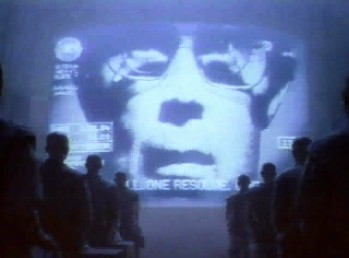
"We're here to help you."
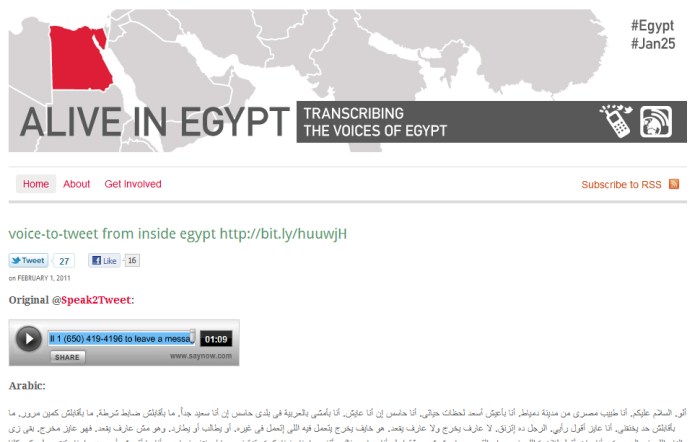
Vodafone and France Telecom SA were forced by the Egyptian Government/army to send texts to their customers, the Wall Street Journal reported Friday. The texts had to do with “national security and general safety.” One example texted message: “Egyptian youth beware of rumors and listen to the voice of reason. Egypt is above everyone so protect it.”
The Egyptian government/army would likely argue those were not threatening messages, and were intended for general safety. But every time an institution speaks to an individual with an institutional voice, the results are less than believable. In this case, they were wildly unbelievable—given Egypt’s continued attempts to break up the persistent crowds and silence their demands. None of the actions of the increasingly desperate Egyptian government actions are at all surprising given their general shut down of the Internet.
The medium hobbled the institutional message by showing up on private phone carried in a private pocket or private purse. This alone makes national security and general safety messages extremely threatening. One thing the messages through the medium made clear: the army has taken control of private industry and will force their message into your personal sphere.
That’s not the right message for this revolutionary crowd.
###
Oh to be an Introspective French Firm.

People have conversations. Do companies?
On Tuesday the head of France’s national railroad apologized for trundling 20,000 Jews to Nazi camps in 1943-1944, as reported by the NYTimes and carried locally by the StarTribune. US Lawmakers, survivors and descendants had moved to block SNCF from winning US contracts had the company not acknowledge their role. The official word from the firm said the apology was part of “the company’s longtime effort to examine its past and denied that it was prompted by the company’s U.S. ambitions.”
There are at least three striking things about this story.
One: It defies logic to disconnect the company apology from looming loss of revenue from possible US contracts. To insist otherwise cheapens their communication. One clearly connects with the other.
Two: Applying economic pressure to force a company to tell the truth about their role in administering a great evil is a marvelous use of our capitalist instincts. There is a fair amount of both optimism and boldness in this move, especially since official spokespeople nearly always sidestep words that link their brand with anything other than blue sky, sunshine and happy smiling faces. Bravo, lawmakers, survivors and descendants!
Third: To think that a company has a “longtime effort to examine its past” strikes me as, also, beyond belief. Companies incorporate for economic muscle. They organize to move forward, they look for opportunity, hone in and exploit. Companies make money. Companies don’t sit at an outdoor café examining past failings. I’m hard-pressed to think of any introspective executive who would free a budget line item for “Company Introspection.” Please, please let there be such a leader in this world. But maybe French companies have a soul?
###
Two Words Cost Me Dearly
 My Splendid Sabotage
Please know:
First: I wrote the words 40-some hours into a 51 hour project spread across a week and a half.
Second: I was desperate to capture the zeitgeist bouncing between client and agency principals.
As I wrote these two words I immediately moved to delete them. But something stopped me. Was it reckless whim? Had I given up? Why oh why did I pause over “Delete”? My self-editor should have been there, sitting beside me. He was still locked in the self-editor-dungeon where he has a cot and a Folgers can to pee in. He doesn’t get out much when I’m creating.
“Flabby Paths”
Oh, sure. They seem innocuous—even forgettable. But as a subhead for a component of this project, they were the stalled car on the track that derailed the train pulling boxcars of produce that needed to get through right now. Or: These words distracted the creative team and hurried them down a path and off a cliff.
So, my bad. Personal penalty: pulling my invoice and attacking it with scissors and fresh resolutions. It’s a matter of integrity. It’s also a matter of retaining relationships.
Floated or Finished?
It’s never just the words, of course. It’s the trust built between creatives as a project moves forward. With some team members you are free to say the really stupid stuff and let it sit for a moment between you, even as you all know some better idea is moving up an esophagus about to be uttered. But with other teams, and especially in hurry-up mode, words appearing on paper carry more weight: not of an idea floated but an idea finished. At this point in the project, my self-editor needed to be there with his “HIT DELETE” stamp poised. Because time was flying and next steps need to step up solidly.
My point? Conversations are never formulas that work in every case. And: while creating, the self-editor needs to dwell in the dungeon, but words making their way out in public need to meet his approval. Let him out sometimes.
###
Sometimes a Conversation is an Image
We Act Out What We Cannot Say
There are moments when we are open to listening. These moments may indicate we are open to change as well. People have been telling me their stories about conversations that changed their lives. Sometimes an inconsequential conversation at an inconsequential time can make all the difference in the world.
Louise Bell tells of a moment, not exactly a conversation but an image, that changed her life. Years ago her African-American grandparents had been murdered in the most gruesome way over an act of mercy on their part. Justice had not been accomplished in their murder and the wound was deep. It was when Louise mother died, after moving back to the south with an interest in reconciliation, that this moment occurred.
Listen to the December 30 edition of The Story over at American Public Media. It’s in the second half of the show.
###
Where Does Insight Come From?
How do I discombobulate without getting fired—or hired?

Over at the Philosopher’s Playground, Steven Gimbel wrote recently of his need to discombobulate his students (with their “naively smug beliefs which they’ve never thought very hard about.”) to help them begin the work of philosophy. I wonder if the act of getting discombobulated is the beginning point for producing any insight.
A few days back I had coffee with a friend who is a human resources executive and coach and thoughtful person. We were talking about what makes an organization dialogical, that is, willing to enter into conversation internally (versus the usual barking of orders from one management level to the next). Carol, as it turns out, had a keen interest in how dialogue works and was able to identify four stages in a verbal exchange required to produce insight:
- Awareness of a problem or issue
- Trigger: something in the exchange triggers a reflective moment. Insight often falls from the reflection
- Insight: the Aha moment, when suddenly I understand something previously opaque to me
- Action: Do something with an insight or it is gone. Write it down. Tell someone. Do anything.
Gimbel’s discombobulation seems to help with the awareness phase. We need to understand how what we thought certain or easy is neither certain nor easy. Sometimes I use a classroom exercise to help create the trigger/reflection step for my students. But just as often, in ordinary conversation, my discombobulation finds relief when my friend asks a question and I lapse into momentary reflection which often leads to an insight. Sometimes I feel like an “Aha” addict: there’s nothing like suddenly realizing a new truth—nothing like that “click” when a critical piece of how life works suddenly falls into place. That’s a big part of why I write.
Perhaps the key to those four stages is the action part. We need to do something with an insight. Right then at the very Aha moment. Otherwise it’s lost.
But corporate conversations routinely detour around discombobulation. It’s partly a time issue but mostly the politics of a department: a boss or manager or VP rarely seeks out discombobulation, especially from subordinates. The person in charge would much rather pay a high-priced ad agency or consulting group to come in and discombobulate them. I’ve been on both sides of a number of those meetings.
I’ve been trying to help my students become active discombobulaters in their workplaces: from wherever they land, my hope is they ask the impertinent questions that poke through the malarkey and point out deviation from mission.
###
Who Cares What You Think?
Hearing from your non-target audience is critical to moving forward
I look forward to chatting with a friend and HR executive about how or if her organization encourages dialogue internally. It’s going to be a tricky conversation and I’m not at all sure I can verbally explain what I mean.

What's out there?
Dodgy Questions
I’m working backward from the notion that target audiences and publics are no longer willing to suffer monologues, sermons and sales pitches from companies trying to get their dollars. As I talk with clients and friends, I realize the unwillingness to engage in dialogue with their target audiences actually comes from a deep place of control that leaders want to maintain. Dialogue looks like brazen and reckless openness that offers little or no payback: sort of a personal, self-inflicted Wikileak that will most certainly sink the ship.
In a sense they are right: telling what we know and offering it in exchange for discussion and relationship does seem like giving away the store. But it isn’t exactly that and it will become less like that over time. Dialogue today is more a recognition that the audience that once packed your lecture hall is now making its way to the stage, each with their own microphone and their own index card of questions.
The willingness to engage in dialogue is much, much more than turning on another marketing channel or sprucing up a communication strategy. It is a deep-seated willingness that runs counter to the way many of our businesses are organized.
Talking to the Other
I’ve been tracing the notion of the Other back through Derrida to Levinas and Hegel. I’m trying to understand exactly what is at stake when we open ourselves to true engagement with another person. In particular, engagement with people outside my demographic, outside my target audience, outside my belief set. What are they talking about and how have I excluded them and what have I missed through my exclusions?
I’m eager to know what a company that opens itself in this way looks like: who are they internally? How do they talk with each other in a way that allows them to be open to talking with others?
So—this conversation. Are you interested ?
###
Listen Up: #2 in the Dummy’s Guide to Conversation
The problem with listening is the other people who keep talking
 You’ve opened your pie hole and made like a human: shaping experience into words that can be understood by the humans around you (though it’s still a bit fuzzy how anyone understands anything). You anticipate being stopped dead in your tracks with realization or wonder, right in the middle of a conversation.
But there’s a step to bridge the two: you’ve got to listen.
The traditional problem with listening is other people: they keep talking. When they are talking, you are not at the center and they keep uttering words that don’t refer to you. For instance: they rarely mention your name, which you keenly listen for. They keep talking about their own experience. Why, oh why, don’t they stop talking and ask me about me?
Let me introduce you to three friends who knew something about listening: Mortimer Adler, Alain de Botton and Jesus the Christ. I met Mortimer Adler when I read his book, “How to Read a Book.” Why read a book on how to read a book? Because of the author’s crazy fascination with understanding. He didn’t just read, he annotated, he outlined and he synthesized. He labored over passages in long conversations with the authors. Plus, he made it sound like fun (which it is!). Of course, there is not enough time to do that with every book, so Adler picked what he called the “Great Books.” His Great Books program has gone in and out of style over years, depending on your politics and your conclusions about who qualifies as worth reading.
Alain de Botton writes readable books that satisfy his curiosity and pull his readers into the vortex of questions he counts as friends. If you’ve ever wondered how electricity gets to your house or what is the process behind producing biscuits (that is, cookies) or why Proust is worth reading or why Nietzsche was not a happy-go-lucky guy, de Botton is the author you want.
Jesus the Christ knew something about listening, despite being both God and man. His human condition opened a limiting opportunity which in turn caused him to steal away for hours to converse with the God of the universe. I go into depth on this in Listentalk. But the point is that prayer, which is ultimately more about listening than talking, was a preoccupation of the man who was God.
Listening opens us to hearing—which sounds like “duh” except for when you examine your own listening practices and realize how often you are thinking of something else entirely when your spouse/child/boss/friend/neighbor appears to be talking. But to really hear, to be crazy to understand, to be curious and to be committed to connection opens us to the place where we can be stopped dead in our tracks.
###
Listentalk Chapter 3 Synopsis: Building Communities with Words
Words Can Accomplish Stuff Among Us
We spend ourselves in word-formation without giving it a second thought. Producing and delivering words is our daily task. Words are the currency of our social capital, and we cash them in on paper, orally and electronically. And yet even as we spend our words to persuade or motivate someone to action or even command (perhaps depending on the context of hierarchy to provide the whip missing from our voice), we sometimes bank up even more social capital. Words are the giving that keeps giving—sometimes for good. Sometimes for ill.
Our words can be deposits in a community-wide bank as we annotate a context that helps a group self-identify, clarify tasks and purposes and simply move forward. Our words can pinpoint the human condition in a way that names a common problem or promise and so frees others to tackle it. Our words often fly out in camouflage simply because they blend in so well with all the other words flying through the air.
The opportunity to let our words fly is changing on a monumental scale because of technology and because of new attitudes of who, what and how to hear from each other. The opportunity has opened a wide new vista for forming community. But this is no time to hold back. No. It is time to jump in.
###

 conversation is an engine