Archive for the ‘Communication is about relationship’ Category
Sight isolates. Sound incorporates.

What do we lose when we don't hear?
We talk endlessly about community but find the doing thereof problematic. It’s not just because we like the idea of people better than actual people, it’s that context sometimes stands in our way. Reading Walter Ong’s Orality and Literacy: The Technologizing of the Word (NY: Routledge, 1993), I’ve come to wonder if technology divides us. Not any highfalutin technology like iPhones or mobile apps or Twitter or any of the current batch of ones and zeros in our pockets. I’m talking about a very basic technology that we all take for granted and is mostly invisible: writing and, in particular, reading.
When I was a kid, before I spent so much time reading, I was fascinated by my parents’ and grandparents’ conversations. “Fascinated” is too strong: there were moments of fascination, especially when they told some story of their life growing up. Or when they described some mistake they made—especially if it was funny. I had to listen carefully for those stories because mostly their talk was boring, about money or work or gardening or real estate or…well, you’ve listened to these conversations. The interesting stuff poked out every once in a while and that’s what kept me hanging around. It was entertaining to hear the stories. And they were stories I would not know of if I did not hang around.
“Sight isolates. Sound incorporates.” That’s Ong’s concise statement about what happens as we attend to our different senses (71). I think he’s right. Reading, for me, is mostly an individual thing. It’s rather private. I read all the time, and when I read, I am drawn into myself. I actually begin to resent when someone talks to me when I am reading because—limited person that I am—I cannot continue reading while they address me. And yet often I would rather keep reading then enter into conversation.
This is not a judgment on reading and writing and seeing. It is a simple statement of truth: sound, since it is an event (Ong describes sound as something we experience only as it stops or goes away), it is something “we” experience. It is shared. Sight pulls us into ourselves. Reading, in particular, pulls me in and makes me ponder stuff. The pondering goes on deep in my brain, even while I look up from my book as you address me. I’m listening. Kinda.
Here’s the thing: those conversations with parents and grandparents and loud uncles were truly an event. I recognize that now. And we responded as a “we.” We laughed. We cried (occasionally). We responded with an urgent “That’s crazy!” But it was what “we” did.
Not so with reading.
I’m preparing a class for Northwestern College to help writers write to build community using social media. My definition of community must expand beyond those folks that are physically nearby to include those who share common interests. Laura Gurak, in Persuasion and Privacy in Cyberspace: the online protests over Lotus Marketplace and the Clipper Chip (New Haven: Yale University Press, 1997), says the concept of community is rooted in place and in common values (8-9). Building community puts a priority on the sharing of those common values. But in this case, the building of community happens as individuals sit (or stand) and read. They read on their own.
I think of a church service. We listen to the preacher. We listen to a text read. It affects us together. We discuss it as we drive home and as we sit eating lunch. I wonder if those first people experiencing “church,” way back when the gospels were being written, way back when Paul was writing his letters (letters now incorporated between the leather-like covers of the book I own), shared a sense of wonder at the event of hearing. That shared event brought them together in a community, where they just had to talk about it. Because by talking about it they experienced it all over again. We have the same opportunity, but our technology calls us away. My book (or blog list or The Onion) calls me away from conversation. Perhaps it calls me away from community. But not necessarily.
What do you think?
###
Addendum: I mean no disrespect for those unable to hear. I am more targeting the shared experience of responding to something we’ve all experienced, which is open to all.
Facebook at Work—A Both/And Approach

Whole people go to work
Employers are of two minds when it comes to Facebook at work. One view is that it is a great time-waster and should be removed to an employee’s personal time. That view has much traditional merit because workers are paid for productivity. Productivity is part of the social compact we agree to when stepping across that corporate threshold.
Another view is to encourage employees to use their relationship-building tools to advance the cause of the corporation—much like United Health Group invited their employees to lobby congress (mind you, on a “completely voluntary” basis) against reform which could hurt the company’s bottom line. Of course, spouting company talking points in a Facebook news feed sounds even more plastic and lifeless than it usually does in a news article.
Is there a third-way, an alternative that lies somewhere between an outright ban and a manipulative directive? I put this question to a class of college juniors and seniors studying writing in organizations—people who swim in social media all day every day. One woman suggested the typical 5-10 minute coffee break as an opportunity for social networking. In fact, that has always been the traditional purpose of that break: connecting with people over a cup of joe. Generally those breaks have not been work related. Facebook and Twitter and the like mean that now those breaks are taken with friends scattered across the planet rather than colleagues in the next cube.
Of course employees access Facebook and Twitter all day without approval from their employers. But this third way suggests these conversations and relationship-building activities can be good for the company. Not only does limited corporate approval give a nod to employees as whole people who bring their whole selves to the workplace, it also recognizes that connections and communication are life-giving interactions that help a person deal with difficulty—wherever that difficulty happens to come from.
Granted, not every job can allow this. I’d rather my air traffic controller not check Facebook while we’re flying through a crowded airspace. But a lot of jobs have room for connections and communication. Let’s publicly recognize that connections and communication are a good thing.
###
Don’t Be a Twilight Fan with Your New Hero

Remember to breathe.
Gatekeepers have always been part of life. To get to the spine surgeon, get cozy with the receptionist. To get to the editor, make nice with the intern who rejects 95 percent of the manuscripts on the slush pile. To talk with the famous professor, approach through the administrative assistant, or see if you can locate which of the three official offices the professor may be in when you go to chat. But for the sales rep, the writer or prospective student—and everyone else—that world is quickly changing.
Distances compact as people play with new technologies. Surprising conversations now beckon with folks we would have never dreamed of contacting last year. Suddenly access is open to people previously hidden behind protective ranks of gatekeepers. They blog their thoughts about the news. They comment on other people’s posts. They tweet about last night’s dinner. They are approachable—possibly more approachable then they realize.
There’s a new democratization at work here. Technology plays a part in making this possible, but there’s a new attitude afoot. People are making pieces of themselves searchable to the public: their twittery/bloggy/commenty voices can be located and absorbed. And not just our heroes, because we are all developing voices and we want to use those voices. And we’re developing an appetite to hear those voices. And we are also hearing new voices and developing new heroes.
So let me be cautious in my contact.
Without the gatekeeper to set up my query, I must quickly frame up the context of my communication so I can approach that surgeon/editor/professor with a brief, tactful query. I don’t want to be like the star-struck Twilight fan who forgets to talk—or breath—and so lose an excellent opportunity.
The impetus is on me (on us) to grow in this framing, this contextualizing skill. Otherwise we run the risk of being just another screaming fan. And that’s just not conducive to conversation.
###
Don’t Hold Your Breath for an “FDA-Approved” Logo for Your Medical Device Social Media Efforts

Can "trust" enter our discussion?
The lock in the corner of your browser indicates the website is legit. Go ahead and transact business with your credit card number and personal information—your information is secure. All is well. That is, until it isn’t. If it hasn’t happened already, that little lock can be duplicated and put to nefarious uses.
Same thing with an FDA seal of approval logo to place on your blog or website. Pharmaceutical companies are suggesting such a graphic as a way to set their audiences (and their corporate lawyers and the teams of regulators, their board members and shareholders) at ease. Seeing a logo would be an admission that the contents included are all good to go.
That’ll never happen.
That‘s because while the FDA may approve a device or drug for market, they work hard at not becoming responsible for the results the product. And for a set of folks who want to read every word in a document before it hits the street—people who care about the font size of your disclaimers (5 pt? Too small! 6 pt? OK.)—granting a seal of approval to the wild west of social media would be like arming the inmates and locking the prison doors behind them as you shoo them out (may I mix metaphors?). Aside from the fact that even a word-guy can duplicate a logo and affix it to anything, there is simply no way the FDA will be responsible for watching all the dialogue that must—and will—take place. Hiring staff for such Big Brother activity would break the bank (wait—banks are already broken).
Somewhere in the future, the dusty notion of “trust” may well rise up again. I know it seems quaint, like a whiff from centuries past, but it simply is not possible to regulate every part of dialogue. Just ask East Germany. Or watch “The Lives of Others.”
Dialogue is not about guarantees. It is about exploring. Perhaps the best we can do is to voluntarily adhere to a growing body of disclosure best practices.
###
Adland: A Global History of Advertising [Book Review]

The storied lives of creative talent.
The marvel of the Mark Tungate’s history is in how interconnected are so many of the storied agencies. The formula gets repeated again and again: agency hires young creative talent who eventually finds the place too stuffy and goes to start his or her own firm. I like hearing the backgrounds of many of who are now household names: Ogilvy, Burnett, Chiat, Hegarty.
Every local advertising scene has its own particular nuanced and storied development. Certainly this is true of Minneapolis (of which there is no chapter in Adland). While there are certainly national and internationally known agencies in the area, the surprise to me is how little of a creative dent local agencies have made with one of the main exports: medical devices. Certainly budgets have been smaller and consumer advertising for these firms has been nearly non-existent. But it is also true that larger medical device firms are wooed into the unexceptional pockets of agencies on either coast.
I expect a particular creative knowledge to rise from the creative milieu that is the Twin Cities—in much the same way that older established medical companies spawn one company after another. Perhaps creative applications of social media may help establish the Twin Cities communication agencies with the knowing and much-needed human voice in the dialogue between medical device firms, clinicians and consumers.
###
What’s Your Favorite Book on Social Media? Please Retweet! #WriteForCommunity

Here they come!
I’m researching and writing lectures for my class “Writing to Build Community using Social Media” at Northwestern College, a Christian liberal arts college in Saint Paul, Minnesota. The class will be composed of college juniors and seniors who are writers, communicators and folks focused on doing ministry after they graduate. My curriculum includes on overview of the changing face of marketing and communication, the newly generated opportunities to hear and be heard, bits about the kind of leadership required to build communities today and tomorrow, as well as a brief theology of communication and solid rhetorical strategies and tips for writing for interactive media, including blogs, Facebook and Twitter.
I like Clay Shirky’s Here Comes Everybody for a whole bunch of reasons, including how he encapsulates the new opportunities and attitudes surrounding how we connect. He makes clear how the social tools make organizing easier, which helps me make the case for strategic copy that engages. The original The ClueTrain Manifesto (by Rick Levine, Christopher Locke, Doc Searls and David Weinberger) amazed and provoked me. Today I’ll go find a copy of the 10th Anniversary edition. What Would Google Do (Jeff Jarvis) continues to provide useful fodder for thought, as does Seth Godin’s Tribes: We Need You to Lead Us.
What books about social media would you recommend for these students?
###
Building Content: Share Your Research—Even if Incomplete
A few days ago I talked with a company about their research efforts into a growing subset of a particular business process. This firm’s business is all about helping other companies make personal connections with their customers. Over the years this company has built a strong reputation for their expertise even as they continue to grow and adapt. They already know the benefits of being perceived as experts. Now they seek to add to the already strong understanding of the tools, process and attitudes needed to help companies remain connected.
One of the new opportunities before all of us is to provide leadership around a topic and invite others to talk with us about that shared passion. Seth Godin talks about it in Tribes. This company I had been speaking with has already caught the bug for growing themselves and helping others along the way. But one of the things about research is a commitment to doing something new. By definition, research means you are answering questions and finding things out fresh. Naturally we want to apply our new understanding to the problems and opportunities before us. That means we might not get it just right all the time. We may make mistakes. And don’t mistakes force a slip in our perception as experts?
I’ve been arguing all through these articles that what we gain in authenticity more than makes up for momentary slips. Social media is about real time communication, so if we read our research at some future point and realize something happened that changed everything, we’ll understand that we knew what we knew when we knew it. “Now we see things differently,” we might say to ourselves at that future point. I’m arguing for grace. I’m also arguing we’ll understand the nature of social media in this way.
 This topic has a personal application for me. I’m currently writing out a book-length project that develops a theology of communication. But I’m reluctant to chunk it out into a blog format because every part of the book changes as I move forward. What I thought was true in the first three chapters is actually changing as I write chapters four through six. I’m certain change will continue all the way to Chapter 12. Do I have the courage to make mistakes in public?
How do you approach sharing your research? I’d love to hear.
###
Tale of a Communication Fail that Lost a Sale
We stood looking at the broken window. I wanted an estimate. But the window salesman was unspooling a monologue about the wood in windows these days: something about 80-year old trees, then 50-year old trees and 35-year old trees. Then came sealant rates, the attributes of vinyl, why his company of craftsman were utterly dependable and more than just sales guys, and then another round of features so precise and minute I would need to plot them on a spreadsheet to begin to understand them. Most of what he said was entirely unverifiable—especially at the rate he was spewing it out.

The sales pitch is dead. Long live dialogue!
I suddenly realized it’s been some time since I’ve heard one of these old-school sales pitches. And I remembered why: I hate listening to sales pitches. I’ve been writing about the switch from monologue to dialogue so much that perhaps I had convinced myself the sales pitch was dead.
Not so.
For all the reasons I’ve been writing about, from lack of curiosity to the absence of questions to simple lack of insight into his audience, his sales pitch did not address my central question: Will you give me an estimate on replacing this window and, even more, can I trust you to do the job effectively?
It’s too bad, really. I used body language to say “I’m not interested” and “I don’t believe a word you are saying.” And two or three times directed him to the question of the estimate, even so, the pitch soon came tumbling out again at full speed. I despaired of getting back to work. He seemed to not get that the pitch was not working, nor that it was affecting me negatively. Maybe he didn’t care. He clearly seemed to not care that I didn’t care.
Even Mrs. Kirkistan, in later conversations with the window pitchman, found herself attempting to cut through the monologue to force an estimate. In fact, long before the actual estimate came, we decided we could not trust this guy or his company.
Two things about the pitchman and his monologue:
- Dialogue is a way of establishing trust. It proves someone is listening. By way of contrast, monologue proves someone is not listening. Do I really want to work with someone who is not listening?
- Feature-laden promises delivered at a rate that makes them unverifiable (even if we cared, which we didn’t) have “scam” written all over them. Maybe the pitchman and his company were legit. His monologue led me directly away from that conclusion.
Dialogue helps disperse skepticism.
###
Please, Back Away from the Controller.

It’s about interest, not control.
It’s not like you can just adopt this new channel, buy space and you’re good to go.
It’s more like learning to be a friend again. I described the equivalent of “winning the lottery” in a dialogue-based medical device marketing context, but Seth Godin takes the next step with his Tribes: We Need You to Lead Us. Instead of focusing on the tools of social media we all find so interesting (or not), he posed the provocative question “Who is it we should be leading?” His question presupposes this inward-looking beginning point for any who care to begin dialogue: “What change am I passionate enough about to lead?”
I like that Godin helps me see that the coming dialogical world is much broader than today’s set of bloggy-twittery-searchable tools. The questions we ask when moving from monologue to dialogue have more to do with what we all care about together. Finding what we care about together is a necessary stop on the journey. And knowing what we care about together is a step beyond carefully controlling the conversation with fine-tuned messages.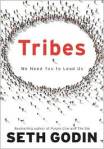
What we care about together as humans has always been different from the one-dimensional messages with which we’ve surrounded our product messages. The secret to dialogue is what we learned years ago when our first friend showed up that summer day: we look for common interests. We expect give and take, and a willingness to hear and try something new. Friendship is formed when we stop claiming to know all the answers. Inviting marketers to rethink friendship is a step toward dialogue and a step away from monologue. Inviting marketers to find their place of leadership within friendship and within dialogue is a step toward freeing them to be the leaders they secretly want to be. The tribe-formers we need them to be.
###

 conversation is an engine