Archive for the ‘Communication is about relationship’ Category
Medtech Using Social Media #5: Winning the Lottery

Our conversations help individuals lead groups forward.
Working on a client’s factory floor yesterday, I heard a guy describe how his troubles would be over if only he won the lottery. It’s a common enough thing to say and I’m sure we all think it from time to time. I happen to think winning the lottery would be more like trading one set of problems for another. Without the life disciplines that build on any skill (including making money), without a bit of thankfulness, suddenly receiving lots of money may not change all that much about a person’s life. Maybe for the moment more expensive toys enter the picture. But without discipline, the money eventually runs out and even larger debts take their place.
In marketing communication, just like in every other area of life, we search for the perfect tool that will solve everything. The perfect strategy of engagement. The perfect ad or the perfect media buy. The perfect social media tool. But deep-down we all know that perfect tools don’t exist. Or perhaps the perfect tool for the job does exist, but it gets corrupted when interacting with us.
The vision for engagement using these new social media tools is a vision for engaged contact with a group of people who believe in what you are talking about because you are talking about what they believe in. The vision is precisely not sharpening the perfect tool for the perfect kill (that is, the perfect sale, or the perfect implantation of our message in some consumer’s brain along with the instruction to “Buy!”). And even though lots of folks are—for the moment—listening to the social media channels, with Twitter and Facebook making headline news daily, newer channels will arise and suck away attention. The enduring lesson is that we all do better when we talk things through—no matter what technology enables that talk.
The equivalent to winning the lottery for a medical device firm using social media is a group of committed friends, colleagues and fellow-travelers making a journey together. It is a group where questions are shared as freely as answers. It is a collection of conversations where your brand is given legs and flesh as the brand promise works its way out through conversation after conversation. Winning the lottery is about building a fierce loyalty along the way.
###
“Mad as Hell” Points to Need for Restored Trust. Dialogue Can Help.

Trust builds with honest talk.
Frank Luntz writing for the Los Angeles Times (reprinted in the StarTribune) points to town hall meetings as evidence that “Competing ideals are actually competing.” Though the dialogue is rowdy, it is dialogue. With leadership generally viewed as lacking integrity (for lots of reasons, from scandals to bail-outs to clear hypocrisy to “Question Authority” in modern or post-modern guise), talking together is one of the beginning points to rebuilding trust.
What if marketing and marketers led the way by engaging audiences in real talk–talk that is broader than just their product?
###
Medtech Using Social Media #4: The Power of the Question

Yes--what is your question?
A question changes everything. A question mark sets a thought on a pedestal in the street and invites comment. It says, “I don’t know the answer—do you?” When I teach, a question is one of my most powerful tools. With a question I ask for input while simultaneously implying “You’ve got something valuable to say and I want to hear it.” The best, most fruitful discussions happen when I present what I know and then invite students to contribute from their experience and thinking. Something alive often happens, something I could not plan for or even predict. Something that moves us all forward.
For marketers, the question is equally powerful. If we’re lucky, we’re in a team where we can ask questions openly rather than pretending to own all the answers. Our usual path to outward communication is to ask our questions in the (relatively) protected environs of conference rooms and among colleagues. Then we polish and hone the messages into one-way barbs to shoot out through our media channels. But what if the questions themselves were our communication points? What if we started with questions to our growing community of similarly-interested people, long before we ever started polishing messages for public consumption?
Once upon a time my team worked on promoting a new heart failure device. We identified a single main message that incorporated three strong benefits (based on market research) which became the core of our campaign. We tested our messages informally, received anecdotal feedback and pushed forward. Today, with the help of social media, that scenario might look like this: take the received market research, our questions and immediately begin dialogue. Proceed with message polishing and honing even as the community dialogue continues. At some point the internal and external dialogues blend and the end result is something beyond what we could conceive on our own. Best of all, this new something already his mind-share in a community of interested people. And if you have a sales force, you know that mindshare is a key gear for turning sales.
Next Up: What would dialogue success look like?
###
Photo credit: Colt Elementary PTO & JustHost.com
Medical Device Firms Using Social Media, Step #2.1: Curious People Make Better Conversation Partners

I'm interesting? You're fascinating!
Frenemies are talking—according to one medical-device insider—but mostly because the genie is out of the bottle. What we need is a wave of curiosity to beset our organizations.
You know and love curious people: they are the ones who unearth some fact about you when in conversation, find it fascinating, and then probe your knowledge of it. And when anybody finds us fascinating—they are instantly fascinating themselves.
Seth Godin, in Tribes, describes the difference between a fundamentalist and a curious person. He wasn’t talking (only) about religion. A fundamentalist receives new information or experience and immediately compares it with established dogma with the intent to reject (or perhaps even approve). In contrast the curious person receives the new information or experience and immediately engages what they have learned with what they know, looking for areas of overlap and disagreement. The curious will also reject ideas, but not before engaging, understanding and even mentally giving the idea a test drive.
Bless the hiring managers who incorporate curious regulators and lawyers into these positions—people willing to explore a changing communication landscape even while respecting the letter of the law.
Can we resolve to test for curiosity before hiring?
###
Photo credit: OpenPhoto / Sarah Klockars-Clauser
Does Social Media Provide Too Big a Reveal?
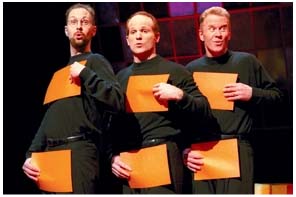
What will be your single most embarrassing moment?
My industrial client sees the logic behind building a community of interest around the technology and processes they expertly provide. But building community means sharing information—and that’s problematic. This client’s industry is rife with corporate espionage, where one small step ahead of the competitor is a huge win. So they want to share their innovation story but they don’t want the information spigot open too wide.
The alternative is to continue to hold back the necessary ingredients for building relationships with would-be brand loyalists. Silence in a room gradually filling with talkers will eventually remove you from the game entirely.
###
Medical Device Firms Using Social Media, Step #3: A Busker’s Tip for Making Friends in the World

Studio perfect or street-corner authentic?
When thinking about social media or advertising, there’s a familiar hurdle for every medical device marketer: a narrow audience. Unless you are marketing consumer goods, most target audiences need to be found through existing channels that cater to the specific needs of that particular, well-defined audience. It was a function of our old scarcity economy, where there were few channels that spoke directly to, say electrophysiologsts. So we ponied up our advertising dollars to buy a double-truck ad in PACE.
But communication is changing as fast as media opportunities emerge. How to take advantage of them? Let a busker answer the question. For Rob Firenix, a fire-dancing comic I met in Windsor, Ontario at the International Busker Festival, the best part of busking is “speaking directly to the audience.” Standing before an audience he has gathered lets him tweak material and get instant feedback.
Glen Hansard, the Irish musician, “Once” actor and Oscar winner (with Marketa Irglova) for best song started his artistic life as a busker. “When you are playing in the street, you are open to the street around you. The street becomes your club and people start to trust you.” Hansard describes the difference (around six minutes into this World Cafe recording) between making music in the studio and making it on the street. The studio allows the opportunity to perfect the sound while putting together something light and airy out in the public has a different kind of authenticity.
After looking for dialogue partners and pursuing the important internal conversations, find a way to get your conversation going with the people you want to reach. You want to start a conversation that will attract the dialogue partners whom you would have only received 10% interest from with your PACE print ad. But engaging them the way a busker attracts and holds an audience is worth the effort. Find your dialogue partners with authentic posts, useful information and well, entertainment.
Why not start today?
###
Medical Device Firms Using Social Media, Step #2: Make Nice with Your Frenemies

- Dialogue starts inside a corporation.
Swapping one-way messaging for dialogue in medical device marketing starts with a question. But “Who am I talking with?” is just the beginning. Conversation requires more than just a change of audience—it requires a reversal of communication style. Preparing for this change starts deep inside the protected medical device community. Marketers must talk with regulatory folks. Lawyers need to join the same discussion. It’s important that all the right people join the conversation so it steers clear of the legal and ethical issues different sectors of the medical device community are currently answering for.
Starting conversations with the right people has always been something of a tightrope walk: back when internal regulatory folks and lawyers were thought of as enemies of marketing, they were not invited to the discussion so as to quiet their nay saying—at least until the final review process. But those days are gone—and thankfully so—because the different disciplines will have the best discussion when they speak openly about the requirements they represent, but with the willingness to bend as much as possible to service their patients, physicians and clinicians.
The kind of conversations needed are far from adversarial. Marketing, regulatory and legal need to open new ground for discussion. Opening that new ground includes the goals and parameters of each disciplines. It also includes the rhetorical elements of conversation: the giving of an idea and the listening to what someone else says. It’s just regular, ordinary dialogue. And if it cannot happen inside a medical device company, can it really happen outside?
###
Abercrombie and Fitch: the Brand to Avoid
News today that Abercrombie and Fitch must pay a Minnesota family $115,264 for discriminating against a disabled person when the store refused to accommodate a daughter with disabilities. The autistic youth needed help in the dressing room from her sister, which A&F clerks would not allow. After repeated attempts, the girl said she “felt like a misfit” at Abercrombie and Fitch. It took a lawsuit to even get the matter noticed by the company. The result was a fine, though certainly “hefty” by the standards of a $3.5 billion business (in sales last year).
Two interesting features of the story reported in the StarTribune: one is that disabilities are not always outward in appearance. You cannot always see a person’s disability. Though Abercrombie and Fitch had a policy for accommodation, stores clerks understood that to mean visible disabilities and would not accept that there are other types. And that points to a lack of training at Abercrombie and Fitch, though in fact they say they have an “innovative and provocative approach to [diversity] education that we call reality-based learning.” Perhaps someone needs to mention to Abercrombie and Fitch that just calling something “reality-based” does not make it so.
I cannot help but wonder if the very goals of Abercrombie and Fitch are as much to blame as the lackluster clerk training. I’ll admit I know next to nothing about the organization. But from a brand perspective, I have gained all the information I need. The truth is still the same: brand impressions are the extent of our interactions with most organizations. After raising teenagers and hearing their impressions of the merchant, and just by simply passing the store myself, the brand message is clear enough: become a beautiful person by buying Abercrombie and Fitch stuff. The store’s narrow understanding of beauty and constant attention to sensuality trivializes the human condition and sends a load of false messages to everyone who comes in contact with it. I know that the Minnesota girl is not alone in feeling like a misfit—I saw my kids and their friends rejecting the company’s narrow view, along with the products they peddled.
There’s no question that beauty and sex sell—they always have—but Abercrombie and Fitch’s surface perspective seems to have affected their approach to everything. And my evolving impression of the Abercrombie and Fitch brand is that they use beauty and sensuality to sell false versions of reality to kids. And now I know their surface way of looking at things discriminates against people with disabilities.
It’s time to shop elsewhere.
###
Medical Device Firms using Social Media, Step #1: Have You Defined Yourself Out of Conversation Success?

Who are you talking with?
Launch plans have always been about sharpening one-way messages and sending them out through as many channels as may get noticed (and as many as you can afford). But what if your next product launch changed up the usual one-way messaging mix of brochures, ads, comparison sheets, case studies and article reprints with a few simple tools that help you get traction where it counts—in engaged discussion?
In the next few blogs I’ll offer suggestions about how regulated industries can begin to build communities using social media. One thought to start: Who are you talking with?
As a medical copywriter and communication consultant, I’ve spent years working with marketing colleagues to stay focused on target audiences. You see, we had these sharp and polished messages we wanted to shoot—and we needed to know who to shoot them at. Getting these messages ready for communication battle was tough work because each message had to zip through all the natural barriers every human erects around their will. It surprises me now that some messages actually did get through.
But there’s this new thing going on: technology plus market proactivity plus searchability are turning the tables so that the person with the moneybag to spend on communication no longer owns the medium. Of course, it was mere mirage that such a person actually did own it—since the brand conversation has always been in the hands of customers.
One first penetrating question as you develop launch plans: Who are we talking with? It is right and proper to continue to develop and hone benefit messages for new products. New devices must be born with clear benefit statements and positioning otherwise they never even get seen in the market. But the exercise of teams crafting marketing messages usually results in one-way messages toward target audiences.
“Who am I talking with?” is a different question than “Who are you aiming at?” Aim is one-way focused, so the message gets there. Or not. Talking is a two-way conversation. But conversation is not a delivery vehicle for one-way messages. Talking to a person who delivers only one-way messages is like listening to a monologue: at best it is only mildly interesting. Usually we do our best to politely hang on. But conversation is a give and take where both parties remain interested, both parties have a stake in continuing, both parties get something from the conversation.
Going beyond the question of aim to the question of conversation brings another level of discussion to your marketing meetings. Questions like, what would a genuine conversation look like? And who would we be talking with? Physician? Clinicians? Patients. Possibly yes to all three. And what could a conversation accomplish? Just to ask this question is to begin to see things differently. And it is also to begin to prepare for a future where one-way messages have an even more limited power and where conversation is a vital element of any launch.
So: are you conversing with interested partners or are you delivering a monologue alone in the middle of the room?
Next-up: Building Community among Frenemies
###
Busking and the Urge to Hone Your Craft
Meet Rob Firenix. He’s a British showman, part juggler, part fire dancer, part street actor and stand-up comic who has traveled and worked in 55 countries. I met him last weekend in Windsor, Ontario at the International Busker Festival.

Rob Firenix is Captain Underpants
While Windsor city workers remained on strike (14 weeks plus), garbage piled high around garbage cans with parks and museums going to seed, Mr. Firenix and other buskers honed their craft for free (at least until they passed the hat), depending on delighting the crowd to earn their keep. It’s worked for the last eight years for Mr. Firenix.
With a background in corporate theater and experience choreographing large shows, he found he loved the freedom of performing live before audiences on the street. Pulling from another earlier job of working with people with disabilities, Mr. Firenix wants to make things accessible for everyone. It’s this attention to making the show easy to understand that also brings in the levity.
“I love it when people can have a laugh.”
One of the best parts of busking is “speaking directly to his audience” said Mr. Firenix. He is constantly tweaking his show to see what laughs he can get and how he can go further in delighting his audience. His current show is a character-based performance (“Captain Underpants”) that often features a pair of audience members in the ridiculous tights as well.
Was his craft comedy? Or was it the juggling or firedancing?
“The show is the craft,” he said. “Getting people to stay and enjoy the show is the craft.” He explained that a crowd may watch a person juggle for three or four minutes, but there has to be something more.
“It’s all about presentation.”

Willing Audience Members. In Tights.
As a communicator, I found myself in awe of Firenix and other buskers who worked on their craft out in the open, depending on impulse generosity for their bread. It’s a gutsy way to go about work—especially poignant in a city on strike because of limited post-retirement benefits. It says he is serious about the craft, that honing the craft is not a luxury but a necessity. It also points to the presentation as something of primary importance: people need to be engaged and stay engaged or they walk away.
Buskers also show there can be more to work than money.
###

 conversation is an engine