Archive for the ‘copywriting’ Category
Writing for Pretty Not Petty
Seth Godin: Designing Our Ideas to be Spread
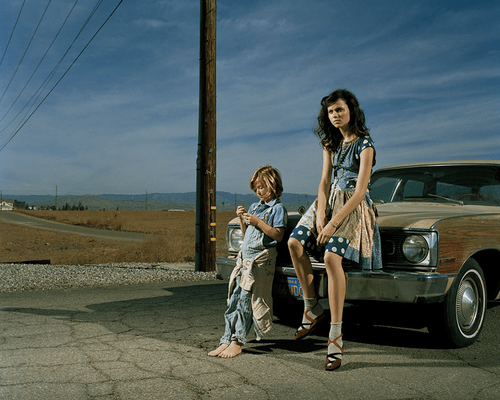 I’ve always been utilitarian–not overly concerned with fashion. That’s not a boast, it’s a lament: I confess to being more preoccupied with ideas than the various forms atoms take. But I’m coming around. I’m starting to think more about what is sharable. Pretty things matter because pretty things move around in our culture: photos, design, elegantly packaged ideas. Unexpected videos. Things that are well-lit or unusual. Baubles attract and hold the attention of babies and today’s adults alike. Visual simplicity and elegance are part of what helps an idea stick.
This is sort of a big deal. It is something we know for others but not so much for ourselves. Because we think our own ideas are inherently interesting. Seth Godin talked about this in his post yesterday and the day before. He talked about doing the work whether or not you get picked for fame. And making things sharable. Those posts are worth reading.
If I have some message to deliver, just plopping out the linear logic on paper pulls in only the most interested and committed insiders. Everyone else keeps walking thinking “nothing to see here.” Old school marketing was all about setting features into bullets for the interested reader to scan. But the interested reader was buried in the local cemetery years ago: only distracted readers walk the earth today. I’ve said over and again that blocks of copy scare people away—even people who self-identify as readers. Too much to read. Too slow.
But an image…now that is sharable. An image intrigues in a very different way.
So—today’s writer must sort out how to engage with a visual generation. Sure, we’ve known this for forever and those who have taken it to heart for the messages they need to deliver are the ones being heard today. One of our daughters feels that getting rid of the ugly in the world is part of her life work. As a writer I’m thinking about adopting that stance—I’m becoming more intent on locating images and simple analogies to help me tell the deep story that I need to tell.
###
Your Product: Light of My Life
You Complete Me.
 Am I right? The magnetic power to draw citizens off the street. The hushed tones in the presence of greatness. The loving gaze. This car will change your life—perhaps it already has?
The fawning devotee image is standard fare in our media diet. Models perpetually doing homage to the product at the focus of all attention. Chevy, Toyota, Cadillac—who doesn’t make ads like this? Product as hero. Forever. We see this everywhere.
Somersby recently turned the Apple experience on its head by grabbing the dead-earnest communication style to appropriately ridiculous ends. It is perfectly reasonable to poke fun at the high places certain brands have taken in our lives.
Can we get beyond product as instrument of life change? True: it is possible that some consumers (that is, those who have already chosen to purchase a car/beer/computer/whatever) may look with unbridled lust toward their purchase, this object of their desire. But is it possible to promote a product without making the (thoroughly ridiculous) promise that it will indeed change your life?
Maybe not. Because quickening desire has always been at the heart of selling, and nothing quickens desire (and loosens the wallet) like showing the person you will be once you buy this car/beer/computer/whatever.
Maybe so—and this may be what is behind the eventual victory of online advertising: product messages that follow our search patterns and interrupt us with the key to what we’ve already been seeking.
Maybe both. Because desire follows a need or want. And we want what promises to make us different. Better. Smarter. Hipper. Advertising will always make these promises and will find ever new ways to get the message to us. And because we self-identify as “consumers” we’ll probably never run out of the optimism that buying stuff will change our life
It’s just that the loving magnetism of the Chevy image seems, well, juvenile. It’s a credibility issue.
###
Why I Want To Do What Others Don’t (Shop Talk #6)
Guest Post from Kayla Schwartz

From The conchological illustrations, by George Brettingham Sowerby, London, 1832.
[A few of us have been discussing what fulfillment looks like for a professional writer. The entire discussion was in a response to a question from Kayla Schwartz, a professional writing student at Northwestern College. Check out these six essays filed under Shop Talk: The Collision of Craft, Faith and Service for more on that. Kayla’s back with this guest post that contains a few of her thoughts and conclusions.]
“Technical writing? That’s so…interesting.”
This is the response I usually get when I tell people what I’m studying. As a professional writing major, I’ve done journalism and PR writing, but I’ve been most drawn to technical writing.
Why? I had not given it much thought. Most people think of technical writing as boring or tedious. So why pursue it? What really drives technical writers?
As I’ve thought about these questions and talked to technical and other professional writers who’ve been at it much longer than I, I’ve gleaned a few potential answers.
- It’s useful. Some people find a lot of satisfaction in their ability to help others understand things. They feel they are making a difference.
- It’s necessary. Technical manuals may not always be read by customers, but they are a necessary step in the process of distributing the product. There is satisfaction in contributing to a company’s success.
- It’s interesting. For people who are naturally curious, technical writing offers an ideal situation: learn about new ideas and products, and get paid for writing about them.
- It’s lucrative. Yes, some people are just looking for something that pays the bills.
All of these are valid reasons to do technical writing. However, none of them really expresses my motivation (although the last one is starting to look pretty good when I think about my student loans).
I’m pursuing technical writing because I genuinely enjoy it. I like creating an organized, easy-to-follow document. I like figuring out how to use words effectively and concisely. I’m a bit of a perfectionist and don’t mind spending time on “minor” details. I suppose I enjoy learning about new things or knowing that I’m helping others, but ultimately, it’s a way to do what I love.
Maybe this makes me the exception among technical writers, but I hope not. Technical writing isn’t for everyone, but for those of us who enjoy it, it can be just as satisfying as any other career.
###
Image credit: George Brettingham Sowerby via OBI Scrapbook Blog


Ten Ways Fulfillment Mingles with Professional Writing (Shop Talk #4)
Life’s not about poetry. Or is it?
 I’ve been posting in response to a query from an English student who wondered about finding fulfillment as a professional writer. How can we compare writing poems and short stories and novels to writing for companies or ad agencies or other firms or organizations seeking help to communicate? She asks a good question which we all struggle to answer all our lives. See a few responses here: Shop Talk: The Collision of Craft, Faith and Service
When I teach professional writing classes at Northwestern College, I like to invite Rich Bosshardt, who writes for a well-known local manufacturer, to talk with the class. Like many of us, Rich’s route to writing was circuitous: from mover of boxes to telemarketer to carpenter to chemical compounder to university research lab technician—plus about ten other jobs. Along the way he earned a Master’s in New Testament, so his thoughts about work and writing have a theological bent, which I appreciate. In response to my request, Rich rattled off ten things about writing for a living and offered to explicate one more:
- We could learn a lesson on career fulfillment from Joseph, the son of Jacob and the great administrator in Genesis.
- How do you work through when the honeymoon of being hired is over and passion for the work is long gone, but the bills keep coming?
- My career has been an unintentional path; I didn’t enjoy writing and knew nothing about technical writing until I was over 30 years old.
- Why shouldn’t we be passionate about what we do for a living? Whom would you rather hire—the passionate worker or the dispassionate one? You can raise the competence of a mediocre worker who is passionate about the work and therefore wants to improve, but the dispassionate worker? Let him or her go; you’re doing both of you a favor.
- Luther had great insights about one’s vocation, raising the legitimacy and importance of “common” work and sparking the Protestant work ethic.
- There is joy in doing work of the best quality that you can and in a manner that marks you as a person who has character, thereby earning the respect and admiration (stated or unstated) by others. Good (both competent and ethical) workers do eventually get noticed by those who work with them, and these good workers will find themselves happily employed.
- I thank God for the “little things” at work, e. g., that I’m working inside in a temperature-controlled environment on a frigid winter day or a hot, humid summer day.
- Relationships can make all the difference; being part of a caring and talented team can turn drudgery into joy because you enjoy the relationship regardless of the circumstances.
- There is a psychology to technical writing; good writers should think about at least two things: (1) how people will use the product that they are writing about; and (2) how people will interact with the instructions and illustrations that you create.
- “And God saw that it was very good.” There is a satisfaction (and fulfillment) in a job well done, no matter what job it is, great or small.
I like Rich’s list and think it gets at the tensions of creating versus making a living versus making meaning every day. Rich’s vocational path also reminds me of Parker Palmer’s wonderful “Let Your Life Speak,” which is all about taking the time to notice what you enjoy. Palmer’s book is one to own and read annually.
I’d like to hear more from Rich on Number 9: the psychology of technical writing.
What would you like to hear more about? What would you add or subtract?
###
Image credit: 2headedsnake
Is Your Job Fulfilling? (Shop Talk #3)
Depends: what do you mean by fulfilling?
 An art director and I were talking once about the different jobs we had done over the years. Al said he did some work as a freelancer he was not particularly proud of: wasn’t bad work, just didn’t highlight the creative style he had become known for. Why did he do it? “Well, I had a family and a mortgage and…you do what you gotta do.”
This is my story, too. It is everyone’s story.
An English student asked me how someone writing for an agency or corporation can find fulfillment when the writing is essentially voiceless. By that I understood she meant that the writing was not coming out of some personal deep need to communicate. I get what she means and I think this is an important question. But I also think we romanticize the production of art, novels and poems.
I’ve been arguing that work and art sometimes fit hand in glove and sometimes stay at opposite ends of our daily teeter totter. I’ve been arguing you need both to make either work. If you just have paying work, you are not exercising your creative self. If you just are creating, you’re broke and maybe you don’t have a place among real people in real life. Here are a few things that happen when work and art find a way to live together:
- Workmanlike attention: Our work with its deadlines and status updates helps us (sometimes forces us) to be productive. This is useful when it comes to delivering on our art or craft. Just getting to it—every day—is the way we produce anything. None of this waiting for enlightenment stuff.
- Having a place among people: isolation is not good. Those colleagues and bosses and clients who critique our work help shape it (no matter how painful). In the same way as we try to explain our craft or art to others, it gets shaped as well.
- It is your job to develop a voice. It may not be your voice, but it must be a believable voice. And to run that voice through the gauntlet of critics and peevish managers and lawyers and regulators is no small feat. The voice you produce can become a team or corporate asset. That is something to be proud of.
- Now is not forever. If you are not producing the art/poems/novels you intended, find a way to get to it. This usually involves owning up to the myriad excuses we present for not doing it. And if today’s work is less than fulfilling: start looking. It’s the steely beauty of the free market system that you can change. Recognize that this job is for now and not forever (more and more I’m convinced different seasons in life hold different tasks and levels of fulfillment. Plus, we are personally changing all the time, which means fulfillment is a moving target.)
Several of the hard-bitten copywriters I know would say “Who has time for writing outside the office?” To these I would say your own art and copy is a gift to yourself that pays back in meaning and insight.
There’s more to say about this. What would you add or subtract or say to my student?
###
Image credit: Kirk Livingston
Writing with Sheet Metal (ShopTalk #2)
The Pull of the Factory Floor
 As a copywriter I spend my days in front of a pair of computer screens. Writing. Yes, I have meetings with clients and colleagues, brainstorming sessions and updates and phone calls. But mostly I remain planted before my computer, sorting through masses of information, ordering data that came with competing priorities and generally figuring out new ways to present the right facts to the right people in a way that causes a reaction.
Then there are days I visit a particular client’s factory. It’s a factory with a whistle that blows, union members who take 15-minute breaks, safety glasses and focused workers at benches doing macro and micro tasks. It’s a factory that stamps and welds metal, where electricians wire metal carcasses as long and tall as a semi-trailer. This factory is lit so everything is visible and produces a hum of activity across the concrete floor, which is the size of several football fields.
Why give so much detail? Because many who read this—myself included—spend our days in offices. But a factory floor is a different sort of place—a different world, with a different set of priorities and where production is king but craft sits near the throne.
I like this factory floor because it is different from an operating room, different from a cath lab, different from a conference room during an endless PowerPoint presentation, different from a row of cubicles and different from the Livingston Communication Tower (high over St. Paul). There is an irresistible, energizing activity on this factory floor that flows out of the scores of workers. But maybe that energy also comes from my past, because I grew up watching my dad craft furniture from oak and walnut. Maybe that’s where I absorbed the notion that producing a solid piece someone might actually use is a great way to spend your time and a fulfilling thing to do.
In this ongoing discussion of what makes for fulfilling work, I want to trace fulfillment down a different thread. This thread places the writer in a team with a goal of productivity. The writer and the team are focused on this goal of shipping something real and substantial. At the same time this team is also sort of doing life together—because in the middle of work there are the discussions about the rest of life. For a writer, this team-ness is a different way of spending the day and not to be missed.
Don’t take this as a romantic view of factory work. Instead, see it as the reality of the life situations where your craft takes you to meet a need.
###
Image credit: Yael Frankel via 2headedsnake
The Tradeoffs in Selling Your Craft
Make a living while making a life
 Teaching in a college English department, I come in contact with lots of people who want to express themselves. They have things to say and they want to say those things through poetry, fiction and all manner of creative writing. The typical line of thinking goes that the best and highest fulfillment comes from putting words around those things that compel us. The process of searching out those compelling things involves regularly plunging deep inside to pull stories and impressions up to the surface to slice and dice for delivery. This is good and useful work and has, or course, resulted in the poems and works of fiction and symphonies and songs celebrated worldwide.
This work of surfacing our deepest thoughts and emotions and capturing them for delivery is important work in which each of us must continue. I want to do this as well and regularly set aside time for it. But is this highly internal work the only route to fulfillment? Answer “Yes!” and you shortchange the rest of life.
I want to argue in a few posts that we make some of our best and most meaningful contributions when three streams collide:
- Faith: what we believe
- Talents: what we are gifted at
- Service: as we focus on needs outside of us, how can we use our faith and talents and imagination to solve those needs?
I want to argue the junction of craft and faith and need is the locus of true fulfillment. When we plumb our depths for words or impressions that solve a need our organization or community has identified, well then we’ve done a good thing and a highly fulfilling thing. I might further argue that much of our greatest art and literature has come from that junction of craft, faith and need.
Writing ad copy or technical specs is not the route to personal fulfillment. But neither is a self-focus that never reaches out.
There’s lots more to say about this.
###
Image credit: frenchtwist via 2headedsnake
Don’t Bother Me, I’m Busy Talking to Myself
Just because you have a budget doesn’t mean you know what you’re talking about
 I just finished with a client who refused to take direction.
What’s that? You think a consultant should not give direction to a client? You could not be more wrong. That’s exactly what a good consultant does. It’s just that a consultant’s direction doesn’t look like orders or demands. A consultant’s direction looks like alternatives to the usual and invisible way of doing things.
Sometimes we need help seeing what is right before us. We are soaked in teams that are steeped in detail that is loaded with the talk that just circulates between people in the know. This adds up to a set of increasingly narrow word choices that are interesting only to the team. Those words sound like gibberish to anyone on the outside.
My client continued to talk in the insider terms only they understood. And they would not be dissuaded. In the end, they approved copy that ensured no one outside their little circle would understand.
Which feels like failure to me.
This doesn’t happen often, but it’s a bummer when it does. And it makes me think again about how complicated communication is, and why it is so important to start talking earlier rather than later. And why it is critically important that we pull our head out of the huddle from time to time.
###
Image credit: killythirsk via 2headedsnake

 conversation is an engine