Archive for the ‘copywriting’ Category
The Case for Believability
Is Deeper than You’d Think—Especially for Those Outside Your Tribe

We believe words in context
I try to help clients understand the limits of their messaging. After we get past the glory of the features (many would stop there and pronounce their marketing “Done!”), we get to benefits. That’s a good place to hang because we are facing outward: how this product/service will help their customer accomplish X. For my medical device clients, after getting beyond the glory of the features, our conversation turns to the benefit promises that can ring true and still be within the legal and regulatory parameters, and still be within what the journal articles support. And still make emotional sense to their intended customer.
Beyond benefits and features, a message is believable because it comes from a much deeper place of fit and truth. A message becomes believable when it suddenly snaps in place with the other factors we already know. The best copywriting does this: it offers words (really ideas) that help place the benefit message into a frame that suddenly makes all sorts of sense.
That snap is why we believe anything. Words “ring true” when we see how they fit our context, where we live. So when we want someone to believe us, we find ourselves building out the context so they can see how and why this idea fits. This is time-consuming when you are talking with someone from outside your tribe, because they don’t see things the way you see them. They have not been inculcated in your doctrine of how we see things around here.
I guess that’s why it’s easier to mostly hide in my tribe.
###
Image credit: Christopher David White via 2headedsnake
Texts as Tools for Sorting What Matters to Your Firm
Your words make me so mad—and that’s good

words can wake us to the believable center of our purpose
I spend my days poring over texts. Reading internal notes and documents. Rereading interviews and meeting notes. Writing questions, asking those questions and writing the answers. And sometimes rereading the answers. Then I start making texts: mind-maps and cartoons and diagrams for starters. Then the short (or sometimes long) text that will go back to my client—ordered arguments and assertions. Emotive elements. Narrative. Jokes and anecdotes—whatever it takes to communicate the essence of what I take as my client’s central point.
And then I send it to them.
And they react.
Reactions vary from “you are right except for this point” to “that’s fine” (the worst possible reaction, it means my copy was so bland it stirred exactly nothing) to “you nailed what we’ve not been able to say” (my favorite reaction) to “We are deeply offended by this.” That last is my second favorite reaction—it means I got under their skin, though not in a good way.
And then we trim the right copy as a text for the target audience.
What’s remarkable is how the process of sorting through all the internal dialogue and the organization’s unexamined thought actually helps in finding the believable center of the organization’s identity. It’s got to be believable because if you can’t imagine an employee saying it with a straight face, you’ve not hit it. It’s got to believable or the promise won’t match reality—and that never gains traction with the target publics.
But the words themselves—right there on the page—can stir such a reaction from the client that they can sometimes catch a quick vision of what they aren’t. Or what they are. And that glimpse carries forward to what a team does next. And that glimpse can fold backwards into how an organization thinks about and treats itself.
That’s why copywriting is fun.
###
Image via 2headedsnake
Ginsberg’s “tanked-up clatter” vs. the Gray Flannel Suit vs. a Third Way
Peace for the Listening Lurking Capitalist
We’re at the Beats and Allen Ginsberg and Howl now in our march through modern poetry. A recent discussion took in a stanza that seems relatively autobiographical, describing Ginsberg’s failed flirtation with advertising:
who were burned alive in their innocent flannel suits on Madison Avenue
amid blasts of leaden verse & the tanked-up clatter of the iron regi-
ments of fashion & the nitroglycerine shrieks of the fairies of advertis-
ing & the mustard gas of sinister intelligent editors, or were run down
by the drunken taxicabs of Absolute Reality,
 There is lots to talk about in this section (indeed, the entirety of Howl begs for response and discussion), including “leaden verse & the tanked-up clatter” and the irresistible “nitroglycerine shrieks.”
Of particular interest to me was the quickness with which our TA/discussion buddies blasted the hackiness of advertising copy. Of course the poets are right (and anybody actually creating ads readily confesses to their role in purveying crass capitalism), still…not everything is “clumsy, tacky copywriting.” That knee-jerk reaction to advertising covers a lot of ground well. But the comment misses the diabolical under-the-skin genius of the copy that got through and has already been ingested and now guides our subconscious. Professor Al hit closer to home when brought up “very slick” old slogans that remain memorable. Ginsberg’s insights at that point are perceptive and well-wrought, but I cannot help but insist on seeing the beauty of some advertising. The turn of a phrase that attaches (yes, at times parasitically to a target brain) is, well, amazing. It’s a kind of poetry let loose among today’s pages and screens and whispers.
There is a way to be at peace with using creativity to solve business problems. The way of peace wanders alongside the grove of manipulation without wandering in. This path follows a course of respectful persuasion, with nods to the “I and Thou” while resolutely trimming and toning messages for real-life use.
There is a way between “clumsy, tacky” and slick manipulation. That is a way of service that can be beautiful in its workmanlike portrayal of practical truths.
###
Image Credit: marcedith via 2headedsnake
Juxtapose: Alongside is the New Black
Confession from a monochrome space
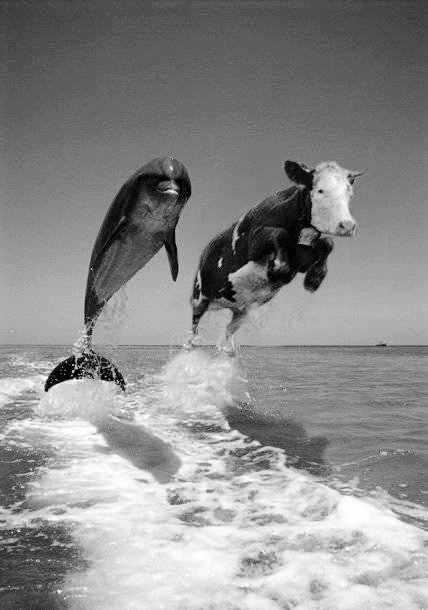 Putting like and unlike next to each other can have unanticipated results. Chefs know this and routinely put tastes together that “should” never go together to create things that are suddenly wildly tasty (dumb example: salsa on scrambled eggs shattered the sheltered world of my taste buds. So did Chicken Tikka Masala). As a copywriter I pull from poetry and technology and design and even theology and philosophy to place a disparate idea next to my client’s problem to see what may result. It is tried and true method for breaking out of the invisible constraints we didn’t even know held us back.
Yesterday I talked with a friend about a Respectful Conversation Project she had been involved with concerning the upcoming state vote on the marriage amendment. She described the training in dialogue and how so few of us know the difference between dialogue and debate. Debate is our knee-jerk response to different.
And that’s too bad.
Because just a few honest questions about the story behind a conviction, for instance, can do a lot to grow understanding and empathy. It turns out there are academic groups dedicated to this notion of appreciative inquiry as a management tool and a method of organization development. And there are resources like the Respectful Conversation Project moving toward the same end in our communities.
“Alongside” is an effective, creative tool that can build understanding and empathy and solve problems.
I’m still new to this generous notion of “alongside.” My formative years were spent in a land of black and white, where good was good and bad was bad and any fool could distinguish between. This monochrome way of life instilled deep revulsion (yes, that is the word) toward any pursuit of naming the shades of color between the usual poles. It’s taken years and questions and lots of discussion with patient friends but I still find myself curiously uninformed about all the places “alongside” can appear.
###
Image via 2headedsnake
Today’s 1pm Meeting: Make It Work
Zoning out should not be an option.

Cut the web. Don’t zone out.
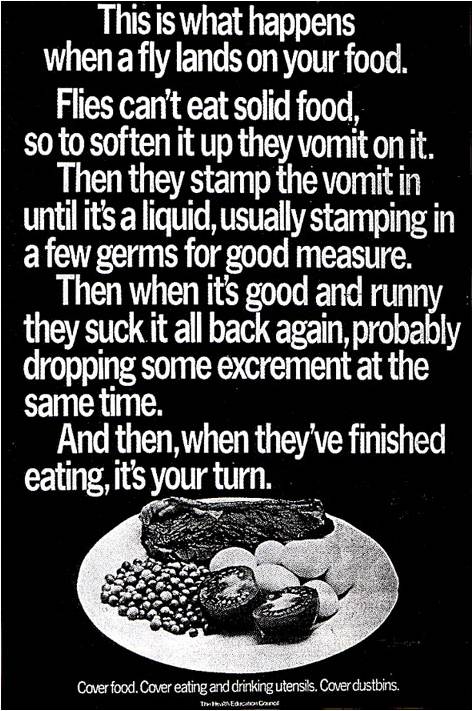
Not every meeting is a useless waste of time. Some of my must-read copywriting bloggers have written about meetings they attended ranging from useless to suicide-inducing.
But I recently sat with a client to hash out what was going right with their messaging to a particular audience. They had seen a spate of cutting-through-the-clutter moments with a particular set of customers and the wins were tumbling in.
People from different roles in the organization pulled up to the big conference table. Each spoke to the success with this audience from the vantage point their position afforded. I was there to hear and gather and (ultimately) tighten and sharpen the message. The message—and the story around the message—would fuel a set of communication vehicles and events.
The meeting was entirely successful, at least for me, because I could question and challenge as the discussion unwound. And my pages of notes have served to bring back quotes and directions. Just connecting the dots on my notes has been productive.
All this to say it is up to us to make a meeting work. That means cutting through the rhetorical web spun by the power-seekers. Sometimes we need to call “bull” on people. And sometimes we need to play catalyst and lob a softball question to pull forward the silent person’s thoughts.
Zoning out should not be an option.
###
Image Credit: via Frank T. Zumbachs Mysterious World
Endo Brochure Silent on Vital Bits—2 Skills for Tonight’s Debate
Read the White Space. Hear the Silence.
Campaigns, Inc.: My Antiheroes.
MedCity News reports on an Endo Pharmaceuticals brochure under scrutiny by the FDA. The problem was a lack of transparency about the dark side of the therapy—a therapy designed to slow the growth of prostate cancer cells, namely:
- paralysis that may result from the risk of spinal cord compression
- the increased risk of diabetes/heart attack/sudden cardiac death/stroke
In a lively debate in comments section of the Pharmalot blog, the consensus seems to be that the FDA made a good call. Commenters began by speculating this was likely more than just a slight oversight as the Endo communicator skipped regulatory/legal review in a rush to meet a deadline. Then commenters started tracing the language to the Vantas Implant website and began speculating on the rest of their messaging and promotional literature.
The debate amuses me because it is the rare product brochure that is read outside of a sales presentation. And it is even rarer for a brochure to withstand extended exegesis. That the FDA does this regularly earns my respect/awe/fear. Love them or hate them, the FDA’s dogged attention helps medical copywriters and marketers hew to the high road.
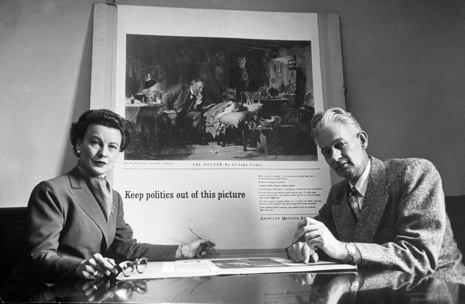
The debate also serves as a reminder of the skills needed for watching tonight’s presidential debate. It’s the white space and silence that may be most eloquent. The skill of reading the white space and hearing the silence means the audience must be equipped with the fuller argument. The FDA certainly was. But to read Jill Lepore’s recent New Yorker essay (“The Lie Factory: How politics became a business,” Sept. 24, 2012) is to come away with all the history and reasons as to why the American populace remains a happily uninformed audience. Whitaker and Baxter of Campaigns, Inc. helped set the stage for the current state of our spectatorship:
In tonight’s debate, I’m trying to break free of my usual indolence to hear between the lines (as it were).
###
Image credit: The New Yorker
Can the Best Creative Solutions Ever Come from Collaboration?
Not if collaboration means consensus
If you are invited to a brainstorming meeting today, consider this.
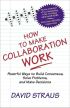
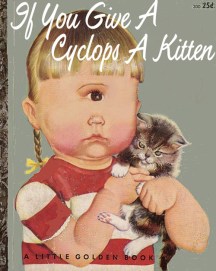 David Straus, in his excellent How to Make Collaboration Work lists five steps to effective collaboration:
- Involve the relevant stakeholders
- Build consensus phase by phase
- Design a process map
- Designate a process facilitator
- Harness the power of group memory
I think these steps are brilliant and especially useful as a framework for collaborations large and small. At first they seem sort of obvious—but as with so many “obvious” things, further explanation quickly gets tricky. With Straus, every step is critical and has its place. Best to plan for it.
But one thing Straus does not address is how collaboration works in developing a risky communication event that requires a singular voice. I’m thinking of something as simple as a letter, brochure, print ad or broadcast spot and beyond. Anything meant to cut through clutter and gain attention.
 Though I’m a big believer in collaboration, there are times in a collaborative process when working alone gives the best results. I’ve always felt my best ideas come after having a chance to noodle a problem on my own and then come back with a few possible solutions to retrench with the art director or other team members.
Brainstorming meetings don’t afford this opportunity. And sometimes (if handled very badly) they lead to consensus talk. Any communication tool that is the product of consensus is likely to be so bland as to be invisible. That’s because what we usually take for consensus is finding agreement around some solution that does not offend any of the stakeholders. If someone says my headline is “Fine,” then I’ve lost the battle. As a copywriter, I crave a visceral reaction or a polarized response. Consensus often results in pabulum.
My point:
- A brainstorming meeting can be useful for getting a lot of different ideas. A brainstorming meeting is not useful for honing those ideas.
- Creative people can and do collaborate to achieve wildly wonderful stuff. But at points in the collaborative process, a singular voice must take command to champion the risky solution. And a singular vision needs to guide the piece toward a singular voice.
At some point a singular vision must step in to create a singular point of view and to champion a risky idea.
###
Image Credit: Bob Staake via 2headedsnake
Today I start a Coursera Modern Poetry Class. I have over 29600 classmates.
It’s a big room.
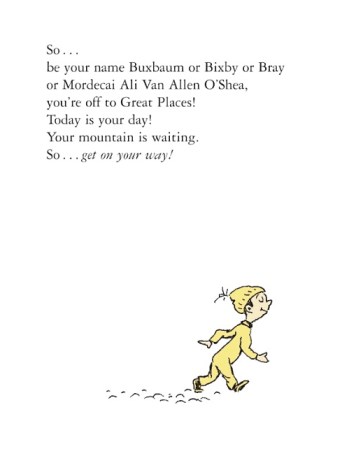 I’ve always had a hard time with poetry. Except for Billy Collins, Ted Kooser, and William Carlos Williams and a few others, I mostly don’t get it. Over the years a few smart and patient friends have helped me glimpse what I’ve been missing. Those few glimpses have made me hungry for more.
So I signed up for a Coursera course. This one is taught by Al Filreis through the University of Pennsylvania. It’s free to take and so far, even the readings look like they are freely available on the web. The fact that nearly 30,000 people signed up for the ten-week course seems to have shocked everyone, including the instructors.
Why Poetry When There is So Much Real Work to be Done?
Poetry and copywriting are joined at the hip.
I see you rolling your eyes.
Listen: reducing a big idea to the shortest, most succinct nugget that cannot be ignored by a target audience is the heart of copywriting. Yes, it’s true we often waste that succinctifying power on soda and beer and lingerie and the Reliant K-car. But not always: sometimes we write to expose human trafficking and to raise money for refugee crises or to invite people to reconcile with God. All these uses—whether mundane or transcendent—use that succinctifying muscle. Longer-term readers of this blog might argue that whether mundane or transcendent, the work of serving with words is valuable. I agree.
Sharpening that succinctifying muscle is what interests me. I hope that will be one outcome from the course, as I see what poets have succeeded at encapsulating experience into words and phrases. Of course, I’m guessing there will be much, much more to it.
###
Image Credit: Dr. Seuss via thisisnthappiness
Dedication to Craft: Jiro Dreams of Sushi
There’s hardly a more fitting reminder of dedication to craft than the 2011 David Gelb documentary Jiro Dreams of Sushi. The film follow’s 85-year old Jiro in his daily routine of preparing sushi. From buying fresh tuna and squid at the market every morning to massaging the octopus (that’s right for 45 minutes) to talking with the rice vendor who refuses to sell rice to someone just because they ask for it. One of Jiro’s biggest fans is a local food writer who we follow into the restaurant again and again as he articulates the surprise that happens with every meal.
Jiro’s shop (“Sukiyabashi Jiro”) is extremely clean but modest. Located in a Tokyo subway station, it has only ten seats and serves only sushi. Jiro sets up two rounds of meals a day: lunch and dinner—which sounds like he serves 20 people a day. And yet sushi lovers from around the world reserve up to a year in advance (if my memory serves). Jiro is the only sushi chef to receive a three-star Michelin Guide.
The film is a meditation on craft, just as the copy says. Beautifully filmed with long shots of Tokyo life and the chefs’ concentration on their craft, including a mesmerizing classical soundtrack. The film is primarily about Jiro’s compulsion to learn all there is to know about making sushi. But along the way he influences his sons and seems to have changed the way sushi is prepared. In the end, both Mrs. Kirkistan and I felt we wanted to put heart and soul into our respective crafts.
For copywriters and writers, the parallels are clear. Several times in the film, Jiro says he is happiest when he is making sushi. Even at 85 years old, he continues to make a mark and continues to be mesmerized. In fact, there seems to be a push-pull between his work and the rest of his life. Craft is almost the reason he gets up. But it also is his main worry. Hearing what craft looks like from his sons’ perspective and the up and coming chefs that move through the restaurant.
Thanks to Scott Berkun for the recommendation.
###

 conversation is an engine