Archive for the ‘copywriting’ Category
Nicely Done: Sharp Minds Trump Sharp Elbows.
I love the brevity and simplicity.
 The second phrase paints a clear image which points quickly to the negatives in our fighting/boasting/hard-scrabble economy. “Trump” is excellent, evocative and rather top-of-mind—and a bit ironic, given the Donald. The sign-off is full of promise for anyone considering why they would pursue education.
###
Image via Ads of the World
In Praise of Brain Picker
Maria Popova shows how to move forward
 If you are a fan of Brain Pickings and Maria Popova (if you are not you should be), do yourself a favor:
- Sign up for her blog…
- And tweets (@brainpicker).
- Read for a week and then…
- Read this article from Mother Jones. You won’t be able to appreciate this article until you experience for yourself Ms. Popova’s prodigious output.
If you are unfamiliar with Brain Pickings, it is a resource-heavy blog that pulls together the oddest assortment of topics that will mesmerize and pull you deep into some of the most creative minds our species has produced. From creativity to music to authors to architecture to, well, the list is long. In each post—and she posts three times a day!—she identifies diverse resources and pulls them together with enough depth to change how you think about your work this very day.
The effect is breathtaking. I subscribe to a lot of blogs but Ms. Popova’s posts all require further, eager reading. Much of my Instapaper account is filled with ideas, authors and links that started with a post from Ms. Popova. The Mother Jones article gives more detail about how she accomplishes what appears to be a team effort, but isn’t. Along with working a regular job, she reads 15 books a week, posts three times a day, and tweets every 15 minutes (that’s right, four times an hour: 56,096+ tweets gathering 222,195 followers). Ms. Popova is motivated by “combinatorial creativity”:
But even before I knew what that was, I always believed that creativity is just, sort of, our ability to take these interesting pieces of stuff that we carry and accumulate over the course of our lives—knowledge and insight and inspiration and other work and other skills—and then recombine them into new things.
Her vision for curation is compelling:
…you enrich people with creative resources, and over time, these Lego bricks that end up in their heads eventually build this enormous, incredible castle. And I don’t think that’s an original idea at all—it’s something a lot of people intuitively understand, and a lot of curatorial projects are born out that vision.
When I teach copywriting at Northwestern College, we spend a fair amount of time thinking, reading about and practicing combinatorial creativity. This kind of creativity is at the heart of any good copywriting practice, but it also has the capacity to open hidden vocational doors.
###
Of Crotchety Old Men and their Winning Ways
Get off my lawn.
 A few days back George Tannenbaum, the crusty old copywriter behind Ad Aged, wrote about the box of good ads he ripped out of magazines and carried with him from job to job. These good ads became a starting point or a kind of measuring stick to gauge his own practice of the craft. To have a box of ads you consider good is itself a positive statement. Most folks in advertising are quick to point out what is bad, what doesn’t work. What is worthless. Copyranter does this constantly, so every once in a while when he says something positive, his readers sit up and take notice. To say something is good is also to say something about your taste level. Doing most anything positive opens you to criticism. Maybe that’s why most of us prefer to not step out of the crowd. I locate myself in that passive crowd.
I’m a fan of George Tannenbaum’s blog. So are a bunch of other people, which is why his blog appeared on somebody’s top 100 list of influential bloggers. He may be the very definition of a crotchety old man, but his near constant kvetching holds lots of secrets about how a person makes it through life as a creative person. What I like about his raw, scenic and often obscene musings is that they give insight into a person and an industry. In a sense, to follow his posts is to follow a story. Not everyone has the courage to tell a few successes, complain about useless meetings (in real time) and the people who organize them, and tell of his own screw-ups.
There are a couple other of these seasoned, old-guy blogs I like and keep returning to, including Dave Trott’s blog and Hey Whipple. It would be a crazy fun party if all these guys showed up. I would not invite my grandmother.
My only point is to express thanks for these vets who share their experiences so willingly and so poignantly. Nearly every day there is an actionable thought to come from their writing. And that is saying something.
###
How to Pitch a Medical Device Company #1: Know MedTech Context
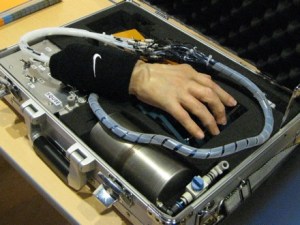
help us feel human again
I spent the early years of my working life being formed by the medical device industry. I was energized by the mission of seeing people restored and hearing joyful patient stories. I enjoyed the banter with physicians and learning about the junction of technology and living systems. And I was charmed by the folks I worked with: some of the smartest people around, with a bent toward helping others. Not everybody, mind you, but enough lively, mission-fed people that the workday was full of surprise.
Things change. Corporations mature—for better and worse. Lately it seems the balance sheet and the quarterly earnings call too easily drown out mission. Smart people who enjoy a challenge still work there, and it is an industry with more and more specific boundaries. So if your agency is pitching medical device work, please be aware of these three influences that shape the perspective of the people you will be talking to:
- Legal pinioning
- Regulatory straight jacket
- Branding dead ends
These perspective-shapers sounds like a bummer, but smart agencies with a knack for operating in tight quarters can help make a difference. The first two perspective-shapers are fairly obvious. Naturally, the best medical device companies hold the patients who receive their therapies in the highest regard. And you would not want to work with a company that didn’t. But in our litigious age, there’s lots of money to be made from suing manufactures for all sorts of things. Naturally, medical device companies ramp up their risk-averting processes. Lawyers review nearly every outward facing piece of communication and regulatory reviewers—the picky cousins of lawyers—delight in ferreting out each word of potential deviation from the FDA-approved copy. And the work of lawyers and regulators is invaluable.
Branding dead ends are not so obvious and few will admit to them out loud. These take a bit more explanation, so I’ll reserve it for another post.
But in your initial approach to conversations with med tech employees, know that most of their conversations are like walking a tightrope: marketing is always a balance between what you’d like to say and what you can say given the published studies. Agencies with more consumer experience can find this deadening. But resisting the pinioning and the straight-jacket—in your own way—is one of the ways your team can add value. It’s just got to be believable. And it becomes more believable when you ask for and expect the list of approved claims before starting work on your pitch. Since every claim must have a valid reference, basing your creative on the right foundation can make the difference between making the final cut and being dismissed as not up to snuff.
Image Credit: Engadget
Getting Voice Right
Speaking for Someone Else is Always a Collaboration
 Speaking in someone else’s voice is not really possible, though copywriters are often called on to do just this. The process—when done well—is more like hearing the client’s messages and collaborating to expand and deepen those messages. If the goal was just getting the words right and getting the message out clearly, strong editing would suffice. But the strategic copywriter often contributes substantive content. Helping the original ideas along by serving as a conversation partner to the client, to help them process through the message and its ramifications. The resulting content can prove stronger than the original content, though the danger is that it can sound like a committee wrote it. But a strong copywriter owns the process and follows through with a singular voice.
A singular, compelling voice.
These old Miller High Life commercials help make that point. These were filmed in the 90’s, directed by Errol Morris through Wieden+Kennedy. The retro male voice is just over the edge to make you laugh, but there is a bit of truth in the way the Americana is presented. The voice-over is perfect—and a perfect throw-back to 1950s and 1960s. That’s where Miller wanted the target audience to dwell for 30 seconds—with that slight whiff of what a man once was. Or at least what the Miller/Wieden+Kennedy collaboration thought might produce spending behaviors. And they succeeded: throughout the set there is the slightest hint of something you sorta remember—something your dad’s friends said. Or maybe your grandfather’s friends.
You’ll find a bunch of Errol Morris-directed Miller commercials here, but “Broken Window” (below) does a good job of capturing our grown up fear of the Other.
###
Image Credit: doylepartners.com via 2headedsnake
You’re Soaking In It—Creative Unresolve and the Good Life
The issues that roil your nerves and kick you in the gut may be instrumental in pushing you forward.
let creative unresolve lead you forward
A few days back I wrote about sitting with unresolve as long as you can, as one method for producing creative ideas. John Cleese had a few choice words on the topic. After talking about this in class and listening to Mr. Cleese and experiencing it afresh with my own writing, I realized a couple of ancient voices had been swarming around, punching me in the face with this very point—only applying it to the rest of life.
One voice is a warrior-poet. Aside from being handy with a lyre and deadly with a sling and stone, he had a very lucid and descriptive (often prescriptive) way of asking God to do terrible things to his enemies. And yet, though he often had the power and opportunity to take action, he didn’t. Instead, he turned from the shortcut, obvious solution and waited. We all know that waiting for God seems to take longer than anyone likes.
Same thing with another Old Testament character—Habakkuk. He saw bad stuff coming (a brutish band of thugs coming to decimate his homeland) and decided also to fix his attention on God. And wait.
Something happens when we wait. Sometimes we can fix things in life right away. Often we can’t. So we wait. And just like when we’re working through a creative solution to a thorny business or communication problem, we sit with unresolve and let the discomfort itself push us forward.
Same thing with life. We wait and seek and wait. And–this may be most critical—we reach out. We reach out when things are not right with us. And reaching out is nearly always worthwhile. Reaching out looks like a phone call. Reaching out looks like an email. Like prayer.
Some students from my copywriting class are graduating. Everyone says it’s a low-energy job market—difficult for the job hunter. I sympathize. To these graduates I simply offer the notion that your creative unresolve can lead you forward into networking, conversation and, yes, to reach out in prayer.
I still maintain that the best stuff in life happens in and through the choices and actions made directly from chaotic, creative unresolve.
###
Image Credit: itchy banquet via thisisnthappiness
Copywriting Tip #5 for English Majors: Why Voice Matters
The human voice will always reign as king of communication.

words contextualize our presence and vice versa
I recently talked with a pastor who opted out of social media. Entirely. If he wanted to connect with someone, he picked up the phone.
“That seems anachronistic,” I said.
“No—that’s how I connect,” he said. “I talk with people.”
And then I realized: Yes! The sound of the human voice will never go away entirely. People may joke about removing the phone app from their phone, but that remains a joke. There’s something about the human voice that demands a response and always will. The human voice has a directness that goes beyond any technology, whether text or tweets or simple words on a piece of paper or images scattered on a cave wall. When our advertisements don’t get through, when our emails fall short, when our Facebook message goes unanswered, we go stand in front of someone and ask our question.
The human voice will always reign as king of communication–it says “I’m here. I’m present.”
Students in my professional writing classes at Northwestern College wander the web with ease. But they are loathe to pick up the phone to talk with people about potential job prospects. This is, perhaps, a pitfall with pursing writing. But perhaps the pitfall itself can show the way forward.
As copywriters we try to use that voice. We mimic it by writing in a conversational manner. With short sentences. We try to “sound” like the voice—“sound” because the sound is in a reader’s head (so—not really a sound). The more our writing sounds like the human voice, the more invisible it becomes—with the goal of messages that get into one’s mind without someone remembering they just read something. Kind of like how you drive to work everyday.
Unconvinced? Check out this German ad (and below) about organ donation. The pathos in the voices is unmistakable, even if you don’t speak German. But the voice is magnified by the dialysis chair. In the train station. It’s a bit of theater that amplifies the voice.
Context switching—from hospital to busy platform—becomes that platform that makes the human voice all that much more effective. The voice, plus the human before them—hard to resist. And emotion is a definite part of this.
Moral: “Write like you talk” is good advice. And not easy to achieve.
###
Image via thisisnthappiness
No One Expects the Spanish Inquisition
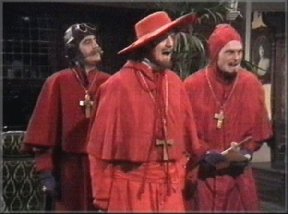 This was a favorite phrase back in High School, when there was no end to how much Monty Python we could quote each other. Lo these many years later, it turns out that John Cleese had quite a lot to say about creativity. I invited Mr. Cleese to lecture in my Freelance Copywriting class last week (via Youtube). Two lectures—spaced 18 years apart—show and reinforce that the best ideas come from sitting in that uncomfortable spot where things are not resolved. The quick solution is often not the best solution. Mr. Cleese argued we need space to become playful, time to border our playful escape from life’s ordinary pressures, time to grind through creating, confidence that mistakes made while creating mean nothing and humor—which is one of the quicker ways to get to this open mode needed for creation.
My goal with copywriting students (and with myself) is to learn to inhabit that chaotic place of unresolve. To live in that space—for as long as possible—while fitting different ideas to the problem. Looking for a match. The chaos of the unresolved space has some motivating effect that helps generate new solutions.
If we wait there.
###
Via Brain Pickings
Copywriting Tip #4: Speak Truth to Profits (Dan’s Story)

ancient copywriters rocked
I’m fond of a particular collection of ancient texts. One tells the story of a copywriter named Dan. Dan’s client was all-powerful and routinely dismantled (sometimes literally) those who did not do exactly as he asked. This client never hesitated making impossible requests and had no problem forcing his teams to guess his mind.
Dan was an employee who had been groomed and mentored and specially-trained for leadership. And yet Dan retained a commitment to the recognition that even his abusive, ill-tempered, seemingly all-powerful employer had to answer for his actions and did not have as much control as he liked to believe. This perspective had been shaped early in Dan’s life by his large, extended family.
Dan’s understanding of life held sway over his work. And while he was dedicated employee, he had committed himself to write truth, no matter the cost. This put him in a bind when it came to this client, because this client’s wealth and power routinely corrupted those around him, so most everybody told the despot exactly what he wanted to hear.
The story goes that one gruesome assignment forced the entire team to guess what the employer dreamed and interpret that dream. Or be dismantled. Of course no one could do it, and so they said. The employer force the point and the team prepared to be dismantled. Dan heard of the impending mass dismantling and he and his buddies thought they better act on their understanding that even the king answered to God. So they prayed. That’s right, this is a story of a copywriter who conversed with God so he could do his work better. Dan would often point to these conversations with God when people praised his insights.
And he did get insight. From God. It was not an insight that put the employer in a good light, but Dan told it anyway. And everyone lived another day.
The Moral
Truth matters more than appeasing the abusive despot before you.
And This
The copywriter’s work has always been about providing insight into the soul of a client and the heart of a client’s audience. Get help with that.
###
Image credit: Douglas Smith via 2headedsnake:
Copywiting Tip #2: Start Fast. Engage Brain.
Start today.
Now. This very moment—long before you have a clue what you are doing. This sounds different from what Young said. Young said go slow, gather your material and masticate. Chew it over. And keep chewing. I agree with Young but with this addition: trick your mind into engaging the problem by jumping all the way to the end before even beginning to gather. Then go back to Young’s process.
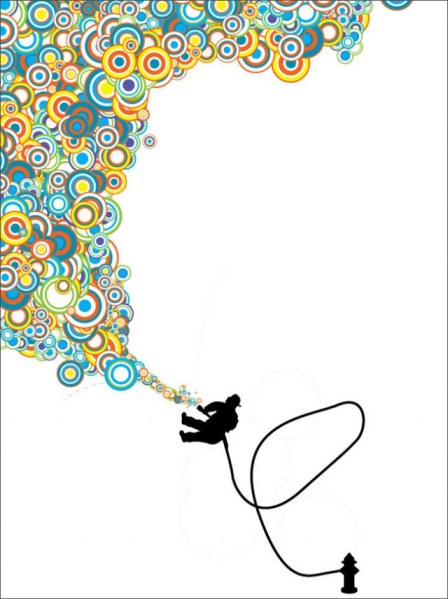 Writing the end result out of ignorance does this: you know you’ll write dreck so your internal Editor-Nazi takes a nap while your inner poet-child scrawls all over the wall with red crayon. When you wake up the next day and look at the terrible mess the poet-child made, you recognize a couple very productive words that hint at where this thing needs to go. Sometimes those words or images drill to the internal core of the problem you might never have guessed at with all your precious process.
###
Image Credit: Oliver Barrett via 2headedsnake

 conversation is an engine