Archive for the ‘Credibility’ Category
Clicktivism & The Power of Social Chatter
This subtle third rail
 Katie Humphrey writing in today’s StarTribune noted the proliferation of pink and red equal signs on Facebook (as the Supreme Court heard arguments on gay marriage) and wondered if social media chatter amounts to much more than chatter. It’s a good question and a good article. Humphrey cited U of M professor of communication Heather LaMarre:
For a lot of people, the mere act of posting relieves that need or feeling for them to be involved. They feel like they did their part….
Anyone who writes regularly understands this dilemma: you want to write about something. But if you say aloud to someone the germ of your idea too soon, your pressure to write diminishes. Same goes for action, apparently: we feel we’ve done something if we’ve said something.
But that’s not exactly wrong, is it?
To say something is to do something. We’ve communicated that something is important to us—important enough to remark on it. Yes our likes and endorsements (LinkedIn) and tweets are cheapened by sheer volume and ease with which we dispatch these opinions. But each says something. And each does something, however slight.
Our talking is the beginning of our acting. Our talking is also a signal that others could pick up on in conversation and in relationship. And when others join in on this important thing we’ve identified, it starts to carry power, like a third rail. I think we’re seeing this power in all sorts of minor and major revolutions.
###
Image credit: Francesco Radino via MPD
Your Product: Light of My Life
You Complete Me.
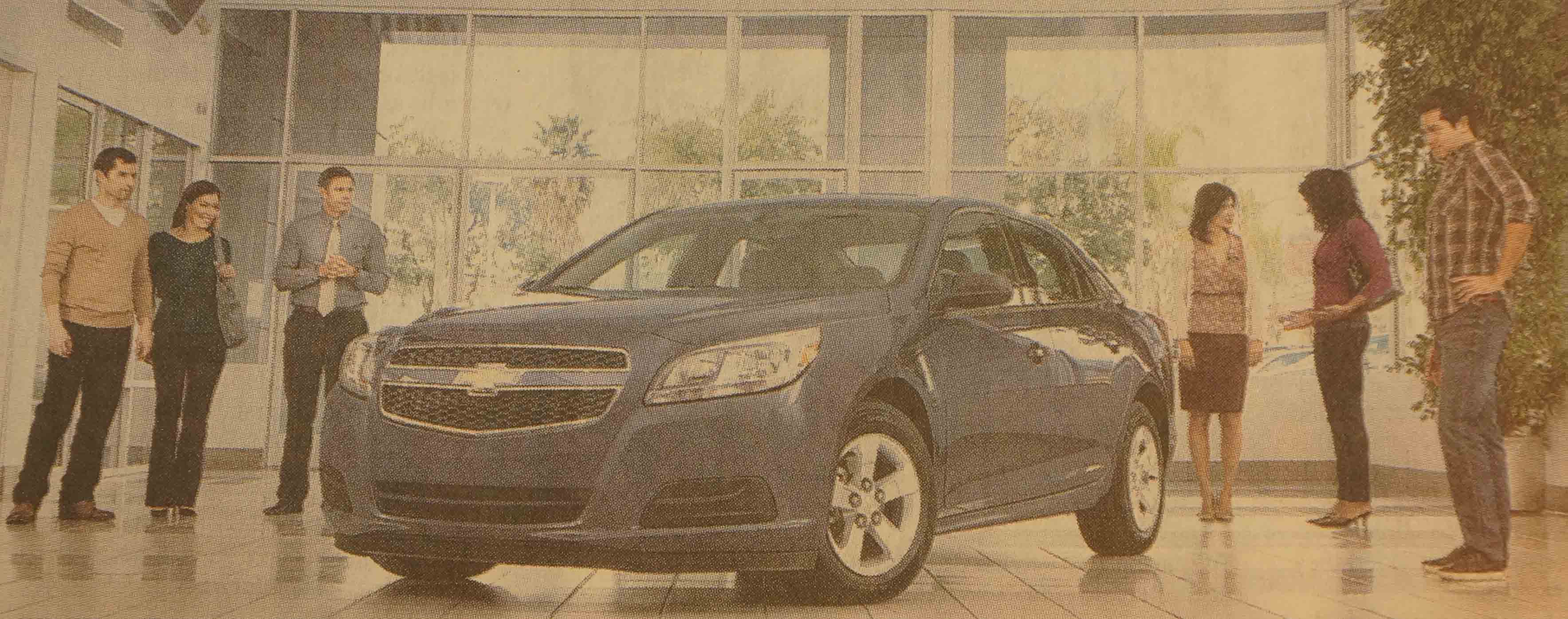 Am I right? The magnetic power to draw citizens off the street. The hushed tones in the presence of greatness. The loving gaze. This car will change your life—perhaps it already has?
The fawning devotee image is standard fare in our media diet. Models perpetually doing homage to the product at the focus of all attention. Chevy, Toyota, Cadillac—who doesn’t make ads like this? Product as hero. Forever. We see this everywhere.
Somersby recently turned the Apple experience on its head by grabbing the dead-earnest communication style to appropriately ridiculous ends. It is perfectly reasonable to poke fun at the high places certain brands have taken in our lives.
Can we get beyond product as instrument of life change? True: it is possible that some consumers (that is, those who have already chosen to purchase a car/beer/computer/whatever) may look with unbridled lust toward their purchase, this object of their desire. But is it possible to promote a product without making the (thoroughly ridiculous) promise that it will indeed change your life?
Maybe not. Because quickening desire has always been at the heart of selling, and nothing quickens desire (and loosens the wallet) like showing the person you will be once you buy this car/beer/computer/whatever.
Maybe so—and this may be what is behind the eventual victory of online advertising: product messages that follow our search patterns and interrupt us with the key to what we’ve already been seeking.
Maybe both. Because desire follows a need or want. And we want what promises to make us different. Better. Smarter. Hipper. Advertising will always make these promises and will find ever new ways to get the message to us. And because we self-identify as “consumers” we’ll probably never run out of the optimism that buying stuff will change our life
It’s just that the loving magnetism of the Chevy image seems, well, juvenile. It’s a credibility issue.
###
Pope Francis Tango: Simplicity, Poverty, Rigor
Messaging that Walks Then Talks

I’m not a Roman Catholic sort of guy, still I find myself drawn to the early descriptions of this tango-driven, Argentinian man-for-the-poor Pope. His actions—catching a crowded mini-van to dinner, hoisting his luggage while paying his hotel bill, crowding into elevators and stairways with everyone else—illustrate some new thing. This new thing looks closer to people and sympathetic rather than distant, academic (in the fusty, out-of-touch sense) and authority-driven. The Roman Catholic Church remains an immense hierarchy with all sorts of problems, but this new thing looks positive.
I like that he wants the organization to get back to evangelism. That seems like he is peering into the right well, looking back at the roots. If he had asked me about repositioning the church (still waiting for the call), I could point in no better direction.
Of course, all sorts of bad, coercive, manipulative, openly evil things have been done under the guise of evangelism. But at its best—and it gets hard to strip away the muck accumulated over centuries—Christ’s message of redemption carried by people who are themselves changed, is transformative.
So. Bravo for pointing back to the roots, Pope Francis.
###
Image credit: John Stark via Frank T Zumbachs Mysterious World
Texts as Tools for Sorting What Matters to Your Firm
Your words make me so mad—and that’s good

words can wake us to the believable center of our purpose
I spend my days poring over texts. Reading internal notes and documents. Rereading interviews and meeting notes. Writing questions, asking those questions and writing the answers. And sometimes rereading the answers. Then I start making texts: mind-maps and cartoons and diagrams for starters. Then the short (or sometimes long) text that will go back to my client—ordered arguments and assertions. Emotive elements. Narrative. Jokes and anecdotes—whatever it takes to communicate the essence of what I take as my client’s central point.
And then I send it to them.
And they react.
Reactions vary from “you are right except for this point” to “that’s fine” (the worst possible reaction, it means my copy was so bland it stirred exactly nothing) to “you nailed what we’ve not been able to say” (my favorite reaction) to “We are deeply offended by this.” That last is my second favorite reaction—it means I got under their skin, though not in a good way.
And then we trim the right copy as a text for the target audience.
What’s remarkable is how the process of sorting through all the internal dialogue and the organization’s unexamined thought actually helps in finding the believable center of the organization’s identity. It’s got to be believable because if you can’t imagine an employee saying it with a straight face, you’ve not hit it. It’s got to believable or the promise won’t match reality—and that never gains traction with the target publics.
But the words themselves—right there on the page—can stir such a reaction from the client that they can sometimes catch a quick vision of what they aren’t. Or what they are. And that glimpse carries forward to what a team does next. And that glimpse can fold backwards into how an organization thinks about and treats itself.
That’s why copywriting is fun.
###
Image via 2headedsnake
Endo Brochure Silent on Vital Bits—2 Skills for Tonight’s Debate
Read the White Space. Hear the Silence.
Campaigns, Inc.: My Antiheroes.
MedCity News reports on an Endo Pharmaceuticals brochure under scrutiny by the FDA. The problem was a lack of transparency about the dark side of the therapy—a therapy designed to slow the growth of prostate cancer cells, namely:
- paralysis that may result from the risk of spinal cord compression
- the increased risk of diabetes/heart attack/sudden cardiac death/stroke
In a lively debate in comments section of the Pharmalot blog, the consensus seems to be that the FDA made a good call. Commenters began by speculating this was likely more than just a slight oversight as the Endo communicator skipped regulatory/legal review in a rush to meet a deadline. Then commenters started tracing the language to the Vantas Implant website and began speculating on the rest of their messaging and promotional literature.
The debate amuses me because it is the rare product brochure that is read outside of a sales presentation. And it is even rarer for a brochure to withstand extended exegesis. That the FDA does this regularly earns my respect/awe/fear. Love them or hate them, the FDA’s dogged attention helps medical copywriters and marketers hew to the high road.
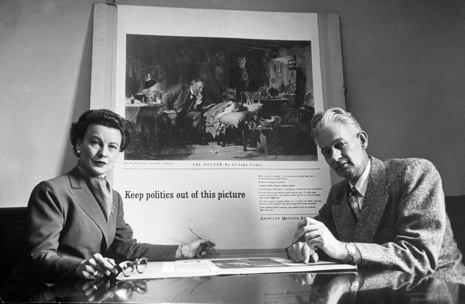
The debate also serves as a reminder of the skills needed for watching tonight’s presidential debate. It’s the white space and silence that may be most eloquent. The skill of reading the white space and hearing the silence means the audience must be equipped with the fuller argument. The FDA certainly was. But to read Jill Lepore’s recent New Yorker essay (“The Lie Factory: How politics became a business,” Sept. 24, 2012) is to come away with all the history and reasons as to why the American populace remains a happily uninformed audience. Whitaker and Baxter of Campaigns, Inc. helped set the stage for the current state of our spectatorship:
In tonight’s debate, I’m trying to break free of my usual indolence to hear between the lines (as it were).
###
Image credit: The New Yorker
Accent Signage Founder Reuven Rahamim and the High Cost of Repairing the World
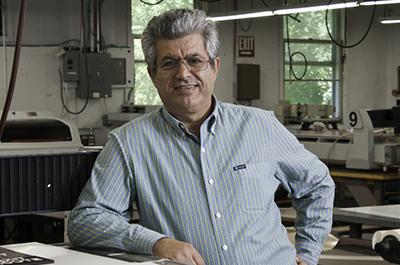 The sadness surrounding last Thursday’s shooting at Accent Signage in Minneapolis’ Bryn Mawr neighborhood deepens. As new details emerge, the picture of Mr. Rahamim is even more compelling and plaintive:
Rabbi Alexander Davis said Rahamim saw his work as “tikkun olam,” a Hebrew phrase meaning to repair the world. “He didn’t just make signs, he helped people find their way,” Davis said.
The shooter, Andrew Engeldinger, had sued Accent Signage four years before. But Mr. Rahamim demonstrated compassion for this “loner struggling with mental illness” by keeping him on the payroll and trying to do “right by him.”
The best of our work has a caring element and is powered by a desire to serve others. Mr. Rahamim’s practice demonstrated this in a number of ways. He had compassion on one who would have been an enemy, pulling him close rather than pushing him away. He paid dearly.
The loss of Reuven Rahamim and others at Accent Signage is a deep sadness to our community.
###
Quote via Joy Powell, Star Tribune. Image Credit: MinnPost
I Believe Your Story. God Have Mercy if it Proves False.
Sucker turns scrapper when story unravels

Duped is Dangerous
The woman shouting optimistic, full sentences from the top of the dune (that story here) highlighted my own willingness to be entrapped by a story. Although I have much of the cynic/skeptic in me, my basic approach to communication is to believe what is in front of me. This bit of openness (or blindness, as the case may be) allows me to enjoy stupid movies. Example: I watched and even finished Fast Five the other day. Fast Five is nothing but a string of car chases. In Rio. That’s it. I guess there was gunplay and corrupt officials and a few pretty girls. But the cars steal the show and the vault (I’ve said too much).
The movie never really asked me to believe it. From the beginning it was just a string of car chases.
Mrs. Kirkistan costumes theater productions. We often talk about what happens to actors the first time they put on their costume: they inhabit the clothing in a very visible way. The actor in costume becomes the character before your eyes. You believe, partly because the actor now believes all the more.
In the same way, we also talk about what happens when the costumes in a staged production are wrong. It’s not just that the production looks bad; it’s that the believability is sucked from the room and the play turns sour. The ill-fitting or badly adapted costume shouts, “This is a fiction.” Of course, the audience knew this already, but they had suspended disbelief. Until now.
And when the story unravels and proves false, you feel duped.
Duped is Dangerous
No one wants to be sold something. No one wants to be taken advantage of. And when we find we have been sold a bill of goods (as the cliché goes), our cynical/skeptical knob gets turned a notch or two. Sometimes we even become enemies. This is true for advertising. This is true for the company line the CEO utters from the podium. It is true for the pastor’s manipulative reading of a text from the pulpit. It is true for the talkative salesperson at the AT&T store. People turn when duped: loyal employees, devoted congregants, potential customers—each has the capacity to become the opposite when the truth is revealed.
Keeping things believable is tough work and a big challenge all the way through a communication event. Maybe that is why evangelizing for something you don’t fully believe is so hard if not impossible.
###
Image Credit: assorted schmidt via thisisnthappiness
Two Inane Commercials. One Purposefully So.
“Perfect place to build a town” defies believability
The folks at Casual Films tell the story behind making one of the dumbest commercials I’ve seen in a long time. In their work for Dassault Systemes, the filming is cinematic, the visual effects are stunning, the soundtrack and entire setup is urgent and important. But in the short form of the clip, when the supposed explorer speaks, the bottom drops out of the story. Her words—and her delivery from the top of the dune—flip the believability switch that says: this is utter fiction.
If we could supply fresh water this really would be the perfect location for the new town.
Her words send me to this set of questions: Really? You’ll build a town in the desert? And you think people will come because you have fresh water? Have you really studied what it takes to build a planned town—has it ever worked? Who wants to live in such a place? And then I start thinking about colonialism and all the unsustainable projects my country has initiated over the years.
Maybe Dassault Systemes really is going to do this and icebergs in the desert really will supply nomadic tribes for years to come. I hope they are changing the world. But the actor’s long sentence yelled across the desert—heard perfectly despite the distance and the howling wind—made everything suddenly seem like a middle school play. In fact there are a couple other points where the supposed conversation sounds like a PR flack talking to schoolchildren.
Wexley School for Girls: Take Me to Copper Mountain Now
Compare what Casual Films did with what Seattle’s Wexley School for Girls did for Copper Mountain. They hammered the silly button with no pretense at believability and completely own my attention. I don’t even ski, but I want to go a place with this sense of humor.
See a fuller set the Wexley commercials here.
By the way, I find the Dassault Systemes tagline pretty compelling:
If we ask the right questions, we can change the world.
###
Via Adfreak
How do your tools shape you and your customer?
We work with tools. Tools work back.
Current Tools Train Us to Expect Collaboration
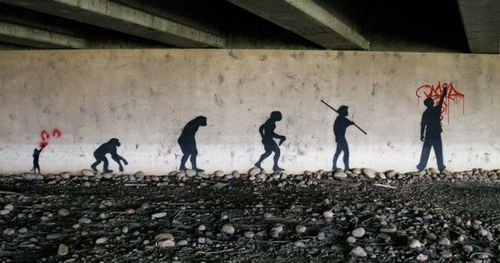
It is not precisely true that our tools train us. More to the point: our tools sometimes wake dormant skills. Our tools help us exercise muscles we’ve not used so much: for instance, my running shoes help me exercise a different set of muscle than my bicycle typically requires. I know this because I have different pains after using each. An axe requires differing coordination skills than a hammer, which is also different from a ratchet.
Current social media tools exercise our collaboration muscles. From Facebook and Twitter we began to see that collaborating is fun. And we start to look forward to working together. It now feels good use those muscles and skills. It feels productive.
So when we require each other to sit silently in a long meeting, well, that doesn’t feel so good anymore. Or when we tell our employees or our congregation to go do this thing without asking for their input and experience—that just won’t fly anymore. And if we expect our customers to buy whatever we sell with no questions, well, that model has been dead for some time (the cult of Apple comes to mind as one exception).
David Straus in his practical and interesting How to Make Collaboration Work (San Francisco: Berrett-Kohler Publishers, 2002) rightly labels this a matter of human dignity:
People who are directly affected by an issue deserve to be able to express their opinions about it and have a hand in formulating a solution. (46)
How are the current tools changing the expectations of your client, customer or congregation?
###
Image Credit: Inkdrips via thisisnthappiness

 conversation is an engine