Archive for the ‘curiosities’ Category
Brian Eno: “Everything Good Proceeds from Enthusiasm”
“Some people are more prepared to take advantage of opportunities than others.”
I’ve been a fan of Brian Eno since his Roxy Music days.
I’m not always crazy about every track from Mr. Eno, but he is always interesting. Speaking of Roxy Music here’s a first listen of Bryan Ferry’s new album “Avonmore.”

###
Via Valeria Maltoni, Conversation Agent
Image credit: NPR
Five days ago I killed someone. I had to.
Lessons Learned: 9000 Words into NaNoWriMo

- She took her own life, which shocked me. Maybe it was the best thing to generate all sorts of electricity in the people around her. For instance, I’m learning Irvina was fierce, respected and disciplined. She was a steady, planful presence. She was empathetic, maybe because of her failed first marriage and potential underworld connections. And now my characters are starting to wonder: is she really dead?
- Dialogue makes stuff happen. It also uses a lot of words, which is perfect for keeping up with the 1667 word daily goal. As Tim and Philip talk, I’m seeing the fierce loyalty they have to each other, their business, and to the woman who (potentially? maybe?) died. I was surprised to find out that Philip was an entitled SOB, but still likable. Who knew?
- The way forward is already present. Even with only 9000 words on the page, potential story arcs are presenting themselves. I’m seeing the whole thing laid out, and it remains interesting.
- Someone stuck an oracle into a fold of my story. Franklin Delano Sjogren showed up as a calm, deep presence. Where did this guy come from? I really want to sit at his feet and learn from him. I sure hope he circles back into the narrative.
Most of my usual writing is essay: persuasive, informative, educational. My work writing for clients is generally marketing copy for ad agencies, the medical device industry and other industrial clients, along with thought pieces and book chapters.
So writing a story for National Novel Writing Month is a new thing for me. So far so fun—but I hope Irvina survived.
Where can I find 1000 words before midnight?
###
Image credit: Kirk Livingston
Making It Up Daily: 1667 Words at a Time
Do You NaNoWriMo?
It’s funny that those stories we’ve lived in since childhood were written by someone. Made up, one word at a time.
Books. Movies. Plays.
All made up.
By someone.
Writing.
Game of Thrones. Lord of the Rings. The Great Gatsby. Even Burt Dow, Deep-Water Man. All made up. Maybe they carried pieces of older stories, but someone composed them. We know the names of the authors.
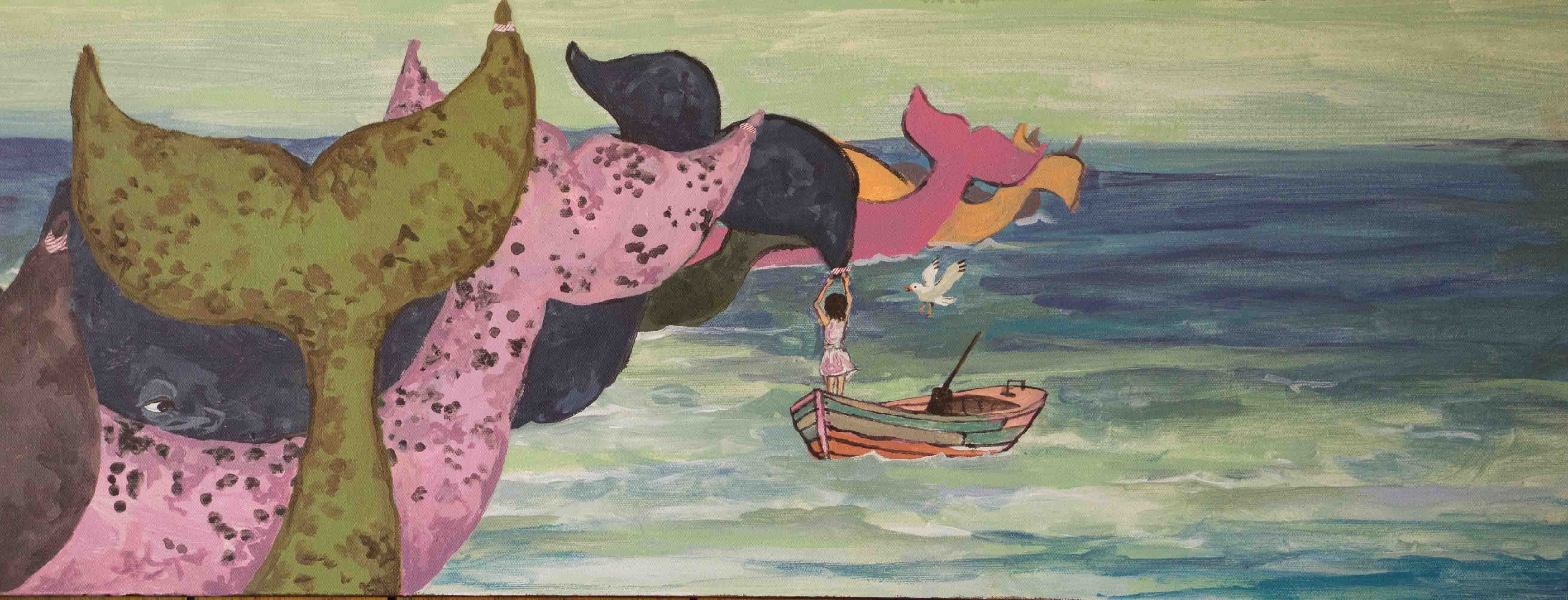
At some point in life I realized these very complete little worlds that seemed so alive were actually fiction. Funny that something made up could prove so real for so long. So concrete. But I had to pull back the curtain to realize this.
At some point—a bit later—I realized there was actually quite a lot made up: much of human interaction is made up (we call it “culture”). Oh sure, it presents as concrete reality, but behind the scenes people were literally making things up every day.
Business is a great example. Walk into a brick and mortar superstore and it seems like it’s been there forever. But we know they huge multi-million dollar inventories come and go. Same with banks. Same with restaurants—especially restaurants. Even the big institutions that are the pillars of our communities are making it up as they go. Sure, the rules of the game are there and seem to be unchanging as if handed down on stone tablets. But nothing is certain about business.
If you’ve ever been in a start-up company you’ll know that making it up as you go is expected. We need more folks willing to leap into the void of making it up. I believe making it up on paper translates to words which translates to action.
National Novel Writing Month is upon us again. And I’m joining in. It’s likely this blog will suffer inattention. But the challenge of creating a story from nothing (or more likely, from the disjointed and broken story-bits laying about in my mind and yours) is too great to resist.
National Novel Writing Month is a relatively painless way to try to produce a coherent story. Or, if not coherent, than at least something that has 50,000 words.
Where are you exercising your make-it-up muscle these days?
###
Image credit: Alli Livingston. Photo: Kirk Livingston
About the Node Not Taken
Steady There, Young Philosopher
My hardworking, entrepreneurial colleague surprised me in conversation the other day:
Sometimes I wonder what it would be like had I stayed in the corporate world—what would I be doing now?
My friend was in one of the periodic slumps that happen to anyone building a business of their own. Those slumps squeeze out long-suppressed questions. These are the questions that precipitate momentary crises of faith for those constructing wings as they plummet.

No. Really. Is there an actual “Afton State Park”?
Young philosophers like to ponder the “What ifs” of life:
- What if I had dated that person rather than this person?
- What if I had taken that job rather than this job?
- What if I had studied engineering rather than philosophy? (One certain answer: the world would have to cope with a very bad engineer.)
- What if had dived 12 inches to the left and missed that rock in the lake?
One problem with our casual “What ifs” is that they often assume a straight line from the point of decision. You go this way. You go that way. Two roads diverging in a yellow wood.
But what if our lives are composed of nodes that become roads? What if each decision is followed by another so that our paths are constantly changing in real-time?
Another problem with casual “What ifs” is they forget the tiny but forceful pinpricks of relationship and conversation and motivation that accompany every choice. Thousands of tiny insights and histories and dreams contribute to each action as well as each subsequent action.
Personally, I cannot help but wonder if the nodes that become roads all lead to the place/people we were meant to be in the first place. Wait—don’t call me a determinist yet. Stick with me: what I mean is that whether we stayed in the corporation or went on our own or dropped everything to join the circus, would we end up as the kind of people we were meant to be?
This is not a perfect thought: we build things into our lives, good and bad, by daily habit. We grow, or not, because of those habits and subsequent opportunities. Admittedly, the determinist take on choice has holes.
But I’m reminded of that inveterate letter writer who wrote his friends about walking in the “good works” begun in them.
Today I’m looking for nodes and roads.
And I hope to step in a good work along the way.
###
Image credit: Kirk Livingston
Charles Chamblis: Photographer’s Notes
Story told by numbers
Charles Chamblis didn’t take too many days off from photography. With his camera he captured slices of life in the African-American community around Minneapolis and Saint Paul, Minnesota in the 1970s and 1980s.
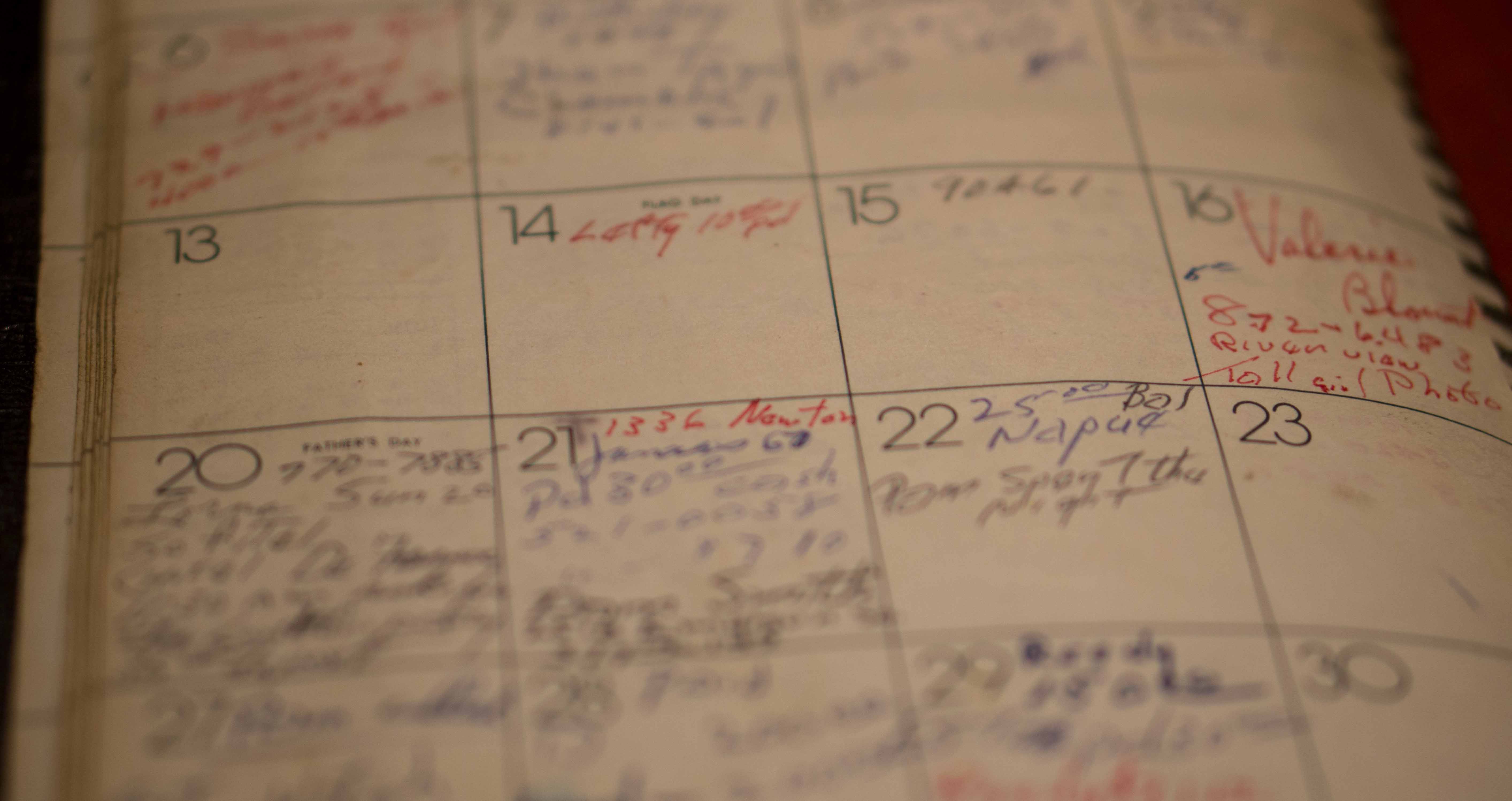
Go see his collection of Minneapolis-Saint Paul photos at the Minnesota History Center.
More on numbers here.
###
Image credit: Kirk Livingston
Should a Doctor Blog?
Only if they want to grow their practice. Or connect with other physicians. Or with patients. Or provide thought-leadership.
Greg Matthews, author of Missing the Forest for the Trees, has been studying the online presence of physicians for years. He’s found that the credibility of their position and the connections within that position can translate to large and devoted followings today.
But all that was counter-intuitive in 2007.
Back when Mr. Matthews was formulating his questions about physicians online.

Back then he was sure—we all were sure—that talking about health information online would never fly. It’s just too personal. What kind of nut would diagnose and prescribe in public/online?
Plus, well, HIPAA.
But some physicians found a way to talk with regular folks (that is, us non-experts who live on the web) about pressing topics. Diagnosis and prescribing on the web was a non-starter, but presenting topics in a way that made sense to regular people did happen. And as we all took to the web to sort our maladies, these authoritative, personal voices became trusted sources of information.
According to Mr. Matthews, today 61% of physicians access social media weekly, 5000 physicians post daily to blogs and Twitter, and 50 physicians are followed each by more than 500 other physicians. Some physicians even feel “ethically obligated” to share on the web. Download Mr. Matthews PDF for more stats.
In this blog (conversation is an engine) we talk about conversation. We’ve noted how conversation is a two-way street: not just in words exchanged, but actually causing conversation partners to go and do different stuff. We leave our best conversations changed and with new resolve for the most important things facing us. It’s a sort of speech-act theory for anyone willing to take a dumb-sketch approach to life.
And even physicians and even patients can gain from this. And what they both gain is far more than mere information.
It makes me wonder what paths might open for collaborative conversations in lots of different work settings.
###
Buzludzha: Bulgaria’s Elegant Monstrosity
Built When Communism Could Not Fail
That could never happen here. For example, the new Viking’s stadium: football will never go away.
Right?
###
Via The Economist
Blue Mounds: Broken
Blue Mounds State Park in Southwestern Minnesota is a surprise. This break with farmland rises amidst all the flatness. See for miles from the hiking trails along the top.

Sioux quartzite cliff 100 feet above an ancient quarry.
More on “broken” here.
###
Image credit: Kirk Livingston

 conversation is an engine