Archive for the ‘curiosities’ Category
If a Customer Shouts in the Forest and No Customer Service Rep is Around to Hear it…
Should she post a comment on Yelp?
Nancy Beiersdorf of Medtronic’s e-Commerce and global strategy hinted (in this SAP talk) at the medical device company’s evolution from a product company to a solutions and service company. One important ingredient in this new recipe will be hearing from the people with problems (people in need of a solution) and helping them solve those problems (that is, service).
But hearing from customers is not easy—even for other customers.
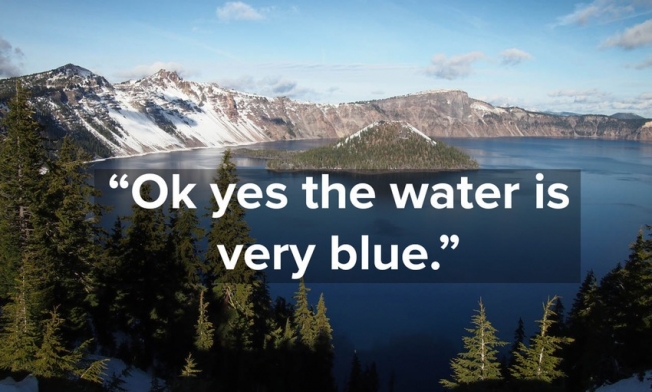
If you’ve ever used Yelp to locate a restaurant while traveling through a new city, you know to toss 30-50% of the comments as someone having (a) evil intent or (b) a bad day. Even our favorite national parks suffer from poor Yelp reviews:
Sorting fact from fiction has been a traditional problem with hearing from the customer. Customer service must wade through long, rabbit-trail narratives to finally get to the actionable item. That is the way of human conversation—sometimes it takes a while to get to the point. All this unquantifiable blather plays havoc with our quality systems. Surely customer service will soon chart a metric like “Time to actionable issue” and pay employees accordingly.
Hearing from customers is an inherently messy business. Especially for Medtronic: where reps once talked only with cardiologists and electrophysiologists now there will be all sorts of real people on the phone (or more likely, placing orders and comments on a web site).
All this conversation cannot help but change things upstream and downstream. In particular I expect at least two results:
- Increasing masses of consumer-to-company interactions will train consumers over time to use certain words and press certain buttons to get what they want. Much in the same way we are conditioned by repetition to bypass our bank’s introductions to get to a real human.
- Corporations may grow more sensitivity toward customer voices–the very thing Ms. Beiersdorf advocates. By that I mean conversations have a way of working backward into the machine-gears of a corporation. As solutions and service show up more clearly on the P&L sheets, people will start to pay more attention to human interaction.
At least that is what I hope.
Let there be more advocates for the customer voice.
###
Image credit via Adfreak
Don’t Bother Me. I’m on Fire.
Too Busy: 4 Takes
- My contact is too busy to talk about collaboration: “Too many deliverables, scheduled too tightly.”
- Another colleague laments the lack of time to think ahead about the broader picture. She chides the constant race to get stuff done.
- A friend observing the inner-workings of a logistics department 2000 miles from where he was trained could identify key process components missing. The very components that created the immediate chaos the team waded through each day.
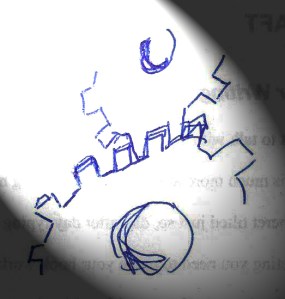
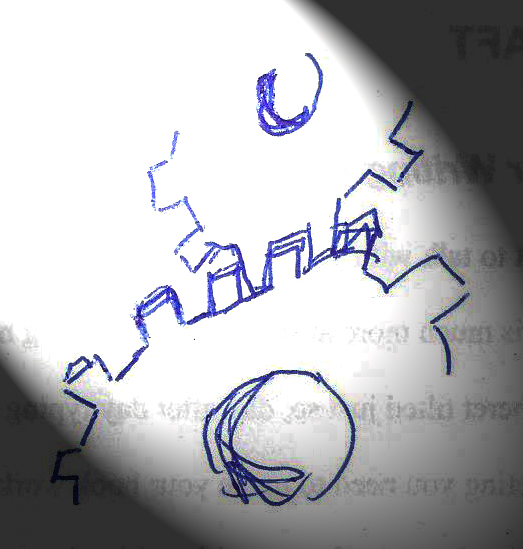
We earn our keep by being busy. None of us want the boss to wander by and say, “Fire up that keyboard/drill press/classroom/spreadsheet and get to work.”
Busy is always good.
There are no exceptions.
And yet:
- We lament “busy” but secretly get a buzz from opening the adrenalin spigot.
- Busy looks productive. But looks can deceive. We easily deceive ourselves with busyness.
- When taken out of action (for instance, when downsized/right-sized/laid-off/fired), we suddenly have time to ask:
- “Where am I?” and
- “What (the heck) am I doing?” and maybe
- “What was I thinking?”
- No one likes the off-balance, adrenalin-free stance of waiting, watching, knocking and waiting. Are we genetically predisposed to seek action? After all, aren’t verbs the action-heroes in our favorite writing?
It’s hard work to look at the bigger picture and make difficult choices about direction, use of resources, usefulness. And yet those are the very questions that help us move forward. As the wheel of seasons grind toward winter in Minnesota, we might take a page from the farmer’s playbook and let snowy fields lie.
Even on purpose: the fallow field may allow us productive time to consider what it means to be productive.
Versus just busy.
###
Dumb sketch credit: Kirk Livingston
Fight Tunnel Vision. Explore Locally.
Start with the Saint Paul Art Crawl
Do two things to fight big money in politics:
- Locate the funding sources (start with OpenSecrets.org) for each particular 30 seconds of non-truth you see and recognize how those sources benefit from the twists presented.
- Stop listening.
Maybe you are tired of fame as our measure of success. Perhaps you’ve begun to realize the Kardashians are famous only for being famous. And that’s on us. That’s our fault—we keep watching, like gawkers at a crash.
Stop clicking.
If you’ve begun to think to think the NFL is a ridiculous combat ritual that channels blood-lust for the masses while siphoning public funding into the pockets of the rich—just tune out.
It’s time we dug deeper to find out what interests us rather than letting business and the business of media tell us what is important. Business and media will begin to get the message when we stop talking about their current media targets. Don’t link. Don’t litter your social interactions with keywords that build others’ businesses.
But that doesn’t mean “shut up.” Instead tell what interests you, whether it’s a local rugby game or the parks along the Mississippi or the Vietnamese Noodle Shop down the street.
We need to hear from each other.

One example: this weekend’s Saint Paul Art Crawl. Go see the crazy and inspiring stuff our local artists produce. The studios themselves are often eye-opening. You don’t have to be some effete arts patron to appreciate a welder transforming car parts into a 30-foot-tall sculpture. You’d have to be entirely heartless to not be moved by the artist who has set up shop in the back loading elevator—to sell her art as she drives the aged contraption from floor to floor.
This weekend: go and do. Maybe even…buy?
You can even get free Metro Transit passes to and from the Art Crawl.
###
Image credit: Kirk Livingston
Bill Moyers: Serving “News” like the Butler Serves Tea on Downton Abbey
Do Not: Do Not Disturb the Master Class
All of us can stand a bit of disruption from time to time.
David Uberti wrote recently in the Columbia Journalism Review about PBS pulling ads from Harper’s Magazine as retribution for an article critical of PBS. PBS exists as a non-commercial, educational media channel. But the critical Harper’s article by Eugenia Williamson pointed out
And so, a fit of ad-pulling ensued. But it was this candid, PBS-critical quote from the patron saint of public broadcasting that caught my ear:
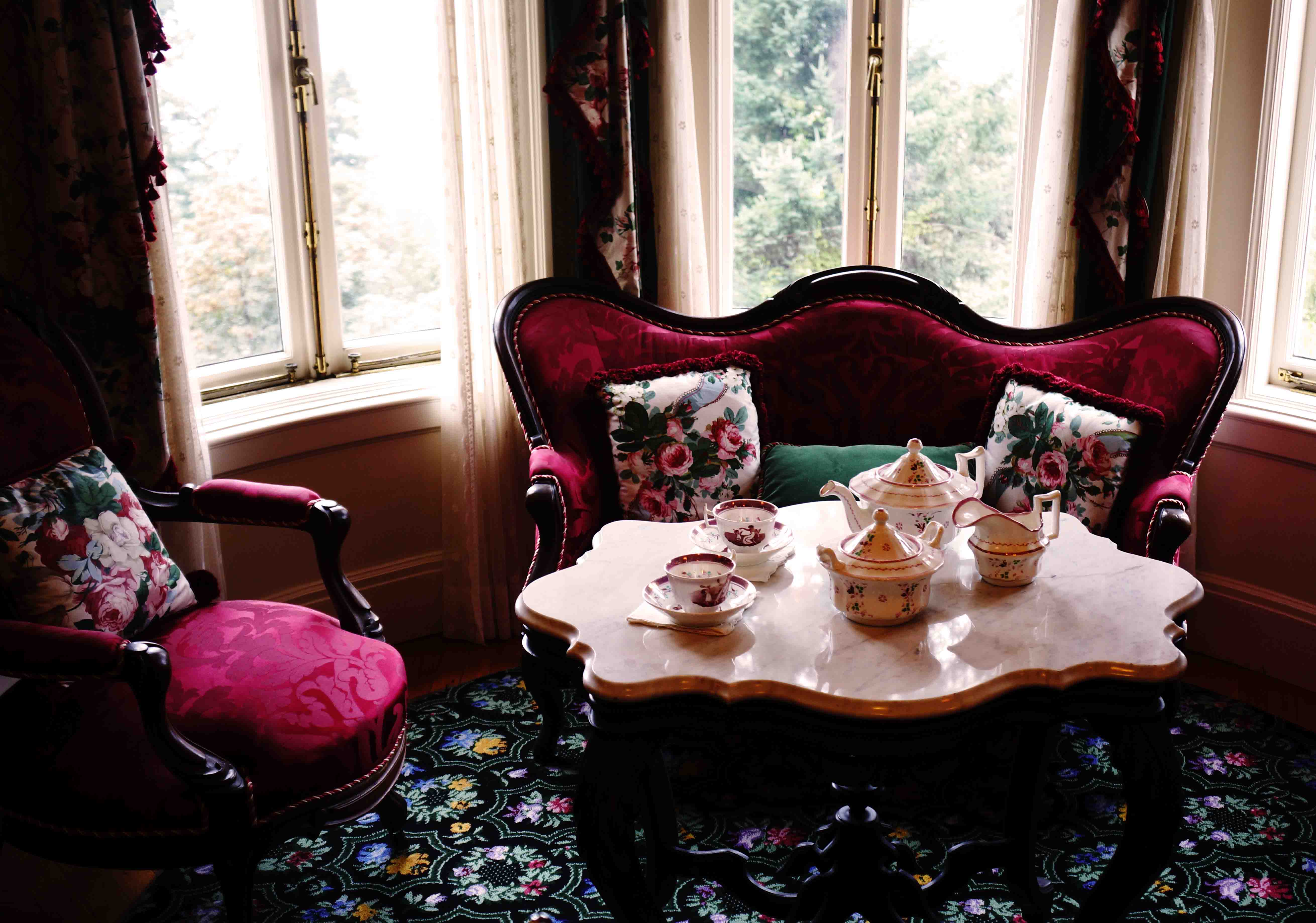
Tea is served at the Pittock Mansion
Wherever you land in your organization, there is some grand narrative at work that guides all involved. That grand narrative is often a good thing and useful. It is often laden with meaning that helps us do our jobs. But it is not a perfect narrative—never is—and parts call out to be challenged by practitioners.
After all, it is the disruptive conversations that lodge in our brain pans. Those conversations we cannot forget sometimes actually open our clam shell brains to something new. And that is the way of both innovation and truth-telling.
Many of us—especially the people-pleasers among us—are careful to assemble conversations that do not disturb the people around us. I am guilty of this. But truth-telling must necessarily veer from the party line.
If only because sometimes the party line veers from truth.
###
Image credit: Kirk Livingston
Square Lake: An Abundance of Divers
A Bounty of Lakes to Explore–Even in October
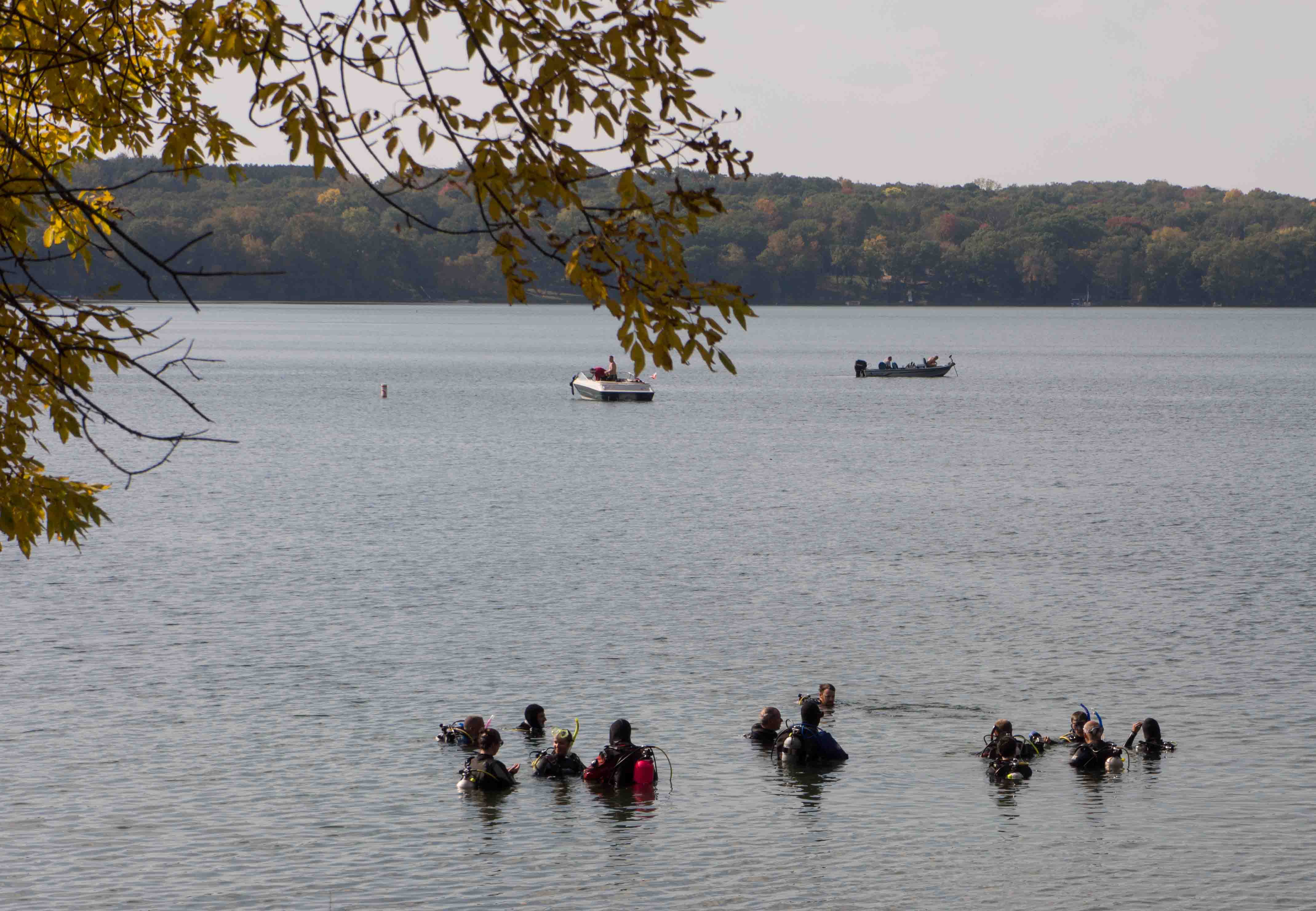
Square Lake is a diving destination because of the clear water. That water is also very cold.
More on “bountiful” here.
###
Rob Moses & the People of Calgary
“Have you ever ridden a horse?”
If you’ve had the pleasure of going to Calgary you’ll know it is truly a western city. Situated not far from Banff and Jasper National Parks, it is also quite spectacular. And rich, fueled by oil and gas money flowing into the city.
Rob Moses is a photographer based in Calgary. I follow his blog because of the extraordinary portraits he takes of complete strangers. His method is to approach someone, have a conversation, and shoot the photo. The endearing thing about this process is the conversation he has. He records it verbatim —or so it seems. His written text includes nervous laughter, indecision, and ricocheting answers. His recorded conversations sound like real conversations to my ear.

Stopping complete strangers is not easy in the best of situations. Asking to take their picture sounds like a scam, but Mr. Moses pulls it off with what seems to be a fair bit of joy. And he always asks if his subject has ridden a horse—critical information for Calgarians, evidently.
The optimism of sharing his talent with photography is not lost on me here. It’s kind of an amazing way to self-promote and, well, bless people. And for those lucky enough to find their way into his lens, they come away with a phenomenal view of themselves. Scroll through his blog and be amazed at the composition, lighting and the ease written on the faces of his subjects. If you’ve ever asked to take someone’s photo, you know it typically ends badly. Unless you are Rob Moses.
May there be more of his talented tribe.
###
Image Credit: Rob Moses
How to Make Your Message Permanent
A tip from a prehistoric consultant
First: Forget about it. Nothing is permanent—at least not in the way advertising mavens augur.
Second: OK—if you insist—make your message about someone else. Make your message give back more than it takes in. “GE” branded on a rock would never last. Even the Apple logo will be chiseled away by Microsoft rebels. But a man with jointed wings, well, who can resist that story?
![Who can resist the story about the “Thunder Being”?]](https://conversationisanengine.space/wp-content/uploads/2014/10/birdman-2-10022014.jpg)
Who can resist the story about the “Thunder Being”?
Prehistoric peoples stopped by these ancient rocks to tell their version of the human condition. So they carved/picked/incised/abraded their messages into the exposed Sioux quartzite outside Comfrey, Minnesota long before there was a Comfrey or a Minnesota or a U.S. of A. Maybe before the pyramids and Stonehenge. Ancients left messages here to direct and entertain passers-by.
Why make your message permanent? We understand marketing communications for companies—it’s about keeping the wheels of commerce turning. But you personally—what messages do you have to communicate? And why would you make them permanent? I argue that your take on the human condition comes out in the way you do your work, the way you interact with family, friends, colleagues, and even the way you see/refuse to see the homeless guy at the end of the exit ramp. And all these daily interactions amount to a carving and incising that is far more permanent than any of us imagine.

The Jeffers Petroglyphs tell a story that became a destination.
Our conversations have an enormous (cumulative) effect on the people around us. An effect that may move through generations.
What exactly is your message, anyway?
###
Image credit: Kirk Livingston
My tree dances like no one is watching.
This year I caught it. One day at a time.
###
Image credit: Kirk Livingston
Audio credit: Cat Stevens, Oh Very Young

Edward Bernays and Jolly Manipulation
Gather round, kids: here’s how you sway public opinion
Edward L. Bernays is called the father of public relations and his book Propaganda (NY: Horace Liveright, 1928) shows why. Bernays is absolutely jolly as he lays out the psychology of manipulation. He doesn’t just talk about the formulas, he gleefully demonstrates them in paragraph after paragraph. Much like one might describe building a shelter to a group of boy scouts, Bernays is positively beaming as he writes about how to pull self-interest into the equation to get publics to do your corporate bidding.
The modern propagandist studies systematically and objectively the material with which his is working in the spirit of a laboratory. (48)
Edward L. Bernays is the ur–flack.
If you can influence the leaders, either with or without their conscious cooperation, you automatically influence the group which they sway. (49)
Reading Propaganda today, it is clear Bernays thought corporations and government leaders and those in power would certainly use his manipulation techniques for good.
How could it be otherwise?

Look through here. You’ll see what you’re supposed to see.
But World War II was just around the corner and every nation developed their own propaganda machines. In the US, we still react viscerally to the imagery and code words used by Nazis. Today old Stalinist imagery has it’s own unique draw. The US had powerful PR apparatus as well. We continue to feed that machine. And since, then, of course, unending sets of military skirmishes/wars, each equipped with God-given reasons for why we must respond. Then Watergate and totalitarian despots revealed and deposed, and, well, it’s a long list of fails that contribute to today’s cynicism and “Question Authority” stance. People found their voice and collected it to push back with outrage at corporations and governments and to call attention to wrong doing when it appears.
Eighty-six years later, the entire population of the US—possibly the planet—is wise to Bernays’ techniques. Not that we’ve studied them: those techniques study us all day every day. Especially in countries like the US where consumption is our patriotic duty. We know manipulation from the inside out.
Bernays would be impressed were he alive to see it. I imagine him smacking his head and saying, “Wait—they know they are being manipulated, and …they still buy it? This is even better than I hoped.”
Why talk about manipulation? Not just because Bernays book is fun to read and easy to contrast with today. In particular, why would a copywriter talk about manipulation? Isn’t that secret sauce you trade in all day? Why pull back the curtain?
As a copywriter my goal is to tell my client’s story in the best possible light. I continue to argue that persuasion is a natural piece of how people interact with each other all day long. It’s part of the human condition. But I argue our efforts at manipulation damage actual conversation. When we use words and techniques with manipulative technique, we shut off further conversation. At that point it is about winning not connecting. Maybe there is a fine line between persuasion and manipulation. Propaganda is the textbook for manipulation.
As a copywriter, I want my clients to engage in conversations not endless manipulative monologues. That seems a more human approach to communication. I continue to think conversation is what today’s market will bear.
###
Image credit: Kirk Livingston

 conversation is an engine