Archive for the ‘curiosities’ Category
Jacob Morgan: Working Out Loud
Can collaboration lead to the fancy donut shop?
We’ve all known people who narrate their way through the day. Whether choosing today’s outfit or cooking or driving, these people say what they do as they do it. What they say includes the choices of the moment.
Such narration could drive you mad.
Unless you cared.
Say you were in the car and the narrator/driver mumbled something about turning left at the light. But you knew the fancy donut shop was to the right. So you suggested going right at the light. The narrator/driver turns right and, Behold!
“Hey—there’s the fancy donut shop we heard about. Should we stop in and get a dozen for the team?” you ask (innocently).
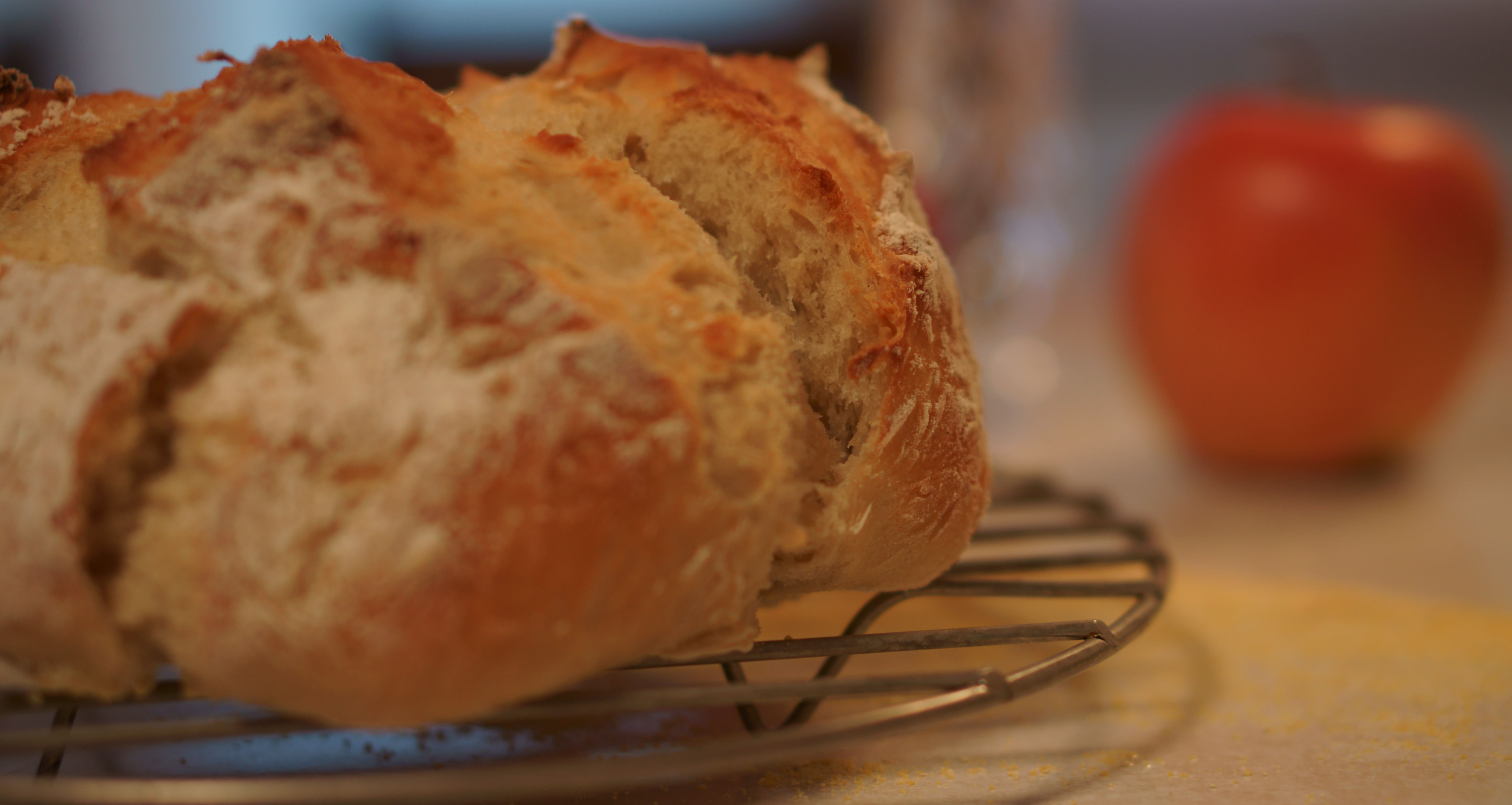
Take a right at the light.
What if we heard about work details we cared about in real-time? But not the kind of hearing that entails being pulled into a conference room so the boss can blather on about goals and objectives. I’m talking about the kind of hearing where your genius colleague one cubicle over shares a “Eureka” about the message your team is crafting. Or—more likely—when your colleague in Scotland answers your informal text message from the U.S. with a game-changing insight. An insight that has the power to order your work for the next two hours.
Being present with each other in our work has the power to delight our working selves. As we toss out ideas and questions amidst the ordinary banter, brand new stuff happens. It’s the stuff that can only happen between people in conversation. It’s not the stuff some boss orders you to do.
 I just ordered a copy of The Future of Work by Jacob Morgan based solely on the articulation of “working out loud” from this author interview on the Kinship enterprise blog. I’ve not yet read the book (did I mention I just ordered it?) but I firmly agree with the notion that the future of work entails some configuration of people wanting to work with a given organization rather than having to. “Get to” versus “have to” makes a huge difference to the motivation and energy with which we approach our work. I’ve argued for a LEED-like certification for workplaces that sustain the human spirit, and I think that is on the radar screen of job seekers today.
“Now let’s get back to that bakery,” he said, as he pocketed his car keys.
###
Image credit: Kirk Livingston
Doing Versus Planning To Do
Stay close to the work

Man is after all a finite being in capacities and powers of doing actual work. But when it comes to planning, one mind can in a few hours think out enough work to keep a thousand men employed for years.
McCullough, David. The Great Bridge (NY: Simon and Schuster, 1983), 381. Quoted in Berkun, Scott. The Year Without Pants (San Francisco: Jossey-Bass, 2013), 67.
###
Image Credit: Kirk Livingston
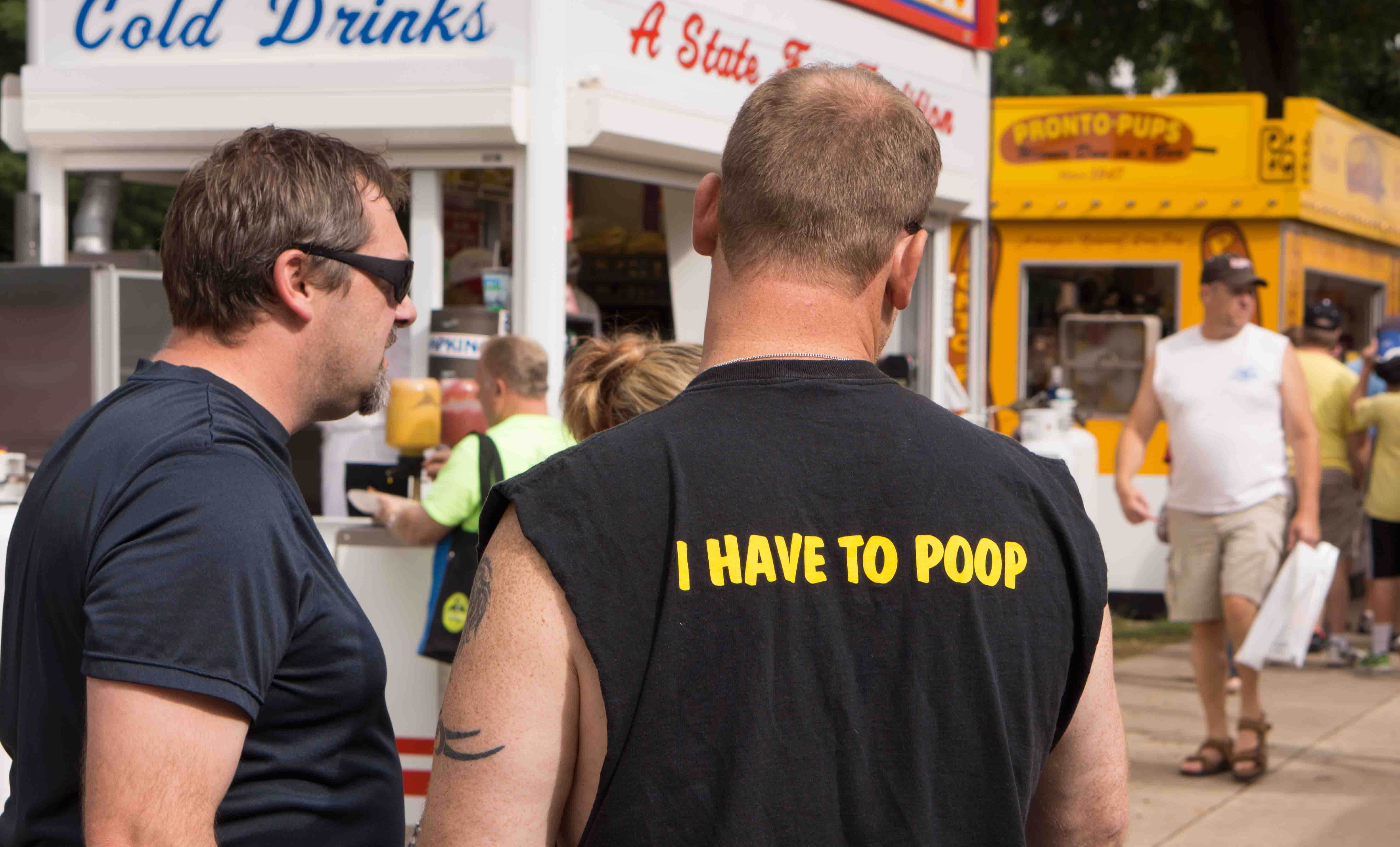
Who Said Minnesotans Hold Things in?
Thanks for (over) sharing.
###
Image Credit: Kirk Livingston
The Post Office is Closed Today
And yet labor continues.
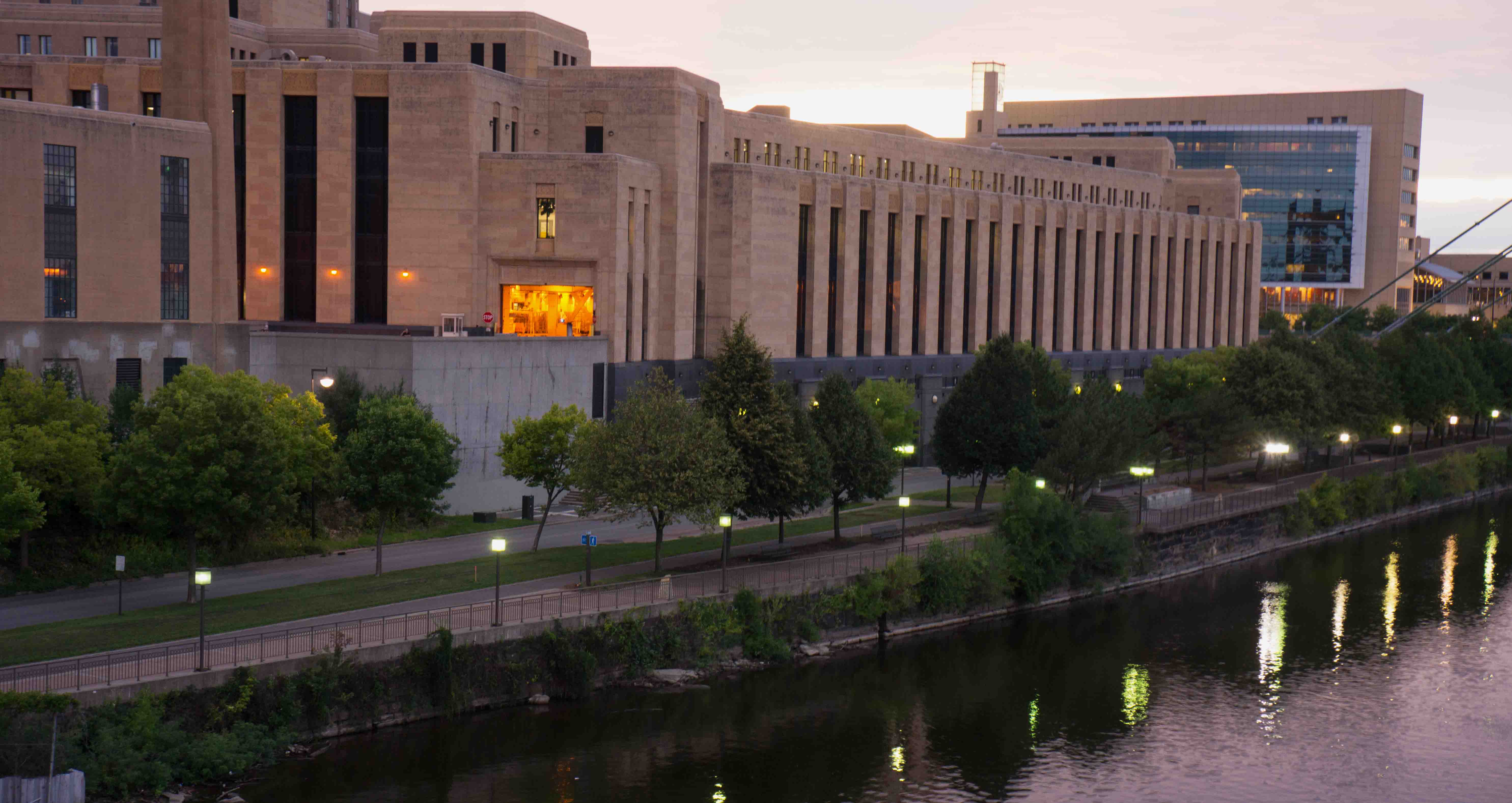
Ministry of Mail
###
Image Credit: Kirk Livingston
King Corn
How talk of an acre became talk of an industry
Here’s a story seemingly about not knowin’ nothin’: two friends from Boston decided to figure out why we grew so much corn in the U.S. So, naturally, they went to Iowa and hired an acre of land to grow their own corn.
As anyone would, given a compelling question.
In King Corn, friends Ian Cheney and Curtis Ellis found their grandfathers both came from the small town of Greene, Iowa. In this documentary (a form we know as dedicated to a version of a story rather than seeking objectivity), the two friends plant, fertilize, weed, and then harvest their acre of corn. All with the help of local farmers. But this is not the gotcha-style documentary that Michael Moore practiced. These friends seem genuinely interested in all aspects, ask the dumb questions that any of us (non-farmers) might ask, and make connections with the farmers, families and communities along the way. They let their questions propel them and others join in, though we have a strong hunch where the questions are going.
As they tell their story, they identify Earl Butz, secretary of agriculture under Nixon and Ford. They note how Butz initiated a government policy shift that turned small farmers into big producers (especially of corn) rather than keeping them as small producers (that is, paying them to not produce to keep prices high). The friends also talk with Michael Pollan and a number of other fancy academic big-shots with opinions and research on food and agriculture. What they found turned the conversation.
- Massive feed lots that have dialed up cattle production by letting them stand and eat corn nearly constantly. So: faster to market. The cattle continue to eat toward an upper physiologic limit and must ingest a constant stream of antibiotics to continue eating. That would be our beef industry.
- A high fructose corn syrup industry spawned from the great quantities of corn produced. High fructose corn syrup seems incredibly malleable and shows up in a high percentage of the produced foods we buy. And high fructose corn syrup, as we are learning, is just more sugary, empty calories that help contribute to our nations struggle with obesity.
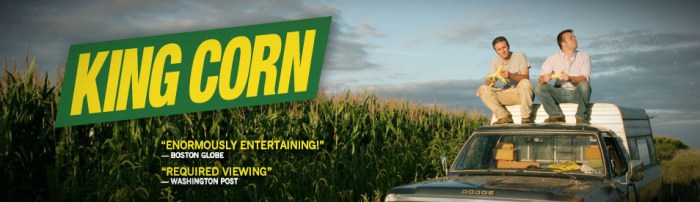
Click for trailer
What’s odd is that raising corn, on its own, is a money-losing endeavor. But with the subsidies our government kicks in, it becomes profitable for farmers to set aside enormous sections of land to grow it. And the resulting industries and practices have a problematic relationship with our culture and health.
King Corn ends up as an uncomfortable look into an industry we all partake in. And like all documentaries, there is a clear point of view, which was fun to watch. I’m certain the beef and high fructose corn syrup industries have excellent and solid rebuttals for the conclusions any viewer might form from the film.
We’re all happy with cheap food, but the film helps us ask about the long-term cost of our cheap food.
What I appreciated about the tone of the film was just two guys just asking questions (yes, I bought into that portrayal of the friends). And rather than Michael Moore-style bombast, the filmmakers presented a couple sides to the story (though certainly not all sides) through conversation. The result helps me begin to rethink the low-priced, easily available food that surrounds us and for which I am grateful.
###
Young and Dumb Rocks!
The Case for Not Knowin’ Nothin’
Pity the expert: the Ph.D. who knows everything there is to know about a certain insect that preys on a certain crop. If she finds the right academic position—fantastic. But there are only three such positions in the U.S. and only one of those (tenured) people is close to death. So…a waiting game.

Feel sorry for the writer whose first novel got rave reviews or the artist who sold a massive installation on their first go-round. Expectations are steep for the next project and the pressure is on.
In conversation with a friend at work, I heard my younger self admit to a life-goal of wanting to, finally, know something. But knowing with certainty becomes harder with every book read and every conversation you have. In fact, the more you read any philosophy or wisdom literature, the more you get the sense of “knowing” as a shy and elusive pot of gold at the end of a rainbow.
That’s why it’s good to attempt the impossible while still young, before you realize it is, in fact, impossible. Quick—try that thing you want to do before someone sets you down and sets you straight about how ridiculous it is you are even considering it.
Another alternative is to cultivate a young and dumb attitude no matter what your age in dog years. Even the Ph.D. is a beginner at something. The beginner just wants to try it for themselves.
Let’s cultivate the joy of a small hand with a big fat crayon, exploring the world.
###
Image credit: Kirk Livingston
Tokyo: Industrial Landscape Tourism
“Factory infatuation” maybe a thing?
Yesterday’s post drew a comparison between liminal spaces and the work that happens in a good conversation: how we help each other explore a topic, which often opens a route to a conclusion and even action.
Along the way I confessed that I am drawn to those more industrial parts of the city. Artist Michael Banning said that particular bent is starting to look like a thing people do. At least in Tokyo. He pointed me toward this:
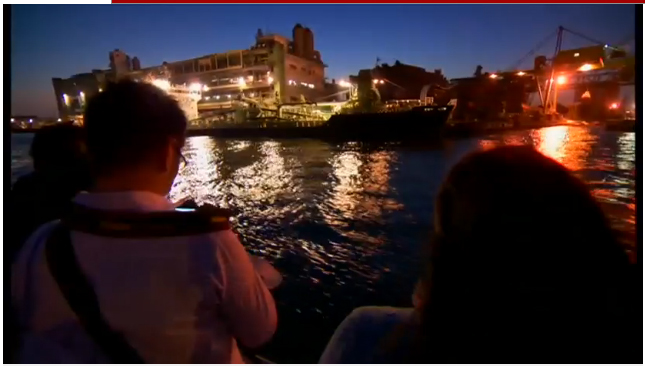
Click to play.
###
Via BBC World News
Pearls Before Swine: The World According to the Supreme Court
Stephen Pastis helps us wonder aloud.
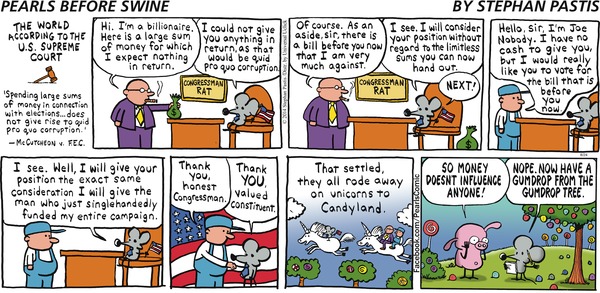
That seems right: “So money doesn’t influence anyone!”
###
Steven Woodward: Dictionary, 2005
How did you think of that?

Apart from [extensive world] traveling and reading, the majority of my adult life has been spent alone in a very larger room, imagining what I wanted to see and how to create it.
Read more about sculptor Steven Woodward here and the James J. Hill House Gallery here.
###
Image credit: Kirk Livingston

 conversation is an engine