Archive for the ‘curiosities’ Category
Tell Me a Story
On the Mindfulness of Listening
Listening is such a simple thing. How hard can it be?
But we all know that listening is harder than it appears, because listening means we have to shut up. And good listening means not just shutting up but also not using someone’s moments of speech as a time to plan counter-arguments.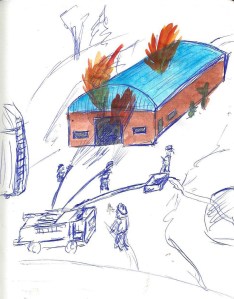
Real listening happens nine hours into a car trip, after you’ve exhausted the common topics and celebrity gossip and a silence settles. For miles. Which can feel weird. And then you pass a broken down Quonset hut and your spouse/friend/acquaintance/ride share starts in on early memory of a fire at her parent’s farm, and how all the kids huddled in blankets watching the barn in flame and hearing the gas tanks in the tractors explode one after the other and how the firemen pumped water from a pond into a little pool they created and then onto the barn. And how the whole thing left her feeling sad and, well, bereft.
It had been a kind of turning point, she says, now that she thinks about it. And then she collects memories of what was different with her family after that and how it was different. She has very specific points.
And you have not said a word. Because the fire story had and entirely engulfed you as well. You were there—as she told her story—shivering on the side and hearing the pop of gas tanks.
Most listening is not that dramatic. But sometimes it is.
We’re talking about how to listen in our social media marketing class. How to listen to the audiences and communities we want to interact with. We want to hear the concerns and the jargon and the voices and the rhythm of those voices.
It occurs to me that we listen in stages. Or perhaps we hear—or comprehend—in stages. When new to a community, we hear the words and perhaps can make out only the broad outlines of the bigger story. The more we listen, the more we hear specificities and nuance The more we listen, the more stories we hear the emotion and motivations that bind a community together.
Good listening means sitting with and through the stages so that we burrow into understanding the people of the community. Our best friends are often great listeners because they sat through the bursts of story that followed silences.
Most of us have little time for listening.
Pity.
###
Dumb sketch: Kirk Livingston
Forget Content Strategists: We need Village Storytellers.
Begin the Begatting!
“Content strategy” has such a corporate feel to it. Such strategized-promotional-content-puzzle pieces, dreamed up in isolation, will move forward whether or not anyone cares. But here is exactly where strategy and art must date, marry and get busy begatting fecund stories.
No human will be interested otherwise.
No amount of strategizing can actually make that happen. Art must take over. Art connects with emotion. Art is a human meaning-making activity not easily controlled by a corporate agenda. If controlled too-tightly, art quickly becomes something less than art.
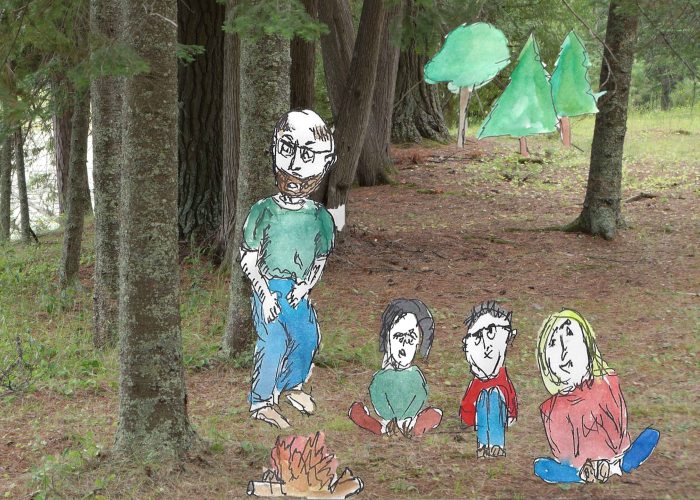
I’m working with a group of writers who need to understand this. Their task is to pull people into the causes they have begun to champion. They will identify their mission and purpose, complete with telling details about their target audiences. They will strategize about content and assemble editorial calendars, but in the end, it is the art of storytelling that has the power to pull anyone forward.
My theory is that strategy works best as a beginning point. You do your best to get a strategy in place, but then you move forward. As a writer, I know from experience that stories and strategies grow up best together. Each talking to the other. That is because the weaving of the story actually makes new strategy elements available (and vice versa). Elements appear that would not be apparent except that the artist has accessed that deep subconscious, chaotic place where connections are made and much foolish talk swirls around very bad ideas before anything worthwhile appears.
Sometimes when I get stuck in the analytical side of strategy, I set it aside to tell stories just to open possibilities. I am not alone in that practice.
There is a push for strategists today. But I would rather work with their more human cousins: story-teller strategists.
###
Image credit: Kirk Livingston
Stephen Fry’s Voice Serving Heathrow
Please speak human
Copywriters try to harness voice to say their client’s message. There’s lots of talk about being on brand these days, and for copywriters that means speaking in the voice of the brand. But voice must always be human to be heard. That’s why press releases and spokespeople are so easily dismissed—they generally don’t sound human.
John Cleese felt he could perform Basil Fawlty for Specsavers because the voice they wanted was true to the character he had created. He had refused many opportunities because unfunny scripts deviated from that character.
Check out how Stephen Fry voices a gentle, unhurried, humorous take on a place that launches an airplane every 45 seconds.
###
Via Ads of the World
Writing Through and To
Rinse and Repeat.
Today’s Writing Task
###
Dumb sketch: Kirk Livingston
“What Will I Be When I Grow Up?”
Start Your Process Early to Answer Life’s Recurring Question
This question will not go unanswered.
As a kid you quickly volunteer answers: firefighter, ballerina, basketball player, scientist, pilot. It’s right that action-jobs attract kids. You may defer answering it as a college senior. You may say, “I’m not sure. We’ll see what comes up.” You find yourself saying it in your first job, hinting that “This is OK, but it’s not quite the right fit.” In fact, you may think it through a career.
I’ve had two different conversations recently with people suddenly seeing the horizon of retirement off in the distance. Both said some variation of “I’m not sure what I want to be when I grow up.”

The question is tricky because it sounds like an all or nothing deal: you do this or you do that. Binary. One or the other. But the truth is more like life is filled with all sorts of opportunities that are concurrent. You must pick. You must choose. If you don’t pick and choose, chances are good you’ll simply slide into being entertained. That’s not bad, it’s just that being entertained generally pacifies the urge to create.
And yes, I am talking about creating. Because one assumption behind the “What will I be?” question is “How will I take action in the world?” I argue that the sooner we find ways to address that question, the better off we’ll be at every stage of life. One old model of retirement was that you put in your time for 30-40 years (at something you hate or just tolerate), and then head to the golf course in Florida or Arizona to be entertained until you tip over into the grave. Today people approaching retirement are looking for ways to keep making a difference. The lucky ones have both their health and some sense of the art or craft or service they simply cannot live without doing.
I’m thinking about this today because one central piece to my social media marketing class asks students to pursue their passion publicly using every social media avenue open to them. This is a difficult question and commitment for these students to make. I like the exercise because it forces them toward the larger life question. I like the exercise because it initiates a process that, if they follow it, will begin to answer that question.
Locating that thing we are passionate about involves experimentation, of course. And if your work does not leave any time for locating your art/craft/serve/tribe, is it possible that in 30 years you might still be asking, “What will I be when I grow up?”
I hope not.
###
Image credit: Kirk Livingston
What is Engagement, Anyway?
Are Likes Helpful or Corrosive?
The college where I teach is something of a bride-and-groom factory. This [largely unstated] expectation of finding your soul-mate by the time you graduate lurks in the halls and hovers over tables in the cafeteria.
At least that’s what students tell me.
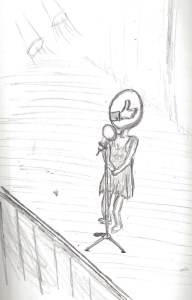
“You like me. You really like me.”
I’m sympathetic: there are few times like college for being surrounded by attractive folks of similar age who are also poised to make big life decisions. And, true, that’s where I ran into the beautiful young woman who a few years later became Mrs Kirkistan (lo these 30 years and counting).
In this particular college social construct, if you ask someone for a date, well, that’s kind of like a proposal. If you actually date, well, you might as well be married. To be fair, I’m not close enough to say if it this is entirely accurate. But my few talks with students make me kind of sad that relationships would be so, well. binary.
So it’s not surprising that these folks have an interesting skew on engagement. These are people who grew up with likes and short texts and public Facebook conversations. The quick word carries a lot of weight. For some, the quickness with which a like comes back speaks volumes to their self-esteem. It seems like engagement is an all or nothing deal and social media has the power to amplify that.
This social construct plays into expectations in my class. What do we expect when we think of engaging with the audiences we pursue? Are likes what we seek? Page views? Actual comments? Someone stopping you in the hallway? How does anyone determine if someone else is interested in what they say? Social media experts have all sorts of answers for this and all sorts of complicated metrics, some of which even make sense.
One thing is certain: grooming your personality and language for likes is dangerous. Just as it always has been. Of course we all do this to some extent. Who doesn’t want to be seen as attractive and groovy?
My hope for my class—and for anyone with courage to create anything—is that they create from an interiority that remains integrated and intact. That is: write and create from what drives your passion. Likes and page views are OK, but they should never substitute for your own sense of chasing the thing you simply must say. Yes, you’ll need to sort out how to get attention, but it is even more important to exercise your creativity along the lines you were made for.
In the end, likes may not be all that helpful.
###
Dumb Sketch: Kirk Livingston
Gary is So Money SuperMarket
Epic Dance Moves
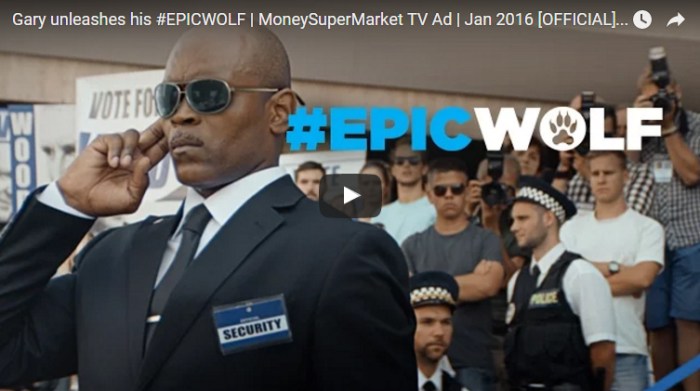
Unfortunately, it is not available for viewing in the US.
Still, if you click on that image, or perhaps here, you might be able to see it.
You never know.
###
John Cleese and Writing Funny
The writing must bring the reader along.
John Cleese is nearly always funny. And he has a lot to say about writing funny. In the “John Cleese Interview” that follows, he says that Basil Fawlty (from Cleese’s Fawlty Towers) was never angry at the beginning of the show. The funny bit was showing how he got there and showing it in a way the viewer could relate to. He goes on to describe the difficulty he had finding a branch to give his auto a good thrashing.
###
Via Adweek


 conversation is an engine