Archive for the ‘curiosities’ Category
How to Regain Wonder
Target cannot sell you a loaf of wonder
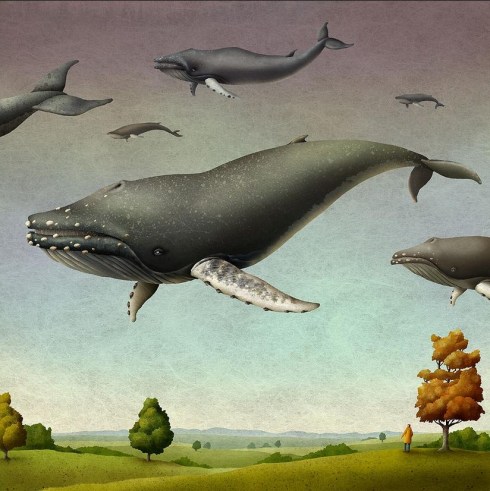 It would seem that life beats wonder out of us. This project went sour. That team sucks. My career seems more about false starts and abrupt ends than ascendancy to the corner office. The boss or CEO or pastor or professor are in it for the money or the power or both. People and institutions disappoint.
It’s easy to paint most anything black with the brush strokes of cynicism. Our culture largely applauds and rewards this attitude, often providing pulpits for the world-weary naysayers. It’s a stance we learn early in life. We chide optimists as Pollyanna and naïve.
But if you look around, it isn’t the cynics who make things different. It’s the people with faith. I’m not talking about religion, though faith in God applies big time. It’s the people with a sense that things don’t have to be this way, that there might be a better way. And beyond that: people with a basic wonder at how the world works. People with a sense of wonder and curiosity are the refreshing people who are fun to be around. They entertain just by pointing out the invisible stuff that we never thought to think about. These are the gratitudists, whose stance of thanks sweetens the well for all around. Their faith and wonder refuse to let today’s seeming realities push forward as tomorrow’s certainties.
Where do you find wonder in your life? Hostess has closed and Wonder bread may or may not be available. But I plan on seeking out those places and people where wonder presents.
###
Image credit: Adam Pękalski via 2headedsnake
The Unbearable Sadness of Adjunct
The Price of the Life of the Mind
 I’m having a lively conversation with PissPoorProf about the value of a Liberal Arts degree. He maintains that liberal arts should be corollary studies in college while I think they should be central. Others are chiming in. It’s a discussion I welcome because the topic goes well beyond the choice of undergrad studies. As Burnt-Out Adjunct so ably points out (in his many posts) the life of the mind does not come with an income. In fact, it requires an income to satisfy those lower elements in Maslow’s hierarchy, just to get to the point where one can, well, buy time to think/read/write/converse.
Agreed.
Also agreed: the treadmill that is adjunct work, with day and night responsibilities (Honest: preparing lecture/discussions, delivering those educational events, responding to questions and grading take way more time than I would have ever believed when I was a cubicle dweller with a steady paycheck) is relentless and seemingly possible only when you have another income. So when PissPoorProf describes adjunct teaching as “about as soul-sucking as a wage-slave job can get,” I tend to agree.
And yet, we agree that the life of the mind—whether taught or caught or pursued or scrimped and saved for—is a thing of value. Maybe part of our equipping for undergrads, as well as for those later in life who want to think, is to help each other understand we need to pay your own way to join the larger conversation.
There is so much more to say about this.
###
Image credit: BORONDO by Arte urbano Madrid via 2headedsnake
How did you become a philosopher?
Claude Lefort on Meeting Maurice Merleau-Ponty

The questions with which Merleau-Ponty was dealing made me feel that they had existed within me before I discovered them. And he himself had a strange way of questioning: he seemed to make up his thoughts as he spoke, rather than merely acquainting us with what he already knew. It was an unusual and disturbing spectacle.
— From “How did you become a philosopher?” by Claude Lefort, translated by Lorna Scott Fox in Philosophy in France Today (Cambridge: Cambridge University Press, 1983) 98
###
Image credit: Jonathan Zawanda via 2headedsnake
“It’s time for your enema.”
Robot & Frank & Listening to Your Machine
 That’s my favorite line from this melancholy film. Frank, the retired jewel thief in decline, doesn’t want the robot his son brought as a caretaker. Frank considers it an appliance with a voice and wants nothing to do with it. But Franks starts to warm to the robot when he realizes he can put Robot to nefarious ends under the guise of a “project.” Robot’s caretaker program takes priority over moral logic and Frank is back in business and seems to self-reboot as he plans minor heists.
“It’s time for your enema” is delivered by Robot after Frank starts to be OK with Robot’s scheduling of Frank’s day and the healthy vegetarian lunches Robot prepared. Just when Frank was thinking this may work.
It’s not the enema that attracts me to the story (despite this Florida couple who swears by coffee enemas four times a day). But it is the realization that the voice of a machine can have a profound impact on a human. My example is the treadmill I run on. Despite being voiceless, it tells me a truth (I’m still not sure it is entirely accurate) about the speed and calories consumed when running. And it helps me hold myself to a higher standard than when I run outside. There is an objectivity about it that I like, that isn’t swayed by my pleas to slow down.
In the end Robot & Frank is a downer. If you have anyone in your life with Alzheimer’s, the movie leaves you with a feeling of inevitability about the human condition, no matter what machines we employ.
###
If By Yes
What we grow when we sow “Yes”
For the past three weeks I’ve not been able to escape the orbit of an old story. It’s a story that tells what happens when one takes a stance of extreme listening. I’ve not been able to escape the story because it has a lot of moving parts that defy easy categories—just like real life. The story refuses to be reduced, which is great because I’m trying to be rid of my old reductionist tendencies.
The story has a woman on the rise and a man on the decline. The product of the woman on the rise was a boy who demonstrated what can happen when one is committed to extreme listening. The story has a narrator who seemed to know more than any narrator has a right to know. And then there was someone standing behind the narrator who could control all things but chose not to.
Right now I’m focused on the son of the woman. This man had a way of listening and agreeing that looked like progress for him and actually pivoted a nation. The man was known far and wide (so the story goes) as one who told truth—because the stuff he said happened out in the world. He was sort of a walking speech-act performative generator.
I’m grappling to understand what seems to be movement between generations—a movement of willingness to listen. That sounds crazy, right? Because we are all responsible for ourselves, yes? Genetic stuff is only physical, only the stuff we inherit. And yet…the social norms, the expectations, the ways we approach life, much of this is nurture rather than nature, so movement of attitudes between generations could apply. Much as I am horrified by North Korea’s policy of imprisoning political prisoners for three generations, it is true we transmit all sorts of ways to think and be through our families.
The woman demonstrated deep listening. Her son demonstrated even deeper listening. The woman’s son learned to say yes to certain risky opportunities that presented. He practiced saying yes. His “Yes” affected wider and wider circles of people around him, as these opportunities became actions out in the world, actions which changed history.
Of course we don’t say yes to everything. Not every opportunity that presents deserves a “Yes.” But some do. Some opportunities need a “Yes” from us, and those around us need us to say “Yes.”
There is a quote that connects our “Yes” with what follows. It’s from the oddly interesting book Pricing on Purpose by Ronald J. Baker. It’s long but worth the effort (bold emphasis mine):
Because economies are governed by thoughts, they reflect not the laws of matter but the laws of mind. One crucial law of mind is that belief precedes knowledge. New knowledge does not come without a leap of hypothesis, a projection by the intuitive sense. The logic of creativity is “leap before you look.” You cannot fully see anything new from an old place…. It is the leap, not the look, that generates the crucial information; the leap through time and space, beyond the swarm of observable fact, that opens up the vista of discovery.
–George Gilder, Wealth and Poverty, 1993. Quote from Baker, Ronald J. Pricing on Purpose (Hoboken, NJ: John Wiley and Sons, 2006) 15
So. If some small, long forgotten voice speaks up reminding you of something you once treasured, consider saying yes.
###
Image credit: 2headedsnake
College Majors to Avoid + Rebuttal
And back to the work itself
 Good design often has this effect on me: it makes me want to find and do the work I am meant to find and do. Moving quickly through the many architecture or art or photography blogs out there also reminds me of what vision looks like when carried out. Vision alters our perceptions of the physical world and sometimes alters the physical world itself. And that is no small thing.
Yesterday I found myself in disagreement with the Burnt-Out Adjunct (whose too-infrequent posts I eagerly await and enjoy) who wrote that liberal arts studies should be more corollary than central to a college degree. Pisspoorprof was reflecting on another of these “ten worst” articles that pop up from time to time. This time it was Yahoo! Education touting the Four Foolish Majors to Avoid if you are trying to reboot your career.
Liberal arts degrees were the #1 opportunity killer with philosophy a close #2 opportunity killer. By the way, I cannot help but note that the entire article is an advertisement for the continuing services of Yahoo! Education.
As a holder of an undergrad degree in philosophy I both agree and disagree.
- Yes: no one hires a college grad to resolve deep-seated teleology questions (one does that on one’s own time). But to his credit, the VP at Honeywell who gave the OK to hire me (lo these many years ago) did question my stance on freedom vs. determinism.
- No: How about granting a bit of perspective? We need people who can think outside the present job parameters. And we desperately need people to challenge those parameters. Educating people to acquiesce by default is not what we need (though it is a short-term path to cash). Liberal Arts (and especially philosophy, let me say) can help this happen. Yes that sounds like the standard line from any college admissions staff says. Yes it is what professors say as they pass each other in the hallowed halls. No you don’t need a college degree to challenge the system, make a million bucks, make a difference or be homeless.
But studying things that don’t make money has a way of making us more conscious of all that is going on around us. Will it eventually make money? Maybe. Maybe not. But we need people with larger vision who can paint or write or photograph or build a different way of looking at things—however that happens.
What do you think?
###
Image credit: Studio Lindfors via 2headedsnake
When Transcendence Goes Missing
One more glimpse into North Korea
 Jason asked about how Shin Dong-Hyuk in Escape from Camp 14 kept his sanity: was there any talk of faith in the book? There was, though it was at the far end of the story, after Shin made his way to California. There he was helped by a family who welcomed him into meals and daily life and helped him understand the give and take of trusting family relationships. So indoctrinated was Shin in the North Korean prison camp system of snitching on others and assuming no one (including parents and family) would look out for him, that he had a very hard time with ordinary relationships.
Early on in the story, Shin’s attention is focused on survival. The entire nation is focused on just getting to the slimmest subsistence level of caloric intake, which was especially true of the political prison system. In one story, a child who found five or six kernels of corn in a fold of clothing and quickly ate them was soundly beaten by the prison guard/teacher. That’s the level of desperation. In this setting, there was little room for anything behind always scanning for rats or bugs to eat. And since Shin was born in the political prison, the only faith presented was a faith in finding hidden problems with others that could be reported to guards in exchange for slightly better treatment. Shin knew nothing of God and was entirely focused on staying alive.
It’s an ugly story.
Shin did come to a faith in God after living with this family in California. Blaine Harden, the journalist who did such an excellent job assembling and telling Shin’s story, struggled with how Shin retold stories of escape after he came to faith: he started to see how God was involved back then. Harden is right in pointing out Shin knew nothing of God at the time (of his imprisonment). It seemed to Harden Shin was adding in new elements in the retelling. But for me, as a person of faith, I can understand how Shin looked back and saw connections he did not notice earlier.
But Harden’s story is not a story of faith in God. It is a brutal story of survival.
Did I mention this book is worth reading? There is a long waiting list at our local library.
###
Image credit: Bousure via 2headedsnake
North Korea Death Watch
Is there an app for that?
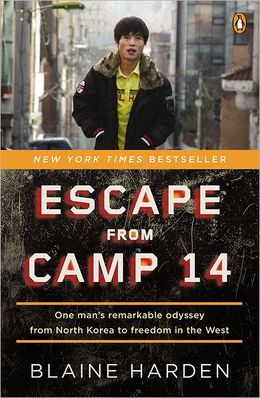 One-third of the nation is chronically malnourished. Hundreds of thousands are in political prison camps. Some are born, live (meagerly) and die in political prison camps under Kim Jong Il/Un/Whatever’s three-generation policy (lock up the family that disagrees with the party line for three generations). This I saw through the story of Shin Dong-Hyuk’s Escape from Camp 14. I defy you to read this book and not come away thinking the entire nation is a prison camp—and absolutely corrupt—focused on supporting the lifestyle and many mansions of Kim Jong Il/Un/Whatever (and a few party elites. Very few).
Amazingly, this is happening right now. Today. This instant. This isn’t something in the past. See the prison camps for yourself.
But how long will we see the prison camps? As Kim Jong Un continues to starve and beat the North Korean population, how long will it be before loyalists hide evidence of these camps? Probably the population is already digging their own graves and praying to fall in.
Surely there is an app that can track the square feet of these prison camps and help the world watch as Kim Jong Un tries to hide their criminal record.
###
Minneapolis Celebrates Winter: City of Lakes Loppet
What’s not to love about an urban cross-country ski festival?


Earlier that day: dozens of trucks parked on Long Lake for an ice-fishing contest.
 ###
###

 conversation is an engine