Archive for the ‘curiosities’ Category
Wes Anderson and the Intrigue of Low Affect
After recently watching Moonrise Kingdom we’re on a jag of Wes Anderson films at the Livingston Communication Tower (high over Saint Paul). Anderson brings a recognizable color palette and camera work to each piece of communication. He also brings a tone that is memorable for comedy touched by a bit of failure. Or failure touched by recognition and agreement.
Even his short persuasive tools earn my rapt attention: this American Express commercial is a masterpiece of jumbled information layered into less than straightforward answers, all of which makes no sense until suddenly it does. This Softbank commercial with Brad Pitt showcases Anderson’s playful direction that rolls with the action even as it creates its own. There is something lighthearted about the commercials while his films often circle a darker place.
The other night we watched Rushmore. In the middle of the movie, Mrs. Kirkistan wondered aloud how dark it would get. But by the end…well, I won’t spoil it, except to say it ends well, which is not a surprise. But along the way it is the understated communication that perpetuates a kind of unflappable honesty that runs through the characters and scripting. Bill Murray wears the honesty particularly well.
Color, emotional affect and carefully framed shots all figure highly in Anderson’s work. Each feels like a mini-play, like we could be watching it on a stage rather than on a small frame on the wall. Or maybe like we’re seeing an old, forgotten toy spin again, but this toy has a few barbs attached. The Darjeeling Limited and Fantastic Mr. Fox certainly have this feel.
NY Times columnist Rick Lyman in his 2003 book Watching Movies, sat down with a number of movie-types to see the films that influenced their art and careers. Wes Anderson was one of these types, but in 2003 more “up-and-coming” than established. Lyman asked Anderson why he chose to watch Francois Truffaut’s Small Change.
Mr. Anderson, it turns out, is the sort of person who tells you—a little sheepishly—that he has no answer to something, and then spends the next two and a half hours giving you one.
Wes Anderson may be something like his movies. But then I would expect art to have a relationship with its creator.
###
Garry Trudeau Writes Essays. His Essays Look Like Comics.
Garry Trudeau Writes Essays That Get Read.
 Garry Trudeau has been writing essays for as long as I’ve been reading comics. His essays get read because they are peopled with, well people. Characters. Hand-drawn characters. We call his essays a comic strip. Comic strips are easy to read. Essays are hard to read and boring—unless they are comic strips.
His current essays on for-profit colleges make me want to run out and check facts, though the tone resonates with what I’ve seen. But Trudeau is a master at breaking facts (and innuendo) into panel-sized chunks. How I could do that with my essays is worth thinking about.
###
Via Slate
This is how to do an Ignite talk: Commutapult
I did an Ignite talk once.
Not so good. Maybe I’ll try it again. Maybe I won’t. But Mark Selander did it right:
###
Via Scott Berkun
This Cheers Me: Rejected Muslim Supporters Invite St. Anthony to Dinner
Not so many weeks back the St. Anthony Village community (not far from the Livingston Communication Tower) held a meeting to consider whether an Islamic center could be built in the community. The meeting got heated, lots of ugly stuff was said aloud, and the proposal was rejected. Whether or not the council acted on anti-Muslim bias (the U.S. Department of Justice is investigating), fear of the unknown seems to have ruled the roost.
People will say what they will say—our country protects that right—which is a fantastic freedom. But our country (city and suburb, mind you) is composed of lots of different folks: religion, color, body shape, languages, musical tastes. A crazy diversity which becomes more interesting every single day. Christians (whether in name only or fully functional) don’t own the place and cannot dictate the rules.
I’m cheered because in this case the stranger has acted on the words that would/should/could motivate the Jesus-follower: they are throwing a dinner (an iftar) Thursday night at the St. Anthony Community Center.
What an interesting time to be alive.
###
Stopped on a Montana Highway
Travel is never what you expect and always more than you ask for.

All you can do is try to take it in.

Montana varies by at least 180 degrees from sitting before a screen and keyboard in the Livingston Communication Tower (high over Saint Paul).

It’s just a whole different horizon.
Of Crotchety Old Men and their Winning Ways
Get off my lawn.
 A few days back George Tannenbaum, the crusty old copywriter behind Ad Aged, wrote about the box of good ads he ripped out of magazines and carried with him from job to job. These good ads became a starting point or a kind of measuring stick to gauge his own practice of the craft. To have a box of ads you consider good is itself a positive statement. Most folks in advertising are quick to point out what is bad, what doesn’t work. What is worthless. Copyranter does this constantly, so every once in a while when he says something positive, his readers sit up and take notice. To say something is good is also to say something about your taste level. Doing most anything positive opens you to criticism. Maybe that’s why most of us prefer to not step out of the crowd. I locate myself in that passive crowd.
I’m a fan of George Tannenbaum’s blog. So are a bunch of other people, which is why his blog appeared on somebody’s top 100 list of influential bloggers. He may be the very definition of a crotchety old man, but his near constant kvetching holds lots of secrets about how a person makes it through life as a creative person. What I like about his raw, scenic and often obscene musings is that they give insight into a person and an industry. In a sense, to follow his posts is to follow a story. Not everyone has the courage to tell a few successes, complain about useless meetings (in real time) and the people who organize them, and tell of his own screw-ups.
There are a couple other of these seasoned, old-guy blogs I like and keep returning to, including Dave Trott’s blog and Hey Whipple. It would be a crazy fun party if all these guys showed up. I would not invite my grandmother.
My only point is to express thanks for these vets who share their experiences so willingly and so poignantly. Nearly every day there is an actionable thought to come from their writing. And that is saying something.
###
Pray Like You Talk. Talk Like You Pray.
How to be.
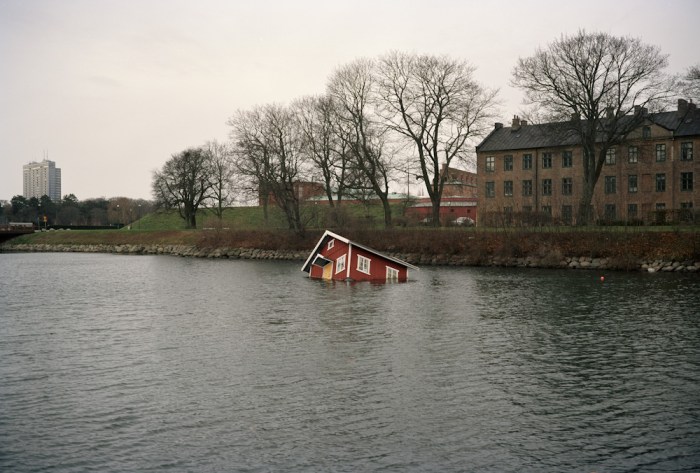 Back when I was newish to this notion of pursuing reunion with the Creator, I began to wonder about prayer. Was it just a kind of thick wishing; full of detail and electric longing, uttered into the silence? The practices of prayer remain mysterious to this day, but way back then my buddy said something I’ve never forgotten:
“Look. Just pray like you talk. Simple stuff. Forget the impressive words. Just talk.”
That proved useful. It still makes sense to me today.
Prayer is an articulated event. A speech-act that causes things to happen out in the world—though not exactly the way you might hope. This is what people who pray believe (people like me): that by talking to the One who controls everything, laying out the case, and leaving it there, stuff starts to happen. Of course, dictation and demands are fruitless. So are bargains. Prayer doesn’t work that way—it’s not exactly a reciprocal relationship.
But what if my friend’s advice worked the other way too: what if that easy conversation full of detail and electric longing was a part of our daily, hum-drum human conversations? So rather than utter desire into silence we uttered it into relationship? That does not sound like wishing into the silence. People would be listening—the very people right around you. They would hear. And sympathize. Or challenge. You’d get known. Your peaks and valleys would be known. There would be no hiding. If our talk were like our prayer, there would be a measure of freedom, and a whole lot of assumptions about the level of interest in our conversation partner.
No. Now I see that would never work.
But. Wait—that characteristic of being known is a peak human experience. What if we were designed for that very thing?
That would be something.
###
Image Credit: Kris Graves via Lenscratch
In the presence of evil
The Girl with the Dragon Tattoo Hit Me Hard
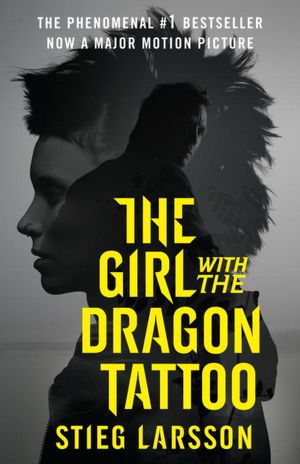
I just finished Stieg Larsson’s The Girl with the Dragon Tattoo and I’m not sure I have the courage to watch the movie. The violence is sadistic. And the violent intent boils up from unvarnished evil. But because I am a sappy reader, I get even more queasy about well-drawn characters I’ve grown to care for who keep walking into ever more desperate situations.
In the Wikipedia entry for Mr. Larsson, there is a claim that everything that happened in the book—all that brutality—actually happened in Sweden at one time or another. Somehow Mr. Larsson had seen something in his growing up in rural Sweden that made him both fearful and a lifelong activist against far-right extremists. He responded to this evil with these “fictionalized portraits” of the people and culture he knew. Of course no culture has cornered the market on brutality, sadism and ever-deepening horror: Just last weekend as we sat on the Memorial Union Terrace at UW Madison on Saturday evening, I found myself pointing out the smokestack of the asylum on the other side of Lake Mendota where Wisconsin’s own Ed Gein was housed—he of the lampshades crafted from human skin.
But why spend time reading about great evil? And why be entertained by such things? It’s hardly uplifting, though the reason we watch shocking horror stuff is often for the very purpose of getting our blood moving.
And yet it is partly uplifting for a couple reasons: because the evil is overcome in the end (Oops. Did I spoil the book for you?). And because the evil is overcome at least in part by shining a light. By letting others see what was going on. My vision of the activity of solid reporting was raised by this bit of fiction, and it made me grateful for the journalists I read every day.
One part of the story speaks to the continuing human need to interact. I say that because the more hidden our behaviors became the more deplorable they can become. It seems that Blomkvist (Larsson’s main character) reason for living was to expose what was hidden. Another part of the story hints that it’s not so far-fetched to look deep inside ourselves and locate an equally limitless capacity for evil.
I cannot help but be reminded of that old dead letter writer who wrote that “everything exposed by the light become visible—and everything that is illuminated becomes a light.”
Mr. Larsson’s book illuminated things for me.
###
Or. What is it good for?
Absolutely Nothin’
[January 13, 2014: looks like the video was made private. Here’s a Vimeo version: http://ispot.tv/a/7ktx ]
Nice consumerist retooling of an anthem from my childhood.
Via Adland.TV

 conversation is an engine
