Archive for the ‘curiosities’ Category
There’s Power in Connecting. Yet Most of us Remain Spectators.
The Stakes are Higher to Trigger Action
It’s easy to get all optimistic about how social media can changes things. That’s where Clay Shirky was when he wrote Here Comes Everybody. He cited (among many examples) how people organized using social media to demanded accountability from the Catholic Church hierarchy as the priest sexual abuse scandal opened (turns out the 60’s were to blame, and the church is all beyond that now, thank you. Somebody bought some great research!). Shirky’s book carried an optimistic tone that continually wondered at what was possible when we start connecting.
And many of us are training ourselves to read reviews of products before we buy. The thinking is that the opinion of several people we don’t know is more accurate than product advertising issued by the marketer. So smart marketers are learning to plant negative reviews along with positive.
And, of course, we’re watching people organize in Iran, Tunisia, Egypt and Syria to oust the corrupt leaders. So it’s just one small step to thinking about the awesome power we have when we connect: power to overthrow decades old monarchs, power to hold authority accountable, power to see through marketing hype.
But Groundswell by Li and Bernoff helps cool that optimism to a more realistic pitch. Their Social Technographic Profile lets you pick a demographic and get a hint of how they interact with social media. And what you’ll see is that most people are spectators, independent of demographic profile. Most of us watch. From the sidelines. Which surprises no one: take any organization and you’ll find most people watching.
 The lesson is not to despair of our tendency to be spectators. The lesson is to find and create an irresistible magnetic pull around the things that are most important.
The stakes are much higher for getting and retaining attention.
###
New Medtronic CEO: Neutron Jack or Charming Nerd?
The World Needs Another Earl Bakken
 Before he was a Six-Sigma Savior, Jack Welch was Neutron Jack. Before Omar Ishrak becomes CEO of Medtronic, he was a disciple of Jack Welch and the GE religion. But the Star Tribune quotes industry sources as saying Mr. Ishrak is “…charismatic…and able to embrace, change or direct culture.”
When I was an employee of Medtronic, and even later when I served as a consultant, these were the very characteristics many remembered about Medtronic founder Earl Bakken. For many years Bakken’s signature caring, geeky optimism fueled the organization—long before the company was populated with neophyte Ivy-league MBAs and their outsized ambitions. Employees coming into contact with Bakken were uniformly energized by his caring, compassion and passion for healing.
In a very real sense, Bakken was the pacemaker of the organization.
Let’s hope Mr. Ishrak can pick up Bakken’s pace and energize the talented folks at Medtronic.
###
Schwarzenegger, Total Recall and the Offspring of Error
How does sharing mistakes affect our relationships?

Sharing can be painful
Today’s shocking revelation takes the form of a ten year old child as part of the reason for Arnold’s impending divorce. It seems the Governator worked a bit too closely with the hired help. Not that the child is at fault—and I fear for the child’s unwanted celebrity status. And this: divorce and broken relationships are not good and no child should be hidden. But there are lessons to learn.
Recently in our Social Media Marketing class we discussed how sharing failure draws readers toward us. Failing at preparing a particular facial mask, for instance helps us sympathize with the beauty enthusiast. Negative reviews at a website help offset glowing reviews and hint that the positive reviews might not just be cherry-picked. Poised to buy some spendy item, we look closely at the negatives to balance the positives. On a personal level, sharing our failures has a way of redeeming our relationships and drawing others toward us, though who knows what that might look like for Mr. Schwarzenegger and Ms. Shriver.
One of the underlying themes as we move toward this social sharing world is that companies no longer control the monologue because the monologue is now a dialogue, whether they like it or not. Letting go of control will mean less pleasant communication about our product or service will certainly surface. The question becomes how we deal with those negatives. We won’t be able to play Terminator. Instead we’ll need to share our true lies.
###
Verbatim: Where will you stumble on mystery today?
Stuff Lingers Just Outside Our Explanations

Leviathan: Run. Or not.
Him: “Our biker friend crashed pretty bad. We went to see her in the ICU.”
Her: “All the bikers said they were praying and thinking about her. One gal wrote on the web page she was ‘sending her best wishes’.”
Him: “You know, ‘We’re sending you energy.’”
Her: “But we came in with words from the Spirit. They know we are Christians and bikers. Lots of people ask us to pray because it’s no big churchy thing. We just stop and pray for people wherever we are.”
Him: “We just try to tune in to what God is saying when people ask us to pray.”
Her: “We spent time with her. We prayed. We hung around.”
Him: “It felt substantial. Like something had happened.”
What happens in a conversation? What happens when God shows up?
###
Photo credit: Caroline Claisse for Art Observed
David Lynch, Creepy Coffee and the Power of Suggestion
Your slowest four minutes today

Just stand me in a cup, please.
David Lynch, as famous for swearing off marketing (literally!) as he is for making powerfully unsettling films, has his own coffee brand. His marketing is, well, unsettling. But it is marketing (proof: I’m passing it on. Oy! I’ve fallen for his demented plan.)
A couple days ago I wrote about how the power of suggestion helps my audience show me mercy as I show them my dumb sketches even as they fill in the blanks with their own story. It’s the power of suggestion: we cannot help but begin a story with every image we see. Writers have known this for years: using certain words and phrases that hint at something much more ominous (or much more glorious) without actually saying it. Copywriters love this tool.
In this slow-moving commercial, listen for the pauses even as you listen for the words. I found myself remembering from the video how much Barbie seemed to like me (especially ~ 1:50). Then I remembered BARBIE IS A DISEMBODIED HEAD WITH DAVID LYNCH’S VOICE.
Where and how have you been affected by the power of suggestion?
###
US to Issue Alerts by Text—Just Don’t Go all Hosni on Us
Just used for good. Honest.

Thanks, I'll keep that in mind.
We’re welcoming texts from the president, right? Amber Alerts, alerts involving imminent threats to safety or life, and messages issued by the president, as reported by the Associated Press in the Star Tribune. Users can opt in or out on the first two, but not the third. President Obama will have the ability to speak directly to us through the device in our pocket. That’s good—we want to hear from the president if some catastrophic thing happens. But wait—what if we get reassuring messages like Hosni Mubarak’s regime issued in February as reported by the WSJ? If I see “American middle-aged taxpayers beware of rumors and listen to the voice of reason. America is above everyone so protect it,” I’m going to get all fidgety.
Image Credit: P.Nguyen via Arrested Motion
###
Do a Dumb Sketch Today
Magnetize Eyeballs with Your Dumb Sketch
 As a copywriter, I’ve always prefaced my art or design-related comments with, “I’m no designer, but….” I read a number of design blogs because the discipline fascinates me and I hope for a happy marriage between my words and their graphical setting as they set off into the world.
But artists and designers don’t own art. And I’m starting to wonder why I accede such authority to experts. Mind you, I’m no expert, but just like in the best, most engaged conversations, something sorta magical happens in a dumb sketch. Sometimes words shivering alone on a white page just don’t cut it. Especially when they gang up in dozens and scores and crowd onto a PowerPoint slide in an attempt to muscle their way into a client’s or colleague’s consciousness. Sometimes my words lack immediacy. Sometimes they don’t punch people in the gut like I want them to.
A dumb sketch can do what words cannot.
I’ve come to enjoy sketching lately. Not because I’m a good artist (I’m not). Not because I have a knack for capturing things on paper. I don’t. I like sketching for two reasons:
- Drawing a sketch uses an entirely different part of my brain. Or so it seems. The blank page with a pencil and an idea of a drawing is very different from a blank page and an idea soon to be fitted with a set of words. Sketching seems inherently more fun than writing (remember, I write for a living, so I’m completely in love with words, too). Sketching feels like playing. That sense of play has a way of working itself out—even for as bad an artist as I am. It’s that sense of play that brings along the second reason to sketch.
- Sketches are unparalleled communication tools. It’s true. Talking about a picture with someone is far more interesting than sitting and watching someone read a sentence. Which is boring. Even a very bad sketch, presented to a table of colleagues or clients, can make people laugh and so serve to lighten the mood. Even the worst sketches carry an emotional tinge. People love to see sketches. Even obstinate, ornery colleagues are drawn into the intent of the sketch, so much so that their minds begin filling in the blanks (without them realizing!) and so are drawn into what was supposed to happen with the drawing. The mind cannot help but fill in the blanks.
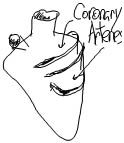
The best part of a dumb sketch is what happens when it is shown to a group. In a recent client meeting I pulled out my dumb sketches to make a particular point about how this product should be positioned in the market. I could not quite hear it, but I had the sense of a collective sigh around the conference table as they saw pictures rather than yet another wordy PowerPoint slide. In fact, contrary to the forced attention a wordy PowerPoint slide demands, my sketch pulled people in with a magnetism. Even though ugly, it still pulled. Amazing.
###
(I rarely fish, but…) Angling Life: a Fisherman Reflects on Success, Failure and the Ultimate Catch (Review)
Angling Life is a long conversation
[Full disclosure: Captain Dan Keating is my cousin. He asked me to review his story, which I am happy to do.]
Angling Life is a long conversation. The kind you have spending hours in a boat waiting for fish to bite. The kind that ranges from food to the stupid stuff you did as a kid to watching your own kids grow–that is, everything. But Angling Life is also a journey book: one man’s quest for the perfect fish—or at least the perfect fishing conditions. As such, this conversation stretches across the globe and occasionally strikes at realities swimming deep inside any man. It’s this search for the best fishing that organizes Captain Dan’s reflections.
 For years Captain Dan has run a charter fishing business on Lake Michigan. He is a fisherman who has made a business of fishing, writing about fishing in books and regular columns as well as holding fishing seminars. Most summer mornings he’s up early with groups eager to get out on the big lake to catch whatever is running. Sometimes the groups know what they are doing. Often they don’t. Captain Dan runs interference on his well-equipped boat so his clients have a great time and catch fish. He has always had a sixth sense about where fish are and how to catch them. Electronics help, but his fishing instinct may exert even more pull. Angling Life tells stories of the failures and successes where this instinct has led—and how the instinct has changed as well over time.
Captain Dan’s personal journey stretches across the globe over the course of this conversation. Each story takes the reader to a different, often far-flung setting, where a fishing story frames Captain Dan’s own questions. There’s fishing in Iowa and Minnesota, fishing in the Rockies, the Atlantic and Pacific, off Cabos San Lucas and Bali and, of course, Lake Michigan. Bait, depth, boats, waves—honestly, I’m not much of a fisher-person but there is much to commend Angling Life because Danny tells details which fill out each story. Details about being a charter boat captain and the business that surrounds that position. Details about storms at sea, and storms inside, about looking for a sure footing everywhere, except for the foundational places he heard about growing up. Which is the place he eventually returned. Captain Dan’s prodigal story is the central story. Like many prodigal stories, it is the inevitable decline that prods him to make life changes. Captain Dan’s journey points to God and the Christ of God—but not in any churchy way you’ve ever heard before. The conversation between writer and reader ultimately invites relation with God, but like two deckhands talking about work-a-day tools of everyday life.
The chapters stand as individual stories, which is a strength. But I might have hoped to see the chapters fit together into a longer learning-narrative with a cohesive story line running the length of the book. Because I know Dan, I found myself itching to hear even more details about the internal storms: to name names. To confess sins. To point out the cause and effect that motivated his seeking and eventual finding of the biggest fish.
###
Jeff Jarvis: “When I was the Goulish Gawker”
Great story by Jeff Jarvis about when he covered the last royal wedding. I love the gritty details about how the paper-bound press ran.
Say More About That: Why one Bible writer stopped his story nearly mid-sentence and why it matters
Leaving a reader with less than they want is akin to walking off stage in the middle of your performance at the height of your fame. But the technique makes the story linger all the longer.
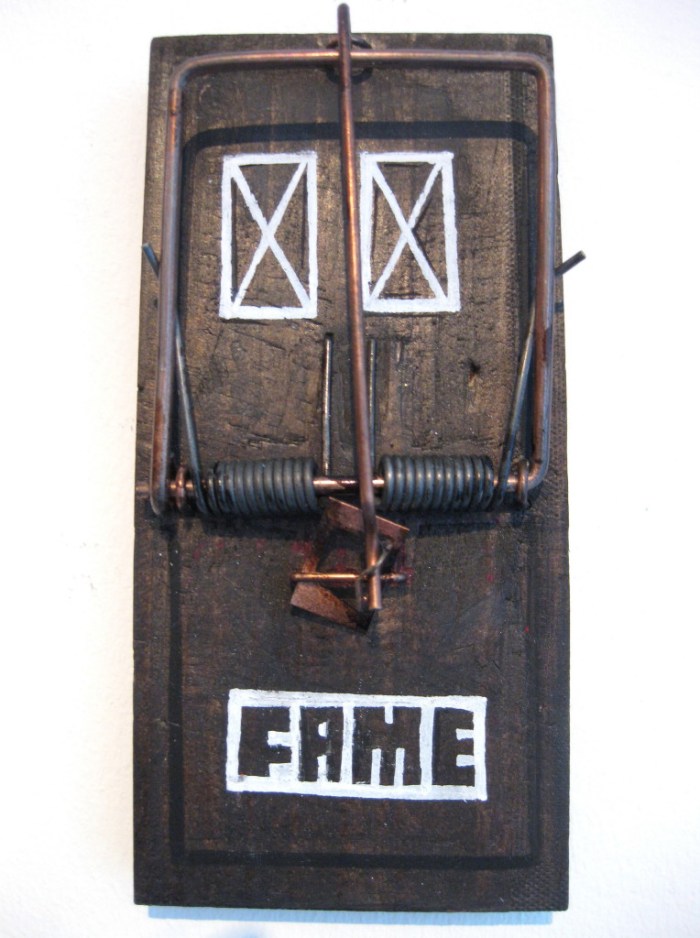
Leave for the sake of the story
Last week a few of us finished working our way chapter by chapter through Mark’s story about Jesus the Son of God. We found the writing idiosyncratic. Intent on capturing action, the writer jumped from episode to episode, scene to scene. The writer seemed less interested in sermons or long speeches (hey—who is?) so just left them out (when compared to the other recorders of Jesus’ life). The writer also cast Jesus’ close followers in a mostly unflattering light: not really getting what Jesus was saying. Generally intent on their own interests—so much so that Mark’s abrupt ending—leaving the followers trembling, astonished and fleeing full of fear after they encounter the empty grave—is a sure sign they never really understood the whole thing. In other words, Jesus’ followers seem like real people. No plaster saints in this story.
We argued why the writer ended so quickly. Did he hear an ice cream truck and left his manuscript and never came back? Why would he miss the important stuff like Jesus rising to heaven in the clouds (which we know from the other writers)? Some of us wished he had included more.
I think the abrupt ending was purposeful. I think he meant to leave us with questions. I think he meant for us to look back into the story and ask what it means to wait and watch. And to ask what it means to believe. The story lives on because it seems so unresolved—especially the case of this walking-talking-breathing God-man.
In the areas I work in, we continually try to build avenues to say more. More about our product. More about our ideas. More about me. We constantly work to expand the time involved for me to talk and to convince you of something. We want to gain an audience with a physician, for instance, and keep her attention until she understands the benefits of our product. But not everybody does this. Some people are smart enough to stop. Garrison Keillor may well be one of them, having recently announced he will retire in a couple years, before someone taps him on the shoulder and asks him to think about what he will do next. The writer of Mark’s Gospel was another. There were others: Plato’s Protagoras chose to end a speech in precisely the same way, which left Socrates “…a long time entranced: I still kept looking at him, expecting that he would say something, and yearning to hear it.” (Mark Denya, Tyndale Bulletin: 57 no 1 2006, p 149-150).
When is it right to leave a story unresolved?
###

 conversation is an engine