Archive for the ‘Dumb Sketch’ Category
The 99 and the One
Merry Christmas! 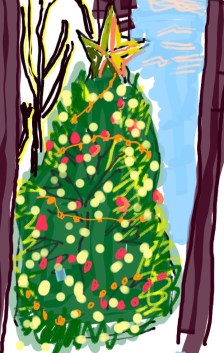

Over the course of 2013 I’ve voiced criticisms and critiques of religion and Christianity, trying to sort culture from subculture and truth from fiction. Eisegesis vs. exegesis. Questioning which texts I privilege and why. Such unwinding and rewinding seems like waking up to the world around me. I’m mostly happy with the process. But it is also unsettling.
One enduring piece of this—one mystery that pulls me in again and again—is the birthday we celebrate today.
It is always dangerous to reduce this to that, so without reducing, I’ll simply point to this small story and say I like how it sets the mystery front and center:
What do you think? If a man has a hundred sheep, and one of them has gone astray, does he not leave the ninety-nine on the mountains and go in search of the one that went astray? And if he finds it, truly, I say to you, he rejoices over it more than over the ninety-nine that never went astray. So it is not the will of my Father who is in heaven that one of these little ones should perish.
Some will ask “What is astray?” Others: “What is perish?” Some will say, “Why ‘Father?’” All reasonable questions and of a piece with how we process the world today. But this notion that God wants relationship with people is mysterious and, for me, quite compelling.
I suspect 2014 will be even more full of mystery.
###
Image credit: Dumb Sketch by Kirkistan
Talk to Me (Life of Privilege, Part II)
Be a Tool Today
It’s what we each crave: the incisive conversation that changes everything. Some of our most thrilling moments are verbal, from “I love you” to a simple “Thank you,” thoughts and affections formed into words can warm us like nothing else on a cold day. Words are arrows snapped directly into the deep-inside-brain-heart.
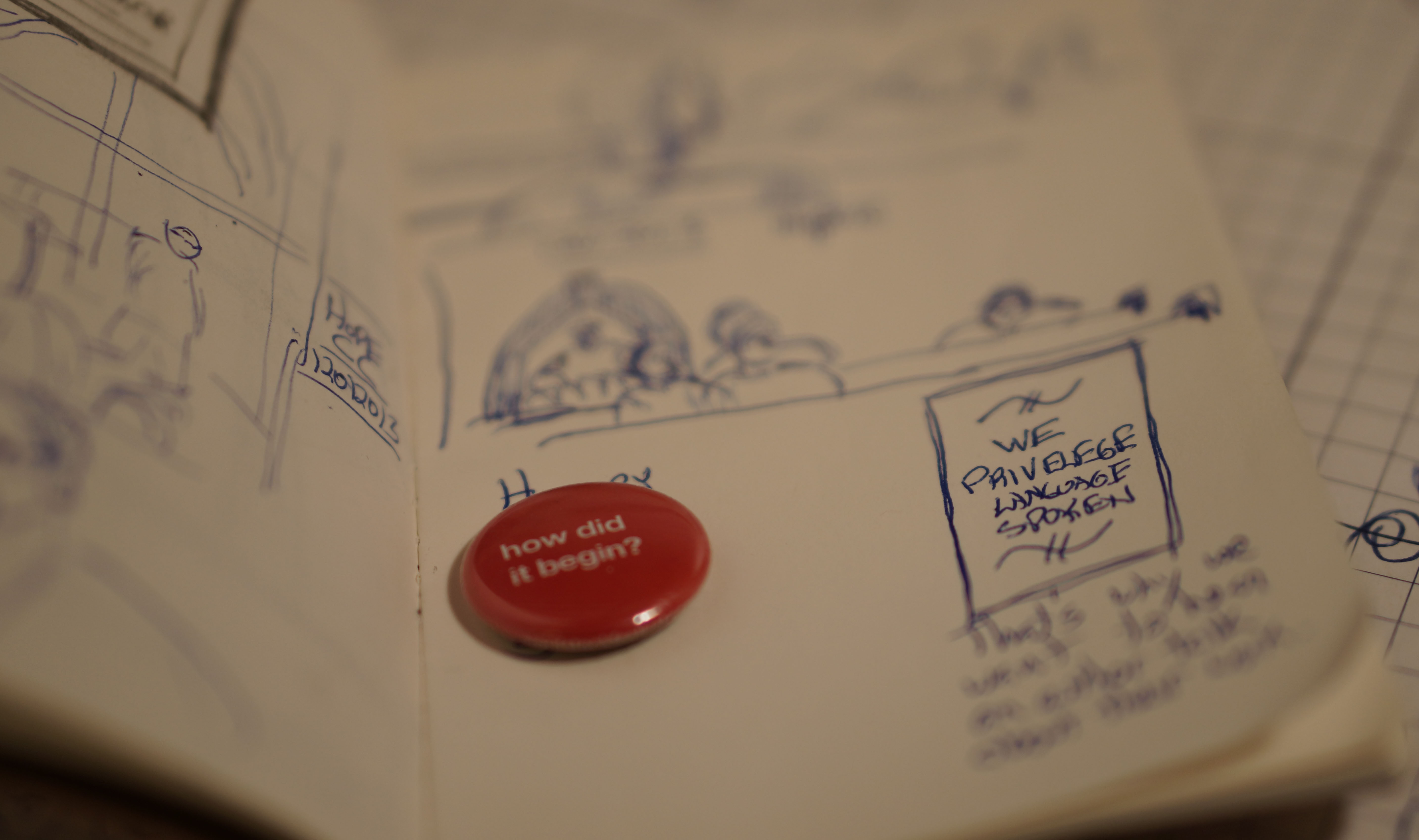
We privilege words spoken—and rightly so. When Kerri Miller hosts Talking Volumes, we listen in because we want to hear some fresh take on the author’s art. We hope the author will reveal some secret to the writing process that fleshes out what we know of her work. We listen intently for some meta-comment that shows how he organized the story. We want more and spoken words are our most believable medium.
Freshly-thought words spoken with spontaneous candor often achieve that end. Fresh words are a response to relationship and a response to the present moment. Which also explains why the CEO’s vetted and scripted remarks at the press conference reek of plywood and formaldehyde. We’re more likely to hear the real story from an employee down in the ranks.
Writing is a technology. Computers, smartphones, pen, ink: all technologies.
Words spoken are not a technology. They are made of breath. They are kind of alive, if only for a moment. But they can also live on in memory (for better or worse).
Which is not to say words are not tools. Words are possibly our closest tools. We use words to accomplish all sorts of things. Words may be our most important tool.
What relationships will you encounter today that will conjure conversations using words you never dreamed you’d say?
See also: Lorde & The Life of Privilege (Part I)
###
Image credit: Kirk Livingston
It’s Better to Have the Conversation Than Not
Assumptions are a cul-de-sac. Admissions, an autobahn.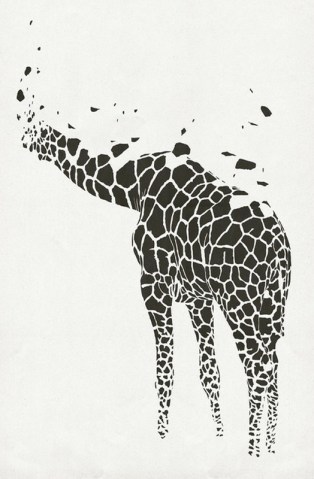
A fast-moving project I’m on pits the changing need of the client with the frantic response of the agency. I’m writing copy and providing strategic direction for a moving target, which has (literally) kept me up nights.
One truth that has proven itself to me several times over the past few weeks is that it is simply better to have a conversation than to not. That may seem obvious to you. But it’s taken me years to come to understand this. I’m too easily put off by the gruff manner or the fly-off-the-handle personality. It’s too tempting to put my head down and just do the work. But the way forward—especially when the task and deliverables are murky—is to talk together about what we understand. Naturally it is embarrassing to admit I know only this much (thumb and forefinger stretched) when I imagine those who wrote the scope of work know this much (from here to the wall, say).
But admit I must.
It is the only way forward. And sometimes it is the only way to get to the place where you can put your head down and do the work. Admitting what I know is also the best way forward: anything I can do to get the team on the same page, whether that means showing my rough draft copy or my quick dumb sketch of what I think the interactive designer just said. And by admitting what I know, others can feel free to admit what they know. That’s usually when I come to find out someone heading up the whole thing is just as baffled. But when we talk openly about what we know and especially what we don’t, a measured response can emerge and we assemble our next steps. At least until the next client meeting.
There is something of an art to getting people on the same page. Some personalities fall into this easier than others. Getting open discussion is aided by vulnerability: the admission. The confession. I suppose the question is: how badly do you want to move forward?
See also Seth Godin’s commentary about fearing the fear vs. feeling the fear. It may give you courage for your task.
###
Image Credit: Mark Brooks via 2headedsnake
Montana!
I’ve been inspired by photo blogs like Shoot Montana (now Run Toward the Light), Photography Journal Blog , Decaseconds | HDR Photography and retireediary (among others) to try make my mediocre photos a bit less mediocre.
Passing through Montana recently I shot this:

I tried some Photoshop jujutsu and came up with this:
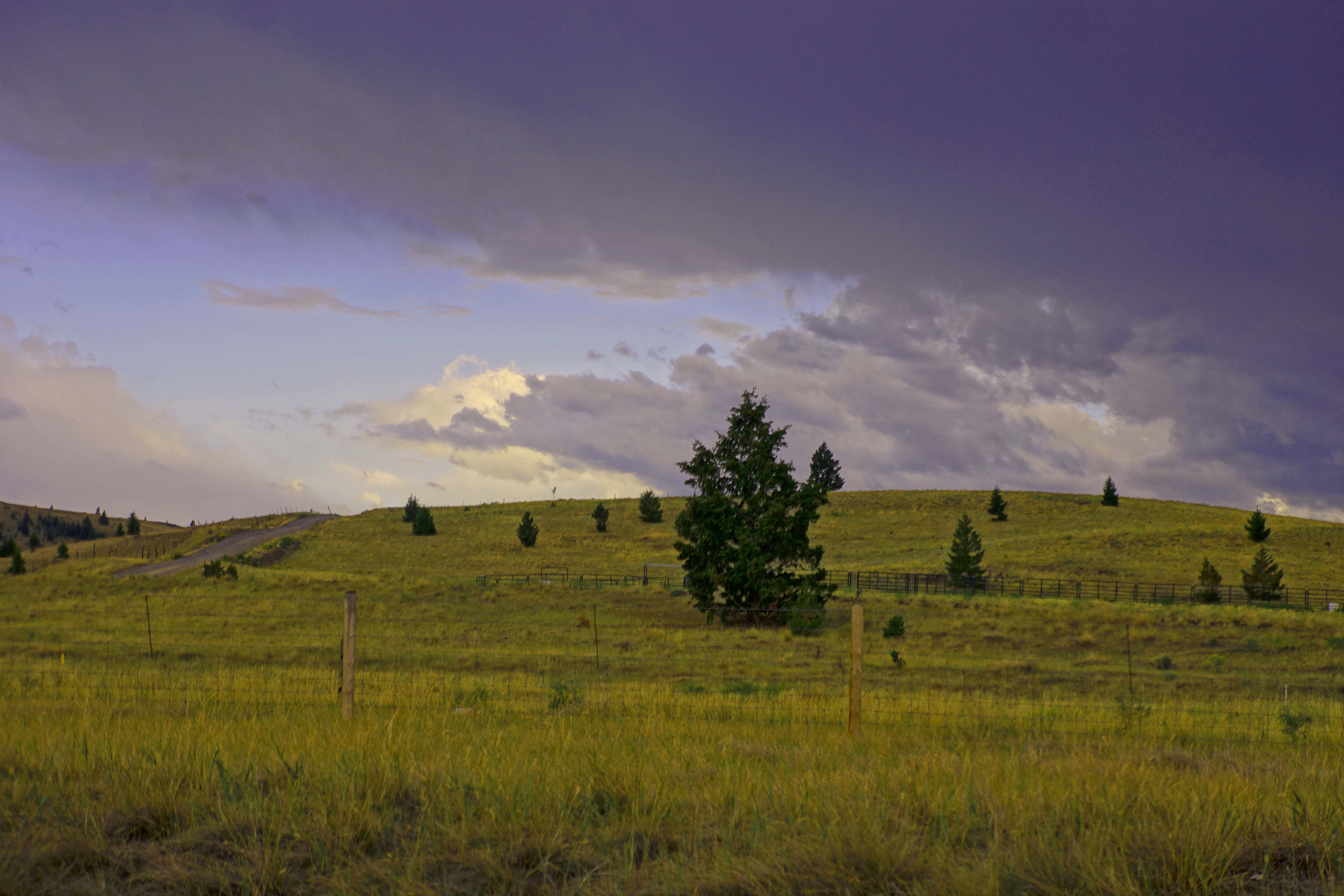
I like the lower shot better, but maybe I went too far.
What do you think?
No matter which you prefer: Montana!
###
Image credit: Kirk LIvingston
Show Your Work
In which Richard Feynman and Charles Weiner politely disagree
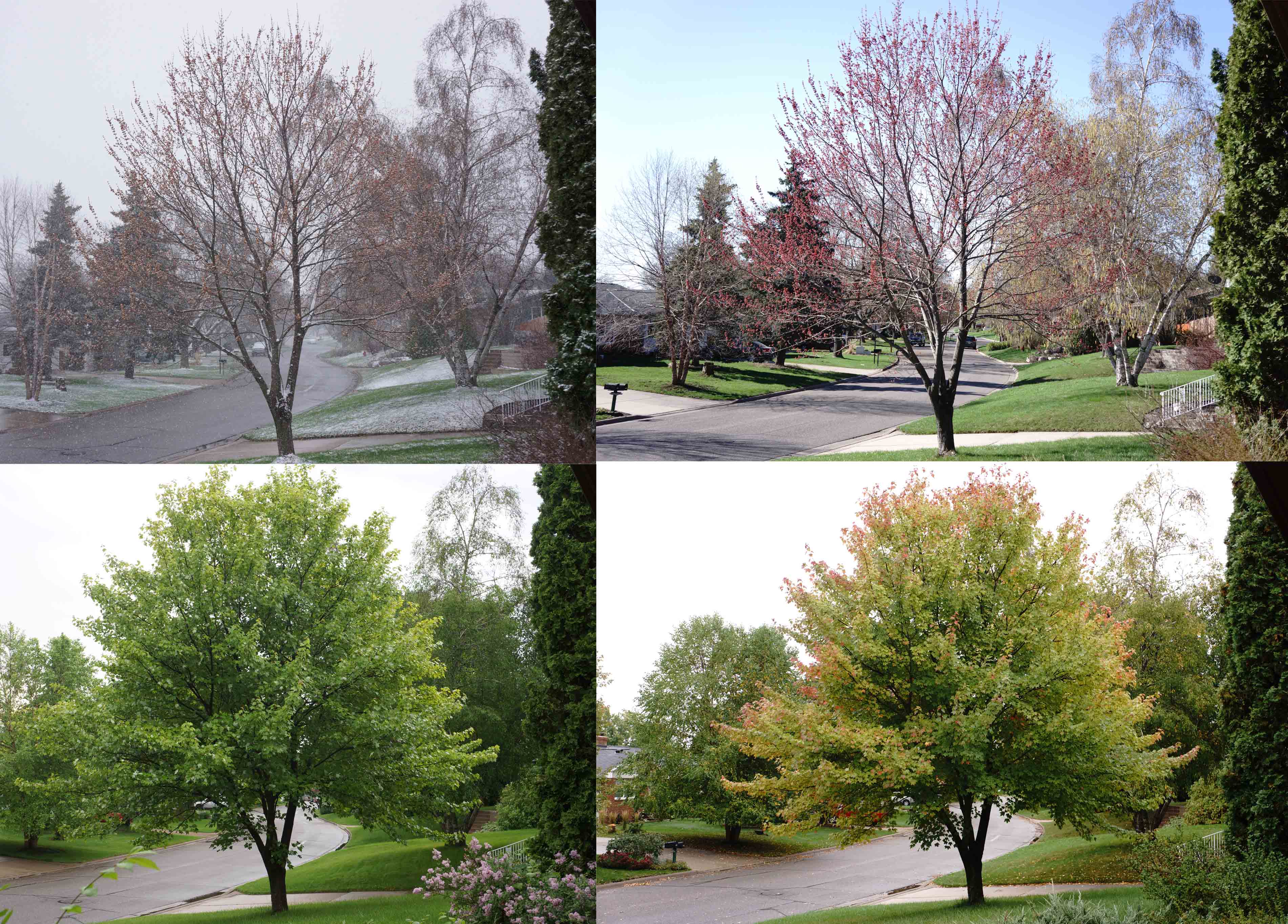
Hey–that’s my tree.
The physicist Richard Feynman once got into an argument [about the belief that genius breakthroughs come from our gray matter alone] with the historian Charles Weiner. Feynman understood the extended mind; he knew that writing his equations and ideas on paper was crucial to his thought. But when Weiner looked over a pile of Feynman’s notebooks, he called them a wonderful “record of his day-to-day work.” No, no. Feynman replied testily. They weren’t a record of his thinking process. They were his thinking process:
“I actually did the work on the paper,” he said.
“Well,” Weiner said, “the work was done in your head, but the record of it is still here.”
“No, it’s not a record, not really. It’s working. You have to work on paper and this is the paper. Okay?
Every new tool shapes the way we think, as well as what we think about.
From Clive Thompson’s [quite excellent] Smarter Than You Think: How Technology Is Changing Our Minds for the Better (NY: The Penguin Press, 2013)
###
Image Credit: Kirk Livingston
Stop-Action Living & How to Pay Attention
Jean Laughton’s Mythic West Borders Her Real West
Put a frame around the scene before you and the scene changes. The frame creates distance from the action, which is both useful and off-putting.

Useful in that the frame helps you stop and see what is going on. Moving parts fall (momentarily) silent and you are released to think critically about the action. Note that critical thought need not be negative or a complaint or a sardonic aside. Critical thinking can result in even more whole-hearted agreement with the action. Critical thinking can also lead to backing away from the action.
Off-putting in that the frame truncates the scene and isolates it from everything else. Off-putting because the people in the scene see the camera and note you’ve switched from action to observer, which most of us find discomfiting. Pick up a camera or sketch pad and you’ve suddenly marked yourself as something other than what is happening right here and now. Pick up a camera and watch people freeze or back away.
Edmund Husserl (that 19th century mathematician/philosopher/phenomenologist) talked about leaving the “natural attitude” and bracketing his experience to come to fully understand/appreciate the experience. Actually, Husserl advised breaking with the natural attitude and bracketing experience to get on with his phenomenological work. Henri Cartier-Bresson always used a 50mm lens to capture the surrounding action, so his audience could see the central action in context and form stronger conclusions. Damon Young, in his Distraction, cites Henri Matisse in explaining how art became his way of looking at the world:
“I am unable to distinguish,” he wrote in 1908, “between the feeling I have for life, and my way of expressing it.”
Any way you cut it, paying attention and making your experience available to others are somehow linked. In Jean Laughton’s work, she takes her camera in the saddle and documents life as working cowgirl. The images she creates are mythic and telling and honest.
Walk through a few of Jean Laughton’s images and you’ll be glad she is paying attention. Laughton seems to have found a way to live in the scenes even as she brackets them. Her frames seem to not take her away from the action. The result is both memorable and accessible.

###
Image credit: Jean Laughton via Lenscratch
Do a Dumb Sketch Today
Magnetize Eyeballs with Your Dumb Sketch
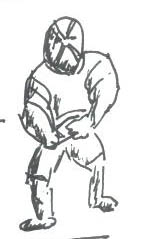 As a copywriter, I’ve always prefaced my art or design-related comments with, “I’m no designer, but….” I read a number of design blogs because the discipline fascinates me and I hope for a happy marriage between my words and their graphical setting as they set off into the world.
But artists and designers don’t own art. And I’m starting to wonder why I accede such authority to experts. Mind you, I’m no expert, but just like in the best, most engaged conversations, something sorta magical happens in a dumb sketch. Sometimes words shivering alone on a white page just don’t cut it. Especially when they gang up in dozens and scores and crowd onto a PowerPoint slide in an attempt to muscle their way into a client’s or colleague’s consciousness. Sometimes my words lack immediacy. Sometimes they don’t punch people in the gut like I want them to.
A dumb sketch can do what words cannot.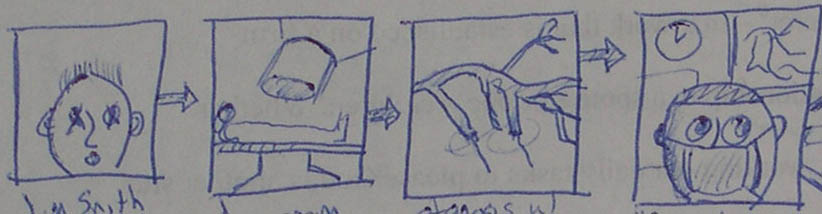
I’ve come to enjoy sketching lately. Not because I’m a good artist (I’m not). Not because I have a knack for capturing things on paper. I don’t. I like sketching for two reasons:
- Drawing a sketch uses an entirely different part of my brain. Or so it seems. The blank page with a pencil and an idea of a drawing is very different from a blank page and an idea soon to be fitted with a set of words. Sketching seems inherently more fun than writing (remember, I write for a living, so I’m completely in love with words, too). Sketching feels like playing. That sense of play has a way of working itself out—even for as bad an artist as I am. It’s that sense of play that brings along the second reason to sketch.
- Sketches are unparalleled communication tools. It’s true. Talking about a picture with someone is far more interesting than sitting and watching someone read a sentence. Which is boring. Even a very bad sketch, presented to a table of colleagues or clients, can make people laugh and so serve to lighten the mood. Even the worst sketches carry an emotional tinge. People love to see sketches. Even obstinate, ornery colleagues are drawn into the intent of the sketch, so much so that their minds begin filling in the blanks (without them realizing!) and so are drawn into what was supposed to happen with the drawing. The mind cannot help but fill in the blanks.
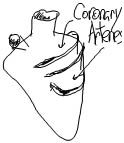
The best part of a dumb sketch is what happens when it is shown to a group. In a recent client meeting I pulled out my dumb sketches to make a particular point about how this product should be positioned in the market. I could not quite hear it, but I had the sense of a collective sigh around the conference table as they saw pictures rather than yet another wordy PowerPoint slide. In fact, contrary to the forced attention a wordy PowerPoint slide demands, my sketch pulled people in with a magnetism. Even though ugly, it still pulled. Amazing.
###
Why I Like the Dumb Sketch Approach to Life
The Lure of Rough Drafts, Quick Observations and Badly Drawn Lines
I made this dumb sketch when visiting our son working in Madison, Wisconsin. Madison holds lots of memories for Mrs. Kirkistan and I: we went to school and met at the UW, we met amazing people who remain friends today decades later and made big directional choices. It was a place for fiddling with and setting trajectory—it still is that today.
Like most summer weekends there was a concert on the Memorial Union Terrace. This jazz festival (see dumb sketch) was running all weekend. These days it seems all of Madison turns out at the Terrace.
 Yesterday I quoted photographer Henri Cartier-Bresson likening his camera to a sketchbook: it helped him instantly sort the significance of an event. And that is exactly what sketching does: it is an entirely imperfect representation (at least my sketches are) of what we all saw. Dumb sketches invite participation, which is why my colleagues and I often employ dumb sketches as we work through a direction with our clients.
One of the functions I relish as a copywriter is this responsibility to provide a rough draft. The rough draft is this work of writing out the position or power of my client’s product or service so others can respond. Or sometimes I’m summarizing and sharpening the science behind a product so we can see more clearly why it is important. Rough drafts are both right and wrong at the same time. The power of the rough draft is to set a thought out in the open where others can reach and tag it. After all, you can’t change something that doesn’t exist. The point is collaboration: how is this right? What do we know that can make this more right?
Saying aloud what we know and what we believe is the verbal equivalent of a rough draft. And saying aloud what we know is more than helpful. It is part of the human condition and not to be missed. Our conversations reveal who we are and what we know even as they and invite participation. Getting it wrong sometimes is part of the deal.
That seems like a good approach to life.
###
Image credit: Kirkistan
Glen Stubbe: “I did this thing. Let me show you.” (Shop Talk #7)
When Photojournalists Gather: MNPA Shop Talk
I’d like to see more. And better.
Photography, like sketching, is another way of interacting with what is right before us. Both photography and sketching present opportunities to see differently—both are a kind of active seeing. As a writer, I have an ongoing project of learning to see more and better and differently. Seeing better helps me write better.

Glen Stubbe Photography [@gspphoto]
That desire prompted me to show up at the Minnesota News Photographers Association last Saturday at Murphy Hall at the University of Minnesota. I wanted to hear how news photographers talked about—and thought about—their work.
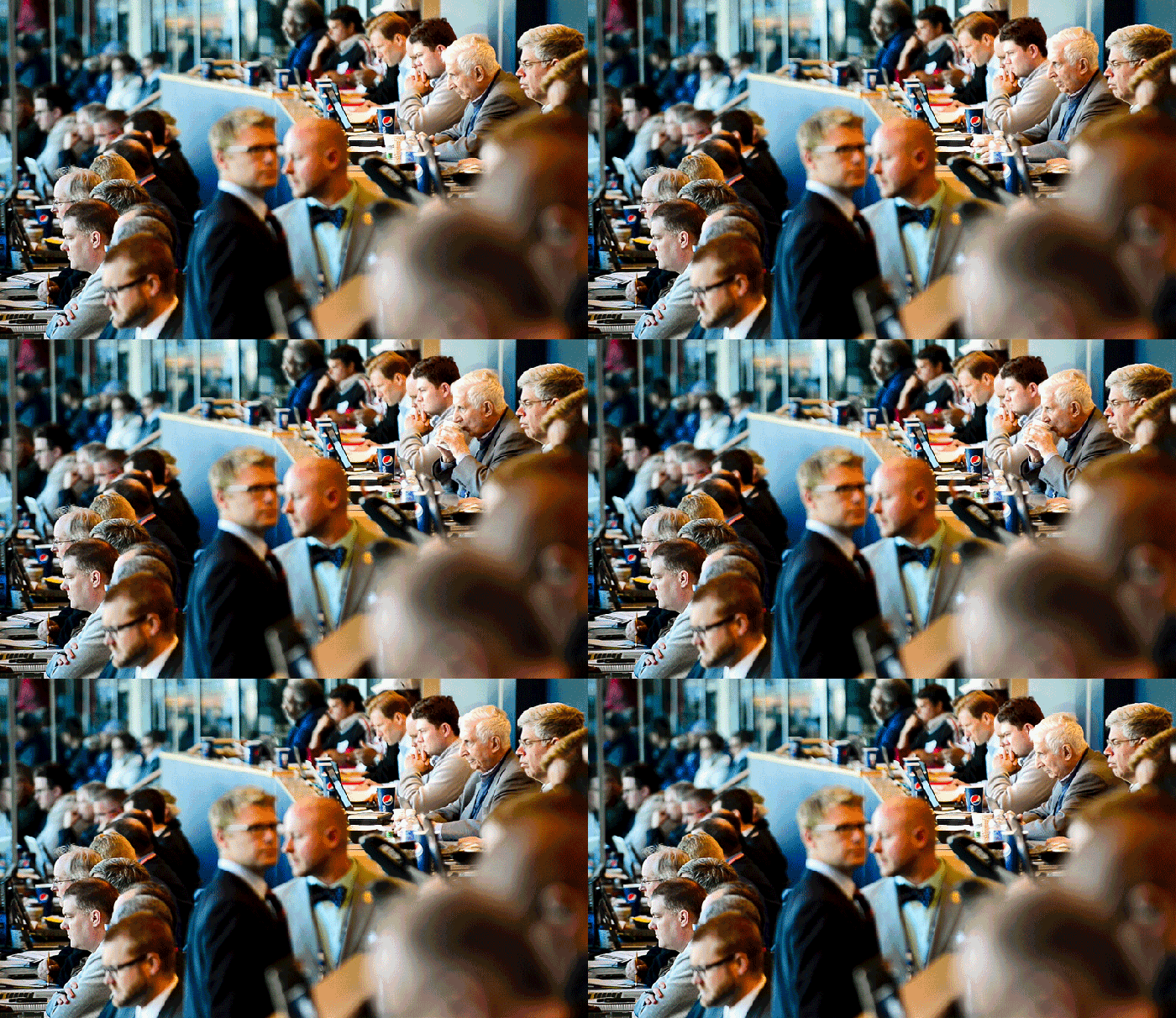
What I heard was talk of technique: details about exposure and how to layer different exposures in a single photo, when to wait and when to move when stalking the photo they have already seen in their mind. Several times I heard how photographs were once merely an accompaniment to the article and how that is quickly changing. Glen Stubbe cited an example of his photo of Michelle Bachman escaping a pointed question went on to start a national story thread.
The photographers were exactly right about this last point: as we move to a post-literate culture, visual content moves to the primary spot. How long do stories stick around in any media you consume without some compelling visual anchor? Not long. I’ve often thought readers either fear blocks of copy or simply find them off-putting. But this is nothing new, we’ve know this for some time. As a writer, visual storytelling is a must.
The photojournalists talked about the increasing role of social media and the blurred lines between reporter and photographer. But three things stood out from the panel between Ben Garvin (Pioneer Press), Glen Stubbe (StarTribune) and Jeffrey Thompson (MPR):
- “Tweet Every Assignment.” Ben Garvin said this and I think it could be true for anyone finding their way into social media. Whatever your work (or vocation or avocation), those things that are top of mind are the very things of (potential) interest to others. The premium here is on immediacy.
- Develop and Feed a Personal Vision. There are some things (photos, thoughts, words, quotes) that land outside of our daily work. There is a place for that top-of-mind content—a public place. Ben Garvin feeds that vision at his blog. For Glen Stubbe , it’s his Instagram account. I believe this personal vision is the necessary counterweight to daily work. My respect for the people I work with and read grows as I see the parameters of their thinking outside their primary work.
- Share what is remarkable. It was Glen Stubbe’s quote that helped me see the emotive content that makes something remarkable—a question I’ve wondered for some time. Something is remarkable when it makes us step out of our routine and remark, out loud, to someone else. To Mr. Stubbe, it was photographs he just had to share. The making and sharing of the photos remains a prime driver for him. What amazes us is the very stuff we share with our spouse, our kids, our friends, total strangers. It is good when we can capture what amazes us.
Ben Garvin [@bengarvin]
###
Image credit: Glen Stubbe, Ben Garvin
Drawing from Photos & Lost in Translation
Unwitting Perpetuation of Someone Else’s Mistake
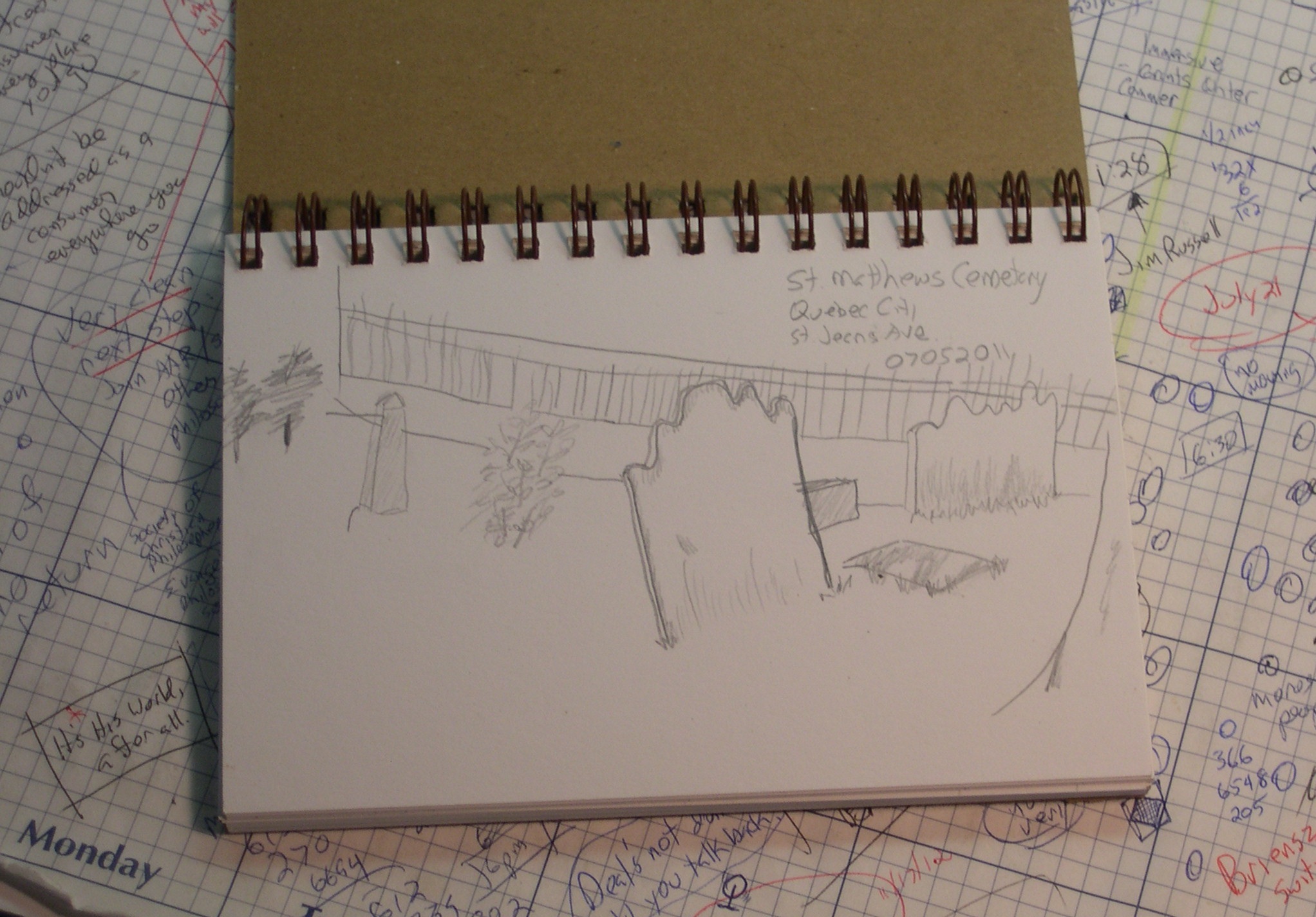
 Sketching from someone else’s representation can make for a bit of trouble. I learned this from our youngest as she tried to school me in the art of drawing. Drawing from a photograph, while not bad, limits my perceptive ability. The photo is one particular view. Some one’s particular view. But to step away from the photo and try to sketch my own perception of the Cimetiére Saint Matthew in Quebec City, for instance, is to grapple with light and shadow on my own, and proportion, and my own inability to capture what I see.
A few days back I had a chat with a local philosopher who described a problem with the way Bertrand Russell read René Descartes’ Meditations on First Philosophy. When subsequent philosophy students read Russell’s interpretation of Descartes, they accepted his assessment as the true and honest way things were with Descartes. But Russell’s perceptions left out or downplayed certain arguments which would later prove pivotal for the development of an entire branch of philosophy. It took smart readers to go back to the primary sources and reread and re-perceive to open this new and productive branch.
This is the beauty of going back to look at something fresh. At least as fresh as possible, given the baggage we carry into every perceptive situation. That’s why so many of our best teachers—and frankly our best friends—urge us to go back to primary sources. It may be a document. It may be a relationship. It may be a place. But seeing again the original and seeing with fresh eyes—it’s often worth the effort. Especially if we are bent on saying for ourselves what we are seeing, which can make a difference in our work, our faith and our relationships.
###

 conversation is an engine
