Archive for the ‘Dummy’s Guide to Conversation’ Category
Obviously.
To spell out the obvious is often to call it into question.
–Eric Hoffer

Though “obviously” can never be rehabilitated.
###
Image credit: Kirk Livingston
Get More Aha’s Per Hour (Dummy’s Guide to Conversation #17)
Dance + Sit + Open = Insight
Who doesn’t crave that sudden influx of insight, the aha?
It is the aha that helps us turn a corner, change a behavior, or to finally, effectively, say “No!” to a persistent bad habit. The aha is a change of mind/heart where we suddenly have insight into a persistent question and then realize we can do things differently. And we will, starting now.
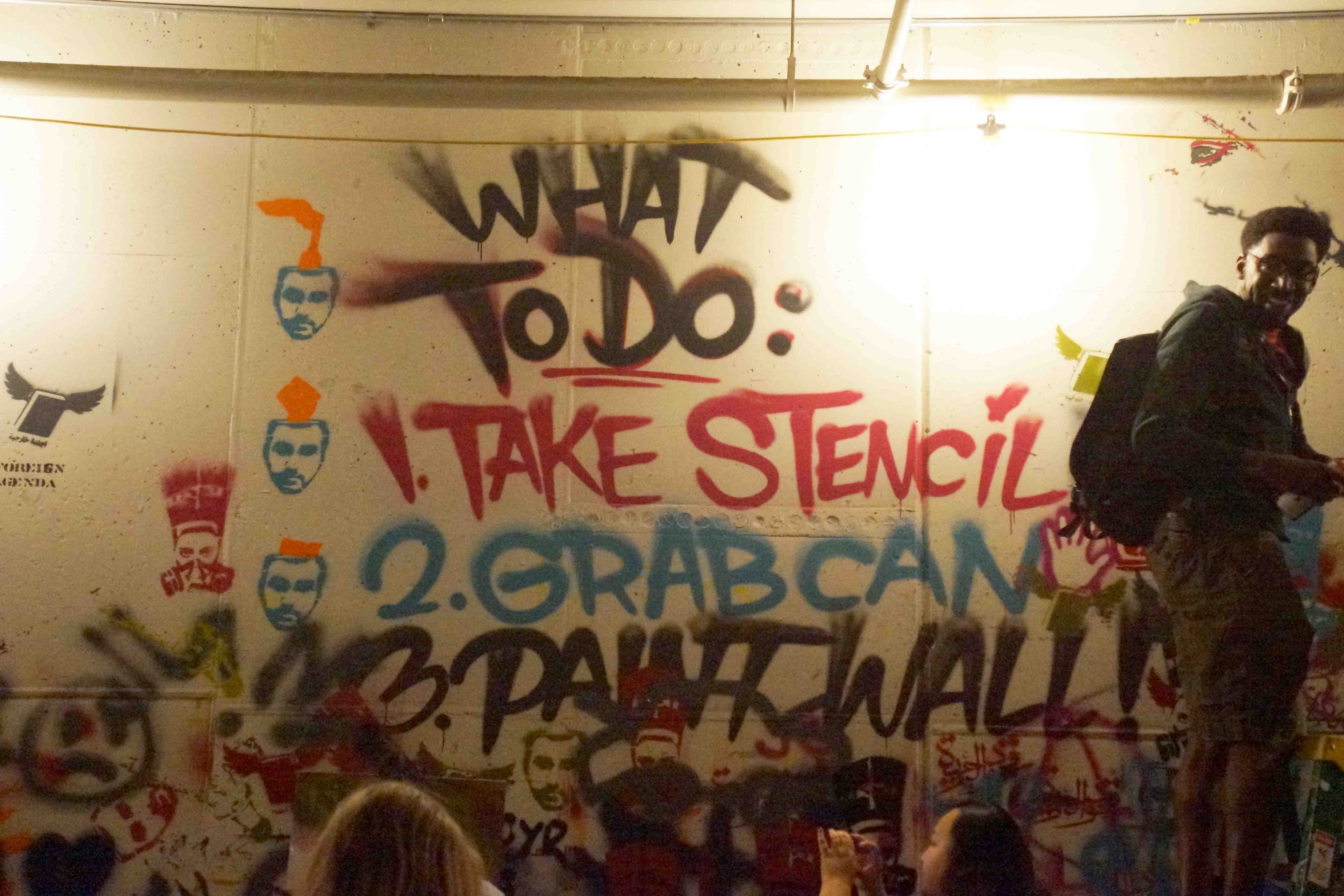
Over the weekend Henry wondered aloud how to have more aha-moments. I speculated that generating more aha’s starts with a dance of definition (DGtC #4) and moves to sitting with the question (DGtC #5). Both the dance and the sitting force the troubling question or decision toward the surface—like a bubble rising slowly through a thick malted milk. And then as we take the vulnerable move of voicing our vexation (DGtC #9 and #10) and then wait (DGtC #8), that is precisely when we are most prone to experience an aha moment. That’s because we are searching and listening. And the next conversation may just connect the dots.
Getting more aha’s per hour means living openly with our questions as well as asking them of the people around us. Insights flow from conversations, often unbeknownst to the conversation partners.
What vexation will you voice today?
###
Image credit: Kirk Livingston
“The readiest way of working on understanding is often through talk…”
Douglas Barnes on Exploratory Talk
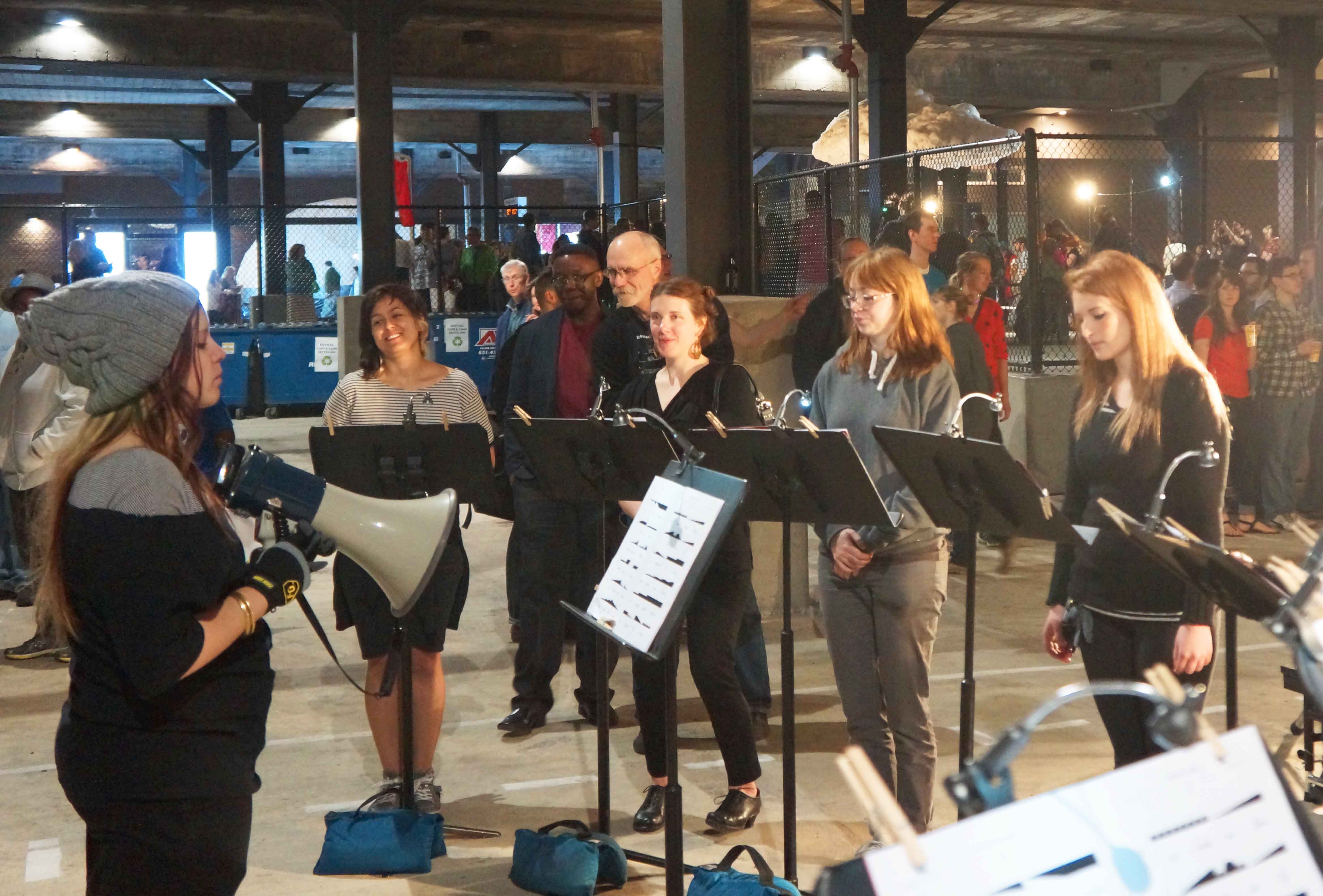
The readiest way of working on understanding is often through talk, because the flexibility of speech makes it easy for us to try out new ways of arranging what we know, and easy also to change them if they seem inadequate. Not all kinds of talking (or writing) are likely to contribute equally to working on understanding. A great deal of the writing that goes on in school is a matter of imitating what other people have said or written, and the same is true at least in part of the talk.
–Douglas Barnes, “Exploratory Talk for Learning” in Exploring Talk in Schools, edited by Neil Mercer and Steve Hodgkinson (Thousand Oaks, CA: Sage, 2009) 5
###
Image Credit: Kirk Livingston
Custom Answers to Personal Perplexities
What does a good conversation look like?

###
Image Credit: Kirk Livingston
Collaborate Starts S l o w
Catch me if you can
One must slow down to understand.
Way back: I’m thinking back to a statistics class in college. The theater-seating room in the Psychology building at UW-Madison was packed with well over 200 people. And at the last possible minute the professor would make a grand entrance, rushing down the side of the room with flowing scarf, his cologne preceeding him and wafting across the room. Then he talked nonstop for the next 50 or 75 or 100 minutes. In my mind a bell rang at the end, but I may have imagined that. He took no questions. His purposes were served to assume everyone was with him.
Few were, naturally.
Teaching assistants did the actual work of slowly going through the ideas and problems sets. They were the ones taking the time to tee up concept after concept and watch as some statistics-averse philosophy student slowly worked it out. That’s how a multi-layered idea passes between people: slowly.
Today: Sometimes Mrs. Kirkistan will ask how teaching went today. I consider teaching a success when we have had a robust discussion about the central concept for the day. When people bring in stories and draw connections—usually there is laughter—that is what engagement looks like. It is satisfying. Once upon a time I thought if I got through my slides in time that was success. Today I believe slides are the least important thing—because delivering slides to an audience largely absent is one of the more vacuous activities on the planet.
Tomorrow: My smelly, scarf-toting statistics professor from way back didn’t care about engagement. But that attitude won’t get anyone very far in a culture pivoting toward collaboration. Broadcasting an aroma and putting on a costume scarf doesn’t actually carry all that much weight for those interested in slicing and dicing a subject. What does carry weight is passion for a topic that slows and shares enough to bring others up to speed. Collaboration takes time while we each catch up and synchronize our language. But slowing to a human scale of understanding is worth the effort.
###
Talk to Me (Life of Privilege, Part II)
Be a Tool Today
It’s what we each crave: the incisive conversation that changes everything. Some of our most thrilling moments are verbal, from “I love you” to a simple “Thank you,” thoughts and affections formed into words can warm us like nothing else on a cold day. Words are arrows snapped directly into the deep-inside-brain-heart.
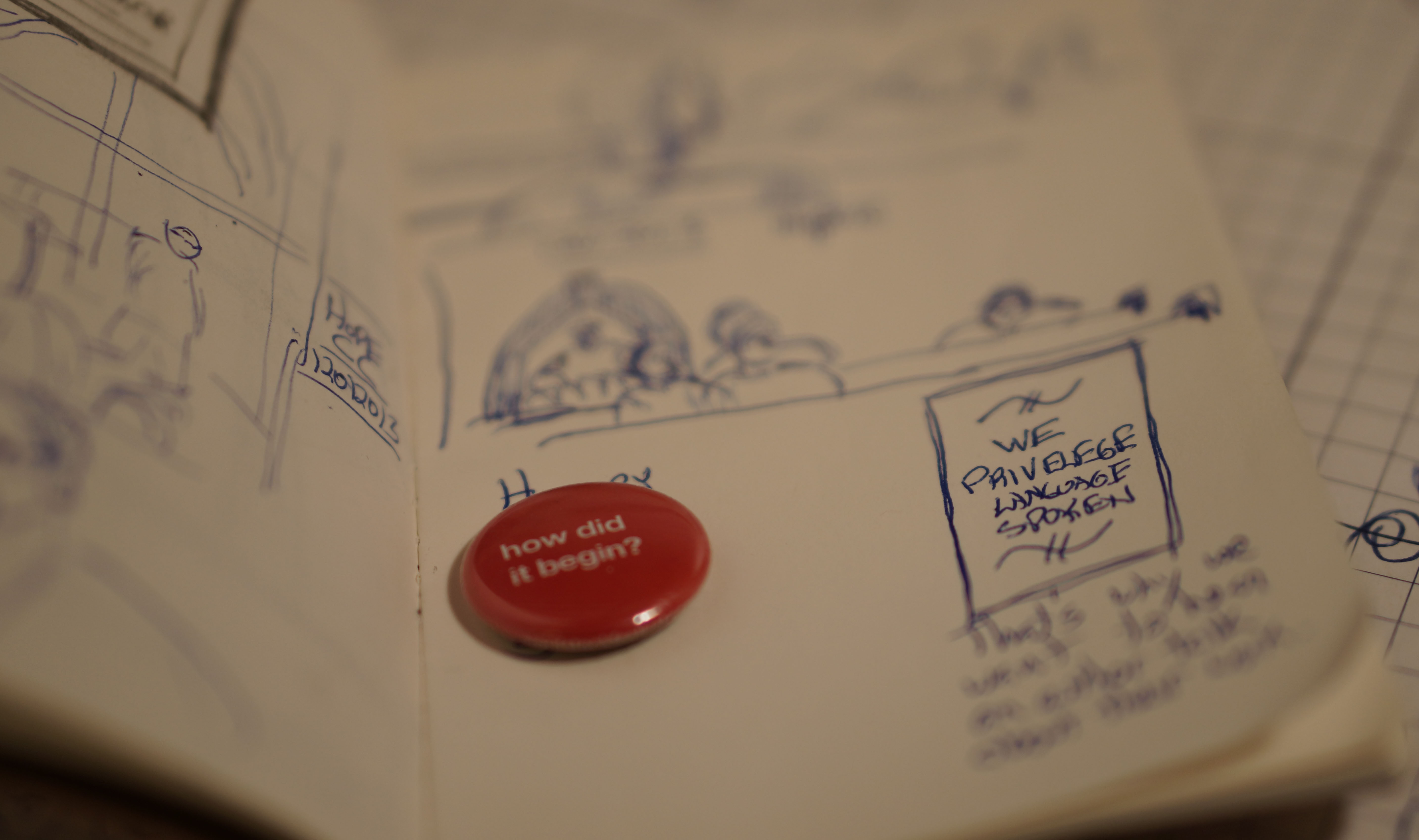
We privilege words spoken—and rightly so. When Kerri Miller hosts Talking Volumes, we listen in because we want to hear some fresh take on the author’s art. We hope the author will reveal some secret to the writing process that fleshes out what we know of her work. We listen intently for some meta-comment that shows how he organized the story. We want more and spoken words are our most believable medium.
Freshly-thought words spoken with spontaneous candor often achieve that end. Fresh words are a response to relationship and a response to the present moment. Which also explains why the CEO’s vetted and scripted remarks at the press conference reek of plywood and formaldehyde. We’re more likely to hear the real story from an employee down in the ranks.
Writing is a technology. Computers, smartphones, pen, ink: all technologies.
Words spoken are not a technology. They are made of breath. They are kind of alive, if only for a moment. But they can also live on in memory (for better or worse).
Which is not to say words are not tools. Words are possibly our closest tools. We use words to accomplish all sorts of things. Words may be our most important tool.
What relationships will you encounter today that will conjure conversations using words you never dreamed you’d say?
See also: Lorde & The Life of Privilege (Part I)
###
Image credit: Kirk Livingston
Repeat, I say, Repeat Others’ Words
Weird Kid’s Trick that Boomerangs (Boomerangs!) in Your Own Brain
Someone told me about Lifehacker not long ago and I’ve been trying all sorts of the suggestions that flow through their stream of articles. But Melanie Pinola’s recent article “Make Better Conversations by Repeating the Other Person’s Words” caught my attention both for what she wrote and how the Lifehacker community responded:
If you want to be great at making and continuing conversations, you have to be a good listener. Barking Up the Wrong Tree’s Eric Barker points out one way to do active listening that hostage negotiators use to build rapport: repeat the last few words your companion said.
She goes on to give a very few specifics about repeating the last two or three words–it is enough to make you think about your own conversations. But the commentary that pops up after the article is almost as compelling as the article itself, with different folks chiming in by parroting the last two or three words. It’s actually not that easy to differentiate true interest from sarcastic banter. It’s all sorta hilarious.
Of course, kids learn repeating words early as a way to drive parents and siblings to the hard edge of sanity. I did it. My kids did it to me. But the surprise is that repeating others words—when not done with ill will or as a bit of customer service trickery, is quite cyclical: what you say again and again finds its way back into your own brain.
I have a client meeting today and I know that at some point I will repeat what my client says. Aloud. It almost always happens. It’s a basic part of understanding—it lets the other person know I am listening and it also gives me a chance to try on the words/concepts my client offers, to see if they make sense coming from someone else’s mouth.
We need more active listening in this world—but less repeating as a parlor trick.
###
Image credit: crazytales562 via Lifehacker
Do a Dumb Sketch Today
Magnetize Eyeballs with Your Dumb Sketch
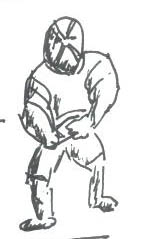 As a copywriter, I’ve always prefaced my art or design-related comments with, “I’m no designer, but….” I read a number of design blogs because the discipline fascinates me and I hope for a happy marriage between my words and their graphical setting as they set off into the world.
But artists and designers don’t own art. And I’m starting to wonder why I accede such authority to experts. Mind you, I’m no expert, but just like in the best, most engaged conversations, something sorta magical happens in a dumb sketch. Sometimes words shivering alone on a white page just don’t cut it. Especially when they gang up in dozens and scores and crowd onto a PowerPoint slide in an attempt to muscle their way into a client’s or colleague’s consciousness. Sometimes my words lack immediacy. Sometimes they don’t punch people in the gut like I want them to.
A dumb sketch can do what words cannot.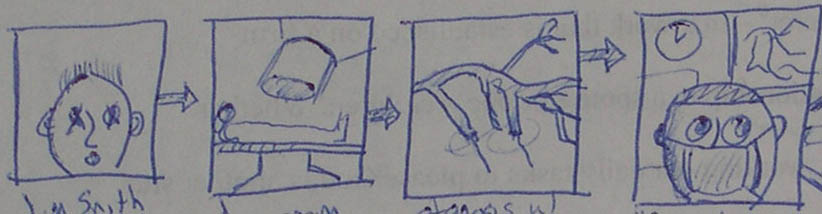
I’ve come to enjoy sketching lately. Not because I’m a good artist (I’m not). Not because I have a knack for capturing things on paper. I don’t. I like sketching for two reasons:
- Drawing a sketch uses an entirely different part of my brain. Or so it seems. The blank page with a pencil and an idea of a drawing is very different from a blank page and an idea soon to be fitted with a set of words. Sketching seems inherently more fun than writing (remember, I write for a living, so I’m completely in love with words, too). Sketching feels like playing. That sense of play has a way of working itself out—even for as bad an artist as I am. It’s that sense of play that brings along the second reason to sketch.
- Sketches are unparalleled communication tools. It’s true. Talking about a picture with someone is far more interesting than sitting and watching someone read a sentence. Which is boring. Even a very bad sketch, presented to a table of colleagues or clients, can make people laugh and so serve to lighten the mood. Even the worst sketches carry an emotional tinge. People love to see sketches. Even obstinate, ornery colleagues are drawn into the intent of the sketch, so much so that their minds begin filling in the blanks (without them realizing!) and so are drawn into what was supposed to happen with the drawing. The mind cannot help but fill in the blanks.
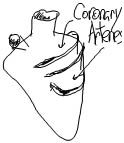
The best part of a dumb sketch is what happens when it is shown to a group. In a recent client meeting I pulled out my dumb sketches to make a particular point about how this product should be positioned in the market. I could not quite hear it, but I had the sense of a collective sigh around the conference table as they saw pictures rather than yet another wordy PowerPoint slide. In fact, contrary to the forced attention a wordy PowerPoint slide demands, my sketch pulled people in with a magnetism. Even though ugly, it still pulled. Amazing.
###
Dummy’s Guide to Conversation #9: Say it Out Loud To Get It
 A pastor friend once wondered why the congregation didn’t know this certain fact he had mentioned in a sermon. My friend was under the notion that people listen closely to every word of a sermon. I am convinced people do listen—just not to every word.
I know this because I have taught college students and mistakenly thought that the wide-open eyes and direct eye contact meant they were listening. It took me until my first test to realize how mistaken I was. Direct eye contact is as much an act as appearing to type notes while facebooking friends. Students and all of us easily adopt the outward behaviors that allow us to escape miles away to play on the beach while the person in front persists in boring monologue.
But a conversation is a different environment than a lecture or sermon. Don’t let your conversation partner bore you with abstractions. Challenge them. Question. Ask. This is the very nature of conversation and it fits with how we understand anything: we need to try an idea on for size to sort out whether it fits us or the situation.
Trying an idea on for size looks like talking.
We must turn something over verbally to begin to understand it. It’s just how the will is connected to the brain—through the voicebox. Not exclusively, sometimes we get it without saying it or asking. And sometimes writing a note helps in understanding (that’s often how it works for me). But make peace that people need to respond in one way or another to truly begin to understand something.
This is part of the reason lectures can be so ineffective.
###
Image Credit: BLU (street artist from Bologna Italy) via 2headedsnake

 conversation is an engine