Archive for the ‘making mistakes’ Category
When Truth Sounds Like a Lie
And the lie that turns out true
Let’s make up a new term: the “aspirational lie.”
The aspirational lie is that thing that falls from your mouth before you can stop it.
- It is not quite true—that’s why you almost didn’t say it.
- But it is not quite false—something about it is true. Which is why you did say it.
That happened to me when talking to a writing class of business students. My professor friend let me come in and chat about freelance copywriting. She wanted her MBA students to see some different shades to how work gets done. In the course of our discussion we talked about how one prepares to write and about how one does the work.
I told one truth that sounded like a lie.
And I told a lie that turned out to be true.
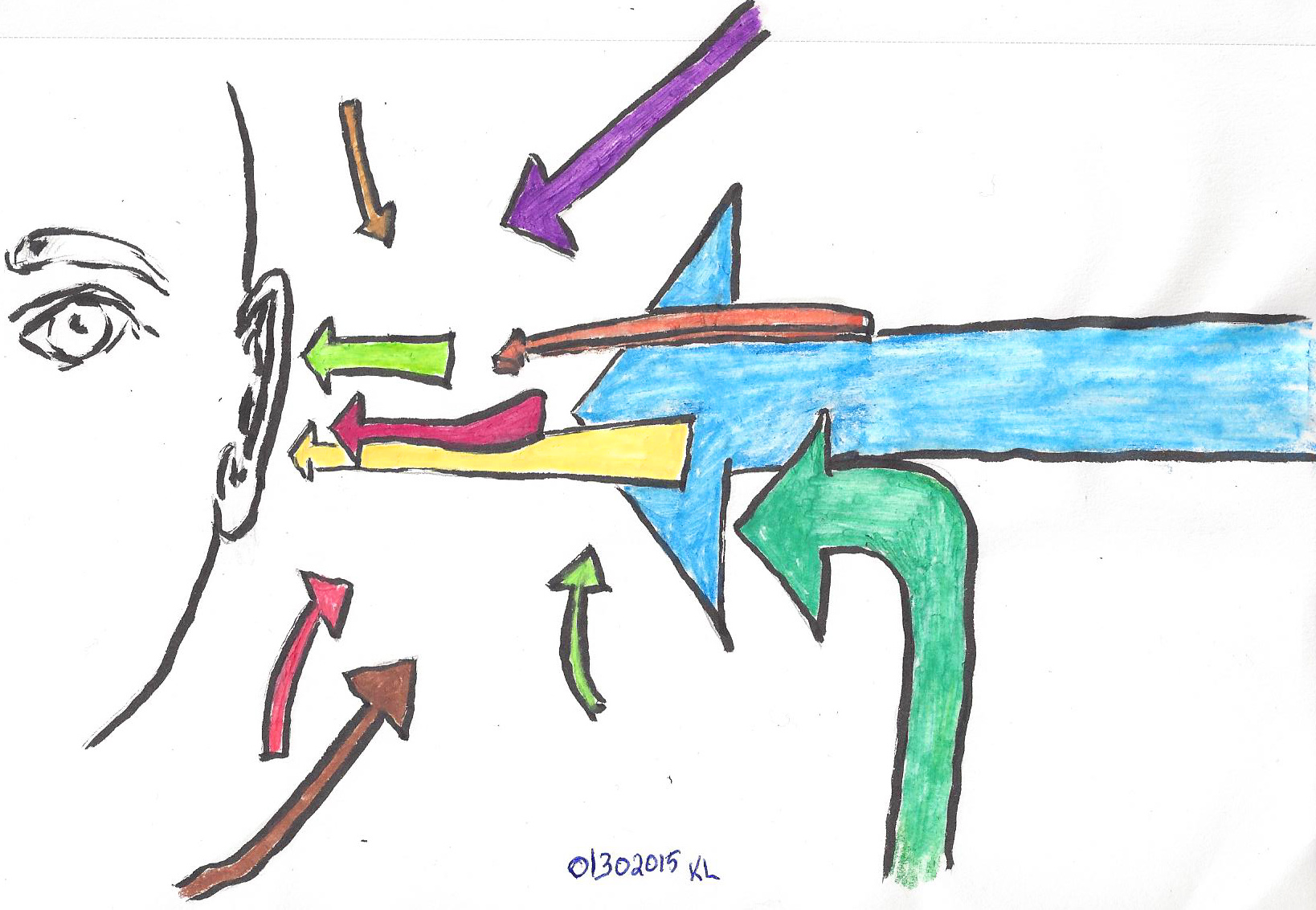
The Truth That Sounded Like a Lie
The truth that sounded like a lie was that I make a bunch of stuff up for my clients. “How so?” wondered the class. It’s like this: the writer’s work is to think forward and then tell the story of how all the parts fit together. Whether writing a white paper, a journal article, an advertising campaign or refreshing a brand, writers do what writers have always done: make stuff up. They grab bits and pieces of facts and directions and fit them into a coherent whole. As they move forward, they gradually replace false with true and so learn as they go.
That is the creative process.
You fill up your head with facts and premonitions and assumptions. Many are true, some are false. But the process itself—and the subsequent reviews reveal what it is true. Writing is very much a process of trying things on for size and then using them or discarding them. And sometimes we used facts “for position only,” as a stand-in for the real, true fact on our way to building the honest, coherent whole.
The Aspirational Lie
We also talked about backgrounds and how one prepares to write. I explained how degrees in philosophy and theology are an asset to business writing. Yes: I was making that up on the spot. But not really, because I have believed that for some time, though had never quite put it in those words. Pulling from disparate backgrounds is a way out of the narrow ruts we find ourselves in. Those divergent backgrounds help to connect the dots in new and occasionally excellent ways. Which is also why we do ourselves a favor when we break from our homogeneous clubs from time to time.
Comedy writers do this all the time. I just finished Mike Sacks excellent Poking a Dead Frog: Conversations with Today’s Top Comedy Writers (NY: Penguin Books, 2014), and was amazed all over again at the widely different life experiences comedy writers bought to their work.
The more I’ve thought about the aspirational lie that philosophy and theology contribute to story-telling, the more convinced I am it is true. That’s because I find myself lining up facts and story bits and characters and timelines according the rhythms and disciplines I was steeped in during school. In philosophy it was the standing back and observing with a disinterested eye. In theology it was the finding and unraveling and rethreading of complicated arguments—plus a “this-is-part-of-a-much-larger-story” component.
Our studies, our reading, our life experience—all these help line up the ways we hear things and the ways we connect the dots. Our best stories are unified and coherent because of this.
###
Dumb Sketch: Kirk Livingston
Own Your Process
Ownership Sparks Creativity in Art & Work & Life
One key differentiator between working for the man (every night and day) and working for yourself is ownership. Working for yourself you own the beginning, the middle, and the outcome.
Especially the outcome.
Some of my favorite colleagues over the years—the very ones who advanced in whatever they worked at—found ways to own the process. These were the ones not content to follow orders. Instead they made the work their own, found their own way, employed their skill and imagination. I’ll argue that owning the work sparked their creativity to accomplish the task. And I’ll argue that ownership looked like responsibility for the outcome. So despite working for the man, they took ownership, made their own meaning and became, well, the man.
Over at Dumb Sketch Daily I’ve been producing a dumb sketch every day for the last 39 days. I was sorta proud of this dumb sketch:

Then a commenter suggested abstracting it, which I tried, given my limited art understanding and abilities (here):
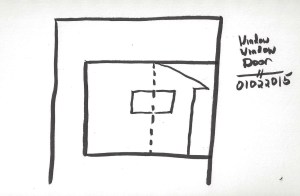
You can see the result is…simple. But it is my own (not that anyone is lining up to take credit). The commenter’s comment helped me continue my odyssey toward learning to see.
My only point is that developing new skills requires a certain elasticity. We try new stuff and get it wrong again and again and again. And we keep failing until maybe, one fine day, it turns out sorta OK.
A lot happens when we take ownership for developing our own skills. And a lot of good can come from taking responsibility for our client/boss/friend’s desired outcome.
###
Image credit: Kirk Livingston
The Talking Part of Writing
Talking Through the Valley of the Shadow of Death
When it comes to brand new, unpaged ideas (that is, not yet written), J.K. Rowling is right:
But at some point every idea needs to make contact with an audience. Writers want their idea fully-formed with beautiful plumage before they exhibit it to anyone (lest someone call my baby ugly). Copywriters know this is not possible when it comes to collaborative writing—writing that serves some mission or purpose for an organization or cause—which needs client eyeballs as a part of the process.
Because Lillian Hellman is also right:
And Nora Roberts is especially right:
There’s the writing. And then there’s the fixing. I often think of the fixing as equally creative as the original writing. Great and wonderful things happen at the fixing/revising stage.
There is a point in every copywriting project where it must be discussed. It must be read aloud. And the key is—especially with new clients—fail faster.
I recently made a category error with a new client and I’m wondering how high a price I’ll pay. Rather than insisting on an early reading and sharing first thoughts when the bar was low, I let my content slide through several holidays until the deadline is an approaching storm and the bar is high for the copy to be right on the first reading.
Which it isn’t: it’s full of questions.
Which is almost always the case with a new client. Especially if the topic has a lot of moving parts.

So lesson learned (again): insist on failing faster and earlier.
###
Image credit: Kirk Livingston
Who We Are Who We Aren’t.
A lot rides on identity
- We aren’t torturers, that’s for sure. Except for…wait, it looks like we are (read the report here).
- We believe in the rule of law, unless we’ve been violated. Then we stand above the law.
- We believe in the level playing field, where everyone has the same opportunity. Except bankers and corporate boards and Wall Street and race are exposed nearly every week as rigging the game and handing big money and privilege to the rule makers.
- We’re not a police state, except for when we are. And it looks like we are building in that direction.

The personal and local and national conversations we need to have are getting harder and much less comfortable. Maybe that’s because we’ve put them off so long and been in denial for so long. Maybe it is because we remain afraid of talking with people unlike us.
But we need these conversations. These are the conversations that help us figure out who we are. These are the conversations that help us move forward.
###
Image credit: Kirk Livingston
That moment when you only want to say truth
Come, blessed ignorance.
Early in my writing life I let on that I knew more than I actually did.
You did too. We all did. We all do.
It’s part of the human condition: the word or name dropped, the subtle nod that hints we are in the know,
“…and, yes—please—carry on…certainly I get it.”
Whatever it takes to not appear stupid.
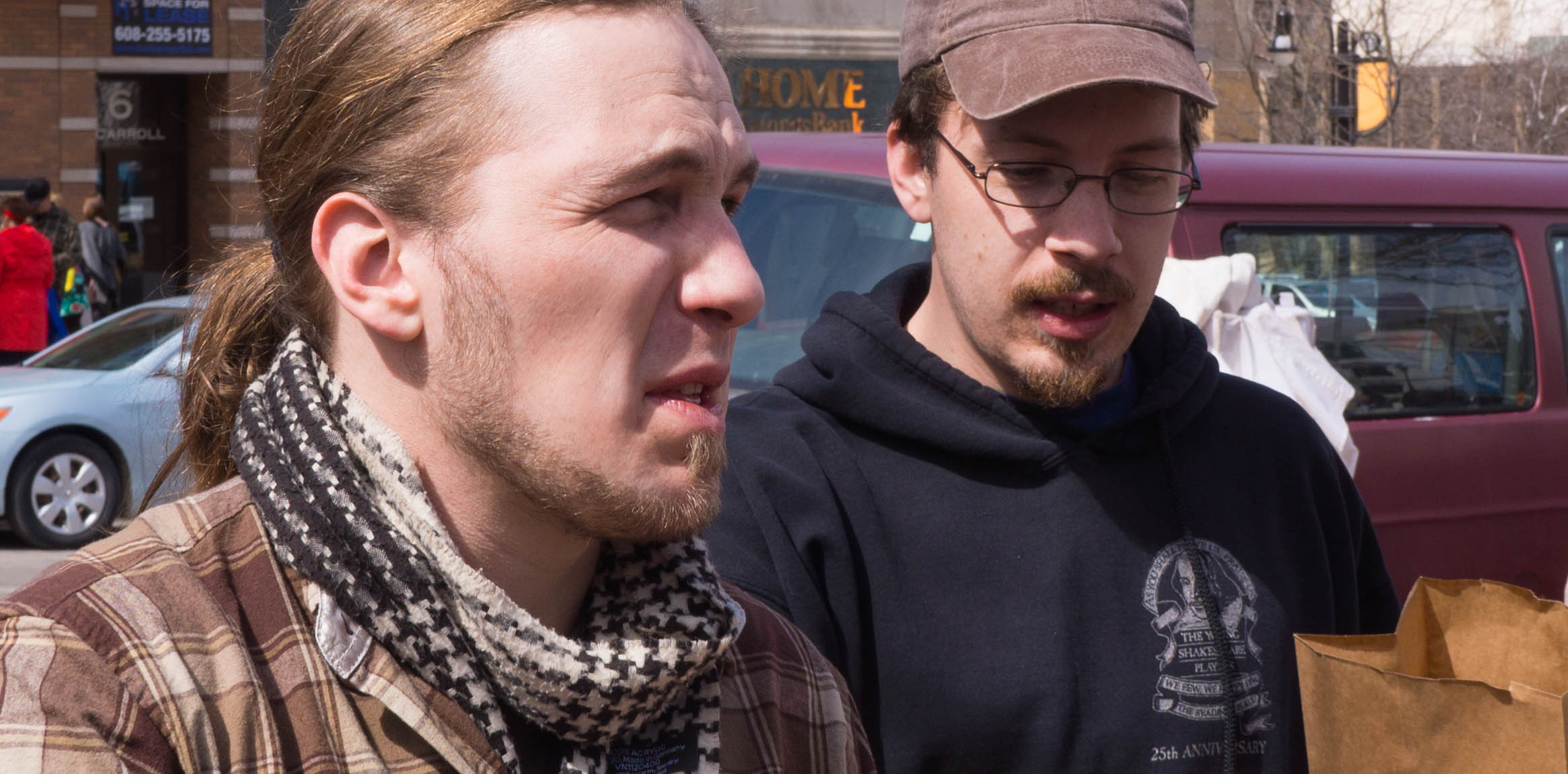
I tried to impress Madison’s potato vendors with my potato knowledge. I failed.
I learned this subterfuge early in life: laughing at my big brothers’ jokes and then stopping by the dictionary later to sort that word they used. Thankfully, there was no Urban Dictionary back then.
I squandered educational opportunities by pretending to know. Maybe my early undergrad years were perfectly set up to encourage the ignorant to remain so—and I jumped into that. It wasn’t until later in school that I went for broke and displayed my ignorance. That’s when I started learning.
One benefit of writing copy for a living is you get to ask the stupidest, most ridiculous questions. Questions to which everyone in the room obviously knows the answer. And actually that is when the fun begins, because the answers that pour forth are often strikingly dissimilar and uniformly telling, in that everyone has a different expression (and possibly a different idea) of this commonplace.
At some point stupid questions become a way of life: after you realize you’ll learn a whole lot more if you just admit you don’t know something. It turns out there’s really not that much to lose. Maybe you lose face with the boss. If so, your boss probably wasn’t that great. Maybe you gum up some well-greased process. If so, your question from the edge may actually open new ways forward.
The benefits of ignorance realized are immense:
- The dumb questions is a verbal mark in the sand. And on the other side of that mark you get to actually start learning.
- It is highly likely others have the same ignorance. You do everyone a favor by asking your question.
- Asking the dumb question often unearths brand new, productive ways of looking at something.
Please—for the sake of humanity—ask your stupid question today.
Do us all a favor.
###
Image credit: Kirk Livingston
Making It Up Daily: 1667 Words at a Time
Do You NaNoWriMo?
It’s funny that those stories we’ve lived in since childhood were written by someone. Made up, one word at a time.
Books. Movies. Plays.
All made up.
By someone.
Writing.
Game of Thrones. Lord of the Rings. The Great Gatsby. Even Burt Dow, Deep-Water Man. All made up. Maybe they carried pieces of older stories, but someone composed them. We know the names of the authors.
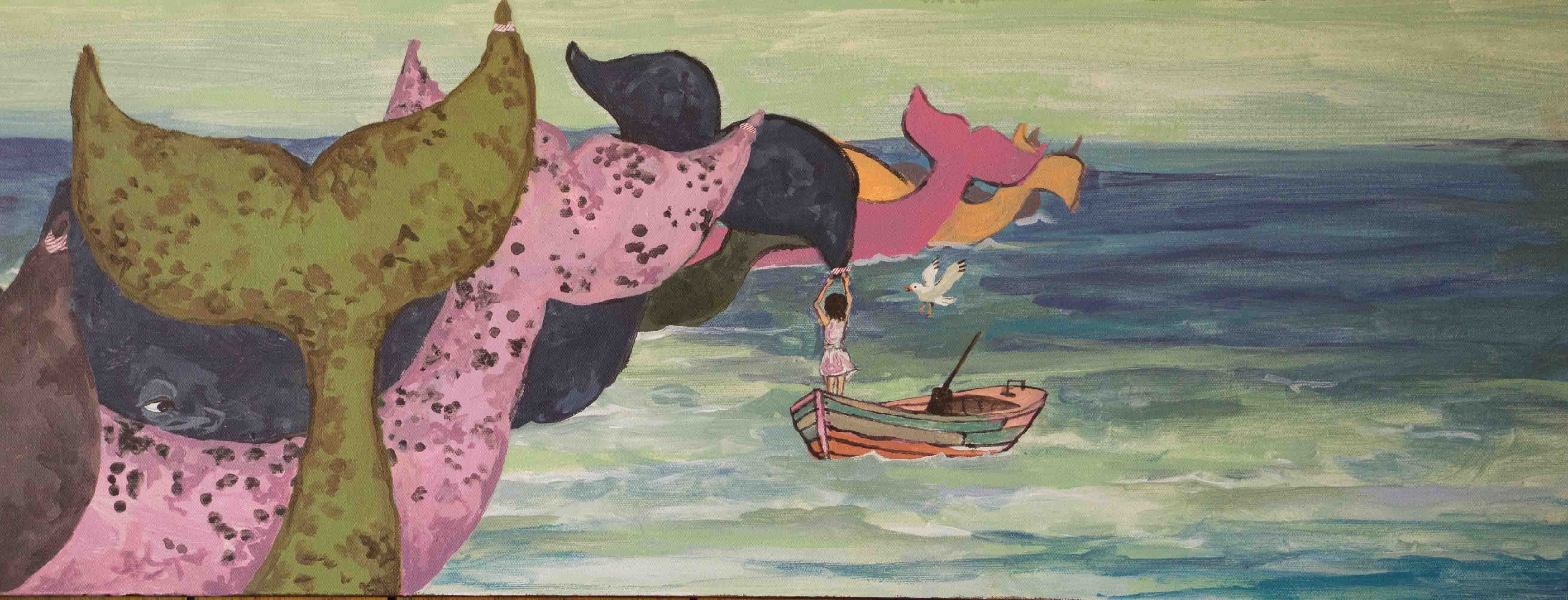
At some point in life I realized these very complete little worlds that seemed so alive were actually fiction. Funny that something made up could prove so real for so long. So concrete. But I had to pull back the curtain to realize this.
At some point—a bit later—I realized there was actually quite a lot made up: much of human interaction is made up (we call it “culture”). Oh sure, it presents as concrete reality, but behind the scenes people were literally making things up every day.
Business is a great example. Walk into a brick and mortar superstore and it seems like it’s been there forever. But we know they huge multi-million dollar inventories come and go. Same with banks. Same with restaurants—especially restaurants. Even the big institutions that are the pillars of our communities are making it up as they go. Sure, the rules of the game are there and seem to be unchanging as if handed down on stone tablets. But nothing is certain about business.
If you’ve ever been in a start-up company you’ll know that making it up as you go is expected. We need more folks willing to leap into the void of making it up. I believe making it up on paper translates to words which translates to action.
National Novel Writing Month is upon us again. And I’m joining in. It’s likely this blog will suffer inattention. But the challenge of creating a story from nothing (or more likely, from the disjointed and broken story-bits laying about in my mind and yours) is too great to resist.
National Novel Writing Month is a relatively painless way to try to produce a coherent story. Or, if not coherent, than at least something that has 50,000 words.
Where are you exercising your make-it-up muscle these days?
###
Image credit: Alli Livingston. Photo: Kirk Livingston
About the Node Not Taken
Steady There, Young Philosopher
My hardworking, entrepreneurial colleague surprised me in conversation the other day:
Sometimes I wonder what it would be like had I stayed in the corporate world—what would I be doing now?
My friend was in one of the periodic slumps that happen to anyone building a business of their own. Those slumps squeeze out long-suppressed questions. These are the questions that precipitate momentary crises of faith for those constructing wings as they plummet.

No. Really. Is there an actual “Afton State Park”?
Young philosophers like to ponder the “What ifs” of life:
- What if I had dated that person rather than this person?
- What if I had taken that job rather than this job?
- What if I had studied engineering rather than philosophy? (One certain answer: the world would have to cope with a very bad engineer.)
- What if had dived 12 inches to the left and missed that rock in the lake?
One problem with our casual “What ifs” is that they often assume a straight line from the point of decision. You go this way. You go that way. Two roads diverging in a yellow wood.
But what if our lives are composed of nodes that become roads? What if each decision is followed by another so that our paths are constantly changing in real-time?
Another problem with casual “What ifs” is they forget the tiny but forceful pinpricks of relationship and conversation and motivation that accompany every choice. Thousands of tiny insights and histories and dreams contribute to each action as well as each subsequent action.
Personally, I cannot help but wonder if the nodes that become roads all lead to the place/people we were meant to be in the first place. Wait—don’t call me a determinist yet. Stick with me: what I mean is that whether we stayed in the corporation or went on our own or dropped everything to join the circus, would we end up as the kind of people we were meant to be?
This is not a perfect thought: we build things into our lives, good and bad, by daily habit. We grow, or not, because of those habits and subsequent opportunities. Admittedly, the determinist take on choice has holes.
But I’m reminded of that inveterate letter writer who wrote his friends about walking in the “good works” begun in them.
Today I’m looking for nodes and roads.
And I hope to step in a good work along the way.
###
Image credit: Kirk Livingston
Bill Moyers: Serving “News” like the Butler Serves Tea on Downton Abbey
Do Not: Do Not Disturb the Master Class
All of us can stand a bit of disruption from time to time.
David Uberti wrote recently in the Columbia Journalism Review about PBS pulling ads from Harper’s Magazine as retribution for an article critical of PBS. PBS exists as a non-commercial, educational media channel. But the critical Harper’s article by Eugenia Williamson pointed out
And so, a fit of ad-pulling ensued. But it was this candid, PBS-critical quote from the patron saint of public broadcasting that caught my ear:

Tea is served at the Pittock Mansion
Wherever you land in your organization, there is some grand narrative at work that guides all involved. That grand narrative is often a good thing and useful. It is often laden with meaning that helps us do our jobs. But it is not a perfect narrative—never is—and parts call out to be challenged by practitioners.
After all, it is the disruptive conversations that lodge in our brain pans. Those conversations we cannot forget sometimes actually open our clam shell brains to something new. And that is the way of both innovation and truth-telling.
Many of us—especially the people-pleasers among us—are careful to assemble conversations that do not disturb the people around us. I am guilty of this. But truth-telling must necessarily veer from the party line.
If only because sometimes the party line veers from truth.
###
Image credit: Kirk Livingston
Young and Dumb Rocks!
The Case for Not Knowin’ Nothin’
Pity the expert: the Ph.D. who knows everything there is to know about a certain insect that preys on a certain crop. If she finds the right academic position—fantastic. But there are only three such positions in the U.S. and only one of those (tenured) people is close to death. So…a waiting game.

Feel sorry for the writer whose first novel got rave reviews or the artist who sold a massive installation on their first go-round. Expectations are steep for the next project and the pressure is on.
In conversation with a friend at work, I heard my younger self admit to a life-goal of wanting to, finally, know something. But knowing with certainty becomes harder with every book read and every conversation you have. In fact, the more you read any philosophy or wisdom literature, the more you get the sense of “knowing” as a shy and elusive pot of gold at the end of a rainbow.
That’s why it’s good to attempt the impossible while still young, before you realize it is, in fact, impossible. Quick—try that thing you want to do before someone sets you down and sets you straight about how ridiculous it is you are even considering it.
Another alternative is to cultivate a young and dumb attitude no matter what your age in dog years. Even the Ph.D. is a beginner at something. The beginner just wants to try it for themselves.
Let’s cultivate the joy of a small hand with a big fat crayon, exploring the world.
###
Image credit: Kirk Livingston
Mind-reading and the Perfectionist’s Dilemma
“Come here, you big, beautiful rough draft.”
You know what needs to be done.
You know how to do it.
But—given your schedule—you simply cannot attend the details. What you want is to jump to editing the rough draft—but who’s got time to create that rough draft?
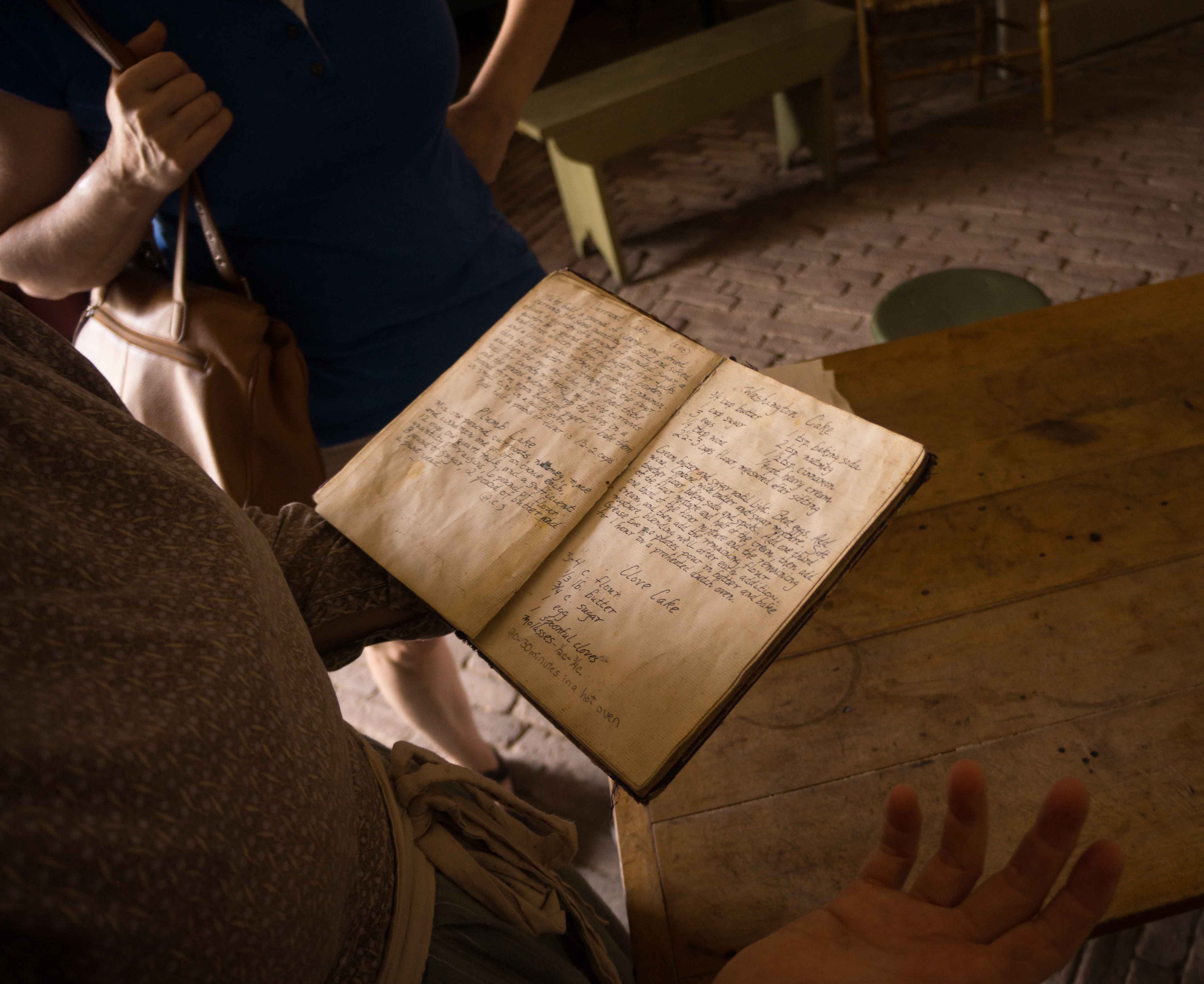
This is what I’m thinking….
We could be talking about drafting an email, an article or a chapter. We could be talking about a curriculum for a class or a seminar. We could be talking about writing a memo to employees or a letter to partners or a speech to stakeholders—anything that requires focused attention for a time so you can spin out and organize the details. We’re talking about anything you need to create from scratch to deliver to others. Any communication that solves a problem you’ve noticed.
Now is when you need an assistant who can move forward without hand-holding. Now is when you need someone who knows what you know without you telling them. Now is when you need a mind-reader.
But there are no mind-readers.
Are there no mind-readers?
I won’t say copywriters are mind-readers. I will say I find myself in situations every week where my client has provided 15-25% of the details but expects our project to organize 100% of the content in a coherent, compelling fashion.
Sometimes I wonder if our close friends, colleagues and collaborators serve as near-mind-readers. With them we feel free to spit out the raw bits of what we know. And as we say it, we realize what we need to do next. To tell someone what is on our mind is the first step to accomplishing a task. Those conversations are a kind of verbal rough draft.
Don’t be intimidated by the blank page. Embrace the notion of doing something mostly wrong and partly right, which is to say, embrace the rough draft.
It is much easier to change words on a page than it is to put words on a page.
###
Image credit: Kirk Livingston

 conversation is an engine