Archive for the ‘photography’ Category
When Walking To The Podium, Remember This.
Resolved: “You are gonna dig this.”
No one will argue that public speaking is petrifying. On this we all agree. Even seasoned performers routinely get the nerves before they walk on stage. In my limited experience, the one thought that calms nerves and spurs me forward is that something I’m about to say will help someone.
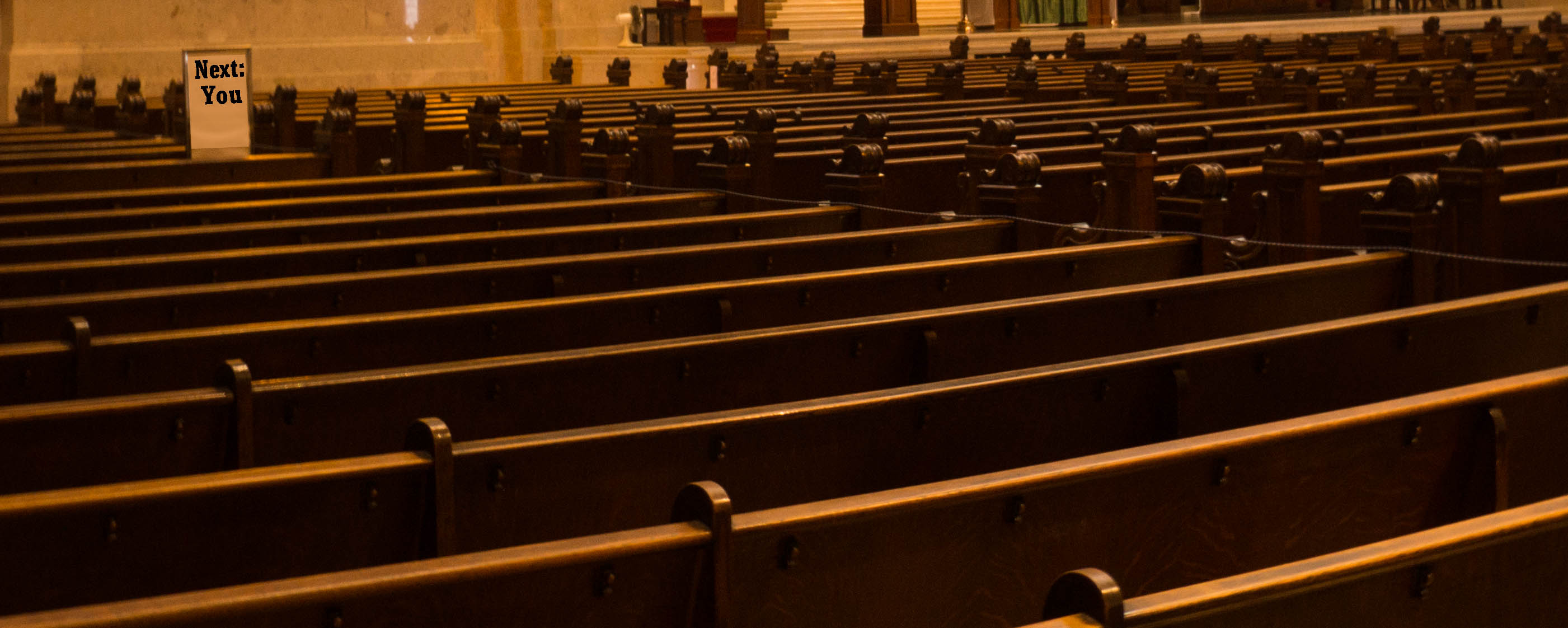
Next?
This occurred to me recently in working out the details for launching ListenTalk. Someone suggested a party and my first reaction was, “Ugh—I hate being the center of attention. No thanks.” But on reflection I found myself at a decision point: do I want to give my best effort toward helping this book succeed or will I follow natural impulses and just drop the published book off on Amazon’s front steps, ring the doorbell and run. Because if I do the latter, I am guaranteeing a narrow audience.
On further reflection, and perhaps with a bit of divine intervention, I realized the message of ListenTalk is much more about this hope I’m starting to entertain: that readers will begin to happily engage in and explore their own daily conversations with something of a treasure-hunter’s gusto. That’s the good thing I want readers to understand. That’s the thing people are gonna dig—once they get it.
So, for those about to engage in public speaking, or for those looking for motivation to move forward with some public task, ask yourself: How am I helping the person I’m about to engage?
It’s always good to refocus on the other person.
###
Image credit: Kirk Livingston
Mind-reading and the Perfectionist’s Dilemma
“Come here, you big, beautiful rough draft.”
You know what needs to be done.
You know how to do it.
But—given your schedule—you simply cannot attend the details. What you want is to jump to editing the rough draft—but who’s got time to create that rough draft?
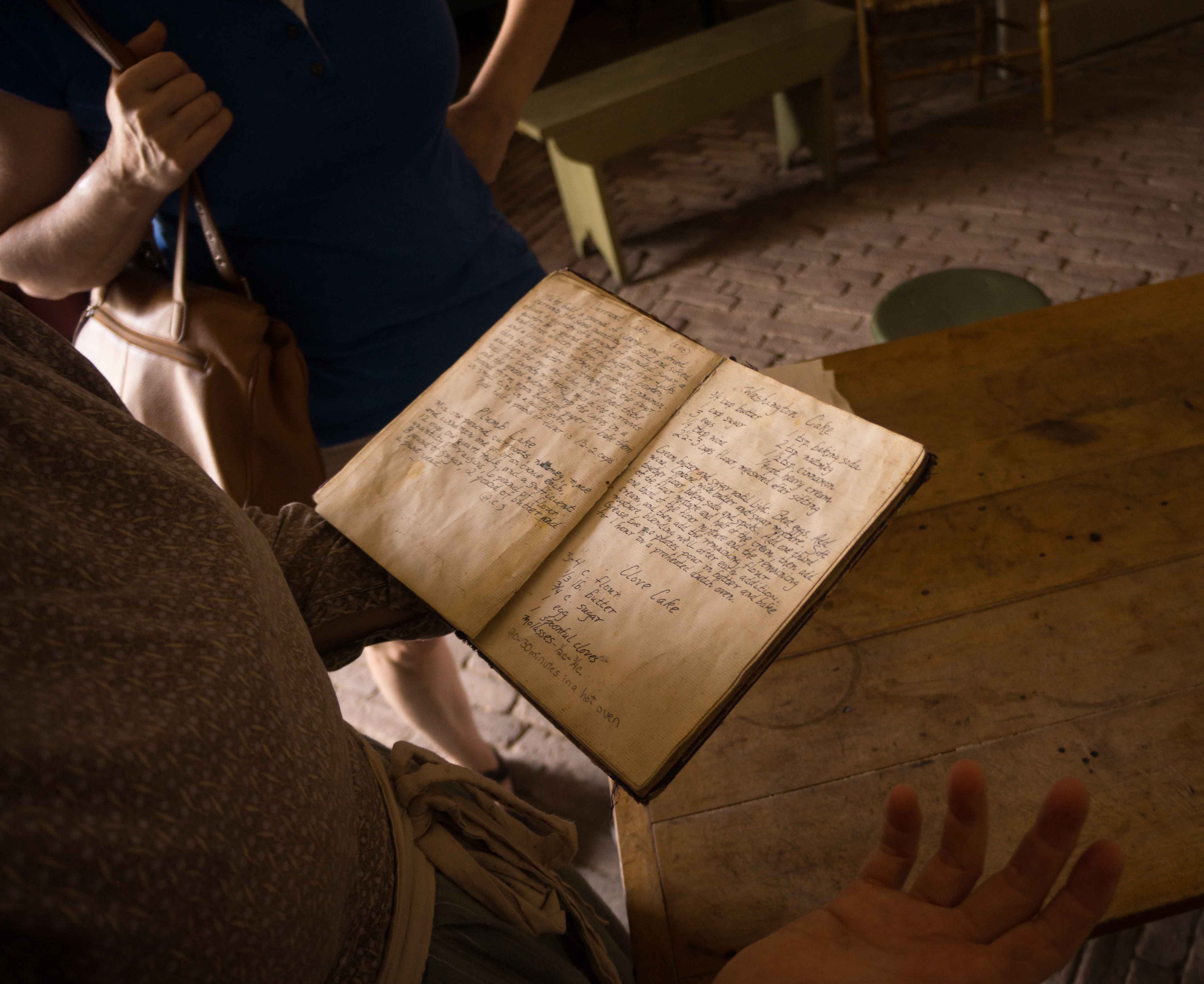
This is what I’m thinking….
We could be talking about drafting an email, an article or a chapter. We could be talking about a curriculum for a class or a seminar. We could be talking about writing a memo to employees or a letter to partners or a speech to stakeholders—anything that requires focused attention for a time so you can spin out and organize the details. We’re talking about anything you need to create from scratch to deliver to others. Any communication that solves a problem you’ve noticed.
Now is when you need an assistant who can move forward without hand-holding. Now is when you need someone who knows what you know without you telling them. Now is when you need a mind-reader.
But there are no mind-readers.
Are there no mind-readers?
I won’t say copywriters are mind-readers. I will say I find myself in situations every week where my client has provided 15-25% of the details but expects our project to organize 100% of the content in a coherent, compelling fashion.
Sometimes I wonder if our close friends, colleagues and collaborators serve as near-mind-readers. With them we feel free to spit out the raw bits of what we know. And as we say it, we realize what we need to do next. To tell someone what is on our mind is the first step to accomplishing a task. Those conversations are a kind of verbal rough draft.
Don’t be intimidated by the blank page. Embrace the notion of doing something mostly wrong and partly right, which is to say, embrace the rough draft.
It is much easier to change words on a page than it is to put words on a page.
###
Image credit: Kirk Livingston
Could Your Organization Grow Your Spirit?
LEED-like certification for human-spirit-sustainable workplaces
LEED certification is a rating system that recognizes a building’s sustainability. LEED or Leadership in Energy and Environmental Design, rates a new building project using five different categories:
- Site location
- Water conservation
- Energy efficiency
- Materials
- Indoor air quality
Businesses and organizations with the highest ratings display them as a sort of badge of honor for the public to see.
What if there were some system to measure and rate the culture within a company or organization? Since we worry about bullying at school and we’re starting to recognize bullies in the office and toxic corporate cultures, does it make sense to start thinking about organizations that sustain people rather than beat them?

For instance, what if any organization was judged by these four categories:
- Bias toward collaboration
- Employee engagement indicators
- Mix of top-down messaging with true conversation
- Ratio of CEO-pay to rank-and-file pay
Seem ridiculous?
It would be difficult to measure many of these, especially since most of the categories seem so subjective. And yet, would it be impossible to measure? Would it be worthwhile to measure? Are we already moving in that direction?
In Minneapolis/St. Paul—like any set of cities—insider talk has long identified those cut-throat corporate and institutional cultures that routinely toss human capital to the side. Insider talk also identifies those bosses, managers and C-suite people without empathy and/or ethical moorings. New employees are generally forewarned when they sign up.
Of course, business is still about earning a living for the people involved even as the organization serves some human need. So don’t think I’m championing some communistic collective. Profits will and must be made to help society move forward.
But as we move toward fuller employment, workers will become more choosy about where they spend their days. And those cultures that have a less sustainable ethos will not be the winners.
I’m not convinced I’ve identified the right categories to measure. What categories would you include?
###
Image credit: Kirk Livingston
Danny Santos II: Shooting Strangers
People in Place in Space
Check out the work of Danny Santos II, a street photographer in Singapore. He creates composite images of people moving through locations in and around Singapore.

In each place, I set up my camera & tripod right in the middle of the street, then stand a few feet away with my remote trigger, clicking away for about 30 minutes to an hour.
Composites are digital images made of multiple photographs taken from the same spot. These photographs are then combined using photoshop, and with a little extra care, these shots can stitched together seamlessly to look like one single photograph.


It’s all real. It’s just not all real at the same time.
###
Wendell Barry: “A Little Nagging of Dread”
Your first bond with your wilderness
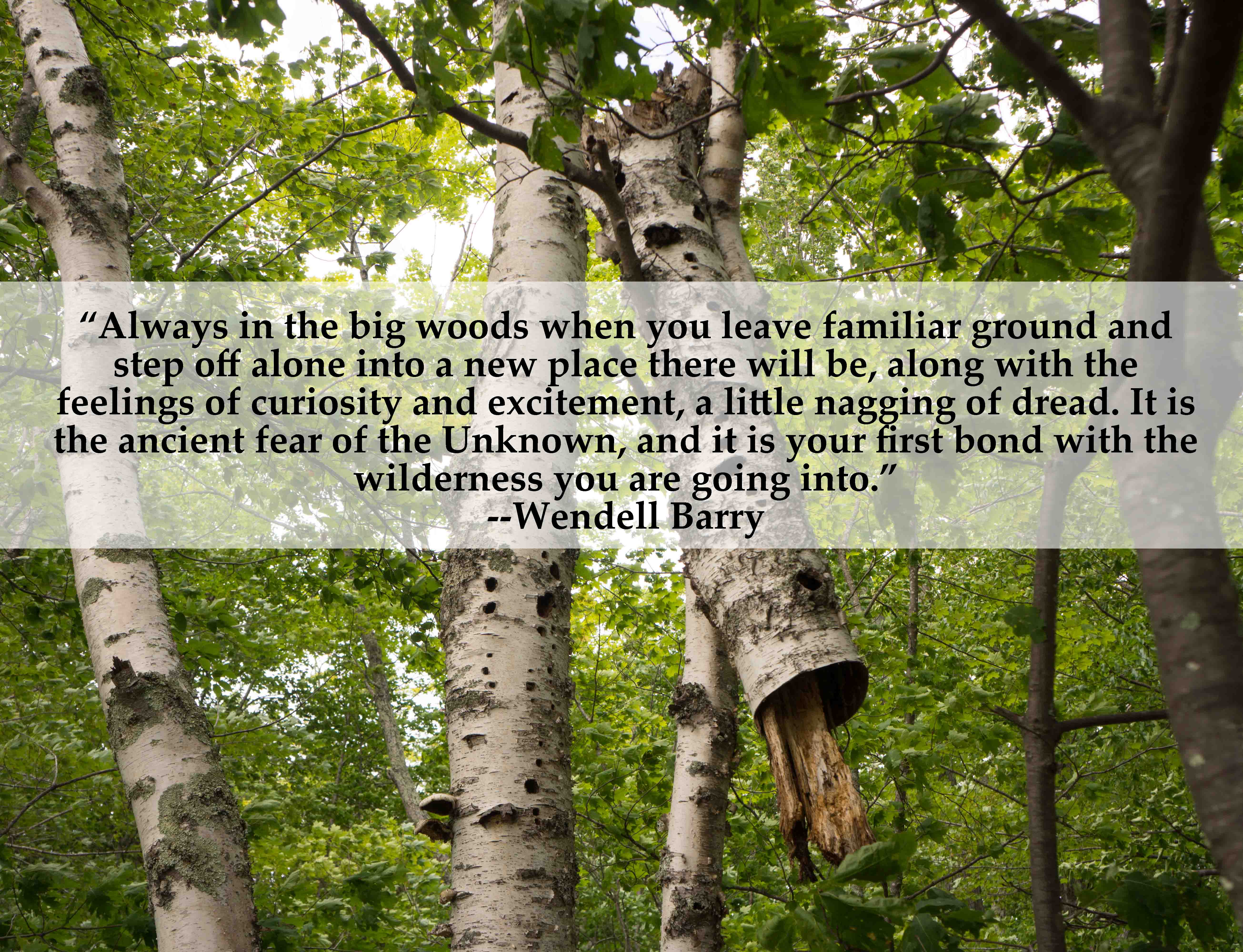
Always in the big woods when you leave familiar ground and step off alone into a new place there will be, along with the feelings of curiosity and excitement, a little nagging of dread. It is the ancient fear of the Unknown, and it is your first bond with the wilderness you are going into.
###
Image credit: Kirk Livingston
Quote via The Way of Improvement Leads Home/Relevant Magazine
Where does loyalty come from?
Gift Economy and Loyalty Programs
This is a tale about where loyalty comes from. It involves making a garbage man very sad.
The second home we purchased was left with all sorts of furniture by the previous owners. We called them and put the furniture in the yard. But they never returned and their furniture sat in our new yard for too long. Rain and sun and more rain—these people never came.

But Ace Solid Waste came. And they took it all for free. And they won our loyalty. Is this a commercial for Ace Solid Waste? Maybe, although I am not employed or directed or in any communication with Ace Solid Waste. In fact, I pay them. On time (mostly).
Their gift of removal (you might say Ace blessed us with the absence of a soggy couch and other wet furniture), is easily and quickly remembered by Mrs. Kirkistan and I, still, to this day.
In The Gift (NY: Vintage Books, 1983), Lewis Hyde described how a gift economy works: people give gifts to each other as a sort of payment. But not in the transactional way most of us expect today. One gift was not given in exchange for another gift. No, Hyde described how gifts move on. Or, you might say, moved forward. The gift you gave me, I gave to someone else, and so on in an endless cycle of giving. In the gift economies Hyde cited, trade was greased by gifts.
Of course, gifts carry with them an obligation: a sort of unwritten sense that I must pay this back, or “I owe you one.” Gifts also carry a sense of relationship. We give gifts to friends or relatives. It is a way of saying, “Hey buddy!” or “I’m thinking about you.”
One long-time strategy for business is to give gifts to woo loyalty. I buy plumbing supplies at Beisswengers because they are patient with my simplistic plumbing questions. They provide answers along with the new drain. The answers are even more valuable than the drain. All sorts of free apps become so indispensable we finally buy them. We frequent the vendor who gives away their knowledge.
A competing garbage gentleman stopped at our door with an offer of savings. When I said I wasn’t interested, he probed:
Why?
I told him my story of the furniture that wouldn’t go away and how Ace helped us out.
Will you be in debt to Ace for the rest of your life?
And here is the surprise: as I listened to my own words, I wondered at the strength of the feeling and the depth of loyalty for this good deed done to us—and the longevity. Maybe our retelling of our furniture story kept giving fresh reasons to continue.
Maybe.
And so the man of seeming excellent garbage-manship walked away sadly.
So that’s one way to build loyalty: help someone with a need. And as you help, try not to see the gift as a transaction.
###
Image credit: Kirk Livingston

Simplify
Island Life: Attending to Important Work

On Madeline Island
More on the notion of simplify.
###
Image Credit: Kirk Livingston
…The…Slow…Talker…. So Boring.
What can you learn from the slow guy?
Q: My colleague is the slowest talker in the world.
Each sentence he forms takes forever and we can all see where he’s going long before he gets there. I’m tempted to take up knitting whenever he makes a point in a meeting. We all finish his sentences.
Is that so wrong?

Not every conversation is electric quick.
A: Some people want to be sure of what they are saying. For some people the internal editor stands with a bullwhip as words cower by the tongue. It could also be your colleague is intimidated by your work team. Do you or your team tend to jump in to argue or quickly quibble about word choice?
Consider counting to ten (or 50) when your colleague speaks.
And consider not finishing his sentences.
Being heard is a basic courtesy we offer each other. When we slow our listening to the pace of our conversation partner, we extend a bit of tangible grace and we demonstrate this person has value—no matter how boring they are. Maybe waiting in expectant silence will begin to change our slow-talking colleague. Maybe he will begin to feel more confident and less like he’ll be mugged for his word choices.
But even more importantly, waiting and expectantly listening trains us to listen for more than words, with more than our ears, to more of what might be going on. We’re used to instant, but not all of what we have for each other lends itself to instant. People need to process words and experiences and thoughts. If we rush them to the end, we likely speak for them, with our words, not theirs.
If your slow-talking colleague drains you with his long pauses and predictable boring comments, consider limiting time with him, just to save you both hassle. But when with him, give him time.
You may be surprised.
###
Image credit: Kirk Livingston
But Can You Outsource Imagination?
Consider cultivating time to consider
One persistent problem in today’s workplace: no time to think.

Frank Lloyd Wright re-imagined this windmill in Spring Green, Wisconsin.
Open floor plans contribute to constant interruptions, as do the barrage of meetings we file into and out of most days. Projects have fast timelines, which do not lend themselves to fully consider ramifications—so we default to action.
And as Curtis White might say: our deep involvement in (what seem to be) sacred institutional processes precludes us from using our imagination. The way we get things done—all those guidelines and guardrails—also serve as blinders, shuttling us down the same paths again and again. We stop seeing other ways to do things. Maybe we stop seeing that there are other things worthy of our attention.
As freelance copywriter, I see this all the time: friends and colleagues embroiled in their system so deeply they forget to imagine the larger issues having just as much impact. One of the great privileges of my work is to come alongside friends and colleagues to think through an issue from a different perspective. Of course, no one hires me to think (thought that sounds like the perfect job). They hire me to write stuff. But in the process of systematically going through their marketing campaign or explaining how a product works or working through the medical literature, new perspectives pop up. Things my client has not yet considered. Small tweaks to a product or presentation that make a huge difference in the outcome.
Though your workday may seem too tight to think through an opportunity or problem, isn’t it in your best interest to carve out the time to do just that? You can off-load many project tasks, but it takes fresh imagination—possibly sparked by an hour away from your desk—to see things differently. A fresh take can make all the difference in the world.
###
Image credit: Kirk Livingston

 conversation is an engine