Archive for the ‘Rhetoric’ Category
The Moving Horizon of Engagement: The New Yorker’s Nathan Heller on TED
How to Boil Down Levinas?

help find a way
A recent issue of The New Yorker includes an excellent article on TED talks. On his way to explaining why the talks are so popular, Nathan Heller stumbles onto the differences between our rituals of learning in college and how college is set up to support those rituals, and compares that with the kind of learning people need outside of college—the kind that keeps expanding rather than narrowing. Along the way he mentions in an offhand way how Levinas does not lend himself to a quick recap. One must do much preliminary work to begin to understand Levinas. Philosophy, especially phenomenology and theology are useful backgrounds to begin to understand Levinas. But only as a beginning.
The author of Conversation is an Engine is well familiar with this. As he tries to explain Levinas from time to time, blank stares and hasty retreats to other subjects are typical reactions. The French philosopher and apologist for The Other is famously obscure. And fascinating. But obscure.
Heller’s offhand remark reminds me that the bigger challenges ahead of us as communicators have to do with how we let people in on the details that engage us. Over at Big Picture Leadership there was a discussion recently about what it means to witness. That discussion reminded me of an ongoing conversation a few of us have had about what makes something remarkable, as in, making me remark out loud to another person because it was that important to me. In both cases there has to be an intensely personal connection for it to bubble up through our conscious mind and cross our lips.
If we are intent on rhetoric that draws others in (and I believe it is a most excellent thing to be a passionate booster for what we love and understand), than we are constantly providing low-hanging fruit for newcomers to grab and taste so they too will become enamored by the taste and want more. This is the horizon of engagement. That horizon is growing shorter and getting closer with every Google Search.
More sophisticated discussions will always have their place among practitioners and experts. But we’re quickly moving to the point where we each need to have a ready answer about our work, or firm, and what we believe.
###
Image Credit: Martin Morazzo via thisisnthappiness
Tattoo U: Reading Those Who Take Required Courses
 Painted along her spine and
Shouted from the pitch of her neck:
“What’s the least I can do?”
Eyes closed her gentle snoring:
“This is boring.”
Doodled maze focusing attention down
And in and away from the other:
“Why bother?”
Just another required class
My parents are funding
Or deepening my debt.
Whatever.
This posture a tattoo
A rhetoric of being
A one person drama
An act that snaps to real
Not easily shrugged off
After the definition-jail of school sets sail
Where topics contain in rigid compartments
While practices secretly wash from stem to stern
Habits inked
Minute by hour by week
Quarter by semester
Cleansed only after years of toil
Digging from the depths of whatever
Where no one pays your fee
Or your debt.
###
Image credit: via Falcons on the Floor
Verbatim: “Pursue truth behind our differences,” Wayne C. Booth
Who will you argue with today?
 The late Wayne C. Booth was Professor of Rhetoric at the University of Chicago. Among the many books he wrote was The Rhetoric of Rhetoric, which I reviewed here. In that book he talked about three kinds of conversations: win-rhetoric where the point of the conversation is to bash your conversation partner into submission. Bargain-rhetoric is where we dialogue toward the goal of finally getting to common ground that benefits both of us. In the business world we called this “win-win” because everybody benefits, though deep concessions were often made. But Booth favored this final type: listening-rhetoric, which had the goal of “pursuing the truth behind our differences” by listening with the intent of understanding what the other is saying. There are many benefits to that way of holding a conversation.
Listening-rhetoric sounds pretty obvious as the way forward, right? I agree. Yet when I check my intent in the middle of a conversation (hard to do), I find I am more often trying to listen strategically to counter whatever obstacle my conversation partner places between us. Or I am not even listening. Instead I’m thinking some far away thought (but maybe that’s just me—I’ve always had a problem staying anchored in the present).
I propose a fourth kind of conversation: reconciliation-rhetoric. I see it as Listening-Rhetoric Plus. Pursuing the truth behind our differences can often lead to a very fertile place—a place as uncomfortable as it is fecund. But leaving the conversation as just touching the two of us does not reveal the whole truth. In reconciliation-rhetoric, me and my conversation partner invite God into our discussion. This isn’t churchy stuff. It isn’t religious stuff. It is a human connection that recognizes the bigger stuff going on around us. It is actively asking and talking about how (if?) God’s plans enter our discussion. Maybe it looks like a silent prayer. Maybe it looks like an out-loud prayer. Maybe it is the recognition that larger plans may be in motion, subsuming our own. I’m taking my cue from a pivotal ancient text written by Paul the apostle in his second letter to the church in Corinth (Chapter 5).
Just who is involved in our discussion, anyway?
###
Photo credit: Niklaus Ruegg
Riot, Restart and Scrubbed Minutes: The Bradlee Dean Prayer
But really…what happens when someone prays?

Say more.
Last Friday Bradlee Dean gave the opening prayer at the Minnesota House. His words caused such uproar that Speaker Zeller apologized and had the prayer scrubbed from the historical records of the day. The session was restarted and Rev. Grady St. Dennis, the house chaplain gave the new prayer.
Was it a prayer Mr. Dean offered or was it a speech intended as a burr under the saddle of the gathered legislators? I don’t know all that Mr. Dean stands for, but his rhetorical mix seems misdirected. Yesterday I wrote about mixing an ancient form with something of today. In Mr. Dean’s prayer, the result from mixing an ancient form and using it as a rhetorical bully pulpit is repellent. The communication seems more speech than prayer, and seems to have been interpreted that way by the humans in attendance. And yet it is possible Mr. Dean was sincere in his conversation with God.
The notion of a public prayer is actually kind of complicated, and is perhaps a mix of forms from the beginning. One person speaks aloud. The person implores God’s attention and action. Perhaps the person seeks wisdom and mercy, or help with any of the myriad needs finite beings have. Listeners listen and agree. Or disagree. Rather than praying along and seeking the same things, the potential prayers in the House rose in disagreement shouted the guy down (figuratively, I think).
I agree with Rev. Dennis Johnson writing about the work of guest chaplains in saying “We have a special burden to include all people in our prayers….” But I’m not so sure about the last part of the quote in Lori Sturdevant’s op-ed: “…and to make the prayers nonsectarian.” Because real prayer must come from somewhere, some belief in God. It is true that belief in God need not highlight a specific brand of religion, but any prayer must be grounded in belief that God exists and hears—that alone will be offensive to some. Otherwise the prayer is just good wishes and positive vibes—not bad stuff, just not, well, real. And not that useful in seeking help from the Eternal.
King Solomon got the form right (1 Kings 8.22ff) and set a lasting example and practice. Of course, Solomon’s prayer was spoken among a set of like-minded people. So the context helps the prayer stay as a prayer: spoken to God from a bunch of people going a similar direction.
If we’re going to have prayer in the Minnesota House, there needs to be some elasticity in allowing people to pray for real. And people praying need to examine their intentions before uttering word one. But let’s continue the notion of conversing publicly with the Creator.
###
Image Credit: Buramai
Why do you call me good?
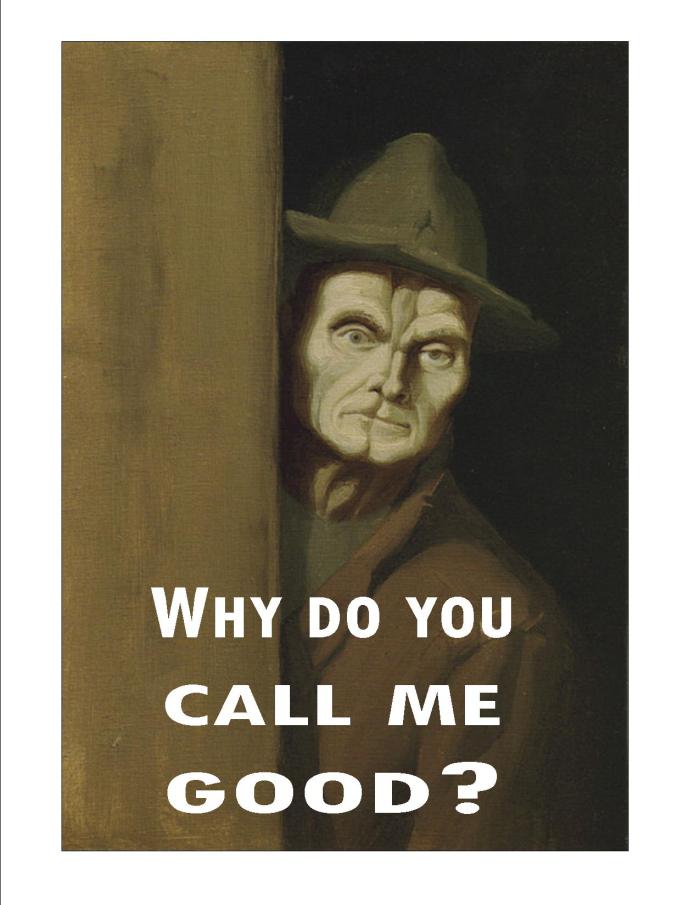 Full of capacity. Charged with purpose.
Ancient texts lead to surprising places. Jesus’ question to the rich young ruler in Mark 10.18 might have been rhetorical—not wanting to play into the man’s argument too quickly. Or it might have been a hint about the complexity of the character before the young man. It was certainly an invitation to think twice about the obvious stuff in plain view. Is cash a sign of blessing? Should I listen more closely to the important person or the stranger? Is death an end or a beginning?
###
When do Technical Details Need a Public Face?
 A sharp friend and colleague asked my opinion on what blogging has to do with technical writing. Both of us teach professional writing classes to upper-level college English majors. Her technical writing students recently opted to deliver assignments as single files rather than modifying them to fit a blog format. I see why: blogging requires a further step of engagement with a wider set of audiences. Blogging has a public face that is wide of the mark for writers who usually compose directly for audiences with specific technical motivations.
Blogging Is The Nonchalant Public Face
In some ways, blogging is a perfect venue for technical communication: the communicator can be as specific as she desires without worrying about capturing audience attention because the audience will find the information. Or not. While blogging must never be boring, the right audience will find details and specifics as scintillating as any steamy romance novel. But I applaud the instincts of my friend’s students. In true college student fashion, why do more work when less will suffice?
Blogging is the more spontaneous and casual cousin of technical writing that allows for quick and specific responses to real questions. Blogging allows more free-form communication about timely issues and provides room, resources and the expectation of responses from an engaged audience—all of which scares lawyers and regulators in a regulated industry. Blogging also makes information and specific insights searchable by a wide variety of people. In a college writing assignment, that public face is not needed and simply represents another process for the writer.
But there may be good reason for writing teachers to find ways to make blogging a more attractive part of the technical writing assignment.
Detail-Delivery Is Changing
For a long time the forms of technical communication have been stable: manuals, instruction sheets, assembly instructions, monographs and the like. We wrote these forms for the reading pleasure of the poor soul faced with a bag of parts or the new customer opening a new piece of software. But today audiences are using technical details in all sorts of new settings. Plus: my technical clients want very much to join the social media frenzy. They just don’t see how they can, given the narrow technical audience they cater to. What they don’t notice is that the very technical resources in their company that have focused on the traditional forms of communication could actually be repurposed for delivery of technical information outside the usual forms. This information could be loaded into a blog-type form that has the advantage of being searchable. The point: let customers find you.
Why go to this extra effort? Simple: no one likes being sold. Finding new forms for communicating technical detail may well be the best marketing investment your company can make. That’s why I think academics and industry, English professors, communication managers and marketers all need to open fresh ways for technical communicators to speak to wider audiences. The future I see has technical and promotional walking hand in hand to satisfy the human need for specificity.
###
I’m Writing a Book called “ListenTalk”
I’m writing a book about talking and listening. I’ve become crazy about what happens in our best conversations: we come alive. We learn something about another person and in the spontaneous moment of creation as we frame up words to describe our own situation, we often suddenly learn something brand new about ourselves. Something we didn’t know before we started talking. I’ve begun to think that when we are in conversation, we are more truly ourselves. And the best conversations have a way of making us very present to each other.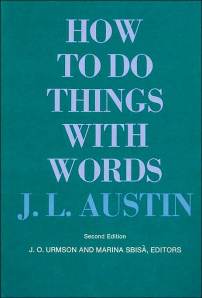
I call this book “ListenTalk: You’re Boring. Let’s Change That.” I think we were created to be in constant, deep, creative, spontaneous conversation. Not just with each other, but with God. That’s why parts of the book develop a theology of communication, starting with God’s act of creation, where His speech-act created dirt and air and giraffes and coffee beans and people, among other things. So you can see that with my book I hope to bring together something of JL Austin’s work on communication with a commitment to faith. Maybe I’m trying to do something impossible. I’m not sure. In a few days I’m scheduled to talk with a philosopher and speech-act theory expert at the University of Minnesota. I’m interested in his response to my notion of combining these things.
Two more pieces of this book project capture my attention in a big way.

Derrida and Welcoming the Other
One has to do with Derrida’s notion of welcoming the other. I recently finished James K.A. Smith’s “Jacques Derrida Live Theory” (Amazing: the book retails for $120! No wonder I cannot afford most of what I read) and was pleased to see a philosopher working from a faith perspective dealing with Derrida’s thoughts. I was impressed to see overlap between Derrida’s notion of welcoming the other into conversation and the God of the Bible’s commitment to welcoming the other. The Bible talks about reconciliation, and that definitely includes welcoming the other. What reconciliation does not mean (and here is where Derrida is particularly helpful in helping throw off some of my Christian cultural baggage) is making the other like me. We’re all tempted to make those around us like ourselves. But that effort misses the point of the kind of conversations that will sustain us.
Is Prayer a Model for Conversation?
Pulling more from theology than communication theory or philosophy on this last point, one of my chapters looks at prayer as the Bible talks about it and posits that we were meant to communicate with each other along these lines. Nothing really mysterious or unorthodox, I just wonder if the way we communicate with God (listening followed by moments of intense listening, and then very frank speech) is meant as a model for how we communicate with each other. Maybe listening is to take more of our effort than talking, which is a lesson advanced people of prayer seem to know.
Social Media is a Way Forward
This book ends with the notion that people of faith are currently presented with a rich opportunity to create and be in conversation. People of faith would do well to place ideas out in the public common areas, since there are far fewer gatekeepers, and see how people respond. This is part of the class I teach at Northwestern College called “Building Community using Social Media.”
What do you think? Would you read a book like this?
###
Honest Defense Strategy: “My client isn’t just arrogant. He’s ignorant!”
You’ve got to admire a defense strategy that highlights that Blagojevich “talked big but was none too bright.”
Of all the things Blagojevich says, his lawyer is the easiest to believe–at least on this point.
Maxed Out: Good Scared
Within ten minutes of starting Maxed Out, I began thinking of cutting up my credit cards. The documentary sets out to expose the predatory practices of credit card companies. Like you might guess, the film is full of the pathos of people in over their heads. It’s gut level film that left me eager to do anything to avoid contributing to any credit card company’s bottom line.
Eye-opening moments:
- The film names the big national banks we recognize and trust that actually front the high-interest storefront cash advance businesses that prey on the poor—and make lots of money doing it
- Efforts to curb predatory lending by enacting national laws were thwarted again and again by the banks and their lobbyists
- George W. Bush encouraging the nation to go out and spend. I still remember my disgust when he was saying that, but capture in film brings it all home again
So—solid fun for a documentary and well worth watching. But please watch it with your brain engaged: watch for the rhetorical tricks that lead directly to your visceral reaction. The film presents one side well, and matches up faces and sad stories with the purpose of exposure. I would have liked to hear the other side. Not because I love credit card companies and bankers, but because there are occasional legitimate purposes for credit. I would also like to hear something about personal responsibility.
The film succeeded in scaring me—yet again—about easy credit. Yikes!
###

 conversation is an engine