Archive for the ‘Theology of communication’ Category
What does a “social” church look like?
What Does a Social Anything Look Like?

hey-let's unlock our solipsism
We talk a lot about “social” but often marketers and corporate communicators practice the same old monologue and one-way messaging characteristic of the last century—they just shrink and divide their messages into packets of 140 characters and broadcast them through the channels people happen to be listening to at the moment.
For most of us “social” means only broadcasting through relatively new channels. We mostly don’t get the listening part of dialogue. This deafness comes from a deep place: this human tendency to see ourselves and our thoughts—our messages—as the axis for all that happens in the world. How could it be otherwise, given that we experience every part of life through our senses: the world comes to us as images, sounds, tastes, feeling and odors?
Certainly that is the case with profit-seeking entities like corporations. We monologue because we want people to buy our stuff. Same with churches: leaders broadcast what they want followers to hear and act on. Same with any organization.
3 Lessons and a Revolution
I’ve just finished my third run at teaching Social Media Marketing at Northwestern College and yesterday was my favorite day: when the students present what they learned from their social media excursions and community building activities. They learned:
- That the most tautly-orchestrated rhetorical strategy falls apart pretty quickly in the face of the opinions and interests of their audience. Students become completely captivated by hearing others respond to their words and ideas. These responses are especially enticing after years of writing papers only for the professor’s eyes.
- Try-Fail-Adapt was a motto we took from our texts and nearly universally adopted. This is the way forward with building communities using social media.
- That vague “interesting” titles and headlines don’t pull readers nearly as well as solid simple titles and headlines. And that putting a number in a headline produces a bit of magic. Something women’s magazines have practiced for decades.
One notion that threaded its way through the presentations was this subversive, revolutionary aspect of working with social media. When you look beyond today’s tools as just more broadcast channels and see that people are given a voice, the world starts to tilt differently. People with a voice. A voice that agrees with leaders. Or not. Voices that speak back to power. We’ve already seen those voices collecting around the Arab Spring, Putin’s Russia and our own Occupy movements. What will that look like as people slip into ownership of the church? Because it is sure to happen there as well. Will leaders learn to lead collaboratively and by pulling people toward them? Or will leaders rely on pulpits and authority structures for their power? And how long will that tactic last?
###
Image credit: Neatorama
I’m Writing a Book called “ListenTalk”
I’m writing a book about talking and listening. I’ve become crazy about what happens in our best conversations: we come alive. We learn something about another person and in the spontaneous moment of creation as we frame up words to describe our own situation, we often suddenly learn something brand new about ourselves. Something we didn’t know before we started talking. I’ve begun to think that when we are in conversation, we are more truly ourselves. And the best conversations have a way of making us very present to each other.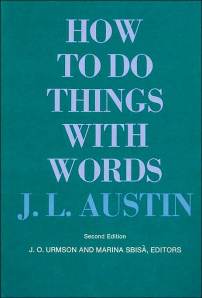
I call this book “ListenTalk: You’re Boring. Let’s Change That.” I think we were created to be in constant, deep, creative, spontaneous conversation. Not just with each other, but with God. That’s why parts of the book develop a theology of communication, starting with God’s act of creation, where His speech-act created dirt and air and giraffes and coffee beans and people, among other things. So you can see that with my book I hope to bring together something of JL Austin’s work on communication with a commitment to faith. Maybe I’m trying to do something impossible. I’m not sure. In a few days I’m scheduled to talk with a philosopher and speech-act theory expert at the University of Minnesota. I’m interested in his response to my notion of combining these things.
Two more pieces of this book project capture my attention in a big way.

Derrida and Welcoming the Other
One has to do with Derrida’s notion of welcoming the other. I recently finished James K.A. Smith’s “Jacques Derrida Live Theory” (Amazing: the book retails for $120! No wonder I cannot afford most of what I read) and was pleased to see a philosopher working from a faith perspective dealing with Derrida’s thoughts. I was impressed to see overlap between Derrida’s notion of welcoming the other into conversation and the God of the Bible’s commitment to welcoming the other. The Bible talks about reconciliation, and that definitely includes welcoming the other. What reconciliation does not mean (and here is where Derrida is particularly helpful in helping throw off some of my Christian cultural baggage) is making the other like me. We’re all tempted to make those around us like ourselves. But that effort misses the point of the kind of conversations that will sustain us.
Is Prayer a Model for Conversation?
Pulling more from theology than communication theory or philosophy on this last point, one of my chapters looks at prayer as the Bible talks about it and posits that we were meant to communicate with each other along these lines. Nothing really mysterious or unorthodox, I just wonder if the way we communicate with God (listening followed by moments of intense listening, and then very frank speech) is meant as a model for how we communicate with each other. Maybe listening is to take more of our effort than talking, which is a lesson advanced people of prayer seem to know.
Social Media is a Way Forward
This book ends with the notion that people of faith are currently presented with a rich opportunity to create and be in conversation. People of faith would do well to place ideas out in the public common areas, since there are far fewer gatekeepers, and see how people respond. This is part of the class I teach at Northwestern College called “Building Community using Social Media.”
What do you think? Would you read a book like this?
###
Sight isolates. Sound incorporates.

What do we lose when we don't hear?
We talk endlessly about community but find the doing thereof problematic. It’s not just because we like the idea of people better than actual people, it’s that context sometimes stands in our way. Reading Walter Ong’s Orality and Literacy: The Technologizing of the Word (NY: Routledge, 1993), I’ve come to wonder if technology divides us. Not any highfalutin technology like iPhones or mobile apps or Twitter or any of the current batch of ones and zeros in our pockets. I’m talking about a very basic technology that we all take for granted and is mostly invisible: writing and, in particular, reading.
When I was a kid, before I spent so much time reading, I was fascinated by my parents’ and grandparents’ conversations. “Fascinated” is too strong: there were moments of fascination, especially when they told some story of their life growing up. Or when they described some mistake they made—especially if it was funny. I had to listen carefully for those stories because mostly their talk was boring, about money or work or gardening or real estate or…well, you’ve listened to these conversations. The interesting stuff poked out every once in a while and that’s what kept me hanging around. It was entertaining to hear the stories. And they were stories I would not know of if I did not hang around.
“Sight isolates. Sound incorporates.” That’s Ong’s concise statement about what happens as we attend to our different senses (71). I think he’s right. Reading, for me, is mostly an individual thing. It’s rather private. I read all the time, and when I read, I am drawn into myself. I actually begin to resent when someone talks to me when I am reading because—limited person that I am—I cannot continue reading while they address me. And yet often I would rather keep reading then enter into conversation.
This is not a judgment on reading and writing and seeing. It is a simple statement of truth: sound, since it is an event (Ong describes sound as something we experience only as it stops or goes away), it is something “we” experience. It is shared. Sight pulls us into ourselves. Reading, in particular, pulls me in and makes me ponder stuff. The pondering goes on deep in my brain, even while I look up from my book as you address me. I’m listening. Kinda.
Here’s the thing: those conversations with parents and grandparents and loud uncles were truly an event. I recognize that now. And we responded as a “we.” We laughed. We cried (occasionally). We responded with an urgent “That’s crazy!” But it was what “we” did.
Not so with reading.
I’m preparing a class for Northwestern College to help writers write to build community using social media. My definition of community must expand beyond those folks that are physically nearby to include those who share common interests. Laura Gurak, in Persuasion and Privacy in Cyberspace: the online protests over Lotus Marketplace and the Clipper Chip (New Haven: Yale University Press, 1997), says the concept of community is rooted in place and in common values (8-9). Building community puts a priority on the sharing of those common values. But in this case, the building of community happens as individuals sit (or stand) and read. They read on their own.
I think of a church service. We listen to the preacher. We listen to a text read. It affects us together. We discuss it as we drive home and as we sit eating lunch. I wonder if those first people experiencing “church,” way back when the gospels were being written, way back when Paul was writing his letters (letters now incorporated between the leather-like covers of the book I own), shared a sense of wonder at the event of hearing. That shared event brought them together in a community, where they just had to talk about it. Because by talking about it they experienced it all over again. We have the same opportunity, but our technology calls us away. My book (or blog list or The Onion) calls me away from conversation. Perhaps it calls me away from community. But not necessarily.
What do you think?
###
Addendum: I mean no disrespect for those unable to hear. I am more targeting the shared experience of responding to something we’ve all experienced, which is open to all.
What’s Your Favorite Book on Social Media? Please Retweet! #WriteForCommunity

Here they come!
I’m researching and writing lectures for my class “Writing to Build Community using Social Media” at Northwestern College, a Christian liberal arts college in Saint Paul, Minnesota. The class will be composed of college juniors and seniors who are writers, communicators and folks focused on doing ministry after they graduate. My curriculum includes on overview of the changing face of marketing and communication, the newly generated opportunities to hear and be heard, bits about the kind of leadership required to build communities today and tomorrow, as well as a brief theology of communication and solid rhetorical strategies and tips for writing for interactive media, including blogs, Facebook and Twitter.
I like Clay Shirky’s Here Comes Everybody for a whole bunch of reasons, including how he encapsulates the new opportunities and attitudes surrounding how we connect. He makes clear how the social tools make organizing easier, which helps me make the case for strategic copy that engages. The original The ClueTrain Manifesto (by Rick Levine, Christopher Locke, Doc Searls and David Weinberger) amazed and provoked me. Today I’ll go find a copy of the 10th Anniversary edition. What Would Google Do (Jeff Jarvis) continues to provide useful fodder for thought, as does Seth Godin’s Tribes: We Need You to Lead Us.
What books about social media would you recommend for these students?
###
Building Content: Share Your Research—Even if Incomplete
A few days ago I talked with a company about their research efforts into a growing subset of a particular business process. This firm’s business is all about helping other companies make personal connections with their customers. Over the years this company has built a strong reputation for their expertise even as they continue to grow and adapt. They already know the benefits of being perceived as experts. Now they seek to add to the already strong understanding of the tools, process and attitudes needed to help companies remain connected.
One of the new opportunities before all of us is to provide leadership around a topic and invite others to talk with us about that shared passion. Seth Godin talks about it in Tribes. This company I had been speaking with has already caught the bug for growing themselves and helping others along the way. But one of the things about research is a commitment to doing something new. By definition, research means you are answering questions and finding things out fresh. Naturally we want to apply our new understanding to the problems and opportunities before us. That means we might not get it just right all the time. We may make mistakes. And don’t mistakes force a slip in our perception as experts?
I’ve been arguing all through these articles that what we gain in authenticity more than makes up for momentary slips. Social media is about real time communication, so if we read our research at some future point and realize something happened that changed everything, we’ll understand that we knew what we knew when we knew it. “Now we see things differently,” we might say to ourselves at that future point. I’m arguing for grace. I’m also arguing we’ll understand the nature of social media in this way.
 This topic has a personal application for me. I’m currently writing out a book-length project that develops a theology of communication. But I’m reluctant to chunk it out into a blog format because every part of the book changes as I move forward. What I thought was true in the first three chapters is actually changing as I write chapters four through six. I’m certain change will continue all the way to Chapter 12. Do I have the courage to make mistakes in public?
How do you approach sharing your research? I’d love to hear.
###

 conversation is an engine