Archive for the ‘Uncategorized’ Category
Getting at what others know but can barely say
We Learn When We Talk

A few days back I pointed to Nancy Dixon’s book Common Knowledge and her useful notion of tacit vs. explicit knowledge. Dr. Dixon’s recent post (Part II “We Know More Than We Can Say: How to Use Tacit Knowledge) over at Conversation Matters is worth a read if you are interested in how anyone ever gets at the depth and layers of experience of a seasoned colleague, for instance. Not surprisingly, face to face conversation with a person of deep experience transmits much more than the content of the words.
###
Image Credit: National Geographic Found
Talking Philosophy with a 10-Year Old
Why not talk about something more interesting like dragons or flying?
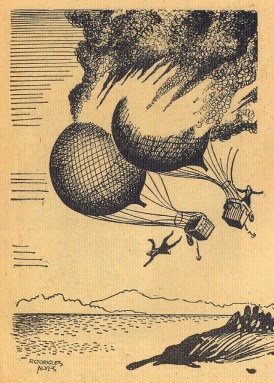 I like reading Emmanuel Levinas. He’s mostly opaque, but every once in a while his writing opens on a breathtaking view and is just what I needed. If I had the opportunity to explain why Levinas matters to an interested ten-year old, I would say that we have a problem with other people. And the problem is that we mostly don’t want to hear from them. I could use an example from their life: you don’t want your mom to interrupt your fun: when she calls you in for dinner, you go in only reluctantly. One problem with the will of the other is that we don’t welcome distraction from our preoccupations. But it is not just that, it is that we really don’t want to even interact with some other who might have authority over us.
10-Year-Old: “Oh. You just don’t want to do what other people say. Does Levinas tell you how to avoid doing what others tell you to do?”
Kirkistan: “Not exactly.”
10-Year-Old: “Does he tell you don’t have to do what they say?”
Kirkistan: “No. It’s more like you suddenly want to do what the other person wanted because you really, really loved them.”
10-Year-Old: “Like maybe if my grandparents were in town and asked me for something and I wanted to do it for them because they are so nice?”
Kirkistan: “Yeah. Maybe like that. And maybe you found yourself really interested in the experiences they had, partly because they are such good storytellers and they make everything sound so exciting. You like their stories and can almost imagine being there.”
10-Year-Old: “So my grandparents are cool and I want to get to know them because they are nice and tell interesting stories. So what you are really talking about is why it is important to hear from other people and why we should care.”
Kirkistan: “That’s right.”
10-Year-Old: “So why did you start be talking about stopping what I thought was fun to do something I had to do?”
Kirkistan: “Well, I might have been a bit confused. But also because sometimes I close my ears to people who are trying to give me a gift. Something I really need. Say you are at the grocery store with your parents. It’s Saturday. And there are sample ladies on every aisle. There is lady offering free ice cream in the frozen aisle. And another man making pizzas in that aisle. And another with little chicken nuggets and another handing out crackers and cheese.
Kirkistan: “But say you really didn’t want to go to the grocer. You really wanted to watch cartoons. So you went to the grocer reluctantly, but you took your iPod and listened to music the whole time. You walked behind you parents, music turned up. So you didn’t hear the sample ladies calling out to you. You kept your eyes on the floor so you didn’t see them either.”
10-Year-Old: “That would be bad. I like ice cream and chicken nuggets and pizza. It’s like I had missed all the really good stuff while everybody else got something. I’d have gotten my way but I’d have missed out on the very best stuff.”
Kirkistan: “That’s why Levinas is important. He helps us start to see and understand why it is we should care about the people around us: what they know. What they bring to our conversations. What they have to say about this and that. Even people who don’t seem to have anything to say—even those people can surprise us with lots of interesting things.”
10-Year-Old: “OK. Well, why don’t you just listen to people? I listen to people and learn things all the time. That isn’t hard to do. It is super easy to listen to people. It’s not like you have to do anything. You just listen.”
Kirkistan: “Well, that is great advice and I want to follow it. My answer to you would be that as you get older, you start to think you know a few things. We get to thinking we know the patterns of how things work and we figure we know pretty much how anyone will respond in any given situation. Anyway, all I’m saying is that it gets pretty easy to think you know what most people will do or say in any given situation. The surprise—if you can call it that—is that quite often people live up to our expectations. They do what we think they’ll do. Not always. But often. Then the question becomes, “Did that guy say that because I expected him to say it?” “Did I have a hand in turning this conversation this way?”
10-Year-Old: “You’re pretty boring aren’t you?”
Kirkistan: “You might be right.”
10-Year-Old: “Why don’t you write about something interesting like dragons or warships? Why don’t you write a book about how to fly?”
Kirkistan: “Great suggestions. I really want to write a book about how to fly. I think that this is the book I am writing.”
###
Image Credit: Mid-Century via thisisnthappiness
How to Hack the Bully’s Monologue (Dummy’s Guide to Conversation #16)
Resist the rhetoric of control
Every person has worth. Every person has something meaningful to communicate to us and vice versa.
But sometimes the guy in the corner office just wants to yank your chain. Sometimes your colleague comes in your cube too close and berates you for something that riles only her. And sometimes these work contexts make you question your worth. Today we call this bullying and officially frown on it, though bosses of all stripes let their primordial managers get away with it as long as they post results.
 In the face of the bully’s monologue, we may need to set down our goals of understanding and hearing each other. We may need to pick up tools that will help protect us from the bully. And especially as our culture talks more about innovation, we must recognize that the enemy of innovation is the bully who uses monologue to quell thinking and drive over dissent.
- The hack begins with dropping sycophancy. Just because the VP of marketing is telling you a personal story about his cabin doesn’t mean he isn’t trying to put you in the low place he wants you. There’s no need to continue to play the prop: the underling enamored by all the person in power does.
- Be present. Don’t go to the Bahamas while the bully drives his verbal tank into position.
- Stand. Even if sitting, assume a mentally poised place to challenge.
- Challenge. Is there another way of looking at the perspective the bully shouts? What is the truth here? Speaking fast and loud does not make something true.
- Know two things
- You are a person, too. A person of value.
- That language can be encouraging or damaging. Every communication encounter has a shaping effect on both conversation partners. Don’t let the bully continue unchecked.
- Turn the other cheek. Yes: quite. Back to Jesus the Christ who knew something about handling the bully. He knew the most effective thing long-term was to offer the bully even more. Not in every case, but dealing with the bully from a place of peace and, yes—faith (in God)—may just cut power to the BS generator the bully madly operates. This counter-intuitive step holds much promise for moving forward as a human.
Some reading this may think no modern/post-modern workplace has bullies like this. You could not be more wrong. It is interesting that the tools used to shine a light on the bully’s madness are also effective in ordinary conversations.
How do you handle the bully’s monologues?
###
Image credit: Used with permission from Paul Rivoche via 2headedsnake
Care Guides: In Praise of Knowing Nothing
The better to listen
 Allina employs people to work the space between a physician’s prescriptives and the patient’s adherence to said advice and prescriptions. (May 6 StarTribune: Care Guides show another face of health reform)
Maura Lerner’s story shows a comical side to healthcare that should surprise no one. The comedy is not that hospital systems would employ people with little to no medical training (that makes good sense to me). The comedy is how many patients and physicians have learned all sorts of dysfunctional ways of interacting and not listening to each other.
Betsy Snyder, 23, never wears a white coat on the job. She wouldn’t want her patients to get the wrong idea.
Care guides make sense because they feed corporate efficiency objectives of moving physicians quickly from patient to patient, which serves to maximize those costly human assets. And certainly care guides will try hard to work within their contractual obligation to not practice medicine not matter how hard the kindly older woman pushes for such advice (especially since they’ll quickly be out of a job if they do).
The key common-sensical notion here is that the care guide becomes another interpreter of the physician instructions. And as they discuss prescriptions and compliance with the patient, they are another voice advocating for improvement. And since they arrive without the baggage of years of training they are free to listen.
And listening is the key. Listening and talking—such simple things—but these are the missing ingredients in treatment. Just because a physician prescribes doesn’t mean a patient complies. But talking it through, why, maybe it is actually a kind of therapy trigger.
Care Guides are a positive development as healthcare corporations try to relate to humans and their conditions.
###
Image credit: Courtney Perry via StarTribune
Talking Philosophy with a 10-Year Old
Why not talk about something more interesting like dragons or flying?
I like reading Emmanuel Levinas. He’s mostly opaque, but every once in a while his writing opens on a breathtaking view and is just what I needed. If I had the opportunity to explain why Levinas matters to an interested ten-year old, I would say that we have a problem with other people. And the problem is that we mostly don’t want to hear from them. I could use an example from their life: you don’t want your mom to interrupt your fun: when she calls you in for dinner, you go in only reluctantly. One problem with the will of the other is that we don’t welcome distraction from our preoccupations. But it is not just that, it is that we really don’t want to even interact with some other who might have authority over us.
10-Year-Old: “Oh. You just don’t want to do what other people say. Does Levinas tell you how to avoid doing what others tell you to do?”
Kirkistan: “Not exactly.”
10-Year-Old: “Does he tell you don’t have to do what they say?”
Kirkistan: “No. It’s more like you suddenly want to do what the other person wanted because you really, really loved them.”
10-Year-Old: “Like maybe if my grandparents were in town and asked me for something and I wanted to do it for them because they are so nice?”
Kirkistan: “Yeah. Maybe like that. And maybe you found yourself really interested in the experiences they had, partly because they are such good storytellers and they make everything sound so exciting. You like their stories and can almost imagine being there.”
10-Year-Old: “So my grandparents are cool and I want to get to know them because they are nice and tell interesting stories. So what you are really talking about is why it is important to hear from other people and why we should care.”
Kirkistan: “That’s right.”
10-Year-Old: “So why did you start be talking about stopping what I thought was fun to do something I had to do?”
Kirkistan: “Well, I might have been a bit confused. But also because sometimes I close my ears to people who are trying to give me a gift. Something I really need. Say you are at the grocery store with your parents. It’s Saturday. And there are sample ladies on every aisle. There is lady offering free ice cream in the frozen aisle. And another man making pizzas in that aisle. And another with little chicken nuggets and another handing out crackers and cheese.
Kirkistan: “But say you really didn’t want to go to the grocer. You really wanted to watch cartoons. So you went to the grocer reluctantly, but you took your iPod and listened to music the whole time. You walked behind you parents, music turned up. So you didn’t hear the sample ladies calling out to you. You kept your eyes on the floor so you didn’t see them either.”
10-Year-Old: “That would be bad. I like ice cream and chicken nuggets and pizza. It’s like I had missed all the really good stuff while everybody else got something. I’d have gotten my way but I’d have missed out on the very best stuff.”
Kirkistan: “That’s why Levinas is important. He helps us start to see and understand why it is we should care about the people around us: what they know. What they bring to our conversations. What they have to say about this and that. Even people who don’t seem to have anything to say—even those people can surprise us with lots of interesting things.”
10-Year-Old: “OK. Well, why don’t you just listen to people? I listen to people and learn things all the time. That isn’t hard to do. It is super easy to listen to people. It’s not like you have to do anything. You just listen.”
Kirkistan: “Well, that is great advice and I want to follow it. My answer to you would be that as you get older, you start to think you know a few things. We get to thinking we know the patterns of how things work and we figure we know pretty much how anyone will respond in any given situation. Anyway, all I’m saying is that it gets pretty easy to think you know what most people will do or say in any given situation. The surprise—if you can call it that—is that quite often people live up to our expectations. They do what we think they’ll do. Not always. But often. Then the question becomes, “Did that guy say that because I expected him to say it?” “Did I have a hand in turning this conversation this way?”
10-Year-Old: “You’re pretty boring aren’t you?”
Kirkistan: “You might be right.”
10-Year-Old: “Why don’t you write about something interesting like dragons or warships? Why don’t you write a book about how to fly?”
Kirkistan: “Great suggestions. I really want to write a book about how to fly. I think that this is the book I am writing.”
###
Image Credit: Mid-Century via thisisnthappiness
Two Inane Commercials. One Purposefully So.
“Perfect place to build a town” defies believability
The folks at Casual Films tell the story behind making one of the dumbest commercials I’ve seen in a long time. In their work for Dassault Systemes, the filming is cinematic, the visual effects are stunning, the soundtrack and entire setup is urgent and important. But in the short form of the clip, when the supposed explorer speaks, the bottom drops out of the story. Her words—and her delivery from the top of the dune—flip the believability switch that says: this is utter fiction.
If we could supply fresh water this really would be the perfect location for the new town.
Her words send me to this set of questions: Really? You’ll build a town in the desert? And you think people will come because you have fresh water? Have you really studied what it takes to build a planned town—has it ever worked? Who wants to live in such a place? And then I start thinking about colonialism and all the unsustainable projects my country has initiated over the years.
Maybe Dassault Systemes really is going to do this and icebergs in the desert really will supply nomadic tribes for years to come. I hope they are changing the world. But the actor’s long sentence yelled across the desert—heard perfectly despite the distance and the howling wind—made everything suddenly seem like a middle school play. In fact there are a couple other points where the supposed conversation sounds like a PR flack talking to schoolchildren.
Wexley School for Girls: Take Me to Copper Mountain Now
Compare what Casual Films did with what Seattle’s Wexley School for Girls did for Copper Mountain. They hammered the silly button with no pretense at believability and completely own my attention. I don’t even ski, but I want to go a place with this sense of humor.
See a fuller set the Wexley commercials here.
By the way, I find the Dassault Systemes tagline pretty compelling:
If we ask the right questions, we can change the world.
###
Via Adfreak

 conversation is an engine