Archive for the ‘What is remarkable?’ Category
You Gotta Find Ways to Tell Your Story
Don’t dumb down. Don’t be boring.
One client is a thought leader in her particular industry. She writes and presents papers around the world. In doing so she thinks brand new thoughts, adds to her credibility and drums up potential clients for her firm. She is disciplined about two timetables:
- Timetable #1: Industry Papers. She includes time in her schedule to research and write, which allows her to build out topics of interest to her customers. Those topics also interest editors of professional journals, so she maximizes her research and writing time to open up new venues to be heard as an expert.
- Timetable #2: Everyone is a Publisher. My client also understands that she is not just speaking to the industry-folks who crave the details she has synthesized. She is also speaking to a broader group of people—those who have a nominal but urgent interest and may benefit from what she has to say. This second, broader group of people drop their questions into the oracle of Google. My client hopes her investment in social media (her firm’s blog, Twitter, and Instagram accounts) will reach these people. She routinely takes papers she has published and breaks them up into smaller chunks that more easily relate to the rest of life.

We need your annotations.
But this second piece is less about research and more a journalistic/writerly function. This part is more about connecting the dots with the work and life and less about laying bare abstract research findings. She understands this second communication need has nothing to do with dumbing the topic down. In fact, just the opposite she employs her best writing to say things as simply as possible without relying on buzzwords and tribal knowledge.
Marketers of consumer products have long focused on Timetable #2. Academics and specialized industries have long focused on Timetable #1. How long before we all use Timetable #2 as the route to Timetable #1?
Remember: we are the gatekeepers now.
###
Image credit: Kirk Livingston
Why Work Out Loud?
Living out loud—even at work
Way back when our first child was born (lo these many years ago), back before there was language, when crying and inchoate grunts were the sum total of signals this small being could muster (along with unblinking stares), a strange communication pattern emerged in our household: narration.
Mrs. Kirkistan and I both found ourselves narrating in real-time to this youngster. His wide eyes and (relative) silence seemed enough to make us think he was curious about, well, whatever. We narrated pacing the floor at 2am (“We’re walking back and forth because someone is crying. But we’re not pointing fingers. No sir.”). We narrated cooking and cleaning. We talked about sitting on the couch and driving in the car. We told the story of outside—every window had a story.
It seemed to work if only because it was met with silence which we took for interest. Eventually he started narrating back at us.
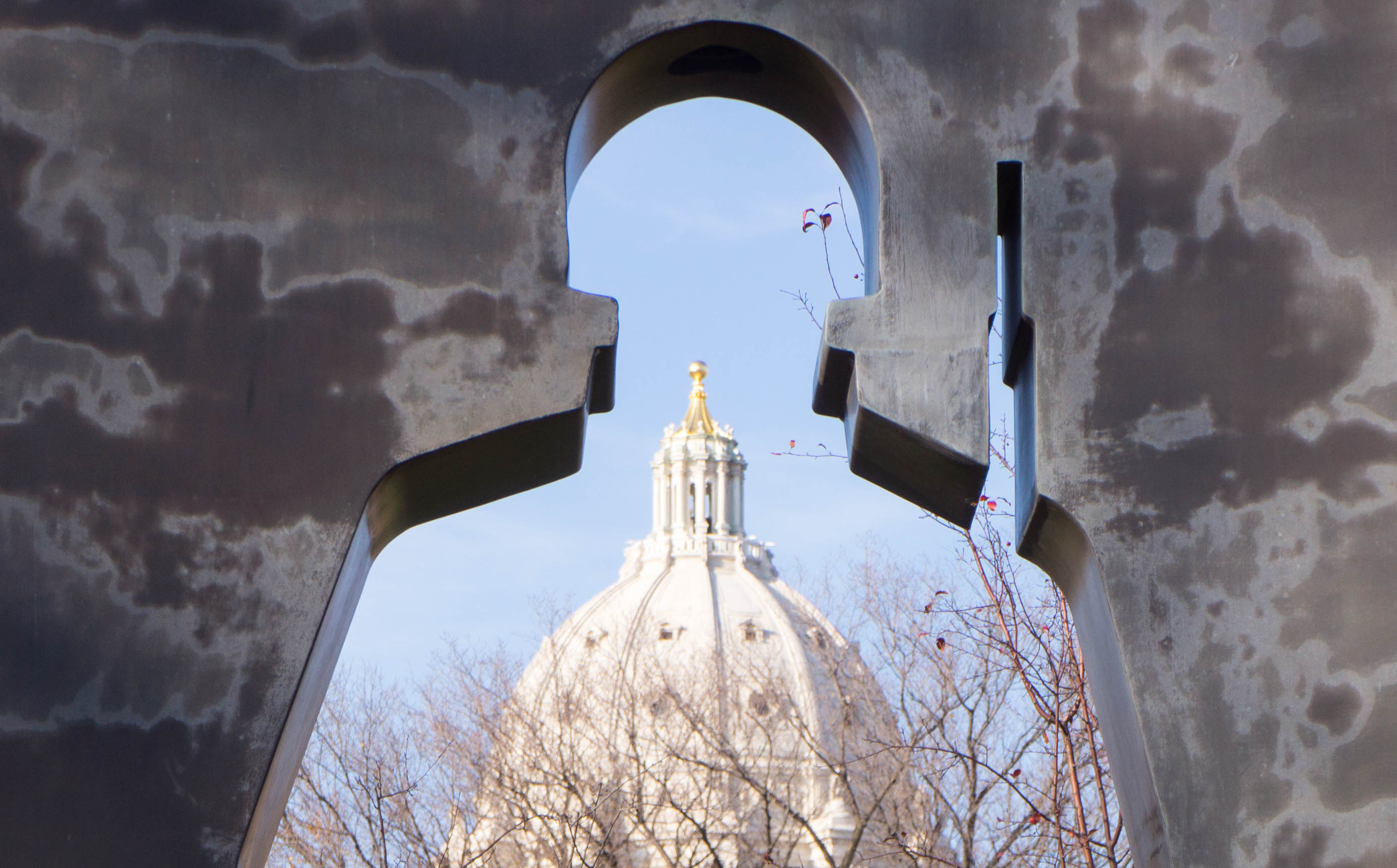
Thank you, Veterans.
I’m reminded of this as I read John Stepper’s blog and anticipate his book, Working Out Loud: How to build a better network, career & life (Due Feb, 2015). Mr. Stepper makes the case that we do ourselves a favor when we “work in an open, generous, connected way.” The benefit is to ourselves and to others. Check out his “5 elements of working out loud.”
Lately I find myself talking more with clients about how they communicate internally and externally. I continue to see the emphasis wrought by free and open social venues (Twitter, bloggery, Facebook) working their way backwards into the way organizations conduct business. I predict more collaborative encounters and less monologue from a guy with a tie and a pen to sign your paycheck.
Stepper’s “working out loud” codifies some of that collaborative energy that rises like Spring sap with honest and open communication. I think of it as another perspective on the “dumb sketch” approach to life.
Narrating our day, asking for input, remarking on a remarkable idea—it’s all part of human contact and cannot be separated from the business of making meaning.
###
Image credit: Kirk Livingston
MIT Media Lab: Exactly When Do You Collaborate?
Tod Machover & A More Beautiful Question
There are times, especially early in the creative process, when I want to slow down and think about a challenging question by myself,” he said. (At such times, he retreats to the solitude of a barn converted into a music studio.)
But there’s also a time, he said, when you must take your question “out of the barn” and begin to work with others. The Media Lab is designed to be an ideal collaborative environment, bringing together people from a wide range of disciplines. “Everyone is comfortable saying to others in the lab, ‘Here’s something I’m passionate about—would you help me think through this question?’”
–Quoted from Warren Berger, A More Beautiful Question (NY: Bloomsbury, 2014) 130-131.
###
Charles Chamblis: Photographer’s Notes
Story told by numbers
Charles Chamblis didn’t take too many days off from photography. With his camera he captured slices of life in the African-American community around Minneapolis and Saint Paul, Minnesota in the 1970s and 1980s.
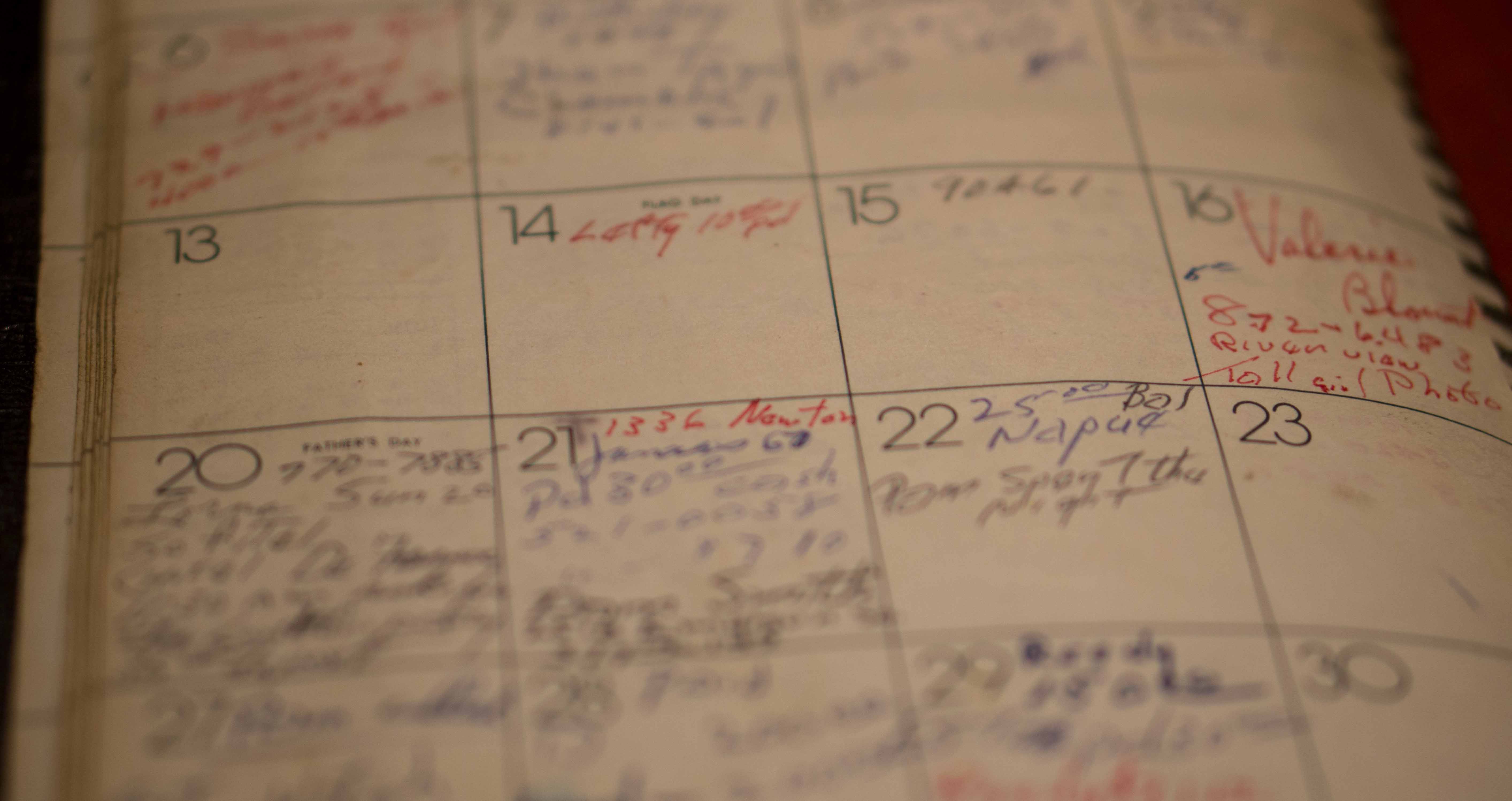
Go see his collection of Minneapolis-Saint Paul photos at the Minnesota History Center.
More on numbers here.
###
Image credit: Kirk Livingston
Talk With Those Who Talk With You (DGtC#25)
Humans just want to connect
Social media, like sales, seeks an ever-expanding public. All tweeters want more followers. All bloggers—same thing. Just like the TV networks of yore, where Nielsen Media Research rated efficacy by numbers (and types) of viewers they brought in. Which just happened to coincide with increasing amounts of cash they could wring out of a sponsor for a 30 second span of monologue.
How to measure audience (and collect cash) continues in today’s social media world as various metrics are embraced and/or disgraced: clicks, views, comments, engagement, time spent on a site.
But real humans in earnest conversation don’t care about size of audience. They care about connecting with a person to tell the important thing they have to say or to hear the important thing a friend or colleague has to say. They want to remark on what is remarkable.
Call me a mystic (please!), but I still embrace the notion that the people peppered through our lives are there for reasons beyond our understanding. And those talking to you—today, right now—have something you need to hear and they need to say. Those people right beside you are worth attending to. For their sake. And for yours.
It’s not wrong to widen your audience.
Just don’t lose sight of this moment with those right before you.
Also see:
- Listen to other people’s stuff (#6)
- Dialogue is a scenic bypass (#12)
- “Good to know” and a failure to communicate (#23)
###
Image credit: Kirk Livingston
Fight Tunnel Vision. Explore Locally.
Start with the Saint Paul Art Crawl
Do two things to fight big money in politics:
- Locate the funding sources (start with OpenSecrets.org) for each particular 30 seconds of non-truth you see and recognize how those sources benefit from the twists presented.
- Stop listening.
Maybe you are tired of fame as our measure of success. Perhaps you’ve begun to realize the Kardashians are famous only for being famous. And that’s on us. That’s our fault—we keep watching, like gawkers at a crash.
Stop clicking.
If you’ve begun to think to think the NFL is a ridiculous combat ritual that channels blood-lust for the masses while siphoning public funding into the pockets of the rich—just tune out.
It’s time we dug deeper to find out what interests us rather than letting business and the business of media tell us what is important. Business and media will begin to get the message when we stop talking about their current media targets. Don’t link. Don’t litter your social interactions with keywords that build others’ businesses.
But that doesn’t mean “shut up.” Instead tell what interests you, whether it’s a local rugby game or the parks along the Mississippi or the Vietnamese Noodle Shop down the street.
We need to hear from each other.

One example: this weekend’s Saint Paul Art Crawl. Go see the crazy and inspiring stuff our local artists produce. The studios themselves are often eye-opening. You don’t have to be some effete arts patron to appreciate a welder transforming car parts into a 30-foot-tall sculpture. You’d have to be entirely heartless to not be moved by the artist who has set up shop in the back loading elevator—to sell her art as she drives the aged contraption from floor to floor.
This weekend: go and do. Maybe even…buy?
You can even get free Metro Transit passes to and from the Art Crawl.
###
Image credit: Kirk Livingston
Rob Moses & the People of Calgary
“Have you ever ridden a horse?”
If you’ve had the pleasure of going to Calgary you’ll know it is truly a western city. Situated not far from Banff and Jasper National Parks, it is also quite spectacular. And rich, fueled by oil and gas money flowing into the city.
Rob Moses is a photographer based in Calgary. I follow his blog because of the extraordinary portraits he takes of complete strangers. His method is to approach someone, have a conversation, and shoot the photo. The endearing thing about this process is the conversation he has. He records it verbatim —or so it seems. His written text includes nervous laughter, indecision, and ricocheting answers. His recorded conversations sound like real conversations to my ear.

Stopping complete strangers is not easy in the best of situations. Asking to take their picture sounds like a scam, but Mr. Moses pulls it off with what seems to be a fair bit of joy. And he always asks if his subject has ridden a horse—critical information for Calgarians, evidently.
The optimism of sharing his talent with photography is not lost on me here. It’s kind of an amazing way to self-promote and, well, bless people. And for those lucky enough to find their way into his lens, they come away with a phenomenal view of themselves. Scroll through his blog and be amazed at the composition, lighting and the ease written on the faces of his subjects. If you’ve ever asked to take someone’s photo, you know it typically ends badly. Unless you are Rob Moses.
May there be more of his talented tribe.
###
Image Credit: Rob Moses
How to Make Your Message Permanent
A tip from a prehistoric consultant
First: Forget about it. Nothing is permanent—at least not in the way advertising mavens augur.
Second: OK—if you insist—make your message about someone else. Make your message give back more than it takes in. “GE” branded on a rock would never last. Even the Apple logo will be chiseled away by Microsoft rebels. But a man with jointed wings, well, who can resist that story?
![Who can resist the story about the “Thunder Being”?]](https://conversationisanengine.space/wp-content/uploads/2014/10/birdman-2-10022014.jpg)
Who can resist the story about the “Thunder Being”?
Prehistoric peoples stopped by these ancient rocks to tell their version of the human condition. So they carved/picked/incised/abraded their messages into the exposed Sioux quartzite outside Comfrey, Minnesota long before there was a Comfrey or a Minnesota or a U.S. of A. Maybe before the pyramids and Stonehenge. Ancients left messages here to direct and entertain passers-by.
Why make your message permanent? We understand marketing communications for companies—it’s about keeping the wheels of commerce turning. But you personally—what messages do you have to communicate? And why would you make them permanent? I argue that your take on the human condition comes out in the way you do your work, the way you interact with family, friends, colleagues, and even the way you see/refuse to see the homeless guy at the end of the exit ramp. And all these daily interactions amount to a carving and incising that is far more permanent than any of us imagine.

The Jeffers Petroglyphs tell a story that became a destination.
Our conversations have an enormous (cumulative) effect on the people around us. An effect that may move through generations.
What exactly is your message, anyway?
###
Image credit: Kirk Livingston

 conversation is an engine