Archive for the ‘Writing to build community’ Category
“Turn Off Your Mind” is One Approach to Faith. It’s Not a Good Approach for the Person of Faith.
In which I post about God, thinking and hypocrisy (my own). Skip if offensive.

and yet it remains
Let me pull back the curtain on faith as I’ve seen it practiced—if only just for my own peace of mind.
[Full Disclosure #1: I am not writing from a generalized “faith” perspective. Instead, I write from the specificity of a follower of Jesus the Christ, who I believe was/is the Trinitarian God and who lived, died and lived. Further, I believe persons must act on their belief, because that’s what Jesus the Christ said. He made the point, which I believe, that the only way to God was through Him (including trying to be good enough which—logically—could not possibly work). Comment/email me to talk more about this.]
“Turn off my mind” has popped up countless times since I was a lad. The phrase has often been offered to me as the reason why people would choose not to believe in God or Jesus the Christ. It went something like, “Look, I’d have to turn off my mind to be a follower of Jesus.” Sometimes the phrase went: “I’d have to turn off my mind to go to church.” The first phrase I disagree with. The second phrase may actually be true.
It’s an Honest Assessment
Maybe you’ve heard or said this phrase or one like it. It’s an honest statement that reflects many things. For instance: a reasonable or scientific person may feel they would have to turn off their mind to embrace faith in Jesus the Christ. Perhaps they think of faith in Jesus the Christ as a kind of voodoo/animism/magic because of the contra-logical behaviors and antics they’ve seen practiced in the name of faith. Maybe the religion they’ve witnessed seems not all that different from the ancients sifting through the bowels of chickens to determine the way forward. I respect people who grapple thusly. Faith in Jesus the Christ is simple—and profoundly not simple—especially with your mind engaged. Wrapping your mind around the actions of an infinite God is way more than just difficult. I would argue faith is a gift, which (happily) is the Apostle Paul’s argument too.
It’s Not (Necessarily) the Leap
It used to be that when my friend said “I don’t want turn off my mind,” I would always hear “I don’t want to make the leap of faith required to believe in this Jesus guy. Who knows, maybe it’s all a fiction. I won’t entrust myself to fiction.”
But my perception has changed over the years as my own doubts and questions about how people have practiced their faith. Now I hear “turn off my mind” and understand there are all sorts of leaps in our lives, and I wonder which leap is calling to shut down the mind.
We make leaps daily, from trust that the bus we’re riding on won’t be blown heavenward by a terrorist with a bomb, to trust that social security will be there when we retire, to faith that the authorities are telling the truth when they say the groundwater is safe despite the chemicals 3M poured in the soil years ago. All of us act on leaps constantly. We act on these leaps because every time we take the bus—so far—we’ve arrived safely at our destination. We act on the leap because we don’t have a choice about social security and we’re putting a little bit aside anyway (besides, no one really retires anymore). We act on faith by drinking tap water, but we’re also reading the reports and we may yet resort to bottled water (though no regulations govern the purity of that water). We make leaps of faith and generally keep observing and considering what’s going on with each leap.
Now I think the “turn off my mind” phrase as applying to my friend’s observations of lives governed by faith. Maybe he sees too many of us exhibiting a herd mentality with some gifted leader we’ve hoisted into a popish position (sometimes against the leader’s will) from which they inevitably fall (no one is perfect, after all) (except that one Guy). My friend feels he must turn off his mind because of the echo chamber talking points that roll off our tongues in response life’s deepest questions. I’ll confess to spending much of my life in mindless following as well. Just doing what I hear the preacher or leaders say. Thinking it’s true (often it was, sometimes it wasn’t). Following the paths everyone else followed—we’re all going the right way. Right?
The fact is it’s just much, much easier to walk the same direction as everyone else. Find a group that’s going in a good direction and jump in. And just stick with it. The problem is that groups need help in continuing to find the way and the leaders don’t always know the right answers. And sometimes leaders may even respond to other interests that become incompatible with the original direction.
Faith Infrastructures are Culturally-Based
It turns out that much of the infrastructure surrounding faith is culturally-based. It’s always been that way. How we are together is not truth in the sense that God said it. Much is invention. People who say “I don’t want to turn off my mind” are not stupid—they see artifice (perhaps even built on something that might be believable) and turn away whether or not they can say why.
[Full Disclosure #2: I take the Bible as the Word of God, which means I read and understand it as a document where the usual rules of interpretation apply. But the words I’m reading carry much greater authority than, say, the New York Times. Further: I believe God helps readers understand His words (which carry mystery and are not always black and white). I see the Bible as a living document that pulls me into constant conversation with the God of the Universe. That’s my leap.]
I’m saying this just to point out that there are many leaps we each take every day. I want to invite you toward the great mystery of knowing God, in any way I can. I also want to avoid turning people away because of my pat answers.
###
My Raw Argument for Conversation
The Practice of Dialogue Rests on Solid Ground
I’ve become intrigued by trying to boil Listentalk down to the most elemental forms. Intrigued because there is a firm foundation for which I can build things on. Here’s what I know so far:

you really should
- There is a performative aspect of language. This performative aspect allows language to actually do something out in the world, to make things happen. It is not just that speaking something makes it true. But there is something closely related that is less about true/false and more about perception/reality: when we speak something, it becomes public, it becomes known, it becomes the story we’re going with—unless immediately debunked by those involved in the hearing and telling. So…stuff happens when we speak it. It becomes true…or at least truish. JL Austin, John Searle and others go on and on about such speech acts. I intend to hear more from them.
- We do right by others when we treat them as people. Obvious? Yes and no. Martin Buber suggested we often treat each other as objects rather than as people. He talks about “I-Thou” relationships where we treat the person before us as fully-human, whole people. Beings with many facets, interests, parts of their character. We talk and (especially) listen to them as we respect the dignity of their being human. But too often we treat others with an “I-It” sort of connection. That is, the kind of connection we have with an object too often becomes the model for the way we connect with people. We use a hammer to pound a nail, a George Foreman Grill to press a Panini for lunch. It makes sense to use tools in that way. But we mustn’t treat people as if they were objects. We devalue them. People are people. People are not objects placed on earth for the sole purpose of carrying out my personal (sometimes diabolical) will. There’s much more to say about this (in particular from Emmanuel Levinas), but that is the basic argument.
- God created and interacts with people. Lest you think I’m writing some humanistic diatribe, both the performative nature of language and the treatment of people as beings of dignity flow directly from the Old and New Testaments. Look at the role of “Word” from Genesis 1 to John 1 to Revelation 22. Words are performative so often it will make your head spin (If your head is subject to spinning) (You might want a doctor to look at that). Watch how the Eternal One allowed for the possibility that words spoken could be rejected. Even the words of the Creator. Even the Word that was a person as well as God.
- We’re at a new time when gatekeepers no longer control the discourse. Social media is part of the deal, but not the whole deal. New attitudes about who is in authority, who we can trust and who we cannot trust are in operation. Technology is opening doors.
Those are “Listentalk’s” four building blocks.
What did I miss?
###

I’m Writing a Book called “ListenTalk”
I’m writing a book about talking and listening. I’ve become crazy about what happens in our best conversations: we come alive. We learn something about another person and in the spontaneous moment of creation as we frame up words to describe our own situation, we often suddenly learn something brand new about ourselves. Something we didn’t know before we started talking. I’ve begun to think that when we are in conversation, we are more truly ourselves. And the best conversations have a way of making us very present to each other.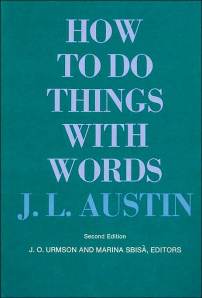
I call this book “ListenTalk: You’re Boring. Let’s Change That.” I think we were created to be in constant, deep, creative, spontaneous conversation. Not just with each other, but with God. That’s why parts of the book develop a theology of communication, starting with God’s act of creation, where His speech-act created dirt and air and giraffes and coffee beans and people, among other things. So you can see that with my book I hope to bring together something of JL Austin’s work on communication with a commitment to faith. Maybe I’m trying to do something impossible. I’m not sure. In a few days I’m scheduled to talk with a philosopher and speech-act theory expert at the University of Minnesota. I’m interested in his response to my notion of combining these things.
Two more pieces of this book project capture my attention in a big way.

Derrida and Welcoming the Other
One has to do with Derrida’s notion of welcoming the other. I recently finished James K.A. Smith’s “Jacques Derrida Live Theory” (Amazing: the book retails for $120! No wonder I cannot afford most of what I read) and was pleased to see a philosopher working from a faith perspective dealing with Derrida’s thoughts. I was impressed to see overlap between Derrida’s notion of welcoming the other into conversation and the God of the Bible’s commitment to welcoming the other. The Bible talks about reconciliation, and that definitely includes welcoming the other. What reconciliation does not mean (and here is where Derrida is particularly helpful in helping throw off some of my Christian cultural baggage) is making the other like me. We’re all tempted to make those around us like ourselves. But that effort misses the point of the kind of conversations that will sustain us.
Is Prayer a Model for Conversation?
Pulling more from theology than communication theory or philosophy on this last point, one of my chapters looks at prayer as the Bible talks about it and posits that we were meant to communicate with each other along these lines. Nothing really mysterious or unorthodox, I just wonder if the way we communicate with God (listening followed by moments of intense listening, and then very frank speech) is meant as a model for how we communicate with each other. Maybe listening is to take more of our effort than talking, which is a lesson advanced people of prayer seem to know.
Social Media is a Way Forward
This book ends with the notion that people of faith are currently presented with a rich opportunity to create and be in conversation. People of faith would do well to place ideas out in the public common areas, since there are far fewer gatekeepers, and see how people respond. This is part of the class I teach at Northwestern College called “Building Community using Social Media.”
What do you think? Would you read a book like this?
###
Are Words Always as Powerless as They Seem?
When we preach, our words often drop like stones from an overpass. And by “preach” I mean anyone who launches into a speech without a deep regard for her listeners. Pastors and priests can do it, but so do marketers, bosses, friends, even spouses. The guy at the party blathering on about his accomplishments—he’s preaching—and people walk away accordingly.
But our words need not fall like lead sinkers.
In 1955, the Oxford philosopher J.L Austin, gave a series of lectures at Harvard that became his book “How to Do Things with Words.” Austin proposed that there is a side to language where words actually cause stuff to happen out in the world. His famous example was with wedding vows: when the groom and bride say “I do,” and when the pastor/priest says “By the laws of the state of Minnesota, etcetera, etcetera, I now pronounce you husband and wife.” At that very point, something has changed in the world. Something changed because of the words spoken. Sure, those words gathered power from the context: the bride and groom, for starters. They agreed to get married. The priest or pastor officiating the deal contributed: the ordination process granted legal authority (at least in the eyes of the state) to pronounce these official words and have them mean something.

J.L.Austin
Why does preaching produce more leaden words than other kinds of talk? Again—not talking just Sunday sermon here. Corporations preach in their print ads and commercials and press releases. They collect a bunch of statements that are purposefully free from conversational context (you recognize this stuff by reading a brochure aloud. That’s when you realize no human talks like this). That kind of preaching that is more like wishing: wishing the world was a certain way. Wishing the reader was different from what he or she really is. The kind of preaching that tells others what to do or what the world is like, but is a lazy kind of talk that bears no resemblance to life. We all resort to this kind of talk that is unmoored from the people around us. Oh sure, we occasionally dress it up with an authoritative tone and we think we’ve accomplished something. But we haven’t.
Is there a way to get off our lazy butt of preaching and start saying things that make a difference in the world? Using words that instigate change? Is there a way to believe in the change our words signal?
I was reading the Gospel of Mark today, Mark 1, where Jesus starts the whole project. His first recorded words in Mark’s gospel are preaching: he preached the kingdom of God and invited his listeners to repent and believe (1.15). The rest of the chapter shows him, well, doing the stuff he preached. His talk about preaching and repenting and believing were not churchy words, meant only for the hour of the week where people piously peer up. No. His words demonstrated power by healing the sick. And the possessed. His were not empty sayings about a far-off God. They were words of invitation to taste something real. He was not just talk. He was walk.
Much more walk than talk.
How about your speech? Are you preaching to an audience who knows you are just mouthing empty words? Press release talk. Or are you saying things you can demonstrate? As a copywriter, am I doing this? And what kind of people do we need to be to deliver on the words we send out?
Makes me wonder.
###
We Need Your (Creative) Briefs

Unsettle the brain and spirit to move forward.
Don’t just paste in your purpose from the last creative brief. Don’t fill your creative brief with numbers and trivia that aren’t sharpened to make your point. Especially don’t dump in the jargon your client prattled on about. Make your brief work first as a communication tool and then as a community-building tool, because (you know this already) you’ll get the best work from your creative team by engaging them with more than facts. You’ll want them excited. Not excited about a tactic, but excited about what this communication (and what this product) will accomplish out in the world.
Don’t let your creative brief be just another check mark on your ever-expanding list of things to do to get a project started (and thus off your desk). Make your creative brief a thing of beauty and curiosity, like Cicero made his speeches: put in an exordium to get the team riled up about the opportunity. Put in some narrative that explains the full scope of the issue at hand, but sharpen it so your copywriter feels the pain the audience feels (and also feels the opportunity revving up your client). Confirm the why of your point: what are the salient details your copywriter can use? Then refute your point: what reasons will your detractors trot out to show how wrong you are? Then send the team off with a stirring conclusion (peroratio) that sums things up and blends pathos (emotion), ethos (your own sterling character) and logos (reason) in the most unsettling way. I always write my best copy when something isn’t sitting right in my soul.
Some of these ancient guys (like Aristotle and Cicero) have a few things to tell communicators today. How to rouse a team to action is one of those things. We need that.
###
Great Moments in Rhetoric: Climate Change and the IPCC Mission

Good communicators are transparent about their purpose.
The Wall Street Journal reported yesterday on the Intergovernmental Panel on Climate Change (IPCC) mission to take “sophisticated and sometimes inconclusive science, and boil it down to usable advice for lawmakers.” The article speculates (via scientists working with the IPCC) that institutional bias toward oversimplification is what lies behind the erroneous projection that Himalayan glaciers could melt by 2035.
If there is anyone out there who still believes in truly objective science—or truly objective anything—I’d like to meet them. It should surprise no one that we constantly arrange facts to meet our pet goals. And we infuse those facts with the urgency that fits our purpose rather than an urgency arising from the facts themselves. This is a human trait and we should expect it in every communication. Facts are facts, yes. But facts are also small pieces of a rhetorical puzzle that can (and will) be built together in a number of different ways. Is there ever a time when we experience facts in isolation—without some rhetorical flourish—that is, without some political aim that wishes to move us toward a favored action?
No.
But persuasion is not wrong. It is a necessary piece of human life on this planet. All our actions, all our thinking, all our communication, all our learning, all of most everything is organized by political pulls. That’s not overstatement: even the best among us are always motivated by partisan or self-serving objectives. Rather than resist this fact of human life, it makes more sense to look closely at the objectives that drive us. Of course, there are two sides to every story, including this large story on climate change. Sure the WSJ is written from a conservative perspective and this article was meant to shine light on hypocritical methods of their opponents, which always makes for good reading and sells newspapers.
It’s just important that we keep in mind what stake our communication partners have in moving us one way or another. And perhaps as communicators, we do best when we state our goals early. In fact, I think our audiences are put in a positive state of listening when they hear our disclosures up front.
###
Blinders, Diamonds and Choices
Do our life choices change the reality around us? Or do our choices fit us with a set of blinders so we pay attention only to what is of immediate interest? Winifred Gallagher in “Rapt: Attention and the Focused Life” argues that our senses are fine-tuned to track the smaller set of interests that are important to us. Her masterful book shows the physiological and neurological changes—and the enormous benefits—that happen when we pay attention. But it is also true that life choices change the reality around us.

You'll be glad you read this.
A few of us have been reading the minor prophet Amos. Amos spoke against the treatment of the poor—over and over again. That’s what prophets do: with little personal authority (Amos was a shepherd), they get tricked-out with a much larger message (larger audience, bigger content, massive ramifications) and they…say it. Out loud. Come what may.
Which is what Amos did. He spoke out against nation after nation for taking advantage of their helpless (among other things). He had a special harangue against nations that should have known better, nations who should have had top-of-mind recollection about how they were recently saved from helplessness themselves.
As we talked about Amos, I mentioned how the poor seem almost invisible today. There are the homeless, but because I’m not paying attention (I’m not actively looking for them), I don’t see them. A couple students in my “Writing for Community” class are doing a masterful job bringing attention to the faces and people-ness of the homeless here. But how can I, how can we begin to see the poor among us? And more importantly, how can I/we keep from choices that trample on them? This spot hints at the effect of our choices:
 ###
###
Write news based only on Facebook and Twitter?
In our “Writing for Community” class yesterday we discussed the difference between blogging and journalism. It’s getting harder draw a firm line between who is doing what, but the code of ethics about fact-finding and fact-checking remain key differentiators.
Stan Schroeder at Mashable offers the story of five French journalists who lock themselves in a farmhouse in France for five days and “write news based only on what they read in Twitter and Facebook.”
The success of their news gathering and sifting for facts will require great ingenuity. But I’m reminded of Thomas Merton, the Trappist Monk whose influential writings about current events were based largely on letters he received rather than rapt attention to media.
###
Passion is the Preferred Communication Tool

"Haircut, please." "Meet me in your lot in 15."
Clay Shirky, writing in “Here Comes Everybody,” argues effectively that with the lower transaction costs for forming groups (caused by social media), there are more possibilities than ever to pull a group together for most any reason. Dan Pink wrote yesterday of a social media-driven mobile hair-cuttery he saw at Google headquarters. Whether your focus is major profits, minor prophets or mingling in Provence, there are all sorts of new opportunities for banding together around a passion. All it takes is strategic use of the tools freely available, plus the willingness to reach out.
I’m asking my Writing for Community class to brainstorm the contours of the opportunity before them as they seek to build communities. With a passionate leader encouraging group sharing, what sorts of things are possible? We’re already seeing examples every day, from the high-schooler who tried to get released from being grounded by amassing thousands of fans on her Facebook page (her parents remained unimpressed) to the seemingly spontaneous “I’m with Coco” protests.
Depth of passion may well be the limiting factor. Just what am I willing to do to make my point? How far out will I reach?
###

 conversation is an engine