Boss No Like Social Media
Mashable reports that employers are not all hep on giving more social media freedom to employees.

tweet that
It seems the spread of negative information is their persistent nightmare fear. There are all sorts of main courses and sides to this tasty debate, but one thing a boss might consider is taking a longer-term look at the issue. Yes, we all know how easy it is to waste hours on Facebook. And many of us are starting to assume Facebook will give way to something else, George Tannenbaum thinks it will happen by 2017. I expect a rising Facebook backlash. But whether a backlash happens broadly, something will rise in its place. That’s because once people realize they have a voice, there is no going back.
But a longer look at giving many people a voice recognizes at least two facts:
- The era of sovereign control over you employee’s voices is over. Despite what Vladimir Putin thinks and does, what you allow or forbid workers to say at the workplace matters less and less when you don’t control the technology residing in a pocket. And conversations about your work are already in progress, whether you know it or not.
- Reasons and a few simple parameters beat “No” every time. All anyone wants is an explanation. It’s a grown-up thing to explain the reasons behind a choice that affects others. An explanation moves a team in the right direction. Even an explanation like my friend offered a two-year old visitor at his party. The toddler wanted to pick up a little poodle who had no intention of being picked up by the toddler: “You know what, Jenny? This is a Wiggly Dog. And no one can pick up a Wiggly Dog.”
Even if you have to make up a new category of canine, it’s worth an explanation. Of course, an explanation invites questions. Simply put: bosses need to get used to hearing voices. May as well start planning for it.
###
Image Credit: via Retronaut
How I had to stop working to love my work.
I don’t have to work. I get to.
People are endlessly interested in work—though not exactly in the stuff they toil at daily. Every week I talk about work with lots of different people. Students looking for work. Careerists suddenly thrust out of (formerly) safe positions. Adjunct professors disgusted with poverty-level positions. University lecturers trying to fit research together with teaching and coming up short.
Work says a lot about who we are as individuals and what we like to do. It’s says things about our priorities and talents, but work could never tell the whole story of who we are. It is only a starting place for that question.
Roughly 15 years ago I realized I was hiring and paying expensive ad agencies to do the very work I wanted to do. So I quit to find a way to do the work I was hiring away. That was the beginning of a journey toward a new way of thinking about how I spend my days. It became less about going to a place and more about solving real problems that bothered real people, using ideas and words strategically. It felt great to jettison the internal politics of a large corporation, though I miss the great fun I had with friends in the workplace. That’s why I relish my current client teams.
But like the hero in the commercial below, being perfectly suited for something doesn’t mean someone will give you the chance to do it.

Just because someone says you don’t fit the job, doesn’t mean you don’t fit. This is how you find your work: the thing you won’t stop doing just because someone won’t pay you to do it.
Today, even on a Monday, find a way to start doing the thing you love. And don’t wait for a company or boss or faculty chair to recognize your genius. Start the process now to expand and hone your particular genius. Don’t get to the end of a career only to realize you missed the opportunity to work.
###
Big Church
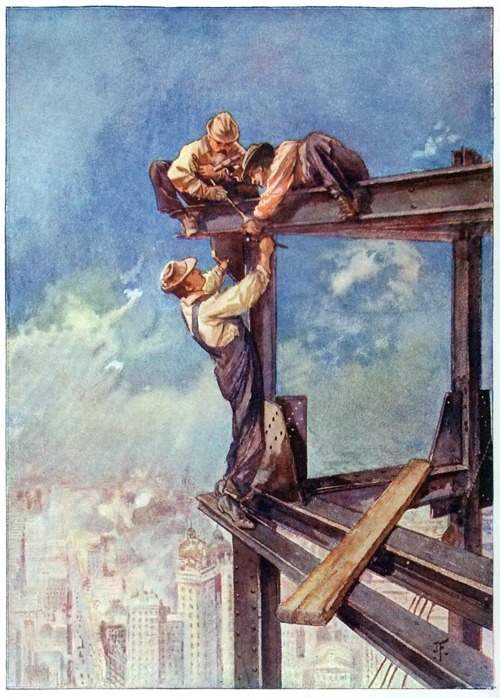
big church extends deep into the work week
There are big churches—but this post is not about large buildings and lots of people. There is the political big tent, which tries to draw together all sorts of people with diverse viewpoints. There is the Big Ten and the big top and the big bang theory and the Big Gulp—from which Mayor Bloomberg wants to save New Yorkers. This post is about none of those, though perhaps Big Bang is closest.
This post is about Big Church.
It’s not about size so much as messaging. Not about authority so much as a disbursing of gifts, talents, passions and mission. Not about one person’s vision and that person’s ability to pull others with him or her so much as it is about a silent listening of many to One, and each responding in kind.
Sometimes we need to state what something isn’t to figure out what it is (a kind of apophatic attempt, you might say).
I’m stuck on a quote from an old dead guy who wrote letters trying to help his readers recognize the big church already at work among them. I wrote about a couple of this guy’s quotes here, and I’ve started with all the “this is not’s” because I’m convinced we mostly don’t see what this old dead guy was saying. That is, we don’t see it, though it is there and vibrant and alive in ways that are still largely invisible to us.
Big church is an entity that communicates persistent care through all its parts. We may think the pastor is the voice of the church, but that’s not so. The pastor is one voice. But the voice of the church looks like words and action. It looks like words and action that extend deep into the work week, far beyond Sunday morning. Big church lives out a redemptive message while embedded in culture and work and relationship. And big church is constantly inviting. But not inviting to a place or a political party. Or to put on a narrow (or wide) filter. Big church invites people into relationship. And it invites people already in relationship to go deeper.
All this because the individuals who comprise the big church routinely step out of self-created subcultures—we’ve done so for centuries—as seasoning for the broader culture. Stepping out carrying God’s passion for other individuals, in all the many ways God has in mind. Big church seamlessly folds in “together” and “apart.” That’s why church is big. And certainly much bigger than a place you go for an hour on Sunday.
###
Image Credit: OBI Scrapbook Blog
Dummy’s Guide to Conversation #9: Say it Out Loud To Get It
 A pastor friend once wondered why the congregation didn’t know this certain fact he had mentioned in a sermon. My friend was under the notion that people listen closely to every word of a sermon. I am convinced people do listen—just not to every word.
I know this because I have taught college students and mistakenly thought that the wide-open eyes and direct eye contact meant they were listening. It took me until my first test to realize how mistaken I was. Direct eye contact is as much an act as appearing to type notes while facebooking friends. Students and all of us easily adopt the outward behaviors that allow us to escape miles away to play on the beach while the person in front persists in boring monologue.
But a conversation is a different environment than a lecture or sermon. Don’t let your conversation partner bore you with abstractions. Challenge them. Question. Ask. This is the very nature of conversation and it fits with how we understand anything: we need to try an idea on for size to sort out whether it fits us or the situation.
Trying an idea on for size looks like talking.
We must turn something over verbally to begin to understand it. It’s just how the will is connected to the brain—through the voicebox. Not exclusively, sometimes we get it without saying it or asking. And sometimes writing a note helps in understanding (that’s often how it works for me). But make peace that people need to respond in one way or another to truly begin to understand something.
This is part of the reason lectures can be so ineffective.
###
Image Credit: BLU (street artist from Bologna Italy) via 2headedsnake
How to Pitch a Medical Device Company #2: Don’t Settle for the Chain Restaurant Brand
 Med Tech spends a lot of time and interest on getting brand right. Precision graphic restrictions paired with copy that strikes a positive, knowledgeable tone are the expected norm. But sometimes the prescribed boxes and creative areas and subheads always in the same order become too familiar. And then the many pages of the branding guidelines present a calcified artery (or a narrowed alley, if you prefer) that can feel stuck.
Almost inhuman. Lifeless. Especially when most med tech firms offer much the same fare.
This is exactly why agencies are invited to pitch: someone recognized their communication had become more wooden, less engaging and sort of like yet another chain restaurant in yet another strip mall.
So the person with clout (or vision or both) says, “Hey, what if we started from a blank page.” Or perhaps you’ve been in conversation with someone and raised the question: “Surely even a med tech firm can seem almost human and engaging?”
That’s where the opportunity begins. Because it’s hard to start over when you live inside an organization. On the inside you’ve already drunk the brand Kool-Aid. And the regulatory restrictions and legal waffle-words troll through you conversations even when talking with your five-year old (“Jimmy, randomized studies correlate earlier bedtimes with general health and well-being. Many physicians would likely suggest you go to bed right now. OK?”)
The point is not to get rid of their brand. Not at all. The processes and procedure the brand encapsulates are a solid investment (that is, until they aren’t anymore). The point is to be yourself and offer a new way of thinking that floats away from the expected norm. Know there will be resistance. Brand managers will fight. But you’re just trying to bring a bit of life to the brand.
###
Image Credit: Laurent Cherere via MyModernMet
How to Pitch a Medical Device Company #1: Know MedTech Context
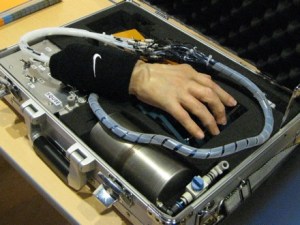
help us feel human again
I spent the early years of my working life being formed by the medical device industry. I was energized by the mission of seeing people restored and hearing joyful patient stories. I enjoyed the banter with physicians and learning about the junction of technology and living systems. And I was charmed by the folks I worked with: some of the smartest people around, with a bent toward helping others. Not everybody, mind you, but enough lively, mission-fed people that the workday was full of surprise.
Things change. Corporations mature—for better and worse. Lately it seems the balance sheet and the quarterly earnings call too easily drown out mission. Smart people who enjoy a challenge still work there, and it is an industry with more and more specific boundaries. So if your agency is pitching medical device work, please be aware of these three influences that shape the perspective of the people you will be talking to:
- Legal pinioning
- Regulatory straight jacket
- Branding dead ends
These perspective-shapers sounds like a bummer, but smart agencies with a knack for operating in tight quarters can help make a difference. The first two perspective-shapers are fairly obvious. Naturally, the best medical device companies hold the patients who receive their therapies in the highest regard. And you would not want to work with a company that didn’t. But in our litigious age, there’s lots of money to be made from suing manufactures for all sorts of things. Naturally, medical device companies ramp up their risk-averting processes. Lawyers review nearly every outward facing piece of communication and regulatory reviewers—the picky cousins of lawyers—delight in ferreting out each word of potential deviation from the FDA-approved copy. And the work of lawyers and regulators is invaluable.
Branding dead ends are not so obvious and few will admit to them out loud. These take a bit more explanation, so I’ll reserve it for another post.
But in your initial approach to conversations with med tech employees, know that most of their conversations are like walking a tightrope: marketing is always a balance between what you’d like to say and what you can say given the published studies. Agencies with more consumer experience can find this deadening. But resisting the pinioning and the straight-jacket—in your own way—is one of the ways your team can add value. It’s just got to be believable. And it becomes more believable when you ask for and expect the list of approved claims before starting work on your pitch. Since every claim must have a valid reference, basing your creative on the right foundation can make the difference between making the final cut and being dismissed as not up to snuff.
Image Credit: Engadget
Going to Church? Hear All the Voices

did you feel that?
Any pastor who cared would say the same thing: no solitary voice can ever speak for an entity as all-encompassing as the church. And except for the rare despot-in-training or the health/wealth preacher coercing you with anti-Bible blather to line his or her pockets, most leaders will say they want something like laminar flow, not just robotic followers.
Laminar Flow? Back when I wrote about mechanical heart valves we talked about the flow across leaflets and disks and how that flow of blood could have a cleaning effect or a stagnating effect.  Cleaning was good: it kept the mechanism moving. Stagnating—not so good: clots could form, which could impinge on the movement. The key was to design valves where flow was largely in the same direction. And that sounds like a bunch of conversations sprouting from individuals but moving in the same direction.
All-Encompassing? This notion the Apostle Paul talked about in some of his letters (like here and especially here) is far too large to leave in the hands of pastors and professionals and volunteer leaders. And it wasn’t just Paul: Old Testament dudes were saying the same things in different language and with different emphases. It takes an entire people—across ethnicities and nations and generations—to even begin to grasp the full story. An entire people writing the story with words and deeds and conversations.
This thing is big. Really big.
###
Image credit thisisnthappiness, RC Modelers of Laredo
Speak up! Wait. Why are you talking?
If you hail from the corner office, you’re used to being heard.
 If you are king of the OR, assistants jump at your command. If you hang out behind a pulpit or professorial podium—you know some at least pretend to tune in. But not everyone has a built-in audience. Not everyone is heard.
Those accustomed to being heard can have a hard time believing some cannot be heard. Why don’t just they just speak up if they have something to say? (Do they even have something to say?) In the same way Wall Street favors insiders over run-of-the-mill investors, every organization favors and rewards certain voices over others. These are the go-to voices in catastrophe or when a pep talk is needed. But these people sometimes assume everyone has a voice—because people listen to their voice—so, true for everyone.
Right?
But how many C-Suiters really want to hear? And how many behind the pulpit or podium really want to dialogue? Because—after all—casting vision is all about one-way messaging. Dialogue takes too long, is messy, confuses people with extraneous stuff and swerves off (my) topic.
What would leadership look like if listening were involved? Certainly there are times when monologue and one-way messaging are appropriate. But not all the time. What if the real strength of leadership was hidden in the will and unvoiced thoughts of the department/team/congregation/classroom? What if all sorts of unity was bubbling deep under the surface waiting to spring out much bigger and much better than anything the C-Suite player could ever imagine? It would be messy at first. But maybe something lasting would happen.
###
Image Credit: thaeger
The Trap of Telling All You Know
The Benefits of Version 1.0

My Ignite experience reminds me that the goal of speaking is engagement, even above conveying information. Looking back, I tried too hard to say too much.
I have a much deeper appreciation for people who can pull off a compelling talk. And I realize these people work hard to be compelling. Preparation is much more about editing then writing. Then again, conveying excitement to an audience–could it be something of a gift? Maybe a gift that grows through practice.
But as Greg Flanagan said in his wonderful talk “Make Mistakes,” I’ll call this version 1.0.
###
Image Credit: via 2headedsnake
Livestream Ignite Minneapolis Tonight Starting at 7pm
I have an idea but just barely the guts to step on stage.
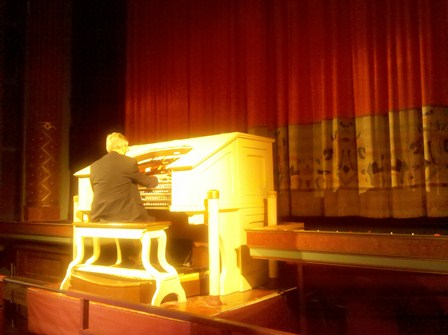 I’m doing it anyway. Watch Ignite Minneapolis here starting at 7pm today (24 May 21012).
I just hope the Mighty Wurlitzer doesn’t rise from the depths before I get to Side 20.

 conversation is an engine