Consumer Divide Grows while Lobbyists Paint over Excessive Executive Pay Packages
This simple ratio can help shareholders see more clearly

Jack Neff at Ad Age reports on the growing divide between the rich who just keep getting richer and everyone else—and how that fact may reshape marketing efforts. That marketers see the divide and are changing strategies is a telling detail to this economy.
Meanwhile, the Washington Post reports on the lobbying efforts to repeal the requirement that public companies disclose comparing executive pay with that of the average worker in the company. According to research conducted by MIT and the Federal Reserve, average executive pay was 28 times that of the average worker income in 1970. “By 2005, executive pay had jumped to 158 times that of the average worker.”
Nobody wants more rules for companies to follow, especially when those rules require budgeting for more government agencies to enforce them. But I would like to see the tone of our national economic conversation move toward simple, understandable terms that can help us see what is going on. Comparing executive pay to average worker pay can help the average person get a grasp on the crazy pay packages many executives receive.
What if shareholders demanded more than that companies “go green”? What if they demanded that companies “pay fair”? I’m not against executives who have agreed to the corporate tattoo receiving more—even much more. But today’s ridiculous executive pay packages remind of feudal economics.
The simple ratio of executive pay to average worker pay could make things clearer. Why aren’t shareholders asking for that?
###
Image Credit: Ruby Anemic
We may play the text, but it is also playing us.

“Another model, which undermined the designer’s new claim to power surfaced at the end of the 1990s, borrowed not from literary criticism but from human-computer interaction (HCI) studies and the field of interface and usability design. The dominant subject of our age has become neither reader nor writer but user, a figure conceived as a bundle of needs and impairments—cognitive, physical, emotional. Like a patient or child, the user is a figure to be protected and cared for but also scrutinized and controlled, submitted to research and testing.
How texts are used becomes more important than what they mean. Someone clicked here to get over there. Someone who bought this also bought that. The interactive environment not only provides users with a degree of control and self-direction but also, more quietly and insidiously, it gathers data about its audiences. Barthes’s image of the text as a game to be played still hold, as the user respond[s] to signals from the system. We may play the text, but it is also playing us.”
Ellen Lupton, Thinking with Type, (NY: Princeton Architectural Press, 2004) p. 73
###
Image Credit: this isn’t happiness

Person of the Book or People of the Book? Love Wins by Rob Bell (Partial review)

It’s too easy to fool ourselves.
Just how blind am I?
Recently I sat with some well-respected relatives who had devoted their lives to pursuing God. Our conversation turned to quick jibes at Rob Bell’s Love Wins. I had only vaguely heard of the book and the controversy surrounding his reading of the Bible. But knowing very little didn’t stop me from defending Mr. Bell purely based on my growing admiration for people trying to reframe stale old arguments.
My uncle said “You have to know the Book to know the Author of the book.”
I found myself in agreement and then in violent disagreement. I thought of my childhood and young adulthood growing up with the Book—that is, the Bible. We spent time in it every day. We memorized it, acted it out and generally knew it pretty well. But it wasn’t until solid conversations with others, both dead (that is, authors who left their books behind) and alive, helped me start to see the shortcuts I had taken in my own single-minded reading. That is, I started to see the blinders I wore that I didn’t even know about. I need conversation with others to help me see my blinders. I can now reassert my love for the Biblical texts, their authority in my life and the God behind those texts and Jesus the Christ who lived, died and lived—but I do so knowing faithful, admirable people can and do disagree over how some/many of those texts are read.
Can you be a person of the book without admitting others into your thought circle? There is a blindness that settles on us even more securely when we think we are just looking at the text and pulling out truth. The problem is not with the text. The problem is with our blindness, which is just another feature of the limitations of our humanness. This is not about more education. Nor is it about liberal vs. conservative. It is about seeking help to locate our blind spots. Of course, we don’t go looking for our blind spots. We go out looking for someone to tell something interesting too, and we end up finding out there is something pretty important we missed.
Also there is another piece: that of holding scripture in faith while allowing questions to sharpen and make visible some critical pieces we need to know to move forward. There is no letting go of faith here, but there is a willingness to help move closer to that truth.
I’m partway through Mr. Bell’s book and enjoy his fresh take very much. I find myself agreeing with his point that heaven is both in the future and partially present. Same with Hell. So far I don’t see anything anti-Biblical. And people from my particular tradition need only refer back to Dr. Ladd’s famous The Gospel of the Kingdom to be reminded of the now/not yet nature of Jesus’ talk about life on this planet. However, my reading of Mr. Bell’s third chapter makes me restless, because I believe there are consequences to what we say and do. I want to hear his full argument before commenting further.
My point: to be a person of the Book is to be a person of conversation.
My wife and I have been blessed by a group who will think together verbally about the Book. This group counters and challenges the inward-looking tendencies arising from my pietistic background. Certainly there is great benefit to carefully watching over our personal devotion. But real truth demands the relationships that talk.
Take-away: don’t rush to judgment in conversation.
###
Image Credit: Achille Beltrame
Meaning Shows Up Between Us
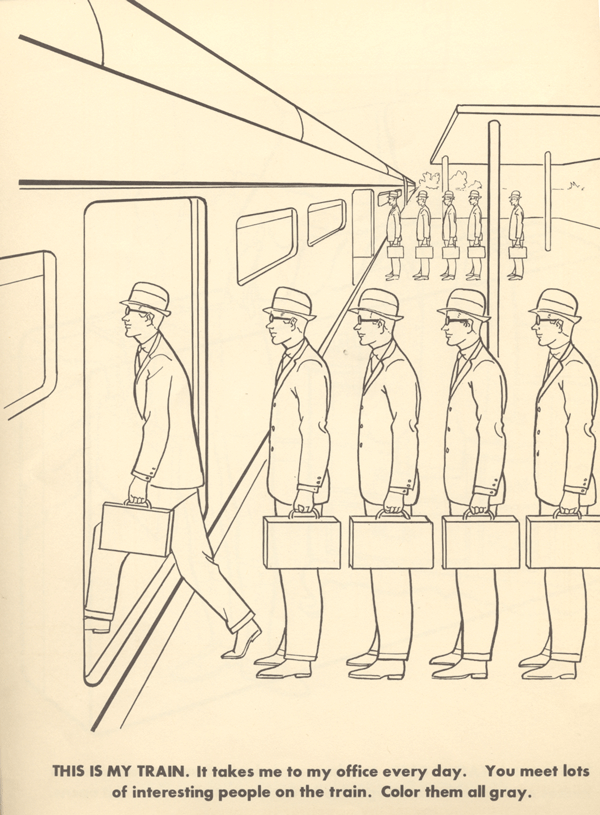
We are each products of the conversations we’ve had, whether with people, books or situations.
That’s why we keep changing.
###
Image credit: A Hole in the Head
In vitro. In vivo. In vino.
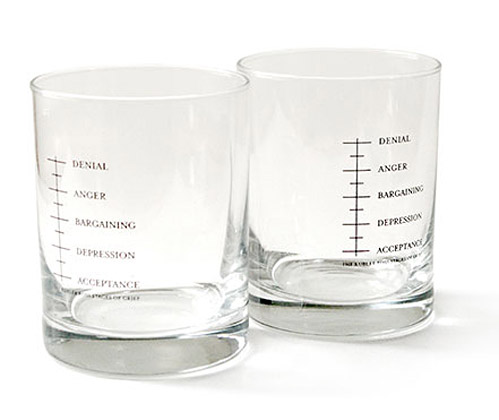 He thought he had carved it on the handicapped stall. But as he sat there he couldn’t see it. Maybe he carved it in another stall. Screw the regulators. Screw purchasing. Screw the fat cat CEO. He would be the fat cat. When his ex stopped screwing his wallet and settled for screwing his best friend. He was drunk and he knew it. He shuffled out the door, pants around his ankles and made himself comfortable in the much smaller stall. Yes. This would have been the one. He searched the wall to his left. De novo. He scanned to his right. In vitro. He caught his breath. In vivo. He took out his car key and scratched. In vino. He stood. Pulled up his pants and fastened them. He took a slug from the bottle in his paper bag and put it back in the deep pocket of his lab coat. Wash hands. Pop a mint. Pop two more mints. Ready for the next procedure.
###
Dialogue is a place
 Dialogue is a place. It’s a playground where humans come to teeter and totter, to swing and slide. It’s a geography—a verbal top-of-the-Foshay—where we suddenly see for miles though still sitting in a coffee shop talking with an old friend. Our best conversations become spots on the map we revisit for the rest of our lives.
###
Photo credit: Minnemom

 conversation is an engine