They shoot listeners, don’t they?
Exercise this underused relational tool
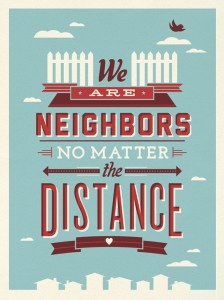 How could listening ever be bad or wrong? For a long time I thought of listening as a sign of weakness: if you are listening, you must not know something. Or maybe you don’t have your ideology straight. If you are listening than you are not talking. And leaders talk: they present solutions. They know stuff and they say it like a champion news reader. Leaders gather followers by releasing streams of words.
It turns out listening is an incredibly rich relational tool: it lets us hear another’s voice. Listening moves a thought from one brain to another. It pulls an experience from one set of muscles to another. Even if we seem to be hearing all the same old words, relational work is accomplished between two talkers when there is also hearing: someone is less alone.
Maybe we don’t listen because we already know what this person will say. But what if we focused on becoming the kind of people others could explore ideas with?
I like those conversations best: where we step outside of ideology and ask “What if?”
###
Image credit: Jacob Etter
All Things Awesome
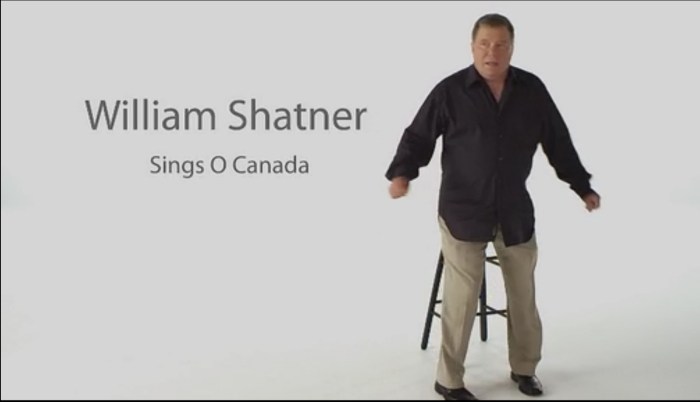
 In the realm of how we talk with each other, Wayne Booth saw three options: convincing someone of our position, bargaining for concessions or listening to “pursue the truth behind our differences.” But what if we knew something even more stunning than the ingredients of Hahn beer? That would be an example of reconciliation-rhetoric: listening + naming what’s awesome. ( Via Adland TV )
###
Who shows up in your conversations?

show up for a few of your conversations today
There’s you. And your conversation partner. And since your discussion stumbled into talking about money, your Grandad showed up who always said “Save your money.” If you talk politics, some talking head from Fox shows up, or some voice from NPR joins in. You didn’t invite them. But you really did, because you heard them speak and absorbed their words as truth—at least until you repeat them aloud. Then you start to wonder.
Maybe you went to a funeral over the weekend and the widow shows up in your conversation, with what she said about her husband, your friend. And then your daughter shows up, because of the tiny gravestone she put over the mole you buried in the back yard ten years ago: “Here lies one dead mole.”
And sometimes even you don’t show up to your own conversations. And neither does your conversation partner. Because you’re both on autopilot and talking past one another as you walk past one other down the long hallway toward the coffee machine.
A good conversation is part mystery, part shining beauty, part toilsome information exchange—and frequently all three. But you need to show up.
###
Image Credit: Jay Fleck
House Hearing on FDA and Medical Devices: Even God Doesn’t Guarantee Safety
A sluggish FDA is partly a response to our demand that they arbitrate safety

Great Power. Still Human.
[Full disclosure: I consult for the medical device industry.]
Tomorrow’s hearing with the House Oversight and Government Reform Subcommittee on Health Care is all about looking for a better way to get medical devices approved. MassDevice reports Minnesota Rep. Erik Paulsen will be there to push for an “ ‘innovation pathway’ for pioneering medical devices.” Paulsen is also there to try to block a proposed $20 billion tax on the medical device industry.
Lives ride on the safety of medical devices. The companies I work for take this very seriously and institute redundant processes to check, double- and triple-check that all the right things were done. They take a great deal of pride in their record and FDA oversight is likely a boon to Minnesota’s culture of medical device safety.
That the FDA is slow to approve medical devices and is often seen as a bottleneck for innovation does not surprise me. How could it be otherwise, given that Americans want iron-clad guarantees that everything with the FDA seal is perfectly safe? We want and expect the FDA to play a God-like role in assuring us nothing harmful every escapes their jurisdiction. And sharp-toothed lawyers constantly circle and swim in at the first hint of blood, so it is also a big-money game.
Do we expect too much from the FDA? Is anything ever truly safe and entirely understood? Though the FDA would likely argue that they are simply applying “reasonable standards for safety,” the public doesn’t see it that way. FDA “approval” means something far more to most of us: that nothing should ever go wrong. That’s too big a role for a person or an agency. Even God doesn’t issue a decree like that: He only says that it all works out in the end for those in relationship with Him. By the way: my experience is that the FDA never “approves” anything. They just clear it for market release. Subtle difference, right?
We all need to be reminded again of what constitutes a reasonable standard for safety.
###
Image credit: Kay-too
Try This: Wait
Waiting has a silver lining: breathing space

but remember to breath
Years ago my wife and I met friends living in a developing country. We hung around for a few days to see what life looked like. Turns out life looked like lines. Long lines. Hours to pay an electric bill in person. Hours more for the water bill. This country was known for layer after layer of bureaucracy to handle the red tape, so the lines kept people employed even as they drove me crazy. I wondered aloud how my friend could stand it—especially knowing he tended toward a Type A personality who relished getting things done. He said, “That’s just the way it is.”
It’s hard to see any benefit in waiting. We work hard to eliminate waiting every day. I pull ahead of drivers focused on phone conversations rather than the road. I seek out the shortest line at the grocer. I click elsewhere when a web page loads too slowly. I don’t like waiting. I bet you don’t like waiting.
But my friend used his waiting time wisely. There was no plugged or unplugged then. Unlike today when most people waiting are looking into a screen, he brought a book. He prayed. He talked with people in line. My friend was a smart guy (still is) and he made a lot of connections between different parts of life. He ran a printing business, started a college and a home for families whose children were in the local hospital—even as he waited in long lines for the business of everyday.
Two recent books advocate intentional unplugging from the web, if only for short times: The Shallows by Nicholas Carr and Hamlet’s Blackberry by William Powers. Both books look at the effect of a mind crowded with stimulus and hint at what might happen with a bit of mental breathing space, which is a kind of waiting. Waiting is also a time-honored means of reflection and forward-movement in the Bible. I just finished reading the book of Psalms and saw how author after author waited for God to do something. They prayed. And they waited. And they watched (and waited).
Waiting comes with the capacity to sharpen our interest, our eyesight and our appetite. Waiting also has a purifying effect on our long-term goals. We become more realistic as we wait (or perhaps we become more insistent). But know for certain that something will change as we wait.
I’m working at waiting. Today I’ll look for an opportunity to stand around and wait. It will be hard to not pull out my phone with its checklists and documents. But waiting may allow me to connect the dots in a fresh way.
###
Photo Credit: We Love Typography
Verbatim: “Pursue truth behind our differences,” Wayne C. Booth
Who will you argue with today?
 The late Wayne C. Booth was Professor of Rhetoric at the University of Chicago. Among the many books he wrote was The Rhetoric of Rhetoric, which I reviewed here. In that book he talked about three kinds of conversations: win-rhetoric where the point of the conversation is to bash your conversation partner into submission. Bargain-rhetoric is where we dialogue toward the goal of finally getting to common ground that benefits both of us. In the business world we called this “win-win” because everybody benefits, though deep concessions were often made. But Booth favored this final type: listening-rhetoric, which had the goal of “pursuing the truth behind our differences” by listening with the intent of understanding what the other is saying. There are many benefits to that way of holding a conversation.
Listening-rhetoric sounds pretty obvious as the way forward, right? I agree. Yet when I check my intent in the middle of a conversation (hard to do), I find I am more often trying to listen strategically to counter whatever obstacle my conversation partner places between us. Or I am not even listening. Instead I’m thinking some far away thought (but maybe that’s just me—I’ve always had a problem staying anchored in the present).
I propose a fourth kind of conversation: reconciliation-rhetoric. I see it as Listening-Rhetoric Plus. Pursuing the truth behind our differences can often lead to a very fertile place—a place as uncomfortable as it is fecund. But leaving the conversation as just touching the two of us does not reveal the whole truth. In reconciliation-rhetoric, me and my conversation partner invite God into our discussion. This isn’t churchy stuff. It isn’t religious stuff. It is a human connection that recognizes the bigger stuff going on around us. It is actively asking and talking about how (if?) God’s plans enter our discussion. Maybe it looks like a silent prayer. Maybe it looks like an out-loud prayer. Maybe it is the recognition that larger plans may be in motion, subsuming our own. I’m taking my cue from a pivotal ancient text written by Paul the apostle in his second letter to the church in Corinth (Chapter 5).
Just who is involved in our discussion, anyway?
###
Photo credit: Niklaus Ruegg
Five Bucks to Withdraw 20? Let the Robber Barons’ Rob!
How do you suffer the stupid?
 I was in a hurry to get to a client meeting. My client was in downtown St. Paul and the ramp only took cash and checks (imagine!). I had neither. How convenient: a cash machine across from the booth. Fees levied? Ok. But the next day when I checked on my account I saw TCF also had their hands out when I stood by the machine.
[hand slap to forehead]
Of course—some portion of a banker’s income must come from stupid. We all know this. I’ve always thought of credit as stupid money (yes, I use credit) because my delay in paying for something I wanted right away is my banker’s opportunity to rifle through my pocket. I sign up for this kind of thing all the time. I can understand why William Cooper and TCF have a lawsuit against the feds for limiting fees—otherwise how would they take advantage of my stupid ways?
Resolved: be less stupid for the rest of the year. We’ll see how many minutes that lasts.
###
Image Credit: DANKTARI
Riot, Restart and Scrubbed Minutes: The Bradlee Dean Prayer
But really…what happens when someone prays?

Say more.
Last Friday Bradlee Dean gave the opening prayer at the Minnesota House. His words caused such uproar that Speaker Zeller apologized and had the prayer scrubbed from the historical records of the day. The session was restarted and Rev. Grady St. Dennis, the house chaplain gave the new prayer.
Was it a prayer Mr. Dean offered or was it a speech intended as a burr under the saddle of the gathered legislators? I don’t know all that Mr. Dean stands for, but his rhetorical mix seems misdirected. Yesterday I wrote about mixing an ancient form with something of today. In Mr. Dean’s prayer, the result from mixing an ancient form and using it as a rhetorical bully pulpit is repellent. The communication seems more speech than prayer, and seems to have been interpreted that way by the humans in attendance. And yet it is possible Mr. Dean was sincere in his conversation with God.
The notion of a public prayer is actually kind of complicated, and is perhaps a mix of forms from the beginning. One person speaks aloud. The person implores God’s attention and action. Perhaps the person seeks wisdom and mercy, or help with any of the myriad needs finite beings have. Listeners listen and agree. Or disagree. Rather than praying along and seeking the same things, the potential prayers in the House rose in disagreement shouted the guy down (figuratively, I think).
I agree with Rev. Dennis Johnson writing about the work of guest chaplains in saying “We have a special burden to include all people in our prayers….” But I’m not so sure about the last part of the quote in Lori Sturdevant’s op-ed: “…and to make the prayers nonsectarian.” Because real prayer must come from somewhere, some belief in God. It is true that belief in God need not highlight a specific brand of religion, but any prayer must be grounded in belief that God exists and hears—that alone will be offensive to some. Otherwise the prayer is just good wishes and positive vibes—not bad stuff, just not, well, real. And not that useful in seeking help from the Eternal.
King Solomon got the form right (1 Kings 8.22ff) and set a lasting example and practice. Of course, Solomon’s prayer was spoken among a set of like-minded people. So the context helps the prayer stay as a prayer: spoken to God from a bunch of people going a similar direction.
If we’re going to have prayer in the Minnesota House, there needs to be some elasticity in allowing people to pray for real. And people praying need to examine their intentions before uttering word one. But let’s continue the notion of conversing publicly with the Creator.
###
Image Credit: Buramai

 conversation is an engine