Is Death a Natural Part of Life? I say “Yes.”
Bodies are finite. Souls—not so much.

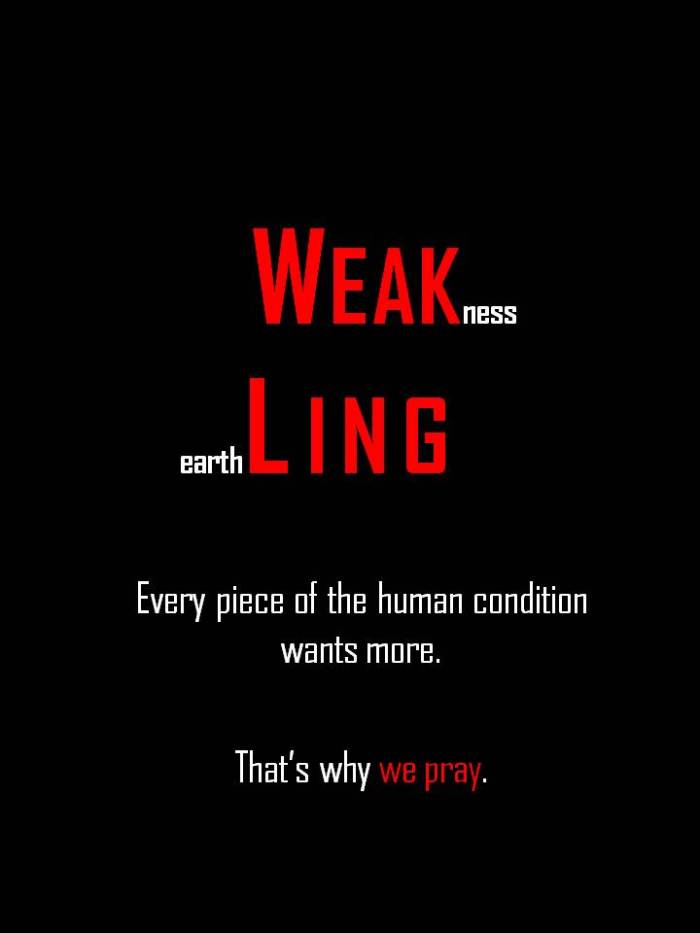
the human condition has always been finite
Our pastor is fond of saying “Death is not a natural part of living.” His statement is especially apropos when confronted with the death that seems so senseless and tragic: the death of a newborn child, or the death of some fresh young person moving through life powerfully with plans, ideas, momentum and devotion. Death seems so wrong. So unnatural.
I deeply lament with the parents of the child whose soul resides with God but whose body is has gone back to the earth. I pretend no knowledge of the knife blade of emotion behind such loss. I know God promises His presence—that He is as troubled and full of lament and weeping (remembering that Jesus wept at Lazarus’ death—John 11.35) as the parents. And that’s as far as I know.
My wife and I have a running controversy about whether sin brought physical death or some other kind of death. In other words, if Adam and Even didn’t disobey God in the Garden of Eden (Genesis 3), would they have continued living—perhaps forever? My position is that the human body has always been finite—even in that perfect place before sin entered the world. I maintain that the very limits introduced to us by our bodies speak incessantly to the deep dependence we have on God at every turn in life.
It’s not as easy a question as it at first seems. If you think back to the Genesis texts, there’s no question that sin introduced a world of pain: literal and figurative. Just read Genesis 3 for the list of pains to expect. But at the end of Genesis 3, it is clear that men and women could no longer live in the garden because they might eat of the tree of life and so live forever (Genesis 3.22). So, banishment.
Calvinists and other reformed folk tend to think of the pre-sin version of humanity as also immortal—at least that’s how Millard Erickson sums it up in his “Christian Theology.” And if you are a fan of the Apostle Paul’s writings (as many reformers were and are), you’ll likely agree. Paul seems to often equate sin and death, for instance, in his letter to the Romans: “Therefore, just as sin came into the world through one man, and death through sin, and so death spread to all men because all sinned….” (Romans 5.12) Other verses share and expand that sentiment. But did Paul mean physical death? Did God mean physical death when we warned against the eating of the fruit of that particular tree (Genesis 3.3)? Because physical death—immediate physical death—was not the result. Yes, Adam and Eve did die physically eventually. But was there a kind of death that occurred at the moment of sin?
Why Does this Matter?
This matters because of the day-to-day conversations we were designed for. The human frame was, is and has always been a fragile and needy instrument. Powerful in many respects (as any history text will attest), but profoundly weak when it comes to aging and decay. Botox and plastic surgery are of limited use. Our very weakness, on display day by day, is the thing that reminds us of God’s awesome power and keeps us coming back to talk. Moment by moment.
So—to say that death is not a natural part of life takes something away from the power and grandeur of God. It takes something away from his glory and seems to prop up the notion that we could have been able to keep on without God.
The point is our limitations constantly call us back to the original and originating conversation with our Creator. Those limitations and finitudes are built into our fabric. Mostly we seek escape from our limitations: thus Powerball, casinos and our ongoing proneness to financial scams. But what if we focused more on the conversation with the limitless One and less on fixing our limits?
What do you think?
###
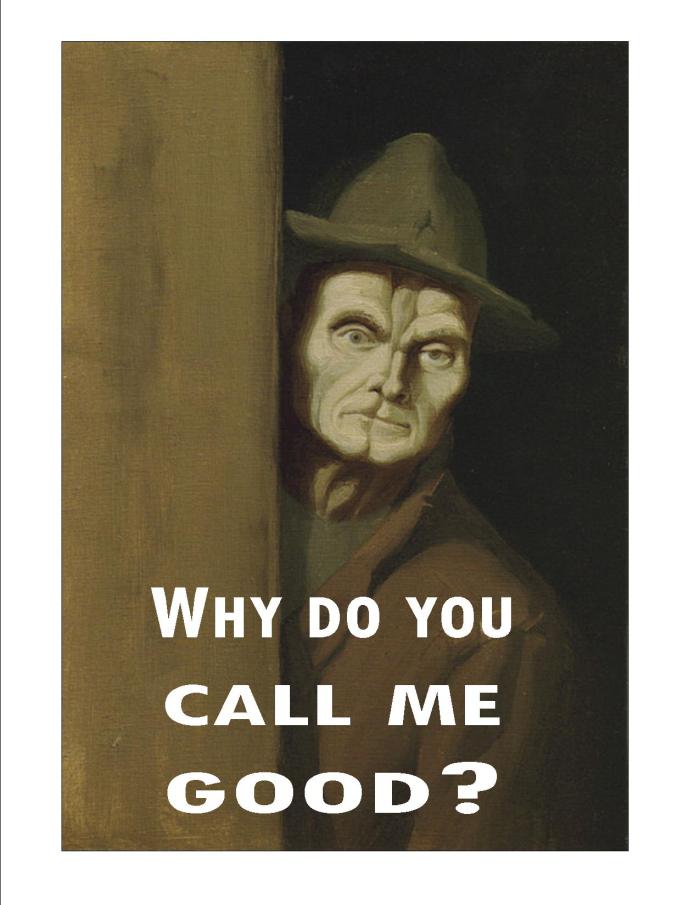
Why do you call me good?
 Full of capacity. Charged with purpose.
Ancient texts lead to surprising places. Jesus’ question to the rich young ruler in Mark 10.18 might have been rhetorical—not wanting to play into the man’s argument too quickly. Or it might have been a hint about the complexity of the character before the young man. It was certainly an invitation to think twice about the obvious stuff in plain view. Is cash a sign of blessing? Should I listen more closely to the important person or the stranger? Is death an end or a beginning?
###

Sometimes a Conversation is an Image
We Act Out What We Cannot Say
There are moments when we are open to listening. These moments may indicate we are open to change as well. People have been telling me their stories about conversations that changed their lives. Sometimes an inconsequential conversation at an inconsequential time can make all the difference in the world.
Louise Bell tells of a moment, not exactly a conversation but an image, that changed her life. Years ago her African-American grandparents had been murdered in the most gruesome way over an act of mercy on their part. Justice had not been accomplished in their murder and the wound was deep. It was when Louise mother died, after moving back to the south with an interest in reconciliation, that this moment occurred.
Listen to the December 30 edition of The Story over at American Public Media. It’s in the second half of the show.
###
Where Does Insight Come From?
How do I discombobulate without getting fired—or hired?

Over at the Philosopher’s Playground, Steven Gimbel wrote recently of his need to discombobulate his students (with their “naively smug beliefs which they’ve never thought very hard about.”) to help them begin the work of philosophy. I wonder if the act of getting discombobulated is the beginning point for producing any insight.
A few days back I had coffee with a friend who is a human resources executive and coach and thoughtful person. We were talking about what makes an organization dialogical, that is, willing to enter into conversation internally (versus the usual barking of orders from one management level to the next). Carol, as it turns out, had a keen interest in how dialogue works and was able to identify four stages in a verbal exchange required to produce insight:
- Awareness of a problem or issue
- Trigger: something in the exchange triggers a reflective moment. Insight often falls from the reflection
- Insight: the Aha moment, when suddenly I understand something previously opaque to me
- Action: Do something with an insight or it is gone. Write it down. Tell someone. Do anything.
Gimbel’s discombobulation seems to help with the awareness phase. We need to understand how what we thought certain or easy is neither certain nor easy. Sometimes I use a classroom exercise to help create the trigger/reflection step for my students. But just as often, in ordinary conversation, my discombobulation finds relief when my friend asks a question and I lapse into momentary reflection which often leads to an insight. Sometimes I feel like an “Aha” addict: there’s nothing like suddenly realizing a new truth—nothing like that “click” when a critical piece of how life works suddenly falls into place. That’s a big part of why I write.
Perhaps the key to those four stages is the action part. We need to do something with an insight. Right then at the very Aha moment. Otherwise it’s lost.
But corporate conversations routinely detour around discombobulation. It’s partly a time issue but mostly the politics of a department: a boss or manager or VP rarely seeks out discombobulation, especially from subordinates. The person in charge would much rather pay a high-priced ad agency or consulting group to come in and discombobulate them. I’ve been on both sides of a number of those meetings.
I’ve been trying to help my students become active discombobulaters in their workplaces: from wherever they land, my hope is they ask the impertinent questions that poke through the malarkey and point out deviation from mission.
###
Social Media in the Workplace
Check out this video about social media I saw on Chris Brogan’s website. Very worthwhile.
Who Cares What You Think?
Hearing from your non-target audience is critical to moving forward
I look forward to chatting with a friend and HR executive about how or if her organization encourages dialogue internally. It’s going to be a tricky conversation and I’m not at all sure I can verbally explain what I mean.

What's out there?
Dodgy Questions
I’m working backward from the notion that target audiences and publics are no longer willing to suffer monologues, sermons and sales pitches from companies trying to get their dollars. As I talk with clients and friends, I realize the unwillingness to engage in dialogue with their target audiences actually comes from a deep place of control that leaders want to maintain. Dialogue looks like brazen and reckless openness that offers little or no payback: sort of a personal, self-inflicted Wikileak that will most certainly sink the ship.
In a sense they are right: telling what we know and offering it in exchange for discussion and relationship does seem like giving away the store. But it isn’t exactly that and it will become less like that over time. Dialogue today is more a recognition that the audience that once packed your lecture hall is now making its way to the stage, each with their own microphone and their own index card of questions.
The willingness to engage in dialogue is much, much more than turning on another marketing channel or sprucing up a communication strategy. It is a deep-seated willingness that runs counter to the way many of our businesses are organized.
Talking to the Other
I’ve been tracing the notion of the Other back through Derrida to Levinas and Hegel. I’m trying to understand exactly what is at stake when we open ourselves to true engagement with another person. In particular, engagement with people outside my demographic, outside my target audience, outside my belief set. What are they talking about and how have I excluded them and what have I missed through my exclusions?
I’m eager to know what a company that opens itself in this way looks like: who are they internally? How do they talk with each other in a way that allows them to be open to talking with others?
So—this conversation. Are you interested ?
###
Listen Up: #2 in the Dummy’s Guide to Conversation
The problem with listening is the other people who keep talking
 You’ve opened your pie hole and made like a human: shaping experience into words that can be understood by the humans around you (though it’s still a bit fuzzy how anyone understands anything). You anticipate being stopped dead in your tracks with realization or wonder, right in the middle of a conversation.
But there’s a step to bridge the two: you’ve got to listen.
The traditional problem with listening is other people: they keep talking. When they are talking, you are not at the center and they keep uttering words that don’t refer to you. For instance: they rarely mention your name, which you keenly listen for. They keep talking about their own experience. Why, oh why, don’t they stop talking and ask me about me?
Let me introduce you to three friends who knew something about listening: Mortimer Adler, Alain de Botton and Jesus the Christ. I met Mortimer Adler when I read his book, “How to Read a Book.” Why read a book on how to read a book? Because of the author’s crazy fascination with understanding. He didn’t just read, he annotated, he outlined and he synthesized. He labored over passages in long conversations with the authors. Plus, he made it sound like fun (which it is!). Of course, there is not enough time to do that with every book, so Adler picked what he called the “Great Books.” His Great Books program has gone in and out of style over years, depending on your politics and your conclusions about who qualifies as worth reading.
Alain de Botton writes readable books that satisfy his curiosity and pull his readers into the vortex of questions he counts as friends. If you’ve ever wondered how electricity gets to your house or what is the process behind producing biscuits (that is, cookies) or why Proust is worth reading or why Nietzsche was not a happy-go-lucky guy, de Botton is the author you want.
Jesus the Christ knew something about listening, despite being both God and man. His human condition opened a limiting opportunity which in turn caused him to steal away for hours to converse with the God of the universe. I go into depth on this in Listentalk. But the point is that prayer, which is ultimately more about listening than talking, was a preoccupation of the man who was God.
Listening opens us to hearing—which sounds like “duh” except for when you examine your own listening practices and realize how often you are thinking of something else entirely when your spouse/child/boss/friend/neighbor appears to be talking. But to really hear, to be crazy to understand, to be curious and to be committed to connection opens us to the place where we can be stopped dead in our tracks.
###
Stop Dead in Your Tracks: #3 in Dummy’s Guide to Conversation
Could Paying Attention be the New Black?
 This has happened to you: Going along. Minding your business. Dashing off small replies to the usual small talk. Maybe you hint at the plus-sized existential questions colliding and storming through your subconscious; the doubts and uncertainties that threaten to spill through your cranium as a conscious thought you even might utter. Maybe you stay silent.
But the internal roiling doesn’t let up.
“What does it all mean,” you mutter under your breath on the elevator to the 23rd floor, remembering your wife’s comment about needing more attention and your boss using pretty much the same words and your doctor stating you need to focus on exercise otherwise diabetes is around the corner. That’s when the person next to you looks up from her phone and says,
“I don’t know, but the CDC says attention deficit disorder is on the rise.”
She smiles half a smile and goes back to her screen.
It hits you: Maybe there is a national attention deficit disorder and your life reflects it. Maybe our screens and multitasking so distract us that full-on attention is rare and becoming rarer. Since we carry the multi-tasking addiction with us into every conversation (like a drunk secretly playing out the context of the next drink), we simply have no bandwidth to attend the need, the threat, or the story (it is National Day of Listening, after all) playing out before us. And suddenly you long for an hour of blissful focus.
Black Friday may be a worthy day to consider that paying attention is the new black: the fashion statement that can only be given, not bought. And paying attention to what we say to each other—really listening—may be a gift that looks more like an investment in the future of a relationship.
If The Word Fits
If the first step in the Dummy’s Guide to Conversation is to open your pie-hole, proving you are both human and alive, then the second step is to listen. And the third step is to be stopped—or at least to be prepared to be stopped. So much of life seems set to automatic pilot. The same bowl of Raisin Bran every morning. The same drive to work. The same greeting to the guard, same conversations with the same coworkers. Same words sent. Same words received.
When we have the Aha moment on the elevator to the 23rd floor next to the woman immersed in her screen, we should take note. Write down the insight. Listen to it. But don’t stop there; consider making a habit of watching for the moments of supreme attention that stop you dead in your tracks with wonder. These are the very pivot points we shoot past without even taking in the scene. And that’s too bad, because we miss an opportunity to learn something about ourselves, our culture and our future.
###

 conversation is an engine