Lorde & The Life of Privilege
Because none of us knows everything.
Lorde’s critique of wealth (covered memorably by Puddles Pity Party) got me thinking about privilege. Her catchy pop tune about pop tunes is itself an expression of privilege. Not so much the gold teeth and Grey Goose (spendy vodka) as it is the kind of information she allows herself to dwell on: those privileged sources she and we take as true.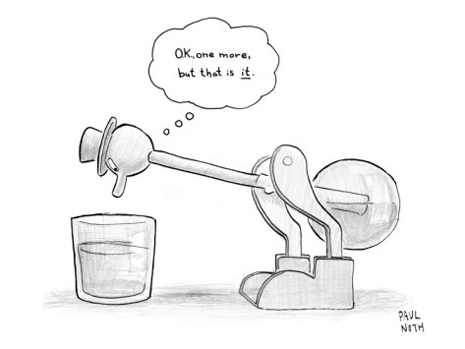
We all have privileged sources.
We might be a red-letter Christian or only read the Apostle Paul. We might consider sacred and true everything we hear on Fox News or NPR or read in the St. Paul Villager. We might listen more closely to a Marxist/feminist/liberation theology reading of any piece of literature. We want the commentator representing our particular bent to comment on life from the perspective of our tribe.
Humans are subjective beings and we do our best work from a perspective. We always have opinions and those opinions are based on whatever we scrape together and push under us, which is to say, we often form opinions first and then seek to support them. Every once in a while we form opinions from available evidence using solid reasoning. But that’s a lot of work.
What texts or authors or people in your life do you privilege? My two friends Rick and Jason often make remarkable book suggestions. Time and again as I’ve read their suggestions, I’ve thought: “Wow. This author is really talking to me.” My friend Russ has made prescient comments that have worked out in real life years later—so I’ve learned to not dismiss his chatter too quickly. My poor beleaguered friend Job wrote poetry possessing an uncanny ability to express my exact experience. Mrs. Kirkistan often sees things before I do. (Often? No: Usually. Typically.)
It’s not wrong to privilege our information sources—we cannot help ourselves. But it is also right to pause to examine what it is we privilege and occasionally ask why and whether we are served well by that privileged source. And perhaps to ask whether there might be other influences that can help us truth things out a bit more fully. Because (and here comes the hard part) even the John MacArthur’s of the world can have their truth sharpened by a Marxist/Feminist/Pentecostal/Whatever perspective.
Because none of us knows everything.
And I hope Lorde watches her lyrics cross the face of PuddlesPityParty. There is something revealing about the scary-tall grownup in clown costume belting out a teenager’s perspective on the world.
###
Image Credit: Paul Noth/The New Yorker via thisisn’thappiness

Taking Direction from Clem Fandango
A Year of Great Clients
I’m counting my blessings these days because I’ve had a year of clients who have been a joy to work with. Which is to say: they let me alone to do the work we’ve agreed on. And then we come together, talk parts through and make the work better.
All in all, there’s been very little Clem-Fandangoing.
And for that I am grateful.
###
Via Sell!Sell!Blog
File Under: Bad Ideas
Please don’t make me drive up that thing.
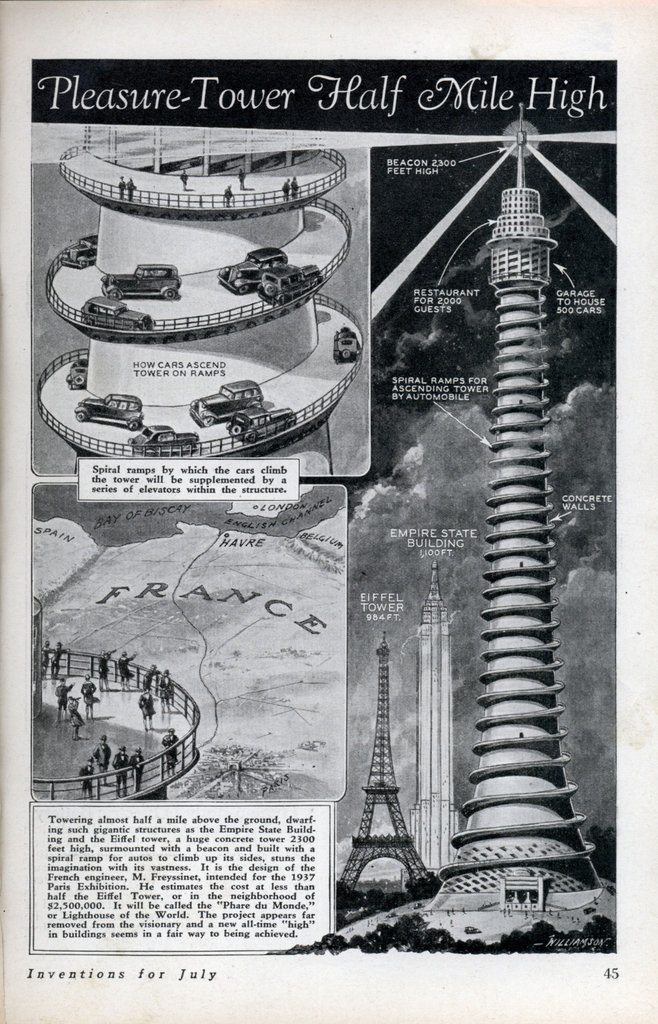
If driving Pike’s Peak scared me–this would be debilitating.
###
via Retronaut
Groundswell Plus: Please Write a Plus-Sized Book about Today’s Social Media Opportunities
Beyond Li & Bernoff’s Groundswell
Groundswell was published by Charlene Li and Josh Bernoff in 2008 (Boston: Harvard Business School Publishing). I’ve used it a couple times to frame this new opportunity and give social media marketing students a sense of the possibilities of communication beyond liking a snarky comment, link or photo on Facebook. I’ll use the text again but I’m also prowling about for newer texts.
Groundswell is a grandfatherly text by today’s standards. Published (counting fingers: 9-10-11-12) more than five years ago and much has changed. I like the book for the authors’ optimism about building and maintaining communities. And that is precisely where it is starting to wear thin. It turns out building communities is a much more complicated endeavor that works best when flesh and blood people talk with flesh and blood people. The social media piece is a nice and useful add-on, but students need to see a larger picture.
I’ve got other texts that give details about best practices and content strategy. We’ll certainly discuss the disciplines of editorial calendars and fine-tuning their understanding of their audience and tightly defining what their audiences need/want. And, as always, we’ll write and share and write and share and learn what works for ourselves.
Groundswell is firmly focused on taking full advantage of business opportunities. That’s why I first started reading it and it may be why I end up with something else next time. My students tend to be a devoted bunch: they attend this Christian college and their writing (most are English students with a professional writing focus, plus a few journalism and business majors) bubbles up from deep theological streams. Many will say they have no interest in business right up to the point where they realize they actually have to pay off their school loans. That realization attenuates their post-college work vision. One my teaching goals is to help students start to see just how much those deep theological streams can pour through the world of work with all sorts of happy results (an income comes to mind, but also making a difference in real life).
What I’d really like is a Groundswell Plus. I’d like a version of Groundswell that paints a larger picture of the community-building opportunities. Perhaps Groundswell Plus tells stories from the Arab Spring (for instance) or Ai Weiwei and points readers toward organizing for social change. Maybe this plus-sized version of Groundswell could point readers toward unearthing social problems (along with business opportunities) that might respond to collaborative energies.
Because in the end, students want to give themselves to things that matter.
Just like the rest of us.
###
Please Write This Book: Seminarians in the Salt Mines
Why I left seminary and why I came back
Short Answer: Seminary trains people to be pastors (no surprise to anyone but me) and while I was interested in God and theology and life’s big questions, I had no intention of being a pastor. My calling was in the world of work and getting stuff done (after a fashion: I still prefer thinking about doing to actual doing). But life’s big questions kept popping up.
Long Answer: one may run but one cannot forever hide from one’s life purpose. For me the big questions reasserted in the regular world most of us live in (versus a churchy, holy world where magical thinking sometimes takes precedent).
One of the big questions had to do with what encouragement looks like when stripped of official roles and titles and authority. To encourage—especially to encourage others to seek after God—floats as calling alongside any and all professions, roles, work and lifestyles. Which is why I finished the theology degree: because I want to encourage people in my profession (communicators, copywriters, art directors, marketers) and concomitant professions (all the folks I interact with every week: engineering, leadership, professors, photographers, pastors, scientists, all manner of physician, nurses, entrepreneurs, students, writers, editors, publishers…it’s a long list for any of us).
There’s a new emphasis out these days among pastors and theological educators. Well, not so much new as renewed: pastors have suddenly realized the world of work has not/does not/will not respond to churchy topics. Tim Keller’s work is pointing people that way and new organizations are springing up all the time, like the Bethel Work with Purpose initiative and Tom Nelson’s Work Matters: Connecting Sunday Worship to Monday Work. I’ve written optimistically and pessimistically about the attempts because I wonder at the intentions behind them:
- Are theological leaders focused on the workplace to enlarge their borders and so pull more people into the orbit of their particular organization?
- Is the workplace viewed as a missional last-frontier where all should be trained to verbalize dogmatic jiu jitsu?
- Or is the emphasis truly on encouraging regular folks (like me) to understand how God works in and through our work—and setting us free to go & do guilt-free?
- Can insular institutions release people to sort out what’s redemptive about their work—even if their ultimate answer has little to do with growing their local institution?
Perhaps I’m asking for too much nuance: is this an institution that focuses in or out? And if it focuses out, what does that mean for sending people and what does it mean for those authorities whose income depends on tethering people to the institutional focus?
Seminarians in the Salt Mines
Please write “Seminarians in the Salt Mines.”
- Start by showing how the God of the Bible was a God who attended to physical work and how work is no less a ministry than caring for souls.
- Help seminarians understand that calling is as much about dealing with the issues of work as it is people’s souls and in fact, people’s souls are laid bare in and through their toil. Or at least it can be that way.
- Have a chapter or section about the horizons of work: how looking out at a lifetime of work forms one’s perspective about what is important and how to spend time.
- Include stories of people who have preached the gospel with the work of their hands, people like Wendell Berry and Frank Laubach. Every chapter could have a story that showed a Wendell Berry-like faithfulness to a community and to substantive faith-giving practices in the world.
- Include stories from people actively pulling faith into their work: not the superstars seeking national attention—just the folks right around you.
I’d read that book. I’d buy that book.
###
Image credit: National Archives of Scotland via Salvage
Puddles Pity Party Covers Lorde’s “Royals.” I Can’t Look Away.
The Scary-Tall Clown with the Remarkable Voice
###
Grateful to See Modernity Limping Away
A Few Things For Which I’m Thankful

Modern: When we thought we could control everything. Then we thought everything we controlled was better than all that was out of our control.
After Modern: Turns out we control very little.
But God is still in control—and He tends toward giving good gifts (though my friends living in the Bible—Abraham, Job and Paul, among others—developed lots of nuanced language about what constitutes “good”).
I’m grateful today for much, like Mrs. Kirkistan and the Youth Culture making their way out of the household of Kirkistan and into/through the world. And that’s just for starters.
And I’m grateful modernity has been sent packing.
And I’m glad to get back to the certainty of uncertainty and the life-giving power of chasing tomorrow’s dinner.
###
Image credit: via thisisn’thappiness
Step 9: Accomplished (Resist the Irresistible)
Step #9: Try to not eat it all the first night.
 This photo taken under the guidance of the Daily Prompt: Simply Irresistible and under the influence of MopMop’s The Golden Bamboo live beat factory.
Let the record show: resistance is not futile.
###
Image Credit: Kirk Livingston

 conversation is an engine