Chris Guillebeau & World Domination
The Art of Non-Conformity
I’m halfway through Chris Guillebeau’s “The Art of Non-Conformity” and enjoying it greatly. It’s a very easy read. Even so, Mr. Guillebeau manages to challenge all sorts of commonly accepted ways we wander through life, from corporate culture to the rhetorical jujutsu of the bosses and authorities in our lives to how we decide what is most important. In every case, he invites me to ask my own questions rather than blindly accept whatever is laid before me. But it doesn’t read like a philosophical tract or evangelist’s preachment—it is simply stories from the lives of different non-conformists, which he then applies to the mundane stuff of ordinary, daily life. To surprising ends.
Mr. Guillebeau’s honesty pulls you in and keeps you hooked. He shows successes and failure, which makes the entire project feel more doable.
His book (and blog) place travel high in his own list of life’s important stuff and you cannot help but get the bug yourself. But I also like his ongoing conversation about what success looks like. Maybe success looks like a Porsche. Or maybe it looks like a month in Kuala Lumpur. Or maybe it looks like time to write every day. Or maybe it looks like helping orphans in Africa. Or like time to care for aging parents. But it whatever success looks like, Mr. Guillebeau is certain it is your decision—not anyone else’s.
Which brings me to one his central pivots: the notion of world domination. It’s really a sly way of rejecting the values we receive by osmosis and asking what it is we are really trying to accomplish in life. You dominate the world when you replace and live by your own definitions rather than hefting someone else’s.
Give it a read.
###
Mini: One Brand’s View of Heaven
I’ll have the feather treatment, please.
Naturally you see the product this way, too. Don’t you?
###
Church: Neither Benign Social Club nor Political Hack
One Approach to Juxtapose
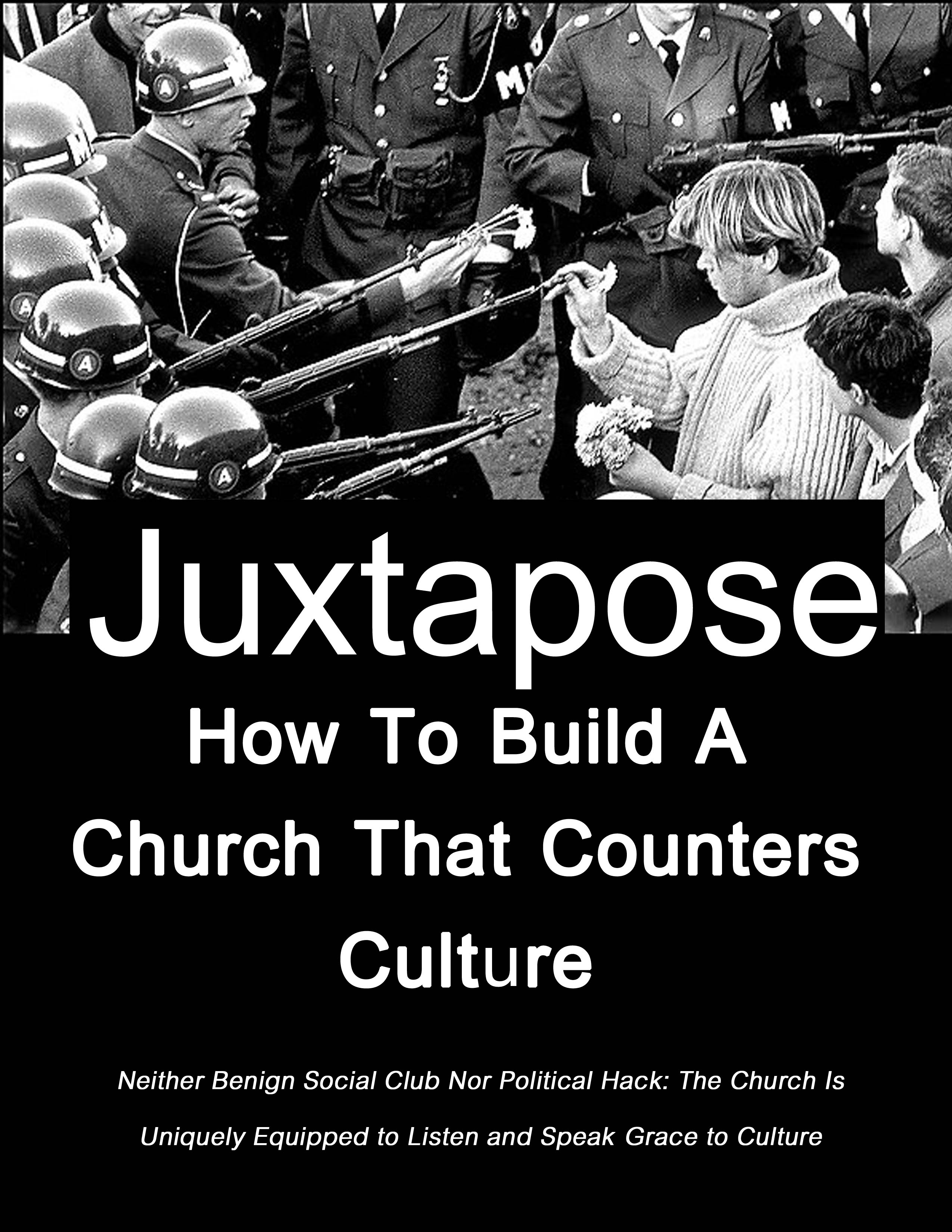
This is one concept as I work out the marketing messages for Juxtapose: How to Build a Church That Counters Culture.
If browsing in Barnes and Noble, would you stop and handle a book that looked like that?
###
Image Credit: Unknown. Do you know?

John: In the Can or Canned?
Termination Tuesday Is A Loser for Everyone
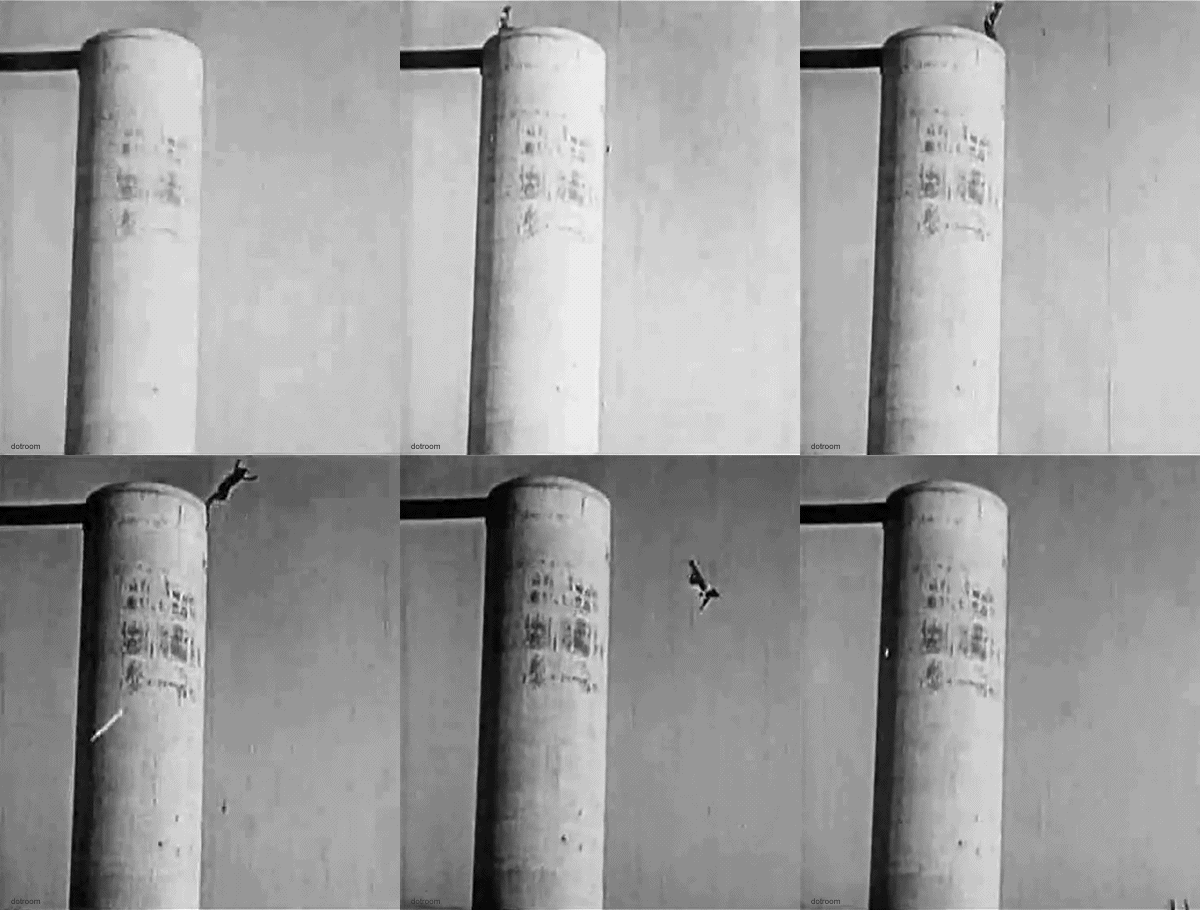
Or leaping off the can?
Monday’s StarTribune story by Thomas Lee on Termination Tuesdays at Best Buy contained this jewel of a quote by a survivor:
“Whenever someone leaves their desk, we think that person just got laid off, when he or she might just be going to the bathroom,” said one surviving employee who requested anonymity because the individual was not authorized to speak to the news media.
I worked like at a place like that for a time. With astonishing regularity we would be in a meeting, the door would open and the director of sales would pop his head in long enough to say,
“John Smith is no longer with the company.”
Any question (“Where is John Smith?” / “Where did John Smith go?” / “What happened?”) was met with the same phrase repeated:
“John Smith is no longer with the company.”
And sure enough, post-meeting, John Smith’s desk was cleared and his car was gone from the parking lot. In my year and a half with the company, this happened at least a dozen times.
It was unnerving.
I understand the confidentiality issues, but some sort of communication would have been helpful. Of course, among the survivors, there was all sorts of whispered communication, rumors, speculation and “Who’s next?” The regularity of employee disposal caused everyone to freshen their Plans B, C and D. With no explanation, loyalty to the firm was tenuous at best. When I finally left the firm, I asked the director of HR what it was like to fire so many people. She rolled her eyes and said it was the worst thing she ever had to do. There was a whimsy to the job destruction that had nothing to do with industry consolidation.
I’ve seen consolidating industries as well. It’s just as unnerving, though the communication is dour though more straightforward. I started with Honeywell just before the axe started swinging and many thousands lost their jobs—but at least we all saw the axe swinging closer and closer.
Whether job destruction happens through managerial whimsy or industry consolidation, employees walk on thin ice for so long that work, relationships, craft and loyalty all submerge.
Unfortunately, that is the guiding business ethos of the day: employees are another capital expense. And when things get tight, well….
My only plea would be for as much open communication and dialogue in a company as possible. And it doesn’t hurt for employees to continually sharpen their craft as they ask, “What next?”
###
Image credit: dotroom via 2headedsnake
Everybody Attends the School of Hard Knocks
Grandad’s knowing was not so different from my own
What knowledge works best?
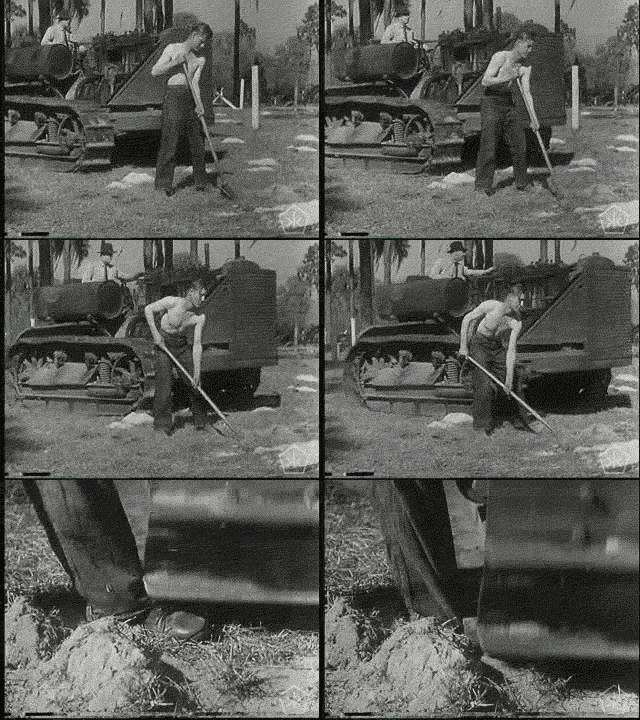
My grandfather, when faced with the schools and degrees and academic pursuits of his grandchildren, would typically say he went to the school of hard knocks. He grew up in the great depression and was on speaking terms with want. In the Navy he literally experienced hard knocks—one of which resulted in a metal plate in his skull. Later in life he was something of a salesman and generally learned by doing. His was a kind of knowledge easily passed on because it relied on behavior and action and movement. You could see what he did and you could do it too, or at least try to.
Same with my father: what I know about fixing stuff I learned from watching Dad. It takes me longer, or course. And I fail several times before I finally succeed (if indeed, I ever succeed). And, yes, the occasional plumber’s word gets uttered during the fixing.
Walter Ong wrote about the transition from oral to literate cultures. He noted that knowledge passed verbally was quite different from locating knowledge on a page. One fatality of the movement from oral to literate culture was that learning became a more isolated thing rather than a thing we did together:
In an oral culture, knowledge, once acquired, had to be constantly repeated or it would be lost: fixed, formulaic thought patterns [that is, clichés] were essential for wisdom and effective administration. (Ong, Walter J. Orality and Literacy: the Technologizing of the Word. NY: Routledge, 1993. 24)
Today our schools consist of lots of reading (which is good, which I applaud) and some hands-on. But in generations past there was not so much opportunity for spending a few years in college, let alone graduate school. People learned from each other any way they could. Apprenticeships helped, and helping Dad build a wall or a house—all these were the stuff of learning.
It seems to me still that experience is the best teacher. Not that books aren’t great. I’m a committed reader. But the best, most useful knowledge, the kind you can pass on to someone else, comes from information plus experience. Some mysterious forging takes place in the cauldron of reading + doing + telling + interacting with others. The result is a very strong knowledge that is also highly communicable.
More than once I’ve heard business owners and recruiters say they favor those who have experience in their field compared with those who go directly from bachelors to masters to doctorate.
Once the information we’ve read becomes something we do with our hands or something we can communicate to someone else, it becomes very useful indeed.
###
Image credit: Okkultmotionpictures (American Red Cross, “Why Not Live”) via 2headedsnake
Are You a Philosopher or a Popularizer?
Must I choose?
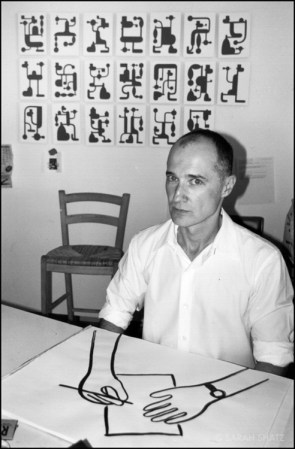 In recent conversation with a local philosopher and food writer, we got to talking about the work of a philosopher in the world today. There’s teaching, which employs academic rigor to help students understand where philosophy has been and what it has been up to. There’s research, typically a subset of teaching, that sorts truth from fiction and sometimes swaps the two. And then there’s, well…that’s it. That’s what a philosopher does in our culture.
Teaches.
Teaches rarified stuff only a few understand and even fewer care about.
Which is not to say philosophy is not happening all over the place.
I’ve begun to argue we’re all philosophizing all the time. We’re not all at the highly abstracted levels represented by academic philosophy. But we’re all in the business of making meaning. Most of us don’t much think about it: once we’ve figured out the basics of family and job and faith and community, the business of meaning-making largely runs on auto-pilot. Until we get cancer. Or age. Or lose a spouse.
Or see a sunrise.
The more questions we ask in everyday life—the less we take as a given—the more life we experience. This is the wonder of being amazed at the small connections that occupy those making meaning every day. Which should be all of us.
My recent conversation turned to the author Alain de Botton, who I described as a philosopher but then back pedaled. We allowed he was certainly a popularizer. I’m a fan of de Botton. I like the places his books send me and the meaning-making tasks he introduces. I also like to read Damon Young, the Australian who is a bona fide philosopher and card-carrying popularizer (meaning only that he regularly publishes philosophy columns in Australian newspapers).
I’m not sure so a philosopher cannot also be a popularizer.
I’ll argue my friend’s food writing displays a philosophical bent even as he courageously walks into the smallest, diviest joints in the metro. I’ll also argue that the ordinary conversations we have with each other, the ones where we try to sort out the details of life together, are themselves often instances of practicing a sort of popular philosophy.
Ordinary conversation is the very stuff of thinking together.
I hope it becomes more popular.
###
Image credit: Via 2headedsnake

Seth Godin: Send Yourself Fan Mail
On Self-Fulfilling Prophecies

Frank Lloyd Wright was a pioneer in using windows almost like walls, to bring the outside in
There’s a fascinating chapter in Paul Watzlawick’s The Invented Reality (NY: Norton, 1984) on Self-fulfilling Prophecies. Those are the statements someone makes and then the world seems to change and grow into it. Watzlawick cited the situation in March 1979 when California newspapers made “sensational pronouncements of an impending, severe gasoline shortage,” which fueled (haha) an actual shortage. Looking back, there had been enough gas to meet the need, but the dire pronouncements changed buying behavior (people topped off tanks and hoarded gas) and so the shortage was born.
Watzlawick also cited the famous “Oak School Experiments” (eliciting the Pygmalion Effect) where teachers’ expectations of their students were tampered with using so-called intelligence tests. Though the students were actually picked at random, the teachers’ high expectations elicited stellar performance from the (purported) high-achieving students.
One of the more famous examples of self-fulfilling prophecy is that of Frank Lloyd Wright. Even before he was born, Wright’s mother was busy planning Frank’s architecture career and putting up images of great buildings in the baby’s room. And long before Frank had done any actual work he was boasting of his great career. He was one of the greatest boosters of his work as he reinvented himself several times and well into his 80s. Actually Wright’s story is even more interesting because he came from a clan where generations were known for resolutely going their own way.
And as we all know, Wright’s architecture turned out well—stunningly well. Pivotally well: much of what we know today of good architecture stems from Wright’s willingness to break with Victorian tradition and bring the outside in.
I like how Seth Godin puts it today (“The opposite of anxiety”): picture the compliment your seminar attendee will have after the seminar you’ve not yet done. See your product on the shelf at the local grocer—the product you’ve not yet completed. Write the fan mail from the person changed by the thing you’ve not yet done. In this Godin has a technique for getting at the emotional reward at the other end of your process—and it’s all anticipatory.
One need not be sold on the power of positive thinking to realize that what we tell ourselves—along with the questions that consume us—all have a bearing on where we go, what we do and who we become.
###
Image credit: Kirk Livingston
Tag:
Books Smell
Musty was part of the charm
Computers rarely smell. Keyboards can get grimy, of course. And the screen on a tablet gets all sweaty if you read while running on a treadmill. Part of the charm of old used bookstores is the smell of the books.
Early on in life I worked as a printer running small presses as a way to pay for college. Fresh reams of paper and rollers and tins of ink and the oiled mechanical bits of the press all have an odor peculiar to the printing industry.
Same with book stores. Paul’s Book Store in Madison, Wisconsin (a haunt of mine in college) had a similar smell, adjusted up for dust and volumes of old paper. Midway Books in Saint Paul is always worth stopping by—and not just for the smell of the books. All sorts of treasures reside there.
Loome Theological Booksellers moved from their old, cold church building in downtown Stillwater to a (considerably expanded) barn out in the country. I’ve not visited since their move. The bookish folks at Loome are offering a 1613 King James Bible for sale (only $3900) with a well-known printing error (the “He” version).
I’m not in the market for such a book, but I may go just for the smell it.
###

 conversation is an engine