Hopper Early Sketches
Where does an idea come from?
Sketching shows the beginning of an idea.
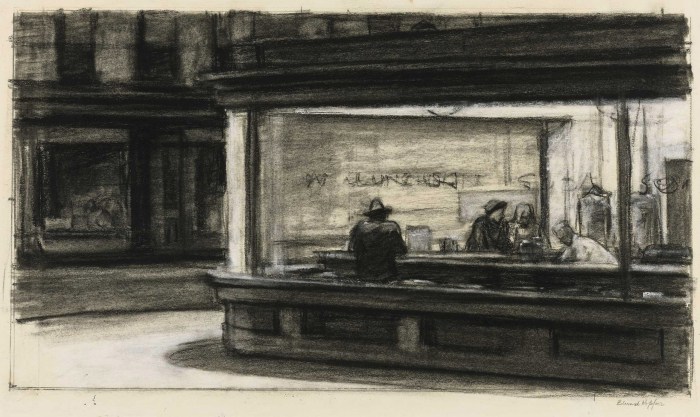
Over at lines and colors, Charley Parker highlighted an exhibit at the Whitney that promises a look into Edward Hopper’s process.
###
Joe Sacco Journalism and the Heights Silent Movie
Hijacking Old Forms
Joe Sacco’s Journalism is a sort of graphic-novel-meets-global-reportage. It’s cartooning with a deadly serious purpose that hijacks both reporting and cartooning and drops both at a new place. Mr. Sacco actually does several new things with this book: sketching out the story, inserting reporting into cartoon bubbles, publishing reporting that looks like a graphic novel. But chief among these new things is Sacco inserting himself into the story he was reporting. Most journalists work hard at writing objectively, that is, without bias. Though that is an impossible task, news readers want to feel they are hearing more than one side of a story.

Sacco went the opposite way: he inserted himself as reporter, sketched right into the panels of the action. We see him ask the uncomfortable question and record the answer while the action goes on—the medium allows for this in an extraordinary way.
The result is a book that is difficult to stick with because the war and refugee experiences depicted are shown in such a raw manner. I think this is exactly what Sacco was after: reporting that grabs you and forces you to interact. He is driving home the difficult stories of our day—and they are hard to see.
Sacco offers no apology for hearing from just one side. The feel of the book is a newspaper as told by your troubled, immigrant neighbor. You want to ignore it (as we do with so many difficult stories) but the whole thing is laid out right before you.
Speaking of being dropped at a new place, last night Mrs. Kirkistan and I attended the remastered The Thief of Baghdad at the Heights Theater, a silent movie complete with the mighty Wurlitzer emerging from the floor. Organist Karl Eilers did a masterful job of providing a continuous soundtrack for two and a half-hours (Oy!) of screen silence. What struck me was how different this experience was from my typical movie-going experience. Because sound incorporates, Eilers’ organ-playing and the response of the crowd (mostly laughter at what was once amazing special effects) were much more prominent. And it took the entire crowd (indeed, the theater was nearly full) to respond to Douglas Fairbanks’ dramatic wind-milling responses to most any situation—it must take a lot of physical energy to communicate without words.
What old form should you revitalize today?
###
Image credit: Joe Sacco, Kirk Livingston
How To Soil Yourself: American Travel Check Voucher
Budgeting for the Aggressively-Uninformed-and-Desperate Niche
 I’ve had this direct-mail sitting on my desk for a number of days. It is so brazenly bad I cannot bring myself to throw it away. It looks like a check. It is not a check: it’s an invitation to (probably) a 90 minute high-pressure sales meeting followed by (likely) more invitations to waste hundreds if not thousands of dollars in fees for the free tickets—at least according to Erica Duecy and Rachel Klein at Fodors.com. American Airlines and the Better Business Bureau have disowned and warned against the scam. Various news teams and scores of writers have been noting this bit of ugliness out of Scottsdale, Arizona for years.
To me this represents the worst of all possible communication events. It plays on one’s innate thrill of getting something for nothing, takes unfair advantage of anyone in desperate financial straits and provides an open door into a cesspool of bad money decisions. It’s probably not illegal, just really, really stupid.
And not just stupid for anyone who tries to cash it.
Stupid for the company paying for the promotion: by this point most of us are trained to Google anything that looks too good to be true. When you Google it, “scam” pops up right away and appears in nearly every entry. One would need to actively disregard obvious warning signs to take advantage of this. And yet, there must be enough aggressively uninformed people who are just desperate enough to fall into the deception. In other words, the few desperate people buying-in keep the swindle going. So—smart for the company to prey on desperate people—and entirely void of care for humans.
The sadness in this direct-mail is how it poisons the water for honest communication. It’s just another example of hucksterism showing up in my mailbox.
Ugly. I’d hate to have this in my portfolio.
###
Image credit: News 8
Juxtapose: How To Build a Church that Counters Culture
 Theological Roots and Practical Hope for Extreme Listening and Honest Talk
A couple nights ago Mrs. Kirkistan and I had dinner with old friends we’d not seen in some time. It was refreshing to catch up and there was lots of that free laughter that happens when old jokes and forgotten quirks reappear. At one point someone asked whether we were hopeful about the state of the evangelical church. We each offered an opinion.
Mine: “No.”
It’s actually a qualified “No”: my sense is that the evangelicalism has largely lost its way following industrial-strength, church-growth formulas and it has also sold its soul to political machinery. Following these tangents we’ve lost the essence of what it means to counter culture by speaking the words that stand outside of time.
I’m actually quite hopeful about what God is doing—especially in the Minneapolis/St. Paul area. We’ve seen a number of groups trying very new things while employing deeply-rooted devotion to sacred texts and veering from partisan nonsense. So my sense is that evangelicalism is morphing and, frankly (I hope) growing up.
For a couple years now I’ve been laying down about a thousand words a day toward this book dealing with the theological and philosophical roots of communication. It’s been a one-step-forward-seven-steps-back process. But I’ve just finished Chapter 8 and by the end of July I’ll deliver the manuscript to my editor friend. I’ll likely self-publish it later this year—I’ll probably have to pay people to read it (Know this: I cannot afford more than $5 a reader. So both of you readers give a call when you are ready. I’ll put a fresh Lincoln in the Preface.)
The book offers new ways to think about the ordinary interactions we have every day. It draws on a few philosophically-minded thinkers and reconsiders some old Bible stories to reframe the opportunity of conversation. It also provides a kick in the butt to move out of our familiar four walls to engage deeply with culture—but not from a standpoint of judgment, rather from a deep curiosity and love. I’ll be sharpening the marketing messages over the next few months, but here are the chapter titles so far:
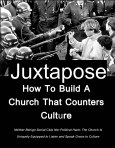
Would you stop browsing at Barnes and Noble long enough to pick up a book that looked like this?
- The Preacher, Farmer and Everybody Else
- Intent Changes How We Act Together
- How to be with the God Intent on Reunion
- Your Church as a Conversation Factory
- Extreme Listening
- A Guide to Honest Talk
- Prayer Informs Listening and Talking
- Go Juxtapose
Let me know if anything of what I’ve said sounds like you might actually be interested in reading. However: I can only afford to buy a limited number of readers.
###
Image credit: Daniele Buetti via 2headedsnake
What Pulls You In Again and Again?
A Photo. A Paragraph. A Word That Helps You Understand.
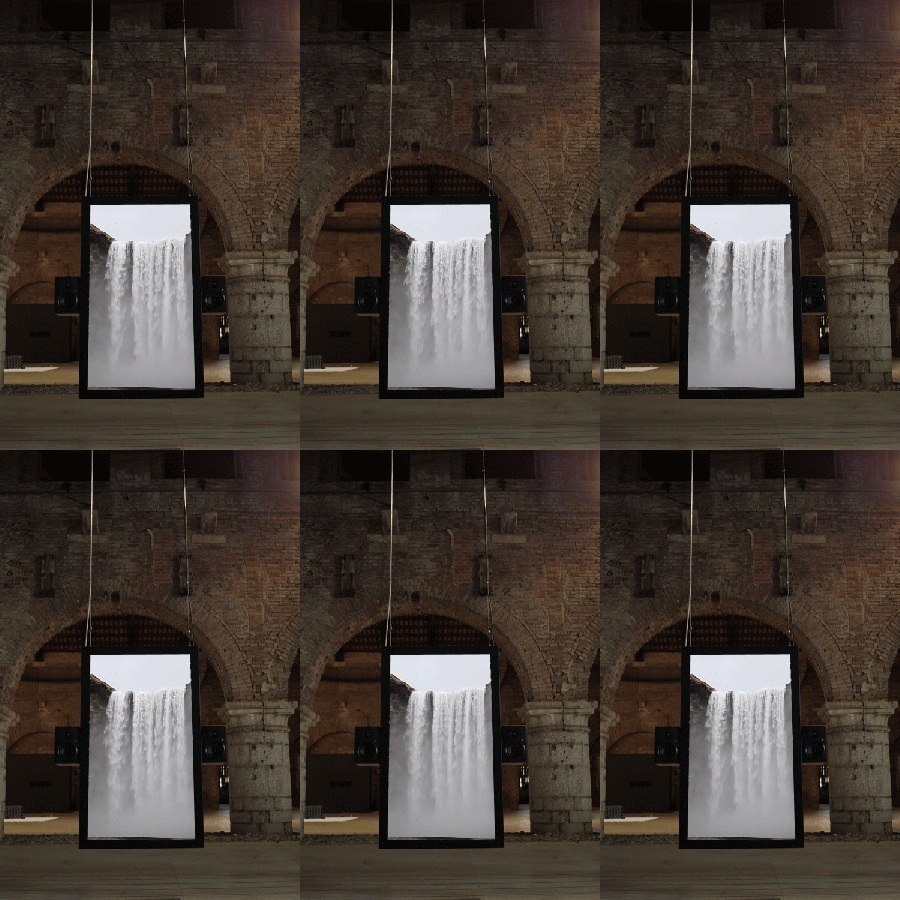 I’ve stumbled at least twice over this useful blurb about writing. I’m not the only one to find and re-find it: a number of Twitterers keep tweeting this particular blog post. It’s from the Australian writer Charlotte Wood who wrote a guest blog back in 2011 for an Australian philosopher I enjoy: Damon Young (‘The Write Tools’ #32 – Charlotte Wood). Ms. Wood wrote about her process for producing novels and how at a certain point in the process she starts to take photos as a way of capturing detail. The entire post is worth your time, but I keep rereading this paragraph:
Iris Murdoch said that paying attention is in itself a moral act. I think this is true – it is hard to dismiss someone if you listen very carefully and watch them, and enter into what they truly believe. I think this is what my photographs and notebooks are telling me: remember not to skate over the surface of an imagined thing or person or act, but really sit, and go quiet, and listen. Pay attention to everything there in the frame, and then also perhaps wonder about what is not there, and why. I think a commitment to paying attention is perhaps as good a way as any to try to understand the world. And trying to understand the world is why I read, and why I write.
Ms. Wood’s attention to detail is a source of inspiration to me. And I like how reading, writing and observing are all helping serve her goal of understanding.
###
Image credit: Kateoplis via 2headedsnake
Untangling Faith and Politics
Kids: Can an Empire Pray?
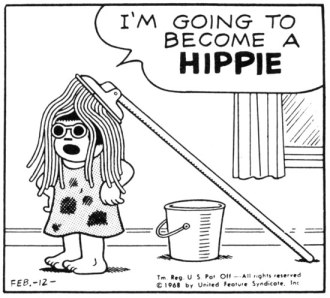 The generation before me worked hard to tie faith with politics so the two landed together like a dense brick every time one or the other was mentioned. The Moral Majority was a beginning point back in 1979 and all sorts of offshoots and sister organizations continue the cause today. The sad bit, the unanticipated piece, was that the next generation saw faith and right-leaning gibberish as the same thing. Press the vending machine button for one and you always get the other—package deal. So when the next generation rebelled (as each next generation will), they had to toss out everything.
But start to untangle the two (faith and politics). As you do, you may remember that Christianity was a counter-culture set of priorities and commitments that offered critiques of whatever society/kingdom/regime it popped up in. And for a long time it was a faith that lived on the periphery, with Jesus as persona non grata. I’m beginning to think Christianity is most effective when living on the periphery and least effective when the state wields it as another tool for empire-building.
Of course, the truth is that faith and politics are intimately tied together. One’s faith absolutely informs one’s stance on any and every issue along with one’s voting record. But the question is what relation faith has to do with empire-building. Is faith a tool for building an empire? My reading of the Bible leaves me with a clear and emphatic: “No.”
I think of this as friends try to find ways to help their kids grow their interior lives and their lives of faith. It’s not an easy task in our culture for a few reasons. One reason is that the very notion of an interior life is drying up for many of us as silence recedes with each Facebook status check-in. But beyond that, asking questions that begin to separate faith from politics may be a way to help your kids find their way through their particular rebellion with faith thriving rather than dying.
###
Image credit: nancyishappy via 2headedsnake
Ben Kyle: Hey—What if We Did a Living Room Tour?
The Dog Days of DIY
 There is no one on the other end of this telephone connection who can help set up my new smartphone. With my last several technology purchases I’ve found myself alone in the final fine-tuning that actually makes the device work. Oh—there is certainly tech support. But my questions seem to send the customer representative to their supervisor (>30 minutes on hold) for answers. Not because I’m so smart, only because I am the chief of my cobbled-together IT system and I seem to always demand awkward things of said system. This is my penance for pushing for non-standard capabilities.
But maybe do it yourself is not such a bad set of expectations.
And maybe do it yourself is the future of, well, everything.
A local artist I find myself listening to again and again—Ben Kyle of Romantica—seems to be doing this very thing. He’s taking his music into the homes of friends and strangers. Right into their living rooms. Pot-luck and BYOB. Sign up here and you’ll see Ben singing from the ottoman. Can this be literally true—have I got this right?
If so, I’m watching for other artists to do the same. Why not run a DIY art gallery (oh, wait, that’s been done for years). Why not bribe neighbors with brats and beer to come to my book reading? Why not summon an interpretive dance-off on my front lawn?
As a nation we’ve always been enamored by fame. Anyone’s definition of “making it” inevitably carries some component of fame. You’re a success when everyone knows your name. If everyone knows your name you are a success. How else to account for the seeming success of the Kardashians who are famous for being famous?
But this DIY future doesn’t look like mass audiences following influential taste-makers. At least not at first. Ben Kyle is on to something that real influencers have known for years, that building an audience is a person-by-person activity. This is the word-of-mouth model: generally slow but immensely effective.
And maybe anything worth doing is worth doing one-on-one, despite what our national psyche longs for. I’m with Mother Teresa on this one:
Do not wait for leaders; do it alone, person to person.
###
Image credit: Francesco Romoli via 2headedsnake
There’s Something About Out
Out Always Informs In
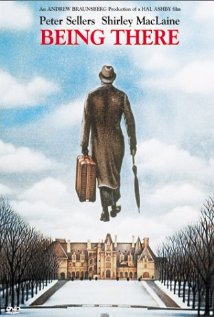 Chance tended the garden of a wealthy old man in Washington D.C. and had done so all his life. When his wealthy employer died, Chance was turned out into the [mean] streets. All Chance knew was the calm of the mansion and all he knew about the world outside was what he saw on TV. And so began Being There, one of the last films made with Peter Sellers way back in 1979. You might call Being There a dark comedy and it was certainly not for every audience.
The scene playing in my mind today is Chance stepping away from the calm of the mansion and out into the urban chaos, complete with garbage everywhere, burning cars and a host of other stereotypes. The movie is all about how he is received by those he encountered.
In a sense Chance came alive as he left the stately known environment. This fits with what I’m coming to understand about taking what I know out to others who don’t know it. Whether it is what I know about medical devices or carbon fiber or my theological and faith commitments or what I know about bicycle routes in Minneapolis/St. Paul. Whatever I know, whatever is familiar to me changes in perspective the moment I try to explain it to someone else. Maybe I succeed in convincing my biking friend to take the river route I like. Maybe I fail to get my reading friend to take interest in the book I liked. Maybe I’m helping my client explain a unique heart monitoring system to an audience of physicians. Whatever it is—and in every case—how I explain myself to those outside changes the way I look at the priority. I immediately learn something new as I try to explain. And the organization changes as the communication happens: as we form words together to explain out product to an outsider, we on the inside understand something different as well.
And it’s not just what I know, it’s what is important to me. And maybe this is the heart of the learning: can this thing be important for someone else? And if so why or why not? And all this communication changes us.
My only point is that we need to actively take our priorities and knowledge with us out into the relationships we feed throughout every day. That’s how we grow.
###

 conversation is an engine