Cory Doctorow’s Story Keeps Me Up at Night
“Makers” makes my mind spin
 Doctorow’s notion of “New Work” generates a physical reaction in me.
Doctorow pictures a future U.S. that has been in decline for some time. Big work for big corporations is long gone and poverty is the new normal. This is a future where giant empty boarded-up malls and Wal-marts invite ad hoc flea markets. And these flea markets now represent the best of commerce as they inhabit high-end retail spaces formerly occupied by the Macy’s and Nordstroms and the like.
After the new economy stripped away the old dependable jobs, the New Work movement sprang up with people recycling waste technology and creating mind-bending, highly specialized products that created their own markets. Cottage industries formed in communities small and large all over the country and people jumped their remaining corporate positions to pursue their own visions. And then it all fell apart. Again.
The book’s vision makes my head spin because of the visceral sense of work as creating and owning. The vividly drawn characters create and collaborate in ways that are very easy to picture, amidst the volatile conditions that already exist in our culture. Maybe it’s the ups and downs of these spirited characters that keeps me awake at night. Doctorow’s vision of the future is that of decline with a sharp aftertaste of humanity striving and living and sometimes succeeding.
I’m only halfway through, but the book has my attention. I may need to finish it fast so I can sleep again.
###
Image Credit: Mondorama 2000 via thisisnthappiness
Malala Got Shot for Just Saying
What We Say Matters
In his fascinating After Babel: Aspects of Language and Translation (NY: Oxford University Press, 1975), George Steiner speculated on the origins of languages. At first it seems like a no-brainer: given all the people and geographies and histories and wars and all that has happened over time, sure, we have a whole lot of languages. But Steiner goes all systematic through the known number of languages over the course of history and asks the rather obvious question: Why? Given that human bodies all work roughly the same way, and that we ingest roughly the same foods the world over, and the we all need air and water and sunshine and coffee (ahem)…why is it again we don’t all speak the same language? It’s a great question and his book is a readable and erudite discussion on the topic. I’m only a few chapters in, but two things stand out:

- Steiner believes all of communication is translation. Whether inside a language or between languages, we are constantly translating and decoding words and meaning. I think he is right about that: there is no end to trying to understand each other. Even couples married for decades need to translate the words spoken by the spouse to understand what it is they really meant. And then to sort out what they should do about it.
- Steiner speculated on a “proto-language,” a sort of first language from which all other languages descended. Steiner called it Ur-Sprache (p.58) and likened it to the language of Eden. A supremely powerful language that when spoken, made stuff happen. One need only think of a couple old Bible stories to get the sense of the promise of this old language: God speaking stuff into existence and Adam naming all the animals (with no committees second-guessing his naming choices).
But…alas…this language is no more.
Or is it?
Maybe we still see hints of Ur-Sprache every day, when we say things and our saying seems to make it so. Saying a thought aloud has a kind of generative effect. Not always. And with more or less effect. But still—stuff happens when we talk.
Maybe this is why people in the U.S. hold so tightly to the First Amendment of the United States Constitution. And why people all over the world agree that freedom of speech is a human right (except for despots, when speech calls attention to their efforts to rape and pillage their people). And maybe that’s why we feel almost personally violated by the Taliban in Pakistan singling out and shooting a teenager (Malala Yousafzai) for speaking her mind. It is beyond repulsive. Beyond degenerate.

###
Image Credits: Vladimir Kush, AFP/Getty Images
Outside Voice
Recalibrate Your Tribe to Grow
 One of our kids was loud. When this particular child was quite young, Mrs. Kirkistan and I spent lots of time distinguishing an inside voice from an outside voice. This particular person (not naming names) did not sort out the difference until a certain age had been reached. But then it became clear to [Child X] why you might not shout your happiness with the world at 5am, for instance. This person still has the capacity to be heard—which I admire.
Patrick R. Keifert’s, “Welcoming The Stranger : A Public Theology Of Worship And Evangelism” (Minneapolis:Fortress Press, 1992) is a sort of outside voice/inside voice book for an organization. Yes, he’s a pastor writing to pastors. But his topic is much larger and dovetails with all sorts of human groups. He tells stories and redacts around the notion of how off-putting our insider language and idiosyncratic group behaviors can be to new people—those not of the tribe. It happens in a church. It happens in a family (I still do not have the courage to ask my new son-in-law what peculiar behaviors he notices when our family is gathered). It happens in a business. It happens on Minnesota interstates: drivers resent others trying to merge into traffic from an on-ramp. Is that peculiar to Minneapolis/St. Paul drivers or is it a Minnesota thing?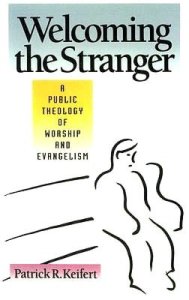
I’m enjoying Keifert’s book because he makes a compelling case for why we should listen to the stranger. He traces the roots of this listening to deep theological places and hints at how we were made for this very kind of interchange. But he also notes there are dangers in hearing the stranger (“Wait—what is this guy up to?”). He points out my unthinking refusal to let focus slip away from me as the all-consuming center of the universe. The end game is that I typically hear the stranger saying only those certain words that fit my view of the world. And we all have experience with that.
But hearing the outside voice in our family, church or company can help us get unstuck—especially when we don’t know we’re stuck.
###
Image Credit via 2headedsnake
Today’s 1pm Meeting: Make It Work
Zoning out should not be an option.

Cut the web. Don’t zone out.
Not every meeting is a useless waste of time. Some of my must-read copywriting bloggers have written about meetings they attended ranging from useless to suicide-inducing.
But I recently sat with a client to hash out what was going right with their messaging to a particular audience. They had seen a spate of cutting-through-the-clutter moments with a particular set of customers and the wins were tumbling in.
People from different roles in the organization pulled up to the big conference table. Each spoke to the success with this audience from the vantage point their position afforded. I was there to hear and gather and (ultimately) tighten and sharpen the message. The message—and the story around the message—would fuel a set of communication vehicles and events.
The meeting was entirely successful, at least for me, because I could question and challenge as the discussion unwound. And my pages of notes have served to bring back quotes and directions. Just connecting the dots on my notes has been productive.
All this to say it is up to us to make a meeting work. That means cutting through the rhetorical web spun by the power-seekers. Sometimes we need to call “bull” on people. And sometimes we need to play catalyst and lob a softball question to pull forward the silent person’s thoughts.
Zoning out should not be an option.
###
Image Credit: via Frank T. Zumbachs Mysterious World
Of Gertrude and Mitt and Barack and Gertrude. Gertrude.
for this is so because
Maybe we’re mistaken about our political discourse.
Maybe the shout of half-truths is
Itself a deconstruction—
A mimicry
Of conversation.
Since we now listen with our eyes
To the form that
Comforts
Us
Most.
###
Image Credit: Gertrude Stein Reading “If I Told Him”
Romney’s 47% and Why The Rich Are Meant To Be Rich
Entitlement Cuts Both Ways
I’ve been puzzling over Romney’s comment that 47% of the country is not paying taxes, dependent on the government and freeloading (my paraphrase). Everybody from Jon Stewart to local pundits have been breaking it down and taking due umbrage. Everybody except Fox News, of course.
A thoughtful New Yorker piece (“Why Do America’s Super-Rich Feel Victimized by Obama?”) gives more background on Romney’s comment. It turns out the super-rich, like Leon Cooperman (billionaire founder of the Omega Advisor hedge fund), are feeling unappreciated if not vilified by Obama. They feel they are the targets of increasing class warfare and they are not going to take it anymore. But the piece by Chrystia Freeland also argues the paradox that the super-rich have done well under Obama’s administration, for example, with “ninety three percent of the gains during the 2009-2010 recovery went to the top one percent of earners.”
So—tell me again—how are Romney and his rich friends victims?
It turns out the supposed sense of entitlement works both ways. The super-rich accuse the 47% of freeloading and expecting the system to supply all their wants. But the super-rich themselves have learned to take advantage of the system to live extraordinarily well—something perhaps they also feel entitled to.
Romney’s comment shows me again why no one candidate or party fits fully within the rubric of “Christian.” We’ve painted compassion for the poor with the broad brush of entitlement and freeloading while failing to examine why and how the system rewards those who have assembled it. And then we douse the whole subject with an indignant tone.
We need a new way of talking.
###
Endo Brochure Silent on Vital Bits—2 Skills for Tonight’s Debate
Read the White Space. Hear the Silence.
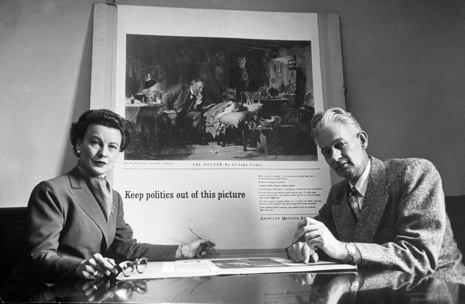
Campaigns, Inc.: My Antiheroes.
MedCity News reports on an Endo Pharmaceuticals brochure under scrutiny by the FDA. The problem was a lack of transparency about the dark side of the therapy—a therapy designed to slow the growth of prostate cancer cells, namely:
- paralysis that may result from the risk of spinal cord compression
- the increased risk of diabetes/heart attack/sudden cardiac death/stroke
In a lively debate in comments section of the Pharmalot blog, the consensus seems to be that the FDA made a good call. Commenters began by speculating this was likely more than just a slight oversight as the Endo communicator skipped regulatory/legal review in a rush to meet a deadline. Then commenters started tracing the language to the Vantas Implant website and began speculating on the rest of their messaging and promotional literature.
The debate amuses me because it is the rare product brochure that is read outside of a sales presentation. And it is even rarer for a brochure to withstand extended exegesis. That the FDA does this regularly earns my respect/awe/fear. Love them or hate them, the FDA’s dogged attention helps medical copywriters and marketers hew to the high road.
The debate also serves as a reminder of the skills needed for watching tonight’s presidential debate. It’s the white space and silence that may be most eloquent. The skill of reading the white space and hearing the silence means the audience must be equipped with the fuller argument. The FDA certainly was. But to read Jill Lepore’s recent New Yorker essay (“The Lie Factory: How politics became a business,” Sept. 24, 2012) is to come away with all the history and reasons as to why the American populace remains a happily uninformed audience. Whitaker and Baxter of Campaigns, Inc. helped set the stage for the current state of our spectatorship:
In tonight’s debate, I’m trying to break free of my usual indolence to hear between the lines (as it were).
###
Image credit: The New Yorker
Here’s to the Restless.
The quirky quibblers.
 Who eschew easy answers.
The questioners—hand up among silent spectators.
The marchers who break stride to banter up the bystander.
Here’s to the people who take a long look.
And another.
The ones crafting their own theory.
Long may they live.
###
Image credit: Jeremy Miranda via thisisnthappiness
[With apologies to Chiat/Day]
Accent Signage Founder Reuven Rahamim and the High Cost of Repairing the World
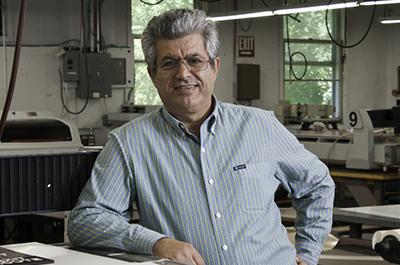 The sadness surrounding last Thursday’s shooting at Accent Signage in Minneapolis’ Bryn Mawr neighborhood deepens. As new details emerge, the picture of Mr. Rahamim is even more compelling and plaintive:
Rabbi Alexander Davis said Rahamim saw his work as “tikkun olam,” a Hebrew phrase meaning to repair the world. “He didn’t just make signs, he helped people find their way,” Davis said.
The shooter, Andrew Engeldinger, had sued Accent Signage four years before. But Mr. Rahamim demonstrated compassion for this “loner struggling with mental illness” by keeping him on the payroll and trying to do “right by him.”
The best of our work has a caring element and is powered by a desire to serve others. Mr. Rahamim’s practice demonstrated this in a number of ways. He had compassion on one who would have been an enemy, pulling him close rather than pushing him away. He paid dearly.
The loss of Reuven Rahamim and others at Accent Signage is a deep sadness to our community.
###
Quote via Joy Powell, Star Tribune. Image Credit: MinnPost
What Question Consumes Your Church?
Not so easy to answer for most of us.
 Church is not a place of questions. It is a place of sameness and routine, where old stories—even ancient stories—are retold. We go to church to be reassured, right? Reassured we are forgiven, for instance. Reassured that I am personally going the right direction, and perhaps even welcoming that kick-in-the-pants reminder of how I veered off-course—yet again. Reassured there is a God. And that God has something to say.
No, church today is not a place of questions. It is a place of answers.
It was not always so.
I’ve been reading through an ancient text that documents the questions the early church was trying to sort out. One primary question was, “What is this thing?” A question even more visceral was surely muttered silently, “What the hell is going on here?” And after that, questions tumbled forth from any and every quarter:
- “How can this possibly work?”
- “How could I be friends with you?”
- “Is this belief so dangerous that I am hunted for it?”
- “Why are you sharing your fortune with me?”
- “Am I ready to die for this?”
Questions everywhere because what was happening was outside the control or vision of one or any individual. Questions because they were watching God do stuff. Extraordinary stuff.
Today we have it figured out. Programs and formulas and seminars and best practices—just like with any industry. We’ve got experts who know stuff.
But every once in a while, I see something in a church and say under my breath, “What the…? How can that possible work?”
###
Image credit: Alleanna Harris via 2headedsnake

 conversation is an engine