Posts Tagged ‘advertising’
Trite Ideas are a Poor Interpretation of a Problem (Paul Rand)
Trite ideas, or unimaginative translation of those ideas, are often the result not of poor subject matter but of poor interpretation of a problem.
Paul Rand, The Designers Art (New Haven, Yale University Press, 1985) 45
Ginsberg’s “tanked-up clatter” vs. the Gray Flannel Suit vs. a Third Way
Peace for the Listening Lurking Capitalist
We’re at the Beats and Allen Ginsberg and Howl now in our march through modern poetry. A recent discussion took in a stanza that seems relatively autobiographical, describing Ginsberg’s failed flirtation with advertising:
who were burned alive in their innocent flannel suits on Madison Avenue
amid blasts of leaden verse & the tanked-up clatter of the iron regi-
ments of fashion & the nitroglycerine shrieks of the fairies of advertis-
ing & the mustard gas of sinister intelligent editors, or were run down
by the drunken taxicabs of Absolute Reality,
 There is lots to talk about in this section (indeed, the entirety of Howl begs for response and discussion), including “leaden verse & the tanked-up clatter” and the irresistible “nitroglycerine shrieks.”
Of particular interest to me was the quickness with which our TA/discussion buddies blasted the hackiness of advertising copy. Of course the poets are right (and anybody actually creating ads readily confesses to their role in purveying crass capitalism), still…not everything is “clumsy, tacky copywriting.” That knee-jerk reaction to advertising covers a lot of ground well. But the comment misses the diabolical under-the-skin genius of the copy that got through and has already been ingested and now guides our subconscious. Professor Al hit closer to home when brought up “very slick” old slogans that remain memorable. Ginsberg’s insights at that point are perceptive and well-wrought, but I cannot help but insist on seeing the beauty of some advertising. The turn of a phrase that attaches (yes, at times parasitically to a target brain) is, well, amazing. It’s a kind of poetry let loose among today’s pages and screens and whispers.
There is a way to be at peace with using creativity to solve business problems. The way of peace wanders alongside the grove of manipulation without wandering in. This path follows a course of respectful persuasion, with nods to the “I and Thou” while resolutely trimming and toning messages for real-life use.
There is a way between “clumsy, tacky” and slick manipulation. That is a way of service that can be beautiful in its workmanlike portrayal of practical truths.
###
Image Credit: marcedith via 2headedsnake
Two Inane Commercials. One Purposefully So.
“Perfect place to build a town” defies believability
The folks at Casual Films tell the story behind making one of the dumbest commercials I’ve seen in a long time. In their work for Dassault Systemes, the filming is cinematic, the visual effects are stunning, the soundtrack and entire setup is urgent and important. But in the short form of the clip, when the supposed explorer speaks, the bottom drops out of the story. Her words—and her delivery from the top of the dune—flip the believability switch that says: this is utter fiction.
If we could supply fresh water this really would be the perfect location for the new town.
Her words send me to this set of questions: Really? You’ll build a town in the desert? And you think people will come because you have fresh water? Have you really studied what it takes to build a planned town—has it ever worked? Who wants to live in such a place? And then I start thinking about colonialism and all the unsustainable projects my country has initiated over the years.
Maybe Dassault Systemes really is going to do this and icebergs in the desert really will supply nomadic tribes for years to come. I hope they are changing the world. But the actor’s long sentence yelled across the desert—heard perfectly despite the distance and the howling wind—made everything suddenly seem like a middle school play. In fact there are a couple other points where the supposed conversation sounds like a PR flack talking to schoolchildren.
Wexley School for Girls: Take Me to Copper Mountain Now
Compare what Casual Films did with what Seattle’s Wexley School for Girls did for Copper Mountain. They hammered the silly button with no pretense at believability and completely own my attention. I don’t even ski, but I want to go a place with this sense of humor.
See a fuller set the Wexley commercials here.
By the way, I find the Dassault Systemes tagline pretty compelling:
If we ask the right questions, we can change the world.
###
Via Adfreak
How to Pitch a Medical Device Company #1: Know MedTech Context
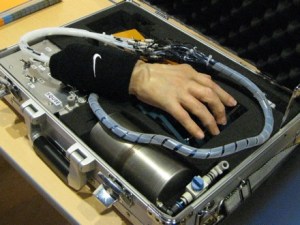
help us feel human again
I spent the early years of my working life being formed by the medical device industry. I was energized by the mission of seeing people restored and hearing joyful patient stories. I enjoyed the banter with physicians and learning about the junction of technology and living systems. And I was charmed by the folks I worked with: some of the smartest people around, with a bent toward helping others. Not everybody, mind you, but enough lively, mission-fed people that the workday was full of surprise.
Things change. Corporations mature—for better and worse. Lately it seems the balance sheet and the quarterly earnings call too easily drown out mission. Smart people who enjoy a challenge still work there, and it is an industry with more and more specific boundaries. So if your agency is pitching medical device work, please be aware of these three influences that shape the perspective of the people you will be talking to:
- Legal pinioning
- Regulatory straight jacket
- Branding dead ends
These perspective-shapers sounds like a bummer, but smart agencies with a knack for operating in tight quarters can help make a difference. The first two perspective-shapers are fairly obvious. Naturally, the best medical device companies hold the patients who receive their therapies in the highest regard. And you would not want to work with a company that didn’t. But in our litigious age, there’s lots of money to be made from suing manufactures for all sorts of things. Naturally, medical device companies ramp up their risk-averting processes. Lawyers review nearly every outward facing piece of communication and regulatory reviewers—the picky cousins of lawyers—delight in ferreting out each word of potential deviation from the FDA-approved copy. And the work of lawyers and regulators is invaluable.
Branding dead ends are not so obvious and few will admit to them out loud. These take a bit more explanation, so I’ll reserve it for another post.
But in your initial approach to conversations with med tech employees, know that most of their conversations are like walking a tightrope: marketing is always a balance between what you’d like to say and what you can say given the published studies. Agencies with more consumer experience can find this deadening. But resisting the pinioning and the straight-jacket—in your own way—is one of the ways your team can add value. It’s just got to be believable. And it becomes more believable when you ask for and expect the list of approved claims before starting work on your pitch. Since every claim must have a valid reference, basing your creative on the right foundation can make the difference between making the final cut and being dismissed as not up to snuff.
Image Credit: Engadget
What Makes Something Remarkable?
Old Volkswagen Station Wagons never die.
 In several classes at Northwestern College we’ve talked about what makes something remarkable, as in, “Hey, let me tell you about this thing I saw….” The Heath brothers tried to parse out the secret of remarkable in Made to Stick, and did a good job noting six principles that make something sticky. But in our Social Media Marketing and now in Freelance Copywriting classes, we’re noting “remarkable” is less science and more art.
Was this ad remarkable in 1966 when DDB’s Marvin Honig wrote it for Volkswagen? Maybe. It is remarkable now because of the nostalgic, iconic bus—just look at the shape of that thing! But for me it is the story telegraphed from inside the bus and at the center of the image: the small businessman waiting to sell you some chili. The copy plays out the story benefit by benefit. Sure—you know you are being sold, but you’re willing to walk right into the story for the 26 seconds it takes to read the copy.
The ad is remarkable in retrospect because of the place this vehicle took in American culture. The story is in the ad, and the story in the ad played out in real life. Surely “remarkable” has something to do with reflecting real life. That’s where things get sticky.
Read the copy here.
###
Via copyranter

 conversation is an engine