Posts Tagged ‘conversation’
Sinister Egyptian Texts
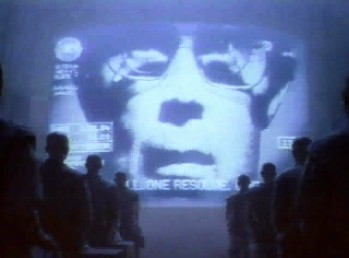
"We're here to help you."
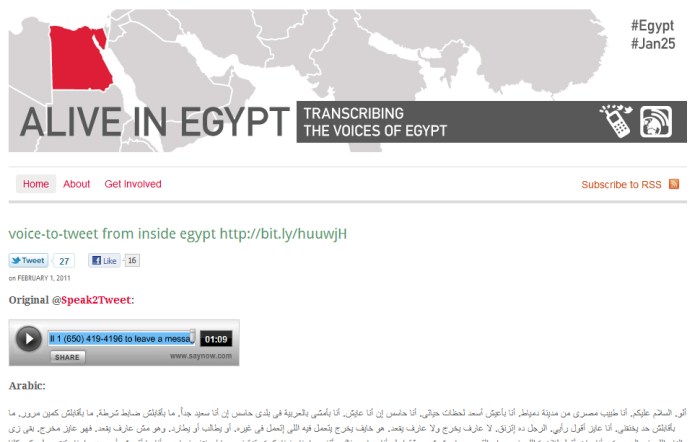
Vodafone and France Telecom SA were forced by the Egyptian Government/army to send texts to their customers, the Wall Street Journal reported Friday. The texts had to do with “national security and general safety.” One example texted message: “Egyptian youth beware of rumors and listen to the voice of reason. Egypt is above everyone so protect it.”
The Egyptian government/army would likely argue those were not threatening messages, and were intended for general safety. But every time an institution speaks to an individual with an institutional voice, the results are less than believable. In this case, they were wildly unbelievable—given Egypt’s continued attempts to break up the persistent crowds and silence their demands. None of the actions of the increasingly desperate Egyptian government actions are at all surprising given their general shut down of the Internet.
The medium hobbled the institutional message by showing up on private phone carried in a private pocket or private purse. This alone makes national security and general safety messages extremely threatening. One thing the messages through the medium made clear: the army has taken control of private industry and will force their message into your personal sphere.
That’s not the right message for this revolutionary crowd.
###
Two Words Cost Me Dearly
 My Splendid Sabotage
Please know:
First: I wrote the words 40-some hours into a 51 hour project spread across a week and a half.
Second: I was desperate to capture the zeitgeist bouncing between client and agency principals.
As I wrote these two words I immediately moved to delete them. But something stopped me. Was it reckless whim? Had I given up? Why oh why did I pause over “Delete”? My self-editor should have been there, sitting beside me. He was still locked in the self-editor-dungeon where he has a cot and a Folgers can to pee in. He doesn’t get out much when I’m creating.
“Flabby Paths”
Oh, sure. They seem innocuous—even forgettable. But as a subhead for a component of this project, they were the stalled car on the track that derailed the train pulling boxcars of produce that needed to get through right now. Or: These words distracted the creative team and hurried them down a path and off a cliff.
So, my bad. Personal penalty: pulling my invoice and attacking it with scissors and fresh resolutions. It’s a matter of integrity. It’s also a matter of retaining relationships.
Floated or Finished?
It’s never just the words, of course. It’s the trust built between creatives as a project moves forward. With some team members you are free to say the really stupid stuff and let it sit for a moment between you, even as you all know some better idea is moving up an esophagus about to be uttered. But with other teams, and especially in hurry-up mode, words appearing on paper carry more weight: not of an idea floated but an idea finished. At this point in the project, my self-editor needed to be there with his “HIT DELETE” stamp poised. Because time was flying and next steps need to step up solidly.
My point? Conversations are never formulas that work in every case. And: while creating, the self-editor needs to dwell in the dungeon, but words making their way out in public need to meet his approval. Let him out sometimes.
###
A meditation on living in chesed
 My friend and I both worked for a long time at a very stable medical device company in Minneapolis. We both eventually left to form our own companies. About this up and down adventure of working on your own, she liked to say “the universe will provide” because her experience was exactly that: interesting clients sought her out with interesting work, she had opportunities for growth coupled with the opportunity to learn and earn for herself and her family. I had to agree that opportunities popped up all the time—especially with the eyes-open approach of a consultant.
My question has more to do with naming the source of these opportunities. Recognizing “the universe” sounds too happenstance. Don’t get me wrong: I am all for whimsy and also a great believer in serendipity. I just want to name the source. Why? Out of joy. Out of wonder. Also because naming the source honors the source. So I credit God as the originator of opportunity.
I’m a beginner at living in dependence on chesed (God’s lovingkindness).
###
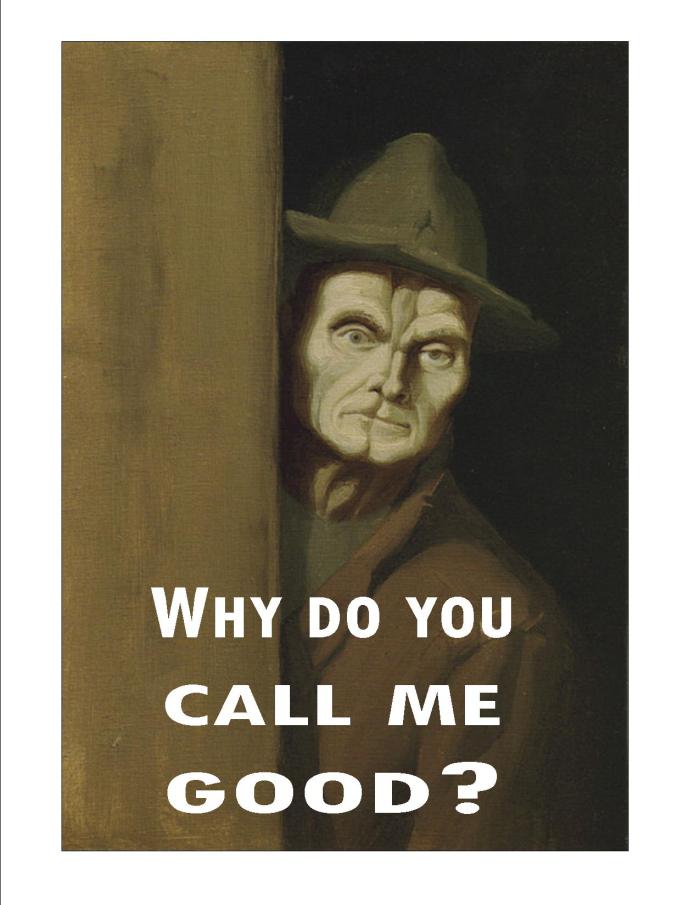
Why do you call me good?
 Full of capacity. Charged with purpose.
Ancient texts lead to surprising places. Jesus’ question to the rich young ruler in Mark 10.18 might have been rhetorical—not wanting to play into the man’s argument too quickly. Or it might have been a hint about the complexity of the character before the young man. It was certainly an invitation to think twice about the obvious stuff in plain view. Is cash a sign of blessing? Should I listen more closely to the important person or the stranger? Is death an end or a beginning?
###

Sometimes a Conversation is an Image
We Act Out What We Cannot Say
There are moments when we are open to listening. These moments may indicate we are open to change as well. People have been telling me their stories about conversations that changed their lives. Sometimes an inconsequential conversation at an inconsequential time can make all the difference in the world.
Louise Bell tells of a moment, not exactly a conversation but an image, that changed her life. Years ago her African-American grandparents had been murdered in the most gruesome way over an act of mercy on their part. Justice had not been accomplished in their murder and the wound was deep. It was when Louise mother died, after moving back to the south with an interest in reconciliation, that this moment occurred.
Listen to the December 30 edition of The Story over at American Public Media. It’s in the second half of the show.
###
Where Does Insight Come From?
How do I discombobulate without getting fired—or hired?

Over at the Philosopher’s Playground, Steven Gimbel wrote recently of his need to discombobulate his students (with their “naively smug beliefs which they’ve never thought very hard about.”) to help them begin the work of philosophy. I wonder if the act of getting discombobulated is the beginning point for producing any insight.
A few days back I had coffee with a friend who is a human resources executive and coach and thoughtful person. We were talking about what makes an organization dialogical, that is, willing to enter into conversation internally (versus the usual barking of orders from one management level to the next). Carol, as it turns out, had a keen interest in how dialogue works and was able to identify four stages in a verbal exchange required to produce insight:
- Awareness of a problem or issue
- Trigger: something in the exchange triggers a reflective moment. Insight often falls from the reflection
- Insight: the Aha moment, when suddenly I understand something previously opaque to me
- Action: Do something with an insight or it is gone. Write it down. Tell someone. Do anything.
Gimbel’s discombobulation seems to help with the awareness phase. We need to understand how what we thought certain or easy is neither certain nor easy. Sometimes I use a classroom exercise to help create the trigger/reflection step for my students. But just as often, in ordinary conversation, my discombobulation finds relief when my friend asks a question and I lapse into momentary reflection which often leads to an insight. Sometimes I feel like an “Aha” addict: there’s nothing like suddenly realizing a new truth—nothing like that “click” when a critical piece of how life works suddenly falls into place. That’s a big part of why I write.
Perhaps the key to those four stages is the action part. We need to do something with an insight. Right then at the very Aha moment. Otherwise it’s lost.
But corporate conversations routinely detour around discombobulation. It’s partly a time issue but mostly the politics of a department: a boss or manager or VP rarely seeks out discombobulation, especially from subordinates. The person in charge would much rather pay a high-priced ad agency or consulting group to come in and discombobulate them. I’ve been on both sides of a number of those meetings.
I’ve been trying to help my students become active discombobulaters in their workplaces: from wherever they land, my hope is they ask the impertinent questions that poke through the malarkey and point out deviation from mission.
###
Who Cares What You Think?
Hearing from your non-target audience is critical to moving forward
I look forward to chatting with a friend and HR executive about how or if her organization encourages dialogue internally. It’s going to be a tricky conversation and I’m not at all sure I can verbally explain what I mean.

What's out there?
Dodgy Questions
I’m working backward from the notion that target audiences and publics are no longer willing to suffer monologues, sermons and sales pitches from companies trying to get their dollars. As I talk with clients and friends, I realize the unwillingness to engage in dialogue with their target audiences actually comes from a deep place of control that leaders want to maintain. Dialogue looks like brazen and reckless openness that offers little or no payback: sort of a personal, self-inflicted Wikileak that will most certainly sink the ship.
In a sense they are right: telling what we know and offering it in exchange for discussion and relationship does seem like giving away the store. But it isn’t exactly that and it will become less like that over time. Dialogue today is more a recognition that the audience that once packed your lecture hall is now making its way to the stage, each with their own microphone and their own index card of questions.
The willingness to engage in dialogue is much, much more than turning on another marketing channel or sprucing up a communication strategy. It is a deep-seated willingness that runs counter to the way many of our businesses are organized.
Talking to the Other
I’ve been tracing the notion of the Other back through Derrida to Levinas and Hegel. I’m trying to understand exactly what is at stake when we open ourselves to true engagement with another person. In particular, engagement with people outside my demographic, outside my target audience, outside my belief set. What are they talking about and how have I excluded them and what have I missed through my exclusions?
I’m eager to know what a company that opens itself in this way looks like: who are they internally? How do they talk with each other in a way that allows them to be open to talking with others?
So—this conversation. Are you interested ?
###

 conversation is an engine