Posts Tagged ‘God’
The “Aha” Outta Nowhere
ListenTalk: Conversation is an Engine [One Page Summary of the Book]
Every once in a while you have a conversation that makes you say “Aha!”
I have those conversations too.

These are the conversations you did not see coming: The offhand comment from the guy in the next cubicle stuck in your brain. You turned it over and over and an hour later the phrase surprised you by unlocking some long-term vexation. The funny thing about these conversations is how they pop up at the most unexpected times—even from clear strangers—and how they can go on to solve pretty big problems. Even funnier: The person we are talking with can be entirely unaware of the importance of the thing they just said.
ListenTalk: Conversation is an Engine is all about where those “Aha” conversations come from and how to have more of them. In ListenTalk we grab conversation and hold it to the light and look at it from a few different angles. We look at what happens when we try to persuade each other of something (which we do constantly) and what happens when we listen deeply. In fact, three smart thinkers offer a refreshing take on what it means to really listen. These three show how the practice of listening gives back far more than it consumes. ListenTalk asks about what happens when our words get launched into a conversation. The answer is another surprise, because words tumble out more often as invitations than commands (even commands are really invitations because of how words bump against human agency). Words have the power to make permanent solid bonds in our physical world. They also have great destructive power.
ListenTalk spins a few ancient stories about how words worked when God talked with people and people talked with God. These old stories begin to make clear just how much is at stake in our ordinary conversations, not just for us but for generations to come. These old stories also hint at deep thick ways of forming insoluble communities that can withstand lots of pressure and still remain collaborative while becoming ever more hopeful. ListenTalk finally links ordinary conversation with the satisfying sorts of conversations humans were meant to have with God—and offers those conversations as a path forward.
[This is a draft summary of my book, which I’ll be shopping around to a few publishers shortly. Comments? Questions? Issues? Angry retorts?]
###
Image credit: imgur
Listen Your Way Into a Larger Story
Start to stop. Stop to hear.
There’s an old story of a woman who could not get pregnant. Her rival got pregnant with unrelenting, vexing regularity. Read the story here—it’s from an ancient text many of us privilege as telling true stuff about the world.
I keep returning to this story because of what it says about how desperation drives our listening habits. The truth is we don’t listen well. Often we don’t listen until we have to: maybe we need some information and it kills us to slow long enough for the clerk/cashier/spouse to spit it out. But we need that information to get where we need to go.
But what if we made a habit of listening? Intent listening. Close listening, rather than listening only when backed into a corner. What if we eagerly sought out answers in the conversations right around us?
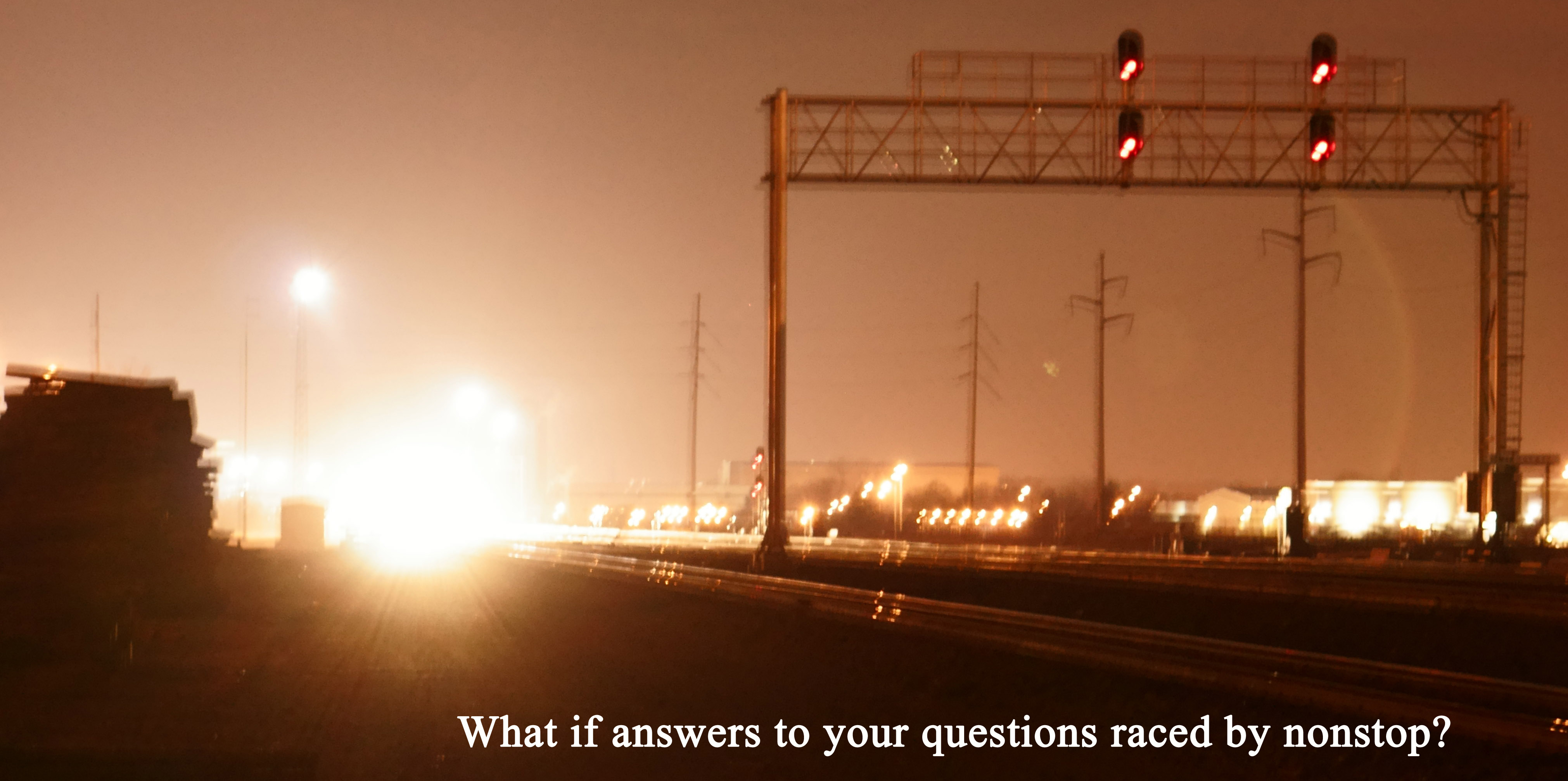
What if the clue to the way forward after our recent lay-off was in the conversation we’ll have at 2:30pm with an old work colleague? What if insight for a growing doubt we’ve had about our faith was just inside the threshold of a chance conversation with an old friend? What if answers to our questions were spinning around us constantly?
That sounds like magical thinking, right?
The woman in the story prayed in her vexation and angst. She prayed so hard the feeble old guy watching her thought she was drunk. The old guy was no prophet and not all that well respected, still, his words formed an answer to the woman’s long-standing question. The story goes on to tell how the answer to her question was part of a much, much larger story with questions an entire nation was asking.
Questions and conversations can be a potent mix.
###
Image Credit: Kirk Livingston
Going to Church Today? Consider This.

expect a conversation that will help sort things
Probably someone will speak to the group—that’s typically what happens. And there will be singing. Prayers will be offered. You’ll shake a few hands. Maybe you’ll learn something new. Maybe you heart will be lightened. Your load lifted.
If heart-lightening or load-lifting happens, stop and think why. Was it because of magic words spoken from the pulpit? Not likely, as there are no magic words. But there are words that find a home in a person’s conscious thought and get absorbed there to do some work. One of the tests the old church fathers used to determine if a letter or text should be included in the Canon (our Bible today) was whether it had the power to change people—did the text speak with authority into a people’s lives? Did something happen because of hearing the text? When those old words get uttered from the pulpit today—they are not magic—but their truthiness has sticking power.
Just as likely: you meet someone who says something that affects you. Makes you think. Makes you reconsider an impending decision. And perhaps that same heart-lightening or load-lifting occurs. Sometimes we meet people who speak truth and it has the same effect.
And consider this: perhaps you go into that time expecting to hear something. What I mean is, sometimes we move into a situation actually expecting to hear something that could have the power to change how we think or act. You might call this listening. Or attentive listening. Or attenuated listening. Or listening on steroids. But whatever you call it, this is the most productive penultimate approach: listening with expectation. Then you pick up the tasty truthiness from any source.
###
Image credit: Douglas Smith via 2headedsnake
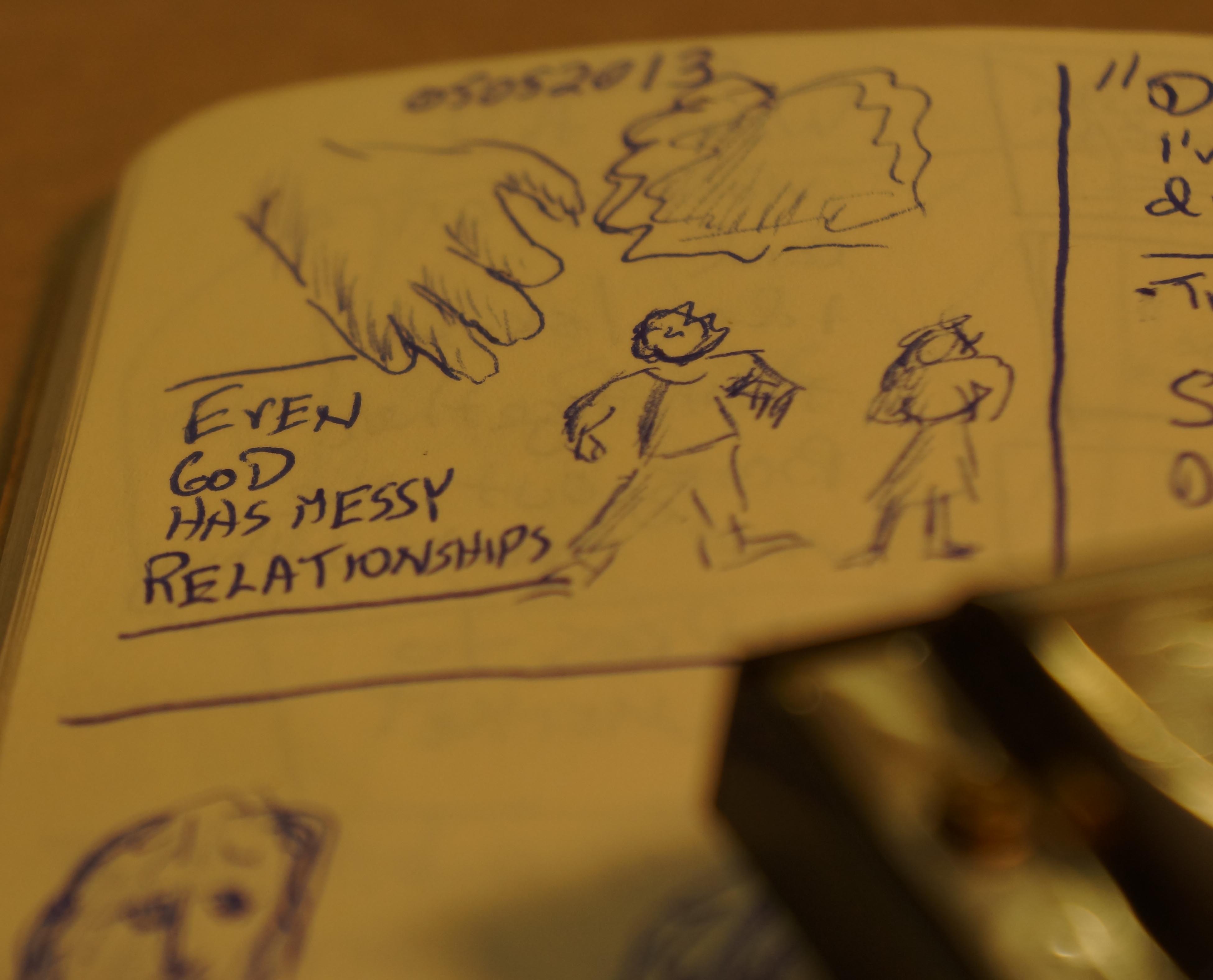
Work Matters. And Show Beats Tell.
Tom Nelson Vs. Wendell Berry Vs. Your Work Horizon
 Not so long ago I heard Tom Nelson speak about his book Work Matters: Connecting Sunday Worship to Monday Work at a Bethel University event. Reading his book confirmed what I noted after hearing him: that preachers often talk about work from an abstracted viewpoint that collects themes from the Bible for a positivistic spin on what many consider the nasty business of business. I’ve tried to understand this phenomenon and I’ve come to suspect it has to do with the horizon anyone brings to their work: if you work but are really on your way to seminary or some transcendent mission, your horizon is 3-5 years, give or take. But if you work and your work is your life work, you have a different set of questions that are not exactly urgent, but are incredibly important.
Those questions are not easily addressed by a set of principles or a preacherly communication event. It’s not that Nelson’s book is wrong. It presents solid thoughts that are good to remember during one’s workday, though the preachy voice is there, the one that happens when oral delivery lands on a page. This voice puts a light, happy, totally-enjoined and engaged touch on every human encounter—which is not how real-life relationships work. Perhaps that voice more than anything provides makes the topic feel trite. Maybe I tuned out because of that voice.
If you were asking questions about why work matters, you can do no better than to pick up nearly any story or other piece of writing from Wendell Berry. Berry doesn’t just tell why work and faith and life fit together. Berry’s fiction shows people enmeshed in lives of work. Yes: he shows older agrarian communities. But he doesn’t show them in the abstract. He shows people who have a basic dignity—an understood dignity, not given by a preacher or unearthed from long silence. Berry’s characters are often in their work for the long haul, and their work becomes part of their identity. That’s a very long horizon indeed. Through their work they understand that they are doing a thing that brings order to the earth.
In my mind bringing order to chaos is a thing our work can do that is closely related to the stuff God does. Bringing order to chaos is a good way to spend a day.
###
Image credit: Metropolitan Museum of Art via Old Chum
Jesus Land vs. The Master
How we pursue power over others

I watched The Master because I was interested in Scientology. I’m not sure how much I learned about Scientology from The Master, but I did see an able portrayal of glib salesmanship and a nifty, nimble made-up religion. And I did see one writer who found a way to sell lots of books, despite the ethical chasm of painting fiction as reality. I did see people who bought in because it fit the way they wanted to see the world. It’s a dark picture and moody. And depressing.
I also just finished Jesus Land, by Julia Scheeres which shows a similar nifty, nimble made-up religion (this one a sad, dark aberration from Christianity). Scheeres’ memoir chronicles growing up in the 70s with abusive, hypocritical parents and power-mad religionists.
There’s nothing like seeing things through the eyes of the resident teenager to unfurl the hypocrisy in a family. You want to hate the parents for their push for outward form even as they undermined their kid’s confidence and ability with ridiculous rules and expectations. And beatings. And micromanagement. And withholding of affection.
As someone who knows that dark side of Christianity is truly an aberration and not at all the entire story, I am so sorry Ms. Scheeres and others had that experience. And I am equally sorry those experiences sent them running the other way. I certainly understand why.
 Many of my friends and likely many reading this will disagree, but I encourage anyone to read through Scheeres’ portrayal of a life where texts and disciplines are wrenched out of context and used as dark and potent weapons. The book is useful if for nothing else than to examine our own habits of turning powerful positive messages to gain power over others.
Both Jesus Land and The Master revolve around made-up religions that are nimble in that they change to suit whatever the leader needs to accomplish. In The Master, Lancaster Dodd is literally writing his new religion as we watch and changing it as he goes. People notice this. He doesn’t care. But his principles are both abusive and entirely without moorings. In Jesus Land, the parents and leaders pick and choose quotes from the Bible to make their point and exert power over the teens. Again—they are blind to having lost the integrity of the message and the ancient moorings that would help them. I can think of half a dozen organizations started in the 70’s that cherry picked Bible passages to make their own aberration of Christianity. At the time, few of us thought to say, “Hey. Stop that.”
Some reading this will say: “But isn’t that the whole point of religion: to make up a set of rules so as to gain power over others?” I appreciate this perceptive comment and it does seem to be true, except that those ancient moorings and understandings can serve to curb the excesses of our current “isms” (whether fundamentalism, evangelicalism, Christian nationalism or whatever). There remains something much, much deeper to explore.
Jesus Land is worth reading, though not at all easy. The Master left me wishing for less.
###
Image credit: un-gif-dans-ta-gueule via 2headedsnake
“Today I Choose to Wear Clothing.”
You have more choices than you think
 Shirt? Yes. Pants? Why not?
Just like every day.
Just like most people.
Except for the odd nudist colony, most people clothe themselves without becoming embroiled in internal debate. Appearing clothed is one of those basic understandings we share. Being clothed is not the question. What that clothing looks like is, of course, the question that drives multi-billion dollar industries.
I’ve been thinking about the boundaries that circle our lives. Or maybe I’ll call them norms. There are expectations out there we follow without thinking. And that’s a good thing, because we might become paralyzed by all the choices before us if we did not have these norms our culture expects of us. And we also have these well-worn ways of acting that help us avoid constantly choosing. We always shower before breakfast. We always drive this route to work. We always park on this side of the lot. We always say “Yo, James” to the receptionist. These are the things we do.
But nothing says we must do it that way.
Nearly every corporate job I’ve had has involved colleagues complaining bitterly about the boss or the manager or director or the CEO. Mondays seemed to foster these discussions. Maybe we cited “golden handcuffs” or likened ourselves to wage slaves in those discussions. But in truth, we’ve been surrounded all along by truckloads, trainloads, barges full of options. An unprecedented wealth of options. But we didn’t see them because we followed the script of our workplace or culture. We didn’t see our choices because the script didn’t let on that there were choices.
I’ve been reading Wendell Berry and Jonathan Sacks—both of whom saw choices that were outside the script: pursuing contentment rather than fame or honoring the stranger. That poet-warrior-king wrote his own set of scripts that were bathed in gratefulness rather than ambition. That inveterate letter writer Paul went off script by weighing the choice of death and life for himself. Of course, Jesus the Christ guy lived the king of all scripts—something we’re still sorting out 2000 years later.
What script are you following today?
What choices are hidden from you because of that script?
###
Image credit: Gervasio Gallardo via 2headedsnake
Rob Bell and Our Costly Questions
Conversations to engage a generation of questioners
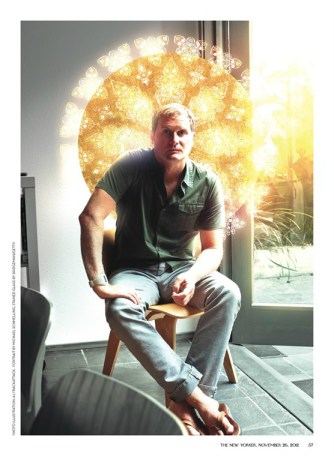 There’s a telling line in the recent story of Rob Bell in The New Yorker (“The Hell-Raiser”), where the author Kelefa Sanneh conjectured that in writing “Love Wins,” Bell was “dreaming of a world a world without arguments—as if the right book, written the right way, would persuade Christians to stop firing Bible verses at each other and start working to build Heaven on earth.” (60) Conjecture about what others are dreaming is often problematic. But Sanneh, like the rest of us, take our cues from what others say and write, which is standard operating procedure for human communication events. Conjecture is always fair game for conversation.
There’s a lot the author gets right in the article and there are a few places with loaded language and mashed-up history. For instance, the notion that the “church matured” (60) out of the notion of Hell as a physical place is too loose a summary to really work. Debates about interpretation rage today, from all quarters.
Sanneh’s focus on how a preacher became a questioner among a people who do not respond generously to larger questions makes for interesting reading. These are my people and I confess that I too have responded without generosity too many times. And yet these larger questions are exactly the conversational fuel that can help move forward this often awkward project called the church. Especially because the generations behind me are increasingly wed to questions rather than dogmatic answers.
Much of what Bell wrote resonates with me. In particular, I’m smitten by this notion that people can talk—even about very deeply held things—without demonizing or judging each other. The notion reminds me of those noble people who early in the history of the church were in conversation with the inveterate letter writer. They eagerly heard what he had to say then examined it on their own to decide whether it was true or not. I imagine them discussing with authoritative texts and possibly disagreeing, but maintaining their relationships.
Bell has done us a great service by voicing these questions, even though the penalties for him have been high.
###
Image Credit: The New Yorker
What if God Showed Up at Work Today?
I doubt it would look like church.
 It wouldn’t look like a Promise Keepers rally. It wouldn’t look like clouds of incense. Probably there would be no robes involved or collars or big leather-bound Bibles to thump.
There might be preaching, but no pulpit. And no audience. If God showed up, the preacher might be the unknown worker silently speaking with deeds, deep inside a process, attending every detail. The example of some human serving in a hidden way that was not meant to be seen.
If God showed up, someone might float an idea in a meeting, an idea that was not politically motivated or meant to show how smart they were. Just an idea to help the group move forward.
If God showed up, all the gossipy chatter might be silenced—all that vindictive, energy-sapping talk about so-and-so that goes on all day every day.
If God showed up, maybe we’d see why we worked there in the first place. And maybe we’d decide this job costs way more than it pays. And we’d quit.
If God showed up today, what would your work look like?
###
Image Credit: Robert Hunt via 2headedsnake

 conversation is an engine