Posts Tagged ‘marketing communication’
Why Name a Problem?
“They won’t recognize a great solution until they see how big the problem was.”
Along the way to becoming a copywriter one must learn to name problems. This is an essential skill for anyone trying use their creativity out in the world of real people and real issues. Because when you present your bit of inspired copy to a prospective client (as one does when planning for serendipity), they will not see how inspired it is until you tell the problem the copy solved. Once they understand the problem, they can begin to appreciate the genius of the solution you created.

Naming a problem is best done in story form: there was this nasty condition and people worked around the nasty business in this way, which was inconvenient and bad. But we saw that this could be done, and so I created this. Which seemed to work and everyone was happy. Problem solved.
But naming a problem can sometimes be uncomfortable. Not usually after the fact, when everyone can easily see that it was a problem. But before: if you are the first one to notice a problem it takes a bit of courage to say it out loud to others. What if you got it wrong? What if you just don’t understand? If you name the problem, will you be responsible to fix it?
Here’s where a lesson from work fits back into real life as a human: naming a problem is the first step toward fixing it. That is true with my clients and it is true with students and it is true in all sorts of relationships and life situations. To name something is to register that a problem exists. It puts the problem on the radar and communicates to others that there may be an issue.
Until you name a problem you have very little opportunity to address it.
Naming is a bridge to fixing.
###
Image credit: Kirk Livingston
Tag:
Bah: Who needs “personality”?
Give me your risk-averse, your bland spinners of boredom.

Two days ago I talked with a marketer trying to sort exactly what space his brand occupies in social media. His brand generally takes a clear position against the competition and owns 15 to 20 percent of the market. Their messaging is mostly working and they see only growth ahead.
But that growth needs a kick. Getting their brand noticed in social media requires more than mere facts. For instance, when it comes to tweets—what tone to take?
They’ve studied their demographic relentlessly. They know, for instance, that edgy won’t cut it with their particular audience. That’s a shame, because “edgy” tweets attract a lot of attention. My friend pointed to @DiGiornoPizza and the (often hilarious) tweets that set them apart. Their tweets fit their audience.
But my friend was not trying to meet the needs or get the attention of that edgy demographic. Plus, my friend’s brand was lodged within a behemoth of company that has traditionally favored corporate, risk-averse language over “fun” and “personable.”
What to do?
This is a question many companies will face as social technologies advance further and further into the selling cycles. Social media will always be about more than facts. People come back to particular tweeters or blog posts or updates because of the personality represented and the personalities’ take on whatever. We come back again and again because we want to hear what Letterman (or Colbert) or Jimmy Fallon will say about this or that. There is an expectation. And there is an emotional connection. And it never hurts to be fun.
I predict even business-to-business will succumb to personality and human speak.
How can a risk-averse corporation that deals in corporate-speak begin to talk human and engage in conversation with other humans? This is a complicated question that calls for creativity beyond the numbering of facts and features. It calls for a viewpoint or perspective. And those companies willing to move their tone off bland and toward standing for something that matters to their audience will be the early winners.
###
Image credit: TaylorTay via morguefile.com
Dialogue 2.0: Can a Marketer Game a Conversation?
Yes. But maybe no?
Lots of us try to figure how to turn a conversation to our advantage.
Marketers increasingly slip us information just when we want it, like Google giving directions to the donut place on the way to my next meeting.
Bad Google.

Carefully observe, one must.
Carl Griffith, writing over at ClickZ, wants marketing websites to recognize and reengage with returning customers via their behind the scenes content management system. He wants websites to engage in dialogue like people do: no need for reintroductions. We know you—you know us—where did we leave off last time? Cookies help this happen, of course. Amazon is an example of picking up where you left off and adding suggestions for more purchasing joy. That is likely where all web properties are headed.
Mr. Griffith goes further: what if we programmed into our content management systems a way to pick up on non-verbals? He means those signals that pass between animate conversation partners (I wrote human first and then remembered how much non-verbal information dogs pick up): the open or closed hands, the orientation of shoulders or head toward or away from the speaker, the eye contact (or lack thereof)—all these bring depth and context to our conversations. That depth and context adds to the words exchanged or belies the words exchanged. Listen to Mr. Griffith:
You will be familiar with the throw-away lines in everyday conversations around the importance of non-verbal communication and what we have now in the world of digital are ways of understanding the more silent and less obvious conversations and dialogue we now have with our consumers driven by context and the insights we should derive from the sum of interaction and engagement.
As a consumer—or for anyone increasingly wary of how our own national security apparatus listens in at will—it’s easy to read sinister overtones into these marketing improvements. Marketers will want to be wary of any resemblance to the NSA, although all the players are starting to look like classmates from the same surveillance school.
But in a human conversation, we start to get the sense of when our partner is yanking our chain—or outright manipulating facts and/or lying. And we back away. Quickly. Perhaps the computer programs that touch our web conversations will go the way of 30 second TV spots—a chance for us to cognitively check-out because we know we’re being sold something.
Mr. Griffith’ vision of dialogue 2.0 is starting to sound like a return to monologue, only in shorter bits and micro-fitted and shoehorned into seemingly ordinary conversations.
Caveat emptor.
###
Image credit: Kirk Livingston (Weekly Photo Challenge: Street Life)
If you bet, bet with your head.
Or just don’t bet.
It’s still a gamble, after all.
But always use your head.
###
Get a Job. Or Don’t.
Rethinking My Standard Line on Employment
What to say to folks starting in this job market?
I’m gearing up to teach a couple professional writing classes at the University of Northwestern—St. Paul. I’ll be updating my syllabi, looking at a new text or two. I’ve got some new ideas about how the courses should unfold and about how I can get more discussion and less of that nasty blathery/lecture stuff from me. I’ll be thinking about writing projects that move closer to what copywriters and content strategists do day in and day out.

Yeah: don’t bind your legs when you really need to take action.
One thing I’m also doing is reconsidering the standard advice for people on the cusp of a working life. I usually tell the brightest students—the ones who want to write for a living and show every indication of being capable of carrying that out—to start with a company. Starting with a company helps pay down debt, provides health insurance (often) and best of all, you learn the ropes and cycles of the business and industry. I’ve often thought of those first jobs out of college as a sort of finishing school or mini-graduate school where you get paid to learn the details of an industry (or industries). Those first jobs can set a course the later jobs. And those first friendships bloom in all sorts of unlikely ways as peers also make their way through work and life. You connect and reconnect for years and years.
But I’m no longer so certain of that advice. While it’s true that companies and agencies and marketing firms provide terrific entry ramps to the work world, they also open the door to some work habits that are not so great. Every business has its own culture, of course. Sometimes that culture looks like back-biting and demeaning and discouraging. Sometimes the work culture can be optimistic and recognize accomplishment and encouraging and fun. Mostly it’s a mix of both.
But one thing I don’t want these bright students to learn at some corporate finishing school is the habit of just doing their job. By that I mean the habit of waiting for someone to tell them what to do. Every year I watch talented friends get laid off from high-powered jobs in stable industries where they worked hard at exactly what they were asked to do. And most everyone at some point says something like:
Wait—I should have been thinking all along about what I want to do. [or]
How can I be more entrepreneurial with my skill set? [or]
What exactly is my vision for my work life?
Some of these bright writing students are meant to be entrepreneurial from the very beginning. Though a rocky and difficult path in getting established with clients and earning consistently, it may be a more stable way to live down the road. Maybe “stable” is not quite the right word for the entrepreneurial bent—“sustainable” might be more appropriate. The quintessential habit to learn is to depend on yourself (while also asking God for help, you understand) rather than waiting for someone to come tell you what to do.
I’m eager for these bright, accomplished people to think beyond the narrow vision of just getting a job. The vision they develop will power all sorts of industries over time.
###
Image credit: arcaneimages, via rrrick/2headedsnake
Do a Dumb Sketch Today
Magnetize Eyeballs with Your Dumb Sketch
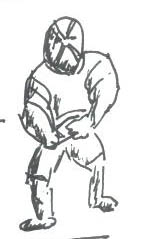 As a copywriter, I’ve always prefaced my art or design-related comments with, “I’m no designer, but….” I read a number of design blogs because the discipline fascinates me and I hope for a happy marriage between my words and their graphical setting as they set off into the world.
But artists and designers don’t own art. And I’m starting to wonder why I accede such authority to experts. Mind you, I’m no expert, but just like in the best, most engaged conversations, something sorta magical happens in a dumb sketch. Sometimes words shivering alone on a white page just don’t cut it. Especially when they gang up in dozens and scores and crowd onto a PowerPoint slide in an attempt to muscle their way into a client’s or colleague’s consciousness. Sometimes my words lack immediacy. Sometimes they don’t punch people in the gut like I want them to.
A dumb sketch can do what words cannot.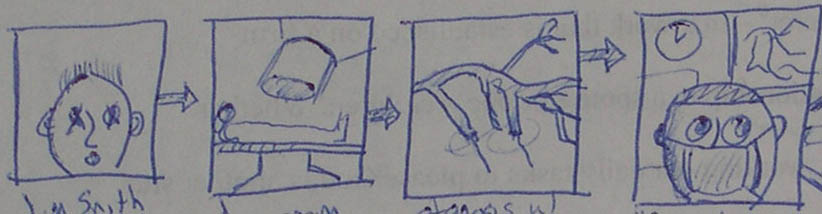
I’ve come to enjoy sketching lately. Not because I’m a good artist (I’m not). Not because I have a knack for capturing things on paper. I don’t. I like sketching for two reasons:
- Drawing a sketch uses an entirely different part of my brain. Or so it seems. The blank page with a pencil and an idea of a drawing is very different from a blank page and an idea soon to be fitted with a set of words. Sketching seems inherently more fun than writing (remember, I write for a living, so I’m completely in love with words, too). Sketching feels like playing. That sense of play has a way of working itself out—even for as bad an artist as I am. It’s that sense of play that brings along the second reason to sketch.
- Sketches are unparalleled communication tools. It’s true. Talking about a picture with someone is far more interesting than sitting and watching someone read a sentence. Which is boring. Even a very bad sketch, presented to a table of colleagues or clients, can make people laugh and so serve to lighten the mood. Even the worst sketches carry an emotional tinge. People love to see sketches. Even obstinate, ornery colleagues are drawn into the intent of the sketch, so much so that their minds begin filling in the blanks (without them realizing!) and so are drawn into what was supposed to happen with the drawing. The mind cannot help but fill in the blanks.
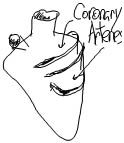
The best part of a dumb sketch is what happens when it is shown to a group. In a recent client meeting I pulled out my dumb sketches to make a particular point about how this product should be positioned in the market. I could not quite hear it, but I had the sense of a collective sigh around the conference table as they saw pictures rather than yet another wordy PowerPoint slide. In fact, contrary to the forced attention a wordy PowerPoint slide demands, my sketch pulled people in with a magnetism. Even though ugly, it still pulled. Amazing.
###

 conversation is an engine