Posts Tagged ‘seth godin’
Joseph, Seth Godin’s Dip and Knowing When to Quit
Practice Your Craft In the Dip Or On The Rise

wait, where is that basket tethered?
It’s funny what ideas collide on any given day. I’ve been re-reading Seth Godin’s The Dip while also re-reading the ancient text Genesis. In Genesis I’m at the point in the story where the Creator needs to clear out his favorite people—the ones He’ll use to help all subsequent generations and peoples—to a foreign land so they’ll survive a famine. The front man is Joseph, sold into economic slavery by his not-so-well-meaning brothers. Joseph winds up as #2 man in Egypt. You know the story. Maybe you are already singing the tune from Andrew Lloyd Webber’s Joseph and the Amazing Technicolor Dreamcoat.
It turns out not just any dream will do, as Mr. Osmond so famously sang, because there were a lot of very big falls and rises in Joseph’s life. And a lot of waiting, which served to focus the dream. Quitting would have been an excellent option for any of the many dips he experienced. Because there were no guarantees the dip would ever end. There were no guarantees he would ever rise out of the slavery/prison. Interestingly, the author of Genesis points out that Joseph continued to work out the processes behind his dream: his gift for organizing people and stuff. His gift of leadership. So that wherever he was, as household slave or in jail, he organized and led using the same skills that would help him manage a nation’s food supply through thick years and thin.
The dream seemed to be about fame at the beginning—that’s what Joseph’s brother’s thought. Maybe Joseph thought that too. But the dream became a byproduct of practicing the gifts given him, even at the lowest points of the dip. To quit would have been to stop practicing the thing he was made for, which would be to give up hope. I think Webber did a good job capturing the optimism that must have been warp and woof of Joseph’s life.
Where does that optimism come from? Maybe from practicing one’s craft when up or when down. Maybe that optimism comes from understanding a much larger plan is in the works and you are in it, whether you on the rise or languishing in the dip.
###
Image credit: Scribner’s Monthly Via OBI Scrapbook Blog
What’s Your Favorite Book on Social Media? Please Retweet! #WriteForCommunity

Here they come!
I’m researching and writing lectures for my class “Writing to Build Community using Social Media” at Northwestern College, a Christian liberal arts college in Saint Paul, Minnesota. The class will be composed of college juniors and seniors who are writers, communicators and folks focused on doing ministry after they graduate. My curriculum includes on overview of the changing face of marketing and communication, the newly generated opportunities to hear and be heard, bits about the kind of leadership required to build communities today and tomorrow, as well as a brief theology of communication and solid rhetorical strategies and tips for writing for interactive media, including blogs, Facebook and Twitter.
I like Clay Shirky’s Here Comes Everybody for a whole bunch of reasons, including how he encapsulates the new opportunities and attitudes surrounding how we connect. He makes clear how the social tools make organizing easier, which helps me make the case for strategic copy that engages. The original The ClueTrain Manifesto (by Rick Levine, Christopher Locke, Doc Searls and David Weinberger) amazed and provoked me. Today I’ll go find a copy of the 10th Anniversary edition. What Would Google Do (Jeff Jarvis) continues to provide useful fodder for thought, as does Seth Godin’s Tribes: We Need You to Lead Us.
What books about social media would you recommend for these students?
###
Building Content: Share Your Research—Even if Incomplete
A few days ago I talked with a company about their research efforts into a growing subset of a particular business process. This firm’s business is all about helping other companies make personal connections with their customers. Over the years this company has built a strong reputation for their expertise even as they continue to grow and adapt. They already know the benefits of being perceived as experts. Now they seek to add to the already strong understanding of the tools, process and attitudes needed to help companies remain connected.
One of the new opportunities before all of us is to provide leadership around a topic and invite others to talk with us about that shared passion. Seth Godin talks about it in Tribes. This company I had been speaking with has already caught the bug for growing themselves and helping others along the way. But one of the things about research is a commitment to doing something new. By definition, research means you are answering questions and finding things out fresh. Naturally we want to apply our new understanding to the problems and opportunities before us. That means we might not get it just right all the time. We may make mistakes. And don’t mistakes force a slip in our perception as experts?
I’ve been arguing all through these articles that what we gain in authenticity more than makes up for momentary slips. Social media is about real time communication, so if we read our research at some future point and realize something happened that changed everything, we’ll understand that we knew what we knew when we knew it. “Now we see things differently,” we might say to ourselves at that future point. I’m arguing for grace. I’m also arguing we’ll understand the nature of social media in this way.
 This topic has a personal application for me. I’m currently writing out a book-length project that develops a theology of communication. But I’m reluctant to chunk it out into a blog format because every part of the book changes as I move forward. What I thought was true in the first three chapters is actually changing as I write chapters four through six. I’m certain change will continue all the way to Chapter 12. Do I have the courage to make mistakes in public?
How do you approach sharing your research? I’d love to hear.
###
Please, Back Away from the Controller.

It’s about interest, not control.
It’s not like you can just adopt this new channel, buy space and you’re good to go.
It’s more like learning to be a friend again. I described the equivalent of “winning the lottery” in a dialogue-based medical device marketing context, but Seth Godin takes the next step with his Tribes: We Need You to Lead Us. Instead of focusing on the tools of social media we all find so interesting (or not), he posed the provocative question “Who is it we should be leading?” His question presupposes this inward-looking beginning point for any who care to begin dialogue: “What change am I passionate enough about to lead?”
I like that Godin helps me see that the coming dialogical world is much broader than today’s set of bloggy-twittery-searchable tools. The questions we ask when moving from monologue to dialogue have more to do with what we all care about together. Finding what we care about together is a necessary stop on the journey. And knowing what we care about together is a step beyond carefully controlling the conversation with fine-tuned messages.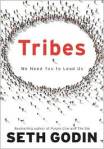
What we care about together as humans has always been different from the one-dimensional messages with which we’ve surrounded our product messages. The secret to dialogue is what we learned years ago when our first friend showed up that summer day: we look for common interests. We expect give and take, and a willingness to hear and try something new. Friendship is formed when we stop claiming to know all the answers. Inviting marketers to rethink friendship is a step toward dialogue and a step away from monologue. Inviting marketers to find their place of leadership within friendship and within dialogue is a step toward freeing them to be the leaders they secretly want to be. The tribe-formers we need them to be.
###
Medical Device Firms Using Social Media, Step #2.1: Curious People Make Better Conversation Partners

I'm interesting? You're fascinating!
Frenemies are talking—according to one medical-device insider—but mostly because the genie is out of the bottle. What we need is a wave of curiosity to beset our organizations.
You know and love curious people: they are the ones who unearth some fact about you when in conversation, find it fascinating, and then probe your knowledge of it. And when anybody finds us fascinating—they are instantly fascinating themselves.
Seth Godin, in Tribes, describes the difference between a fundamentalist and a curious person. He wasn’t talking (only) about religion. A fundamentalist receives new information or experience and immediately compares it with established dogma with the intent to reject (or perhaps even approve). In contrast the curious person receives the new information or experience and immediately engages what they have learned with what they know, looking for areas of overlap and disagreement. The curious will also reject ideas, but not before engaging, understanding and even mentally giving the idea a test drive.
Bless the hiring managers who incorporate curious regulators and lawyers into these positions—people willing to explore a changing communication landscape even while respecting the letter of the law.
Can we resolve to test for curiosity before hiring?
###
Photo credit: OpenPhoto / Sarah Klockars-Clauser

 conversation is an engine