Archive for the ‘art and work’ Category
Ten Ways Fulfillment Mingles with Professional Writing (Shop Talk #4)
Life’s not about poetry. Or is it?
 I’ve been posting in response to a query from an English student who wondered about finding fulfillment as a professional writer. How can we compare writing poems and short stories and novels to writing for companies or ad agencies or other firms or organizations seeking help to communicate? She asks a good question which we all struggle to answer all our lives. See a few responses here: Shop Talk: The Collision of Craft, Faith and Service
When I teach professional writing classes at Northwestern College, I like to invite Rich Bosshardt, who writes for a well-known local manufacturer, to talk with the class. Like many of us, Rich’s route to writing was circuitous: from mover of boxes to telemarketer to carpenter to chemical compounder to university research lab technician—plus about ten other jobs. Along the way he earned a Master’s in New Testament, so his thoughts about work and writing have a theological bent, which I appreciate. In response to my request, Rich rattled off ten things about writing for a living and offered to explicate one more:
- We could learn a lesson on career fulfillment from Joseph, the son of Jacob and the great administrator in Genesis.
- How do you work through when the honeymoon of being hired is over and passion for the work is long gone, but the bills keep coming?
- My career has been an unintentional path; I didn’t enjoy writing and knew nothing about technical writing until I was over 30 years old.
- Why shouldn’t we be passionate about what we do for a living? Whom would you rather hire—the passionate worker or the dispassionate one? You can raise the competence of a mediocre worker who is passionate about the work and therefore wants to improve, but the dispassionate worker? Let him or her go; you’re doing both of you a favor.
- Luther had great insights about one’s vocation, raising the legitimacy and importance of “common” work and sparking the Protestant work ethic.
- There is joy in doing work of the best quality that you can and in a manner that marks you as a person who has character, thereby earning the respect and admiration (stated or unstated) by others. Good (both competent and ethical) workers do eventually get noticed by those who work with them, and these good workers will find themselves happily employed.
- I thank God for the “little things” at work, e. g., that I’m working inside in a temperature-controlled environment on a frigid winter day or a hot, humid summer day.
- Relationships can make all the difference; being part of a caring and talented team can turn drudgery into joy because you enjoy the relationship regardless of the circumstances.
- There is a psychology to technical writing; good writers should think about at least two things: (1) how people will use the product that they are writing about; and (2) how people will interact with the instructions and illustrations that you create.
- “And God saw that it was very good.” There is a satisfaction (and fulfillment) in a job well done, no matter what job it is, great or small.
I like Rich’s list and think it gets at the tensions of creating versus making a living versus making meaning every day. Rich’s vocational path also reminds me of Parker Palmer’s wonderful “Let Your Life Speak,” which is all about taking the time to notice what you enjoy. Palmer’s book is one to own and read annually.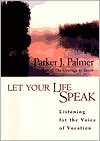
I’d like to hear more from Rich on Number 9: the psychology of technical writing.
What would you like to hear more about? What would you add or subtract?
###
Image credit: 2headedsnake
Bottledworder: Writing in spite of the daily (Shop Talk 3.1)
Words Create Something In the World
 May I steer you toward a blogger I’ve recently discovered? This generous writer visited a number of obscure blogs (including Conversation is an Engine) and commented. Many of us followed back to her blog (lesson learned on growing an audience).
Bottledworder wrote Writing in spite of the daily on January 20. It’s a post that points out the concentration and isolation needed for creative writing. She also writes of how much a privilege writing is—with which I agree. Down in the meat of her essay she disparages making a living through “useful” writing:
“useful” varieties of writing where writing is the medium to achieve something else, not the end-goal.
I use “disparage” lightly and with affection, because it is clear writers of all sorts are heroes in Bottledworder’s world—and I could not agree more. Still, her comment hits at this notion I’ve been thinking and writing about: does writing/creative fulfillment come only from digging down in the isolated depths of one’s own psyche?
 That still seems to me only part of the story.
And for proof I continue to point to the exercises in creativity my writing has contributed to with companies and agencies, in places where we’ve joined as a team. Maybe those team/financed experiences don’t exactly duplicate the joy of writing something pulled from the depths of my soul (and that is a primary joy of writing, no question), but a true phrase that helps a company move forward is also a beautiful thing. Plus, it helps create something real in the world.
Again—there’s so much more to say about this. Here are a few early related posts:
- The Tradeoffs in Selling Your Craft (Shop Talk #1)
- Writing with Sheet Metal (Shop Talk #2)
- Is Your Job Fulfilling? (Shop Talk #3)
###
Image credit: bottledworder, confuse-a-cat via 2headedsnake
Is Your Job Fulfilling? (Shop Talk #3)
Depends: what do you mean by fulfilling?
 An art director and I were talking once about the different jobs we had done over the years. Al said he did some work as a freelancer he was not particularly proud of: wasn’t bad work, just didn’t highlight the creative style he had become known for. Why did he do it? “Well, I had a family and a mortgage and…you do what you gotta do.”
This is my story, too. It is everyone’s story.
An English student asked me how someone writing for an agency or corporation can find fulfillment when the writing is essentially voiceless. By that I understood she meant that the writing was not coming out of some personal deep need to communicate. I get what she means and I think this is an important question. But I also think we romanticize the production of art, novels and poems.
I’ve been arguing that work and art sometimes fit hand in glove and sometimes stay at opposite ends of our daily teeter totter. I’ve been arguing you need both to make either work. If you just have paying work, you are not exercising your creative self. If you just are creating, you’re broke and maybe you don’t have a place among real people in real life. Here are a few things that happen when work and art find a way to live together:
- Workmanlike attention: Our work with its deadlines and status updates helps us (sometimes forces us) to be productive. This is useful when it comes to delivering on our art or craft. Just getting to it—every day—is the way we produce anything. None of this waiting for enlightenment stuff.
- Having a place among people: isolation is not good. Those colleagues and bosses and clients who critique our work help shape it (no matter how painful). In the same way as we try to explain our craft or art to others, it gets shaped as well.
- It is your job to develop a voice. It may not be your voice, but it must be a believable voice. And to run that voice through the gauntlet of critics and peevish managers and lawyers and regulators is no small feat. The voice you produce can become a team or corporate asset. That is something to be proud of.
- Now is not forever. If you are not producing the art/poems/novels you intended, find a way to get to it. This usually involves owning up to the myriad excuses we present for not doing it. And if today’s work is less than fulfilling: start looking. It’s the steely beauty of the free market system that you can change. Recognize that this job is for now and not forever (more and more I’m convinced different seasons in life hold different tasks and levels of fulfillment. Plus, we are personally changing all the time, which means fulfillment is a moving target.)
Several of the hard-bitten copywriters I know would say “Who has time for writing outside the office?” To these I would say your own art and copy is a gift to yourself that pays back in meaning and insight.
There’s more to say about this. What would you add or subtract or say to my student?
###
Image credit: Kirk Livingston
The Tradeoffs in Selling Your Craft
Make a living while making a life
 Teaching in a college English department, I come in contact with lots of people who want to express themselves. They have things to say and they want to say those things through poetry, fiction and all manner of creative writing. The typical line of thinking goes that the best and highest fulfillment comes from putting words around those things that compel us. The process of searching out those compelling things involves regularly plunging deep inside to pull stories and impressions up to the surface to slice and dice for delivery. This is good and useful work and has, or course, resulted in the poems and works of fiction and symphonies and songs celebrated worldwide.
This work of surfacing our deepest thoughts and emotions and capturing them for delivery is important work in which each of us must continue. I want to do this as well and regularly set aside time for it. But is this highly internal work the only route to fulfillment? Answer “Yes!” and you shortchange the rest of life.
I want to argue in a few posts that we make some of our best and most meaningful contributions when three streams collide:
- Faith: what we believe
- Talents: what we are gifted at
- Service: as we focus on needs outside of us, how can we use our faith and talents and imagination to solve those needs?
I want to argue the junction of craft and faith and need is the locus of true fulfillment. When we plumb our depths for words or impressions that solve a need our organization or community has identified, well then we’ve done a good thing and a highly fulfilling thing. I might further argue that much of our greatest art and literature has come from that junction of craft, faith and need.
Writing ad copy or technical specs is not the route to personal fulfillment. But neither is a self-focus that never reaches out.
There’s lots more to say about this.
###
Image credit: frenchtwist via 2headedsnake
(Worth Reading) Through Thickets of Darkness: Solstice Thoughts
Judith Hougen, over at Coracle Journeys, did a good job of celebrating human frailty.
Her post is worth reading.
###
Minnesota’s Outlaw Poetry Students
Did I mention Coursera is free?
I’m taking a Modern Poetry Class with Coursera. It’s free (which is stunningly amazing), offers no credit. I expect no credit—I’m not working toward a degree.
And with each close reading of Dickinson and Kerouac, each synapses that fires, I am violating state law.
The Minneapolis/St. Paul Business Journal reported Friday on a story from Salon that Coursera heard from my (uptight) state, to wit:
Notice for Minnesota Users
Coursera has been informed by the Minnesota Office of Higher Education that under Minnesota Statutes (136A.61 to 136A.71), a university cannot offer online courses to Minnesota residents unless the university has received authorization from the State of Minnesota to do so. If you are a resident of Minnesota, you agree that either (1) you will not take courses on Coursera, or (2) for each class that you take, the majority of work you do for the class will be done from outside the State of Minnesota.
To Summarize: my state won’t let me take a free course because I might lose money. Did I mention the course is free?
I am baffled. I think the roots of this odd quasi-enforcement have to do with Minnesotans wasting their time and money (and state funding) on for-profit schools that offer little chance of graduating. But here the fear has been applied in broad brush strokes, since there was no promise of credit or degrees. Minnesota’s one-size-fits-all solution does not fit. That needs revisiting.
But I’m OK. Because every time I read my readings and watch the lectures, I find myself back at UW Madison law library with the chain smokers and worried scribblers. Or back in Iowa next to the Des Moines River. Or back anywhere that isn’t Minnesota. Because Minnesota’s dream of enforcement is about that likely, and much less credible.
###
Addendum: It looks like my state found a finer brush to paint our laws: http://www.slate.com/blogs/future_tense/2012/10/19/minnesota_coursera_ban_state_won_t_crack_down_on_free_online_courses_after.html
Ginsberg’s “tanked-up clatter” vs. the Gray Flannel Suit vs. a Third Way
Peace for the Listening Lurking Capitalist
We’re at the Beats and Allen Ginsberg and Howl now in our march through modern poetry. A recent discussion took in a stanza that seems relatively autobiographical, describing Ginsberg’s failed flirtation with advertising:
who were burned alive in their innocent flannel suits on Madison Avenue
amid blasts of leaden verse & the tanked-up clatter of the iron regi-
ments of fashion & the nitroglycerine shrieks of the fairies of advertis-
ing & the mustard gas of sinister intelligent editors, or were run down
by the drunken taxicabs of Absolute Reality,
 There is lots to talk about in this section (indeed, the entirety of Howl begs for response and discussion), including “leaden verse & the tanked-up clatter” and the irresistible “nitroglycerine shrieks.”
Of particular interest to me was the quickness with which our TA/discussion buddies blasted the hackiness of advertising copy. Of course the poets are right (and anybody actually creating ads readily confesses to their role in purveying crass capitalism), still…not everything is “clumsy, tacky copywriting.” That knee-jerk reaction to advertising covers a lot of ground well. But the comment misses the diabolical under-the-skin genius of the copy that got through and has already been ingested and now guides our subconscious. Professor Al hit closer to home when brought up “very slick” old slogans that remain memorable. Ginsberg’s insights at that point are perceptive and well-wrought, but I cannot help but insist on seeing the beauty of some advertising. The turn of a phrase that attaches (yes, at times parasitically to a target brain) is, well, amazing. It’s a kind of poetry let loose among today’s pages and screens and whispers.
There is a way to be at peace with using creativity to solve business problems. The way of peace wanders alongside the grove of manipulation without wandering in. This path follows a course of respectful persuasion, with nods to the “I and Thou” while resolutely trimming and toning messages for real-life use.
There is a way between “clumsy, tacky” and slick manipulation. That is a way of service that can be beautiful in its workmanlike portrayal of practical truths.
###
Image Credit: marcedith via 2headedsnake
Widerøe: A Most Winsome and Persuasive Airline
Have you ever seen a more organic selling proposition?
This quote, via the Bill Bernbach fans over at Sell!Sell! seems appropriate for this piece of communication:
Advertising doesn’t create a product advantage. It can only convey it.
###
Today I start a Coursera Modern Poetry Class. I have over 29600 classmates.
It’s a big room.
 I’ve always had a hard time with poetry. Except for Billy Collins, Ted Kooser, and William Carlos Williams and a few others, I mostly don’t get it. Over the years a few smart and patient friends have helped me glimpse what I’ve been missing. Those few glimpses have made me hungry for more.
So I signed up for a Coursera course. This one is taught by Al Filreis through the University of Pennsylvania. It’s free to take and so far, even the readings look like they are freely available on the web. The fact that nearly 30,000 people signed up for the ten-week course seems to have shocked everyone, including the instructors.
Why Poetry When There is So Much Real Work to be Done?
Poetry and copywriting are joined at the hip.
I see you rolling your eyes.
Listen: reducing a big idea to the shortest, most succinct nugget that cannot be ignored by a target audience is the heart of copywriting. Yes, it’s true we often waste that succinctifying power on soda and beer and lingerie and the Reliant K-car. But not always: sometimes we write to expose human trafficking and to raise money for refugee crises or to invite people to reconcile with God. All these uses—whether mundane or transcendent—use that succinctifying muscle. Longer-term readers of this blog might argue that whether mundane or transcendent, the work of serving with words is valuable. I agree.
Sharpening that succinctifying muscle is what interests me. I hope that will be one outcome from the course, as I see what poets have succeeded at encapsulating experience into words and phrases. Of course, I’m guessing there will be much, much more to it.
###
Image Credit: Dr. Seuss via thisisnthappiness
Dedication to Craft: Jiro Dreams of Sushi
There’s hardly a more fitting reminder of dedication to craft than the 2011 David Gelb documentary Jiro Dreams of Sushi. The film follow’s 85-year old Jiro in his daily routine of preparing sushi. From buying fresh tuna and squid at the market every morning to massaging the octopus (that’s right for 45 minutes) to talking with the rice vendor who refuses to sell rice to someone just because they ask for it. One of Jiro’s biggest fans is a local food writer who we follow into the restaurant again and again as he articulates the surprise that happens with every meal.
Jiro’s shop (“Sukiyabashi Jiro”) is extremely clean but modest. Located in a Tokyo subway station, it has only ten seats and serves only sushi. Jiro sets up two rounds of meals a day: lunch and dinner—which sounds like he serves 20 people a day. And yet sushi lovers from around the world reserve up to a year in advance (if my memory serves). Jiro is the only sushi chef to receive a three-star Michelin Guide.
The film is a meditation on craft, just as the copy says. Beautifully filmed with long shots of Tokyo life and the chefs’ concentration on their craft, including a mesmerizing classical soundtrack. The film is primarily about Jiro’s compulsion to learn all there is to know about making sushi. But along the way he influences his sons and seems to have changed the way sushi is prepared. In the end, both Mrs. Kirkistan and I felt we wanted to put heart and soul into our respective crafts.
For copywriters and writers, the parallels are clear. Several times in the film, Jiro says he is happiest when he is making sushi. Even at 85 years old, he continues to make a mark and continues to be mesmerized. In fact, there seems to be a push-pull between his work and the rest of his life. Craft is almost the reason he gets up. But it also is his main worry. Hearing what craft looks like from his sons’ perspective and the up and coming chefs that move through the restaurant.
Thanks to Scott Berkun for the recommendation.
###

 conversation is an engine