Archive for the ‘Communication is about relationship’ Category
Your Office Needs More “Yes, and…” Men and Women
How to Grow Collaborators 1-2-3
- Share your first thoughts as if they were dumb sketches.
- Wait for—look for—and welcome reactions.
- Then say “Yes, and ….”
- Rinse & repeat.

Clear a space for your team.
You model commitment to collaboration by sharing your first thoughts. This dumb sketch approach to life makes you vulnerable and open to criticism. And there will be criticism. But vulnerability + time creates serious ballast around the notion of getting full engagement from all those around.
Your “Yes, and…” is the other shoe that drops to indicate you are also taking your colleagues seriously. It doesn’t matter whether your colleagues are bosses or employees, “Yes, and…” works up and down the corporate food chain. “Yes, and…” is your go-to reaction to ideas. People will gradually come to understand you think the world needs more ideas with legs and feet, ideas that accomplish stuff.
As kids we taunted each other with how sticks and stones break bones but words, well…you know. But it turns out words have a more complicated existence. In many respects, words have far more power than we ever guessed. And in this growing of collaborators, our words can make stuff happen out in the world (a “speech-act,” one might say). It only takes one committed collaborant (I think I just made up a word or re-purposed a French word) to begin to clear a safe space for collaboration. That space will invite collaborators, who become a nucleus to change a team, a group, an organization—and more.
How will you encourage collaboration today?
###
Image credit: Kirk Livingston
Do your best ideas come in two stages?
Maybe that’s where collaboration fits: between.
A story: In second grade we all had to talk about what we did over the summer. I wrote a story that included lots of driving to far-away parts of the U.S. I wrote about camping and swimming and mountains and lakes and trees.
When finished, I read it to myself and thought, “This is boring.”
So I went back at it and remembered mishaps along the way. Flat tires and people falling into lakes and instances of poor judgment from my brothers. Especially instances of poor judgment from my brothers. Then I started inserting instances of poor judgment all over the story and it got very, very interesting.
When I gave my speech to my second grade class, the instances of poor judgment got the biggest laughs.
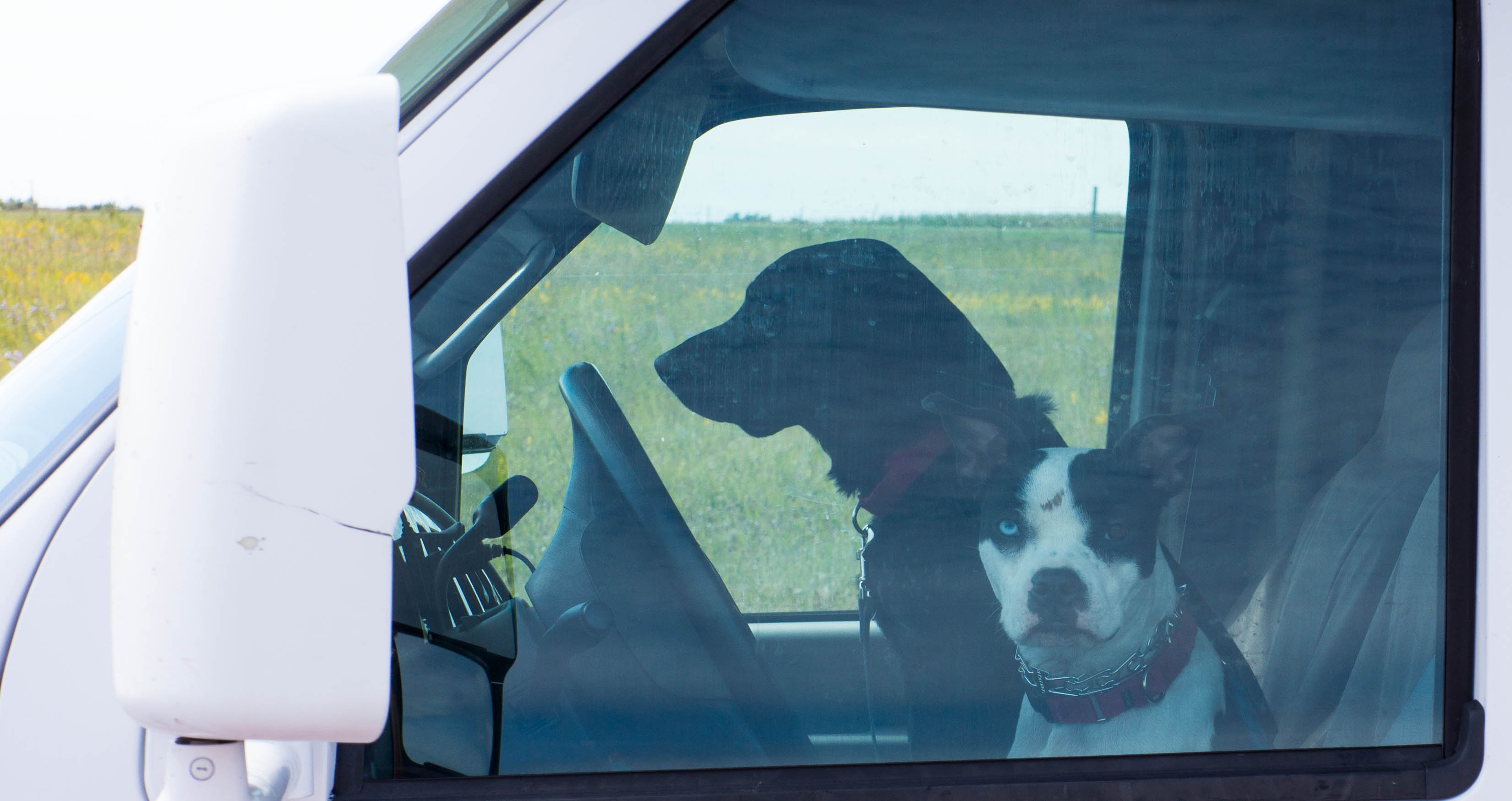
Share that raw thought with a clear-eyed friend.
Today I write stuff for a living, so I think in terms of drafts: There’s the rough draft, with all its heartache, hollering and hoopla just to wrestle a topic onto my screen. There’s the review with a stakeholder/client/colleague. Then there is the excellent revision. The goal is the excellent revision. But few people can begin with the good stuff that came out of the revision.
But you need not write stuff to realize that first ideas can often be improved by a clear-eyed, objective second glance. And often that clear-eyed glance, especially from someone hearing it for the first time, can tell you a lot about where the idea needs to go next. What your reviewer sees or doesn’t see, what causes them to pause, what causes them to guffaw, what causes them to restate or reread—all this is grist for the revision. And revisions are potent parts of the process.
With my clients I am very up front about wanting them to review a draft on the way to the final. And that is how I present it—I’ll write this thing and then you’ll look at it and give me your scathing criticism. And together we’ll move toward what we wanted all along. And the final will be that much better.
That’s what collaboration looks like to me: at least a two-stage process.
###
Image credit: Kirk Livingston
Year Without Pants: What’s Your Conversation Prompt?
Must Hierarchy Always Trump Collaboration?
In the excellent Year Without Pants (San Francisco: Jossey-Bass, 2013), Scott Berkun detailed his efforts to direct a team of programmers working for Automattic/Wordpress. This team was distributed around the world and gathered only occasionally. Most of their collaboration was mediated through computer screens and telephone lines. Curiously, email was not a major player. Instead, in-house blogs contained most of the collaborative communication (~75%), along with IRC (Internet Relay Chat), Skype and then e-mail (~1%). Blogs had the advantage of being entirely public (to the other players) and displaying the entire conversation. So potential collaborators could get up to speed as needed by simply reading/re-reading what had been said. And others could ignore the whole thing (which is the way of blogs).

Does your conversation prompt work?
Berkun found the prompt at the top of the collaborative blog was largely ignored—so common it was invisible (much like Twitter’s “What’s happening?”). It started with,
What’s on your mind?
and then
How can Team Social help you?
migrating eventually to:
Hi Scott: Do you know where your pants are?
That changing prompt became a way to wake up the conversation. It also demonstrated the playful nature of the team—a key factor in all Automattic/Wordpress collaborations. The prompt also turned into a good book title.
Berkun’s conversation prompt gives me hope that hierarchy need not trump collaboration. In my most collaborative projects, there was always a sense of fun/playful/silly/ridiculous that settled like a bubble over team meetings. In contrast, my more onerous jobs and projects carried a sense of duty and chain-gang attention to a boss hammering out a beat.
Creating that collaborative environment requires a light touch, a willingness to explore liminal spaces, record results and allow others access to the longer conversation. Creating collaboration also involves attention to conversation that results in replies, rather than monologue that begets numb pseudo-attention.
###
Image credit: Kirk Livingston
How LinkedIn Helps Before You Are Between Jobs
Generate The Thing Between
LinkedIn is a powerful tool for connection. But lots of people, once they land the job, put connection on the back burner. Some take it off the stove entirely—and that is a mistake, especially in this economy. I know this because many friends and colleagues are on radio silence most of the time. Until rumors of layoff float by. Then it’s connections galore.

Don’t let connections go dormant.
Connection is something that happens long before you have a need or want to generate a sale. In fact, connection is not about the need or the sale, it is something entirely different. And we make LinkedIn frenemies when we mistake connection for a sale.
For those who understand the importance of connections outside immediate work and building relationships widely, there is a great joy in getting to know people and simply seeing what might happen. It’s not even an introvert/extrovert thing. It is a possibility thing. Maybe it is a thing for dreamers, but I think not. It is for anyone who starts to wonder what is possible outside the structure that encases their days.
This openness to others—this beckoning to others, this waving them close—is the early move toward collaboration. It is the ordinary conversation that starts to generate new things between you, seemingly by magic. It is the beginning of finding common ground that eventually leads to “Wait—what could we do together?”
Curiously, openness to others has a way of working backward into our present job so that we start to see new ways of working, collaborating and connecting.
When teaching college students about professional writing, I try to help them understand that the best jobs are the ones not advertised. The best jobs open and shut before ever posted on a web page or printed as a classified ad. Those jobs are available only to connections. Those jobs are almost incidental to the connection: friends see what you do, how fun you are to work with. Their synapses fire and they say to themselves, “She might be perfect for this need we have.”
Maintaining and growing connection is not for a someday need or someday sale. It is a piece of being human and carries a glory all its own.
###
Image credit: Kirk Livingston
Jacob Morgan: Working Out Loud
Can collaboration lead to the fancy donut shop?
We’ve all known people who narrate their way through the day. Whether choosing today’s outfit or cooking or driving, these people say what they do as they do it. What they say includes the choices of the moment.
Such narration could drive you mad.
Unless you cared.
Say you were in the car and the narrator/driver mumbled something about turning left at the light. But you knew the fancy donut shop was to the right. So you suggested going right at the light. The narrator/driver turns right and, Behold!
“Hey—there’s the fancy donut shop we heard about. Should we stop in and get a dozen for the team?” you ask (innocently).

Take a right at the light.
What if we heard about work details we cared about in real-time? But not the kind of hearing that entails being pulled into a conference room so the boss can blather on about goals and objectives. I’m talking about the kind of hearing where your genius colleague one cubicle over shares a “Eureka” about the message your team is crafting. Or—more likely—when your colleague in Scotland answers your informal text message from the U.S. with a game-changing insight. An insight that has the power to order your work for the next two hours.
Being present with each other in our work has the power to delight our working selves. As we toss out ideas and questions amidst the ordinary banter, brand new stuff happens. It’s the stuff that can only happen between people in conversation. It’s not the stuff some boss orders you to do.
 I just ordered a copy of The Future of Work by Jacob Morgan based solely on the articulation of “working out loud” from this author interview on the Kinship enterprise blog. I’ve not yet read the book (did I mention I just ordered it?) but I firmly agree with the notion that the future of work entails some configuration of people wanting to work with a given organization rather than having to. “Get to” versus “have to” makes a huge difference to the motivation and energy with which we approach our work. I’ve argued for a LEED-like certification for workplaces that sustain the human spirit, and I think that is on the radar screen of job seekers today.
“Now let’s get back to that bakery,” he said, as he pocketed his car keys.
###
Image credit: Kirk Livingston
Citizens: Neither Audience nor Consumers but Makers

Reuters image
In a viable self-governing nation… citizens can only know themselves by way of the civic agency. True citizens are not the audience of their government, nor its consumers; they are its makers.
–Hyde, Lewis. Common as Air (NY: Farrar, Straus and Giroux, 2010) 27
###
Mind-reading and the Perfectionist’s Dilemma
“Come here, you big, beautiful rough draft.”
You know what needs to be done.
You know how to do it.
But—given your schedule—you simply cannot attend the details. What you want is to jump to editing the rough draft—but who’s got time to create that rough draft?

This is what I’m thinking….
We could be talking about drafting an email, an article or a chapter. We could be talking about a curriculum for a class or a seminar. We could be talking about writing a memo to employees or a letter to partners or a speech to stakeholders—anything that requires focused attention for a time so you can spin out and organize the details. We’re talking about anything you need to create from scratch to deliver to others. Any communication that solves a problem you’ve noticed.
Now is when you need an assistant who can move forward without hand-holding. Now is when you need someone who knows what you know without you telling them. Now is when you need a mind-reader.
But there are no mind-readers.
Are there no mind-readers?
I won’t say copywriters are mind-readers. I will say I find myself in situations every week where my client has provided 15-25% of the details but expects our project to organize 100% of the content in a coherent, compelling fashion.
Sometimes I wonder if our close friends, colleagues and collaborators serve as near-mind-readers. With them we feel free to spit out the raw bits of what we know. And as we say it, we realize what we need to do next. To tell someone what is on our mind is the first step to accomplishing a task. Those conversations are a kind of verbal rough draft.
Don’t be intimidated by the blank page. Embrace the notion of doing something mostly wrong and partly right, which is to say, embrace the rough draft.
It is much easier to change words on a page than it is to put words on a page.
###
Image credit: Kirk Livingston
Could Your Organization Grow Your Spirit?
LEED-like certification for human-spirit-sustainable workplaces
LEED certification is a rating system that recognizes a building’s sustainability. LEED or Leadership in Energy and Environmental Design, rates a new building project using five different categories:
- Site location
- Water conservation
- Energy efficiency
- Materials
- Indoor air quality
Businesses and organizations with the highest ratings display them as a sort of badge of honor for the public to see.
What if there were some system to measure and rate the culture within a company or organization? Since we worry about bullying at school and we’re starting to recognize bullies in the office and toxic corporate cultures, does it make sense to start thinking about organizations that sustain people rather than beat them?

For instance, what if any organization was judged by these four categories:
- Bias toward collaboration
- Employee engagement indicators
- Mix of top-down messaging with true conversation
- Ratio of CEO-pay to rank-and-file pay
Seem ridiculous?
It would be difficult to measure many of these, especially since most of the categories seem so subjective. And yet, would it be impossible to measure? Would it be worthwhile to measure? Are we already moving in that direction?
In Minneapolis/St. Paul—like any set of cities—insider talk has long identified those cut-throat corporate and institutional cultures that routinely toss human capital to the side. Insider talk also identifies those bosses, managers and C-suite people without empathy and/or ethical moorings. New employees are generally forewarned when they sign up.
Of course, business is still about earning a living for the people involved even as the organization serves some human need. So don’t think I’m championing some communistic collective. Profits will and must be made to help society move forward.
But as we move toward fuller employment, workers will become more choosy about where they spend their days. And those cultures that have a less sustainable ethos will not be the winners.
I’m not convinced I’ve identified the right categories to measure. What categories would you include?
###
Image credit: Kirk Livingston
Where does loyalty come from?
Gift Economy and Loyalty Programs
This is a tale about where loyalty comes from. It involves making a garbage man very sad.
The second home we purchased was left with all sorts of furniture by the previous owners. We called them and put the furniture in the yard. But they never returned and their furniture sat in our new yard for too long. Rain and sun and more rain—these people never came.

But Ace Solid Waste came. And they took it all for free. And they won our loyalty. Is this a commercial for Ace Solid Waste? Maybe, although I am not employed or directed or in any communication with Ace Solid Waste. In fact, I pay them. On time (mostly).
Their gift of removal (you might say Ace blessed us with the absence of a soggy couch and other wet furniture), is easily and quickly remembered by Mrs. Kirkistan and I, still, to this day.
In The Gift (NY: Vintage Books, 1983), Lewis Hyde described how a gift economy works: people give gifts to each other as a sort of payment. But not in the transactional way most of us expect today. One gift was not given in exchange for another gift. No, Hyde described how gifts move on. Or, you might say, moved forward. The gift you gave me, I gave to someone else, and so on in an endless cycle of giving. In the gift economies Hyde cited, trade was greased by gifts.
Of course, gifts carry with them an obligation: a sort of unwritten sense that I must pay this back, or “I owe you one.” Gifts also carry a sense of relationship. We give gifts to friends or relatives. It is a way of saying, “Hey buddy!” or “I’m thinking about you.”
One long-time strategy for business is to give gifts to woo loyalty. I buy plumbing supplies at Beisswengers because they are patient with my simplistic plumbing questions. They provide answers along with the new drain. The answers are even more valuable than the drain. All sorts of free apps become so indispensable we finally buy them. We frequent the vendor who gives away their knowledge.
A competing garbage gentleman stopped at our door with an offer of savings. When I said I wasn’t interested, he probed:
Why?
I told him my story of the furniture that wouldn’t go away and how Ace helped us out.
Will you be in debt to Ace for the rest of your life?
And here is the surprise: as I listened to my own words, I wondered at the strength of the feeling and the depth of loyalty for this good deed done to us—and the longevity. Maybe our retelling of our furniture story kept giving fresh reasons to continue.
Maybe.
And so the man of seeming excellent garbage-manship walked away sadly.
So that’s one way to build loyalty: help someone with a need. And as you help, try not to see the gift as a transaction.
###
Image credit: Kirk Livingston


 conversation is an engine