Archive for the ‘Communication is about relationship’ Category
Op-Ed Wars: Putin on Obama. McCain on Putin. Rouhani on Conversation
Words are The Best Kind of War
As far as wars go, this one is easily sustainable. And we all have a vested interest in sustaining it, because when we’re talking (even combatively), we’re, well, talking.
Just talking. Not bombing. Not spying (well, OK, probably still spying). Not releasing nerve gas on civilians (well, OK. Some of us can talk and still gas/butcher/jail civilian populations). But talking directly to our various populations is at least different than cold-warring it. Talking is the opposite of the silent treatment.
Talking accomplishes stuff: McCain’s sharp criticism of Putin comes on the heels of Putin’s criticism of Obama’s Syria plan. And Obama’s Syrian plan floated out with words and met all sorts of ridicule and resistance and ire and…success (or at least the beginning of movement toward success).
What if more of our conflicts started in our enemies op ed pages, long before we took action?
What I like most about all this talk is the corollary comments that come out when McCain or Putin or Rouhani poke their sharp sticks in the eyes of the audience. The audience responds bringing up all sorts of truth and innuendo and implications that may apply or may not apply, but all of which allows us to think together. All this talk allows us to stay engaged. Engaged audiences are a good thing.
Keep talking Mr. Putin. Say on, Mr. McCain. Let’s grab a chai, Mr. Rouhani. You are right: “constructive dialogue” is a great win for everyone. Even if Iran is on a PR spree with their new reasonable-sounding president. Let’s jump on this bandwagon. We’ll need to move to the next step, of course: if Iran’s nuclear program is truly for fuel only, then allowing third-party inspections will be not big deal, right? Inspections could begin to put the rest of the world at ease about Iran’s seeming bomb-making proclivities. On the other hand, the US also needs to offer movement toward transparency: we’ve certainly hid plenty. Being a superpower should not make us bullies—we need to play by the same rules.
Yes. Let’s chat.
We may not believe everything each other says, but talking is a start.
###
Image credit: Times of India
Stop-Action Living & How to Pay Attention
Jean Laughton’s Mythic West Borders Her Real West
Put a frame around the scene before you and the scene changes. The frame creates distance from the action, which is both useful and off-putting.

Useful in that the frame helps you stop and see what is going on. Moving parts fall (momentarily) silent and you are released to think critically about the action. Note that critical thought need not be negative or a complaint or a sardonic aside. Critical thinking can result in even more whole-hearted agreement with the action. Critical thinking can also lead to backing away from the action.
Off-putting in that the frame truncates the scene and isolates it from everything else. Off-putting because the people in the scene see the camera and note you’ve switched from action to observer, which most of us find discomfiting. Pick up a camera or sketch pad and you’ve suddenly marked yourself as something other than what is happening right here and now. Pick up a camera and watch people freeze or back away.
Edmund Husserl (that 19th century mathematician/philosopher/phenomenologist) talked about leaving the “natural attitude” and bracketing his experience to come to fully understand/appreciate the experience. Actually, Husserl advised breaking with the natural attitude and bracketing experience to get on with his phenomenological work. Henri Cartier-Bresson always used a 50mm lens to capture the surrounding action, so his audience could see the central action in context and form stronger conclusions. Damon Young, in his Distraction, cites Henri Matisse in explaining how art became his way of looking at the world:
“I am unable to distinguish,” he wrote in 1908, “between the feeling I have for life, and my way of expressing it.”
Any way you cut it, paying attention and making your experience available to others are somehow linked. In Jean Laughton’s work, she takes her camera in the saddle and documents life as working cowgirl. The images she creates are mythic and telling and honest.
Walk through a few of Jean Laughton’s images and you’ll be glad she is paying attention. Laughton seems to have found a way to live in the scenes even as she brackets them. Her frames seem to not take her away from the action. The result is both memorable and accessible.

###
Image credit: Jean Laughton via Lenscratch
How do you know what you know?
What you know once belonged to someone else
When I was 19 I knew everything there was to know.
I had been plopped—fully formed—into a pair of sneakers to walk the earth. And so I did, learning and responding as one does, with fresh enthusiasm and proper disdain for the less-knowing who gadded about my footsteps.
A decade later I began to notice how much of what I knew came from the people around me. A decade after that I could locate some sources of my own knowing: family and friends. Professors, pastors and prisoners. Institutions and anarchists. Sacred texts and ephemeral whispers.
Some conversations were limiting. Some texts opened new ground. And vice versa. Gradually I came to understand how little I knew. About most anything. Especially the stuff I studied in school. Especially the stuff for which I would give my life.
And these connections: some electric knowing transmits when we connect.
These connections are not to be missed. These connections should not be easily dismissed.
And no one arrives fully-formed.
###
Image credit: William Heick via MPD
Why We Need a Science of Collaboration
Whatcha talkin bout Willis?
When I assign a report that must be completed as a team, my college writing classes get very still. When I explain the assignment will be graded as a team, I hear barely audible groans and see ever-so-slight grimaces. (These are polite writing students, after all.)
It is much simpler to be an individual contributor than a collaborator. The fun of writing is in the discoveries you make as you write. Collaboration seems to negate all that.
So many unknowns in collaboration: will my team care the way I care? How will we divide the work? What if that slacker is on my team? Who will lead this group?
(“Please let it not be me.”)
(“Please, not me.”)
(“Please.”)

Elegant work from Ogilvy, Honduras
And yet working together—collaborating—is one of the essential skills our business communities (and academic communities and faith communities) desperately need. This story from the Association of Clinical Research Professionals (via the ACRP Wire) highlights just how big the stakes might be for future collaborations:
An essential new way to move discoveries forward has emerged in the form of multistakeholder collaborations involving three or more different types of organizations, such as drug companies, government regulators, and patient groups, write Magdalini Papadaki, a research associate, and Gigi Hirsch, a physician-entrepreneur and executive director of the MIT Center for Biomedical Innovation.
The authors are calling for a new “science of collaboration” to learn what works and doesn’t work; to improve how leaders can design, manage, and evaluate collaborations; and to help educate and train future leaders with the necessary organizational and managerial skills.
Part of the problem is that we think collaboration will just happen on its own.
It doesn’t. Someone needs to organize the task. That organization can look like top-down authoritarian leadership or it can look like colleague-helping-colleague asides. Both approaches have their place, as well as the infinite variety of other ways to help a team move forward. People who study and practice these things are my heroes.
I can’t help but agree with Papadaki and Hirsch in calling for a new science of collaboration.
And for those of the writing persuasion, I plead for patience with group work.
Because sometimes the lightning bolt of writing also strikes in a conversation.
###
Image via Ads of the World
What Business Can Learn From Church #2: Be Accountable—Especially After Conflict
Stop to Honestly Revisit Decisions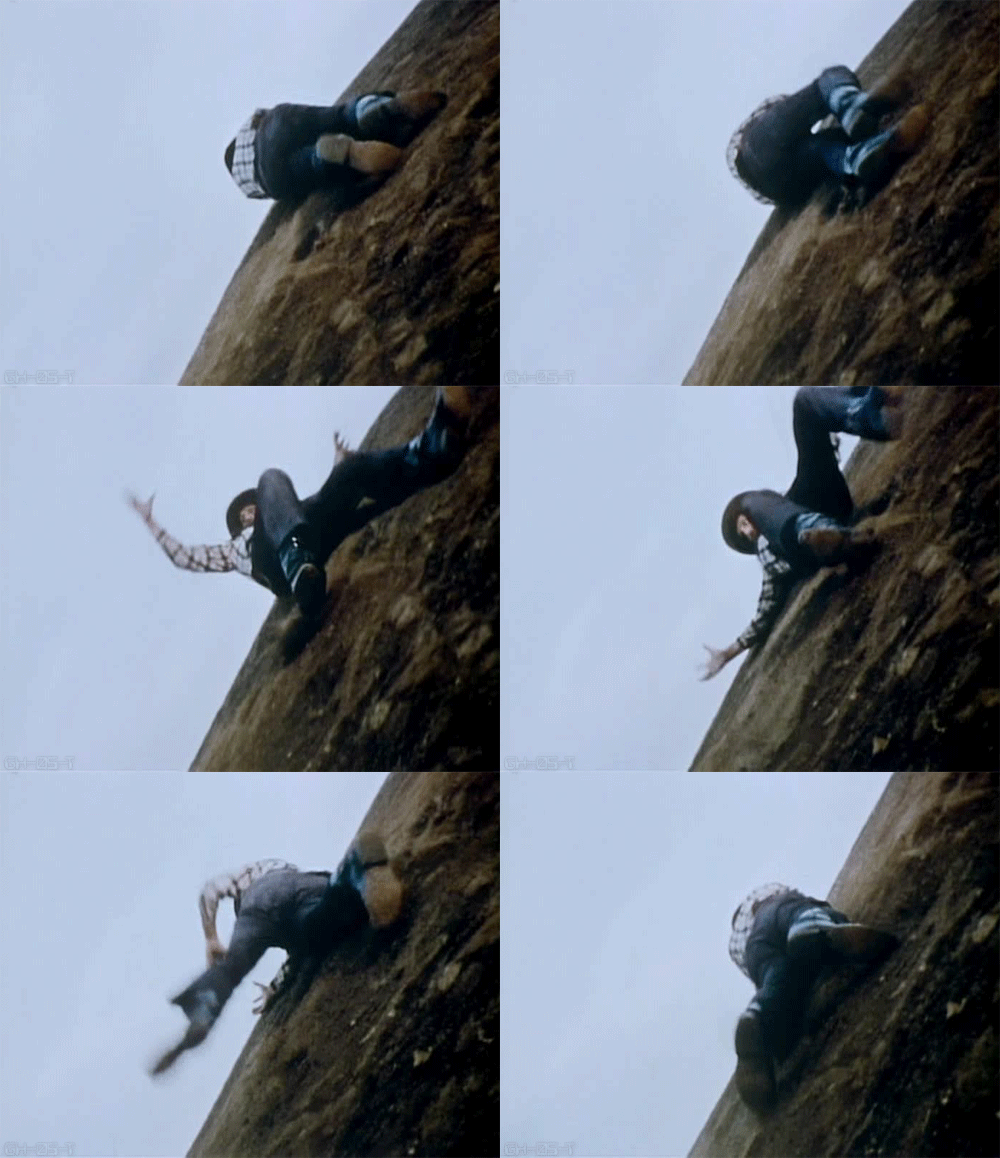
If everyone on your leadership team has an equal voice, how do you sort through conflicting opinions?
First, know that “equal voice” is as rare in teams as it is problematic. It’s likely some team members have a more equal voice—a voice that carries more authority (like the boss, for instance. Or the one who signs the bi-weekly pay stub). And, sadly, team-members willing to scream and throw a fit will often get their way through intimidation and/or sheer annoyance.
In this space between work, craft and carrying out community described yesterday, Seth McCoy talked about a leadership style that didn’t set the founding leader as the all-knowing, final-answer seer whose verdicts were solid gold. Instead, passionate committed leaders bellied up to give their opinions, expecting always to be heard. To continue to get full engagement from these leaders and their wide-open thoughts, team decisions must be revisited and discussed after the conflicting decisions.
Say your leadership team is conflicted on a pivotal decision. You need everyone behind the decision because you know each leader will motivate themselves and their teams based on the urgency of the task. You need them engaged. Whether your team takes formal votes on decisions or just gives a thumbs-up/thumbs-down, the mechanism that allows your leaders to respond to a decision should not be the final word. Allowing the team to revisit decisions in conversation builds trust—but those revisiting conversations must be open rather than defensive.
What business can learn from church is to build enough human to human accountability to actually, really, truly revisit group decision. To ask whether it works or not. And to offer honest assessments. And to build a solid history of honesty.
This is how any organization builds relational trust.
###
Image credit: gh-05-t via 2headedsnake
You may also be interested in:
What Business Can Learn From Church #1: Relational Trumps Transactional
Identify and Hear Gifted Voices
Seth McCoy runs a coffee shop in the Hamline Midway neighborhood of St. Paul. Groundswell makes an irresistible Chai Cinnamon Roll—especially warm.
Especially first thing in the morning.
Seth McCoy also pastors a church blocks away. A new sort of church that takes seriously the notion that people benefit more from dialogue than monologue.
Church and coffee shop each vigorously pursue their mandates: Groundswell makes tasty foods and strong coffee in a high-ceilinged, inviting neighborhood space. Third Way Church takes seriously the notion that community is much more than one guy sermonizing for an hour—you are likely to hear many voices if you show up at a gathering. Groundswell and Third Way Church inhabit the same neighborhood. This community connection also begins to bridge traditional divides, like the sacred/secular myth.
Talk with Seth the business owner and he may tell you how the leadership team works at Third Way Church: discussions can get “heated,” which is to say, leaders are passionate and vocal. One gets the sense they don’t hold back. On the church leadership team they’ve identified different giftedness or abilities in each of the leaders and they try to honor that particular voice. Often leadership voices in a church can follow some of the traditional patterns of prophet/apostle/evangelist/shepherd. Team members speak consistently from their expertise—which is also their natural bent—and they speak with authority.
 Our businesses are typically more transactional affairs. Employees are hired with a set of expectations (whether narrow or wide) and expected to go about their business. Our best work situations are those that move beyond merely transactional and begin to see the various bits of giftedness each employee brings—and then honors that voice. Most of us who have worked in organizations and companies where we remained unheard—and those work situations number among our least favorite. And those best work situations were where we were identified as the person in the know on some particular aspect of the shared vision.
Business can learn from church by recognizing the gifts, abilities and particular bent of employees and hearing the authority that employee speaks from. No matter what position the employee has, there is some authority/expertise/giftedness they bring.
We owe it to each other to move beyond transactional to relational.
###
What’s a Rolodex and why would I want one?
When will the cloud break your heart?

“I don’t care if Google has my information,” said the sales woman.
Digital natives may be a lot of things, but one thing is certain: they aren’t too worried about technology. For them tech is a fact of life, like air and electricity and coffee—always there. Always ready. All slick and wireless and greased to go. That’s why Facebook is mostly just a free $13 18 20 billion Rolodex and Google is a verb. Thus has it always been. And so it shall always be.
Except when it isn’t.
Digital natives have abandoned themselves to the cloud assuming it will always be there. Mostly they don’t have a plan B when stuff goes away. Plan B is to call friends for numbers and addresses and recreate what they had before—but that’ll never happen because Facebook will be there, right?
I don’t put myself in the digital native category, which means I remember a bunch of dumb old stuff like phones with cords and 5 ½ inch floppy disks and, well, I won’t bore you with a kiln-load of nostalgia. But I retain crisp memories of this: important stuff vanishing with a bad piece of media. And an old computer simply destroying things I’d spent lots of time on. More than once. And that lesson stuck. That’s why my contacts and files reside in multiple places, including the cloud. That’s also why I do not assume Internet access in my travels. Instead I have this dumb game of searching for Wi-Fi wherever I go: just last week I ran across a signal called “Chuck Norris” in South Minneapolis. My many experiences losing important information have made me happy to seek redundancy.
The sales woman at the AT&T store has no problem storing contacts, messages and files with Google. Same with millions of us. Who cares if Google scans our communication and sends the right advertisers our way? Who cares if Facebook is about to have one of the largest IPOs in history, based on the dumb comments we type and the hours we spend on the site? Nobody cares—we get what we want out of the deal. We chat with people and divert ourselves with dumb games. Half of Americans think Facebook is a passing fad—and GM thinks their advertising with Facebook is a waste of money. Even if both of those are true, something more enticing and powerful will surely rise next.
I’m guessing down the road we’ll realize the much larger issue was not about losing stuff. And the larger issue maybe isn’t even that we’ve given away the keys to our connections between friends, family and acquaintances. We have yet to understand the full impact of this progressive-thought harvesting, but I’ll admit Nick Carr’s post on digital sharecropping has set me to thinking about where I spend my digits. It also makes me reluctant to entrust everything to the cloud and the enterprising folks who manage it.
###
Image credit: Chris Buzelli via thisisnthappiness
Talking Philosophy with a 10-Year Old
Why not talk about something more interesting like dragons or flying?
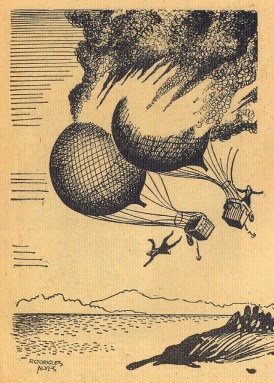 I like reading Emmanuel Levinas. He’s mostly opaque, but every once in a while his writing opens on a breathtaking view and is just what I needed. If I had the opportunity to explain why Levinas matters to an interested ten-year old, I would say that we have a problem with other people. And the problem is that we mostly don’t want to hear from them. I could use an example from their life: you don’t want your mom to interrupt your fun: when she calls you in for dinner, you go in only reluctantly. One problem with the will of the other is that we don’t welcome distraction from our preoccupations. But it is not just that, it is that we really don’t want to even interact with some other who might have authority over us.
10-Year-Old: “Oh. You just don’t want to do what other people say. Does Levinas tell you how to avoid doing what others tell you to do?”
Kirkistan: “Not exactly.”
10-Year-Old: “Does he tell you don’t have to do what they say?”
Kirkistan: “No. It’s more like you suddenly want to do what the other person wanted because you really, really loved them.”
10-Year-Old: “Like maybe if my grandparents were in town and asked me for something and I wanted to do it for them because they are so nice?”
Kirkistan: “Yeah. Maybe like that. And maybe you found yourself really interested in the experiences they had, partly because they are such good storytellers and they make everything sound so exciting. You like their stories and can almost imagine being there.”
10-Year-Old: “So my grandparents are cool and I want to get to know them because they are nice and tell interesting stories. So what you are really talking about is why it is important to hear from other people and why we should care.”
Kirkistan: “That’s right.”
10-Year-Old: “So why did you start be talking about stopping what I thought was fun to do something I had to do?”
Kirkistan: “Well, I might have been a bit confused. But also because sometimes I close my ears to people who are trying to give me a gift. Something I really need. Say you are at the grocery store with your parents. It’s Saturday. And there are sample ladies on every aisle. There is lady offering free ice cream in the frozen aisle. And another man making pizzas in that aisle. And another with little chicken nuggets and another handing out crackers and cheese.
Kirkistan: “But say you really didn’t want to go to the grocer. You really wanted to watch cartoons. So you went to the grocer reluctantly, but you took your iPod and listened to music the whole time. You walked behind you parents, music turned up. So you didn’t hear the sample ladies calling out to you. You kept your eyes on the floor so you didn’t see them either.”
10-Year-Old: “That would be bad. I like ice cream and chicken nuggets and pizza. It’s like I had missed all the really good stuff while everybody else got something. I’d have gotten my way but I’d have missed out on the very best stuff.”
Kirkistan: “That’s why Levinas is important. He helps us start to see and understand why it is we should care about the people around us: what they know. What they bring to our conversations. What they have to say about this and that. Even people who don’t seem to have anything to say—even those people can surprise us with lots of interesting things.”
10-Year-Old: “OK. Well, why don’t you just listen to people? I listen to people and learn things all the time. That isn’t hard to do. It is super easy to listen to people. It’s not like you have to do anything. You just listen.”
Kirkistan: “Well, that is great advice and I want to follow it. My answer to you would be that as you get older, you start to think you know a few things. We get to thinking we know the patterns of how things work and we figure we know pretty much how anyone will respond in any given situation. Anyway, all I’m saying is that it gets pretty easy to think you know what most people will do or say in any given situation. The surprise—if you can call it that—is that quite often people live up to our expectations. They do what we think they’ll do. Not always. But often. Then the question becomes, “Did that guy say that because I expected him to say it?” “Did I have a hand in turning this conversation this way?”
10-Year-Old: “You’re pretty boring aren’t you?”
Kirkistan: “You might be right.”
10-Year-Old: “Why don’t you write about something interesting like dragons or warships? Why don’t you write a book about how to fly?”
Kirkistan: “Great suggestions. I really want to write a book about how to fly. I think that this is the book I am writing.”
###
Image Credit: Mid-Century via thisisnthappiness

 conversation is an engine